Blessed Miguel Pro

A priest working in disguise under an anti-Catholic government
Miguel Pro was born in 1891 in Zacatecas, Mexico, the third of eleven children in a comfortable mining family, and by most accounts a lively, joke-cracking young man before he ever thought of the priesthood. He entered the Jesuits in 1911, but the timing put him on a strange path: the Mexican Revolution forced his own religious order into exile only a few years later, and Pro finished his long Jesuit formation — philosophy, theology, the years of study that precede ordination — scattered across California, Spain, Nicaragua, and Belgium, where he was finally ordained a priest in 1925.
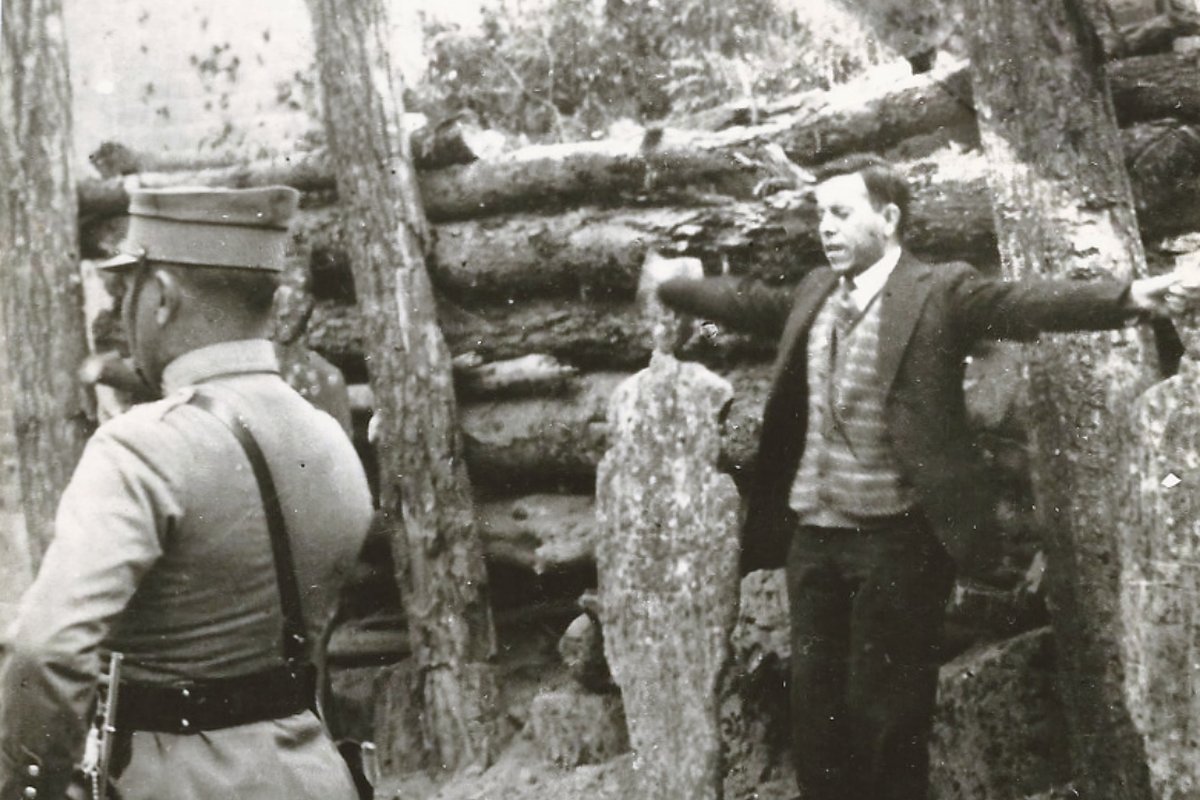
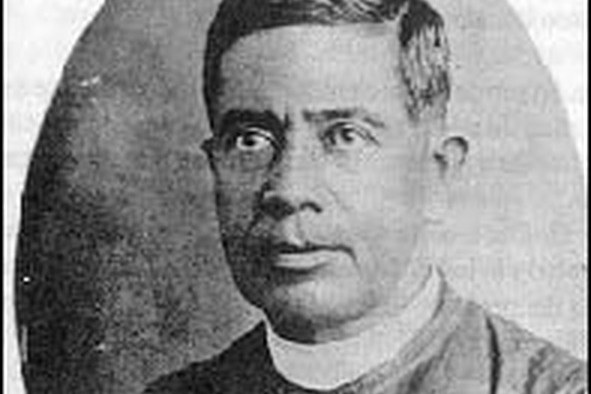
Photograph of Miguel Pro before his execution, Mexico City, November 23, 1927 — public domain.
He returned to Mexico in 1926, walking straight into a country where the government had turned sharply hostile to the Catholic Church. President Plutarco Elías Calles's administration enforced laws that banned public worship, restricted the number of priests permitted to function in each state, and cracked down hard on any visible Catholic practice — the period Mexican Catholics still call la persecución. Pro returned to a country where simply saying Mass in public could mean arrest. He responded by ministering underground — moving through Mexico City in a series of disguises, sometimes as a mechanic, sometimes as a beggar, sometimes as a well-dressed businessman, celebrating Mass secretly in private houses, hearing confessions, and bringing Communion to Catholics who had no other way to receive the sacraments. It was dangerous, deliberate work, carried out with what several accounts describe as an almost cheerful nerve — friends recalled him joking about his own narrow escapes from police even as the risk around him kept rising.
Arrested on a charge that didn't hold up
In November 1927, Pro was arrested and accused of involvement in a bombing plot against a former Mexican president, Álvaro Obregón — a charge with little real evidence behind it, and one that Pro's own brother, also swept up in the arrests, was never able to connect him to. It was, by most historical accounts, a pretext the Calles government seized on regardless, eager to make an example of a priest who had evaded capture for months. He was executed by firing squad on November 23, 1927, without receiving a formal trial, alongside his brother Humberto, while a third brother, Roberto, had his sentence commuted at the last moment.
Arms spread like a cross, in front of the cameras
President Calles specifically arranged for the execution to be photographed, intending the images to circulate as a warning to other Catholics tempted to resist the government's anti-clerical laws. Pro refused the blindfold offered to him, held up a crucifix and rosary, forgave his executioners aloud, and spread his arms wide in the shape of a cross as the firing squad took aim, reportedly crying out "¡Viva Cristo Rey!" — "Long live Christ the King!" — in his final moments. The photographs were published exactly as the government intended, splashed across newspapers as a deterrent, but the effect ran the opposite direction: rather than frightening Catholics into submission, the images of Pro's calm, deliberately cross-shaped final pose became one of the most powerful visual symbols of the Cristero War, the armed Catholic resistance movement then fighting against the Calles government's religious persecution. Crowds reportedly lined the streets for his funeral procession in numbers large enough to alarm the authorities who had staged the execution as a show of strength.
A martyrdom set against the wider Cristero War
Pro's death has to be understood against the backdrop of the Cristero War (1926-1929), an armed uprising by Catholic peasants, ranchers, and laypeople across central and western Mexico who took up arms — often literally under the banner "¡Viva Cristo Rey!" — against the government's suppression of the Church. Pro himself was not a combatant; his resistance was sacramental, carried out with a Mass kit and a disguise rather than a rifle. But the government treated the distinction as meaningless, and his execution is generally counted among the notable martyrdoms of that conflict, alongside the wider group of clergy and laypeople the Church later canonized together as the Saints of the Cristero War. The persecution eased only after a negotiated settlement in 1929 restored a fragile, informal tolerance for the Church's public life.
Beatified as a martyr, still awaiting canonization
Miguel Pro was beatified in 1988, with the Church formally recognizing him as a martyr killed specifically out of hatred for the Catholic faith — the standard the Church applies before advancing a cause of this kind. That places him at the rank of "Blessed," one formal step below canonization as a saint. His feast is kept on November 23, the anniversary of his execution, and he's remembered today as one of the defining figures of the Cristero-era martyrs — Catholics who died during a uniquely violent chapter of 20th-century religious persecution in the Americas, not in a distant century but within living memory of the modern Church. His photograph — arms outstretched, face turned toward the rifles without a trace of the fear the government hoped to broadcast — remains one of the most reproduced images of 20th-century Catholic martyrdom, still printed on holy cards and carried by Mexican Catholics who see in it a rebuke of the very propaganda it was meant to serve.
Trivia
Why was Miguel Pro executed?
What were Miguel Pro's last words?
Why did the Mexican government photograph his execution?
How did Miguel Pro minister to Catholics if public worship was illegal?
Is Miguel Pro a canonized saint?
You May Also Like
Related Reading