Our Lady of Guadalupe

Four appearances in four days
The story unfolds quickly. Tradition holds that Mary appeared to Juan Diego on Tepeyac Hill, near what is now Mexico City, on December 9, 1531, asking him to request that the bishop build a shrine there in her honor. Juan Diego brought the message, but the bishop — reasonably enough — wasn't convinced by a poor man's report of a vision. Mary appeared to Juan Diego again that same day, and again the following day, each time sending him back with the same request, until the bishop finally asked for a sign he could not dismiss.
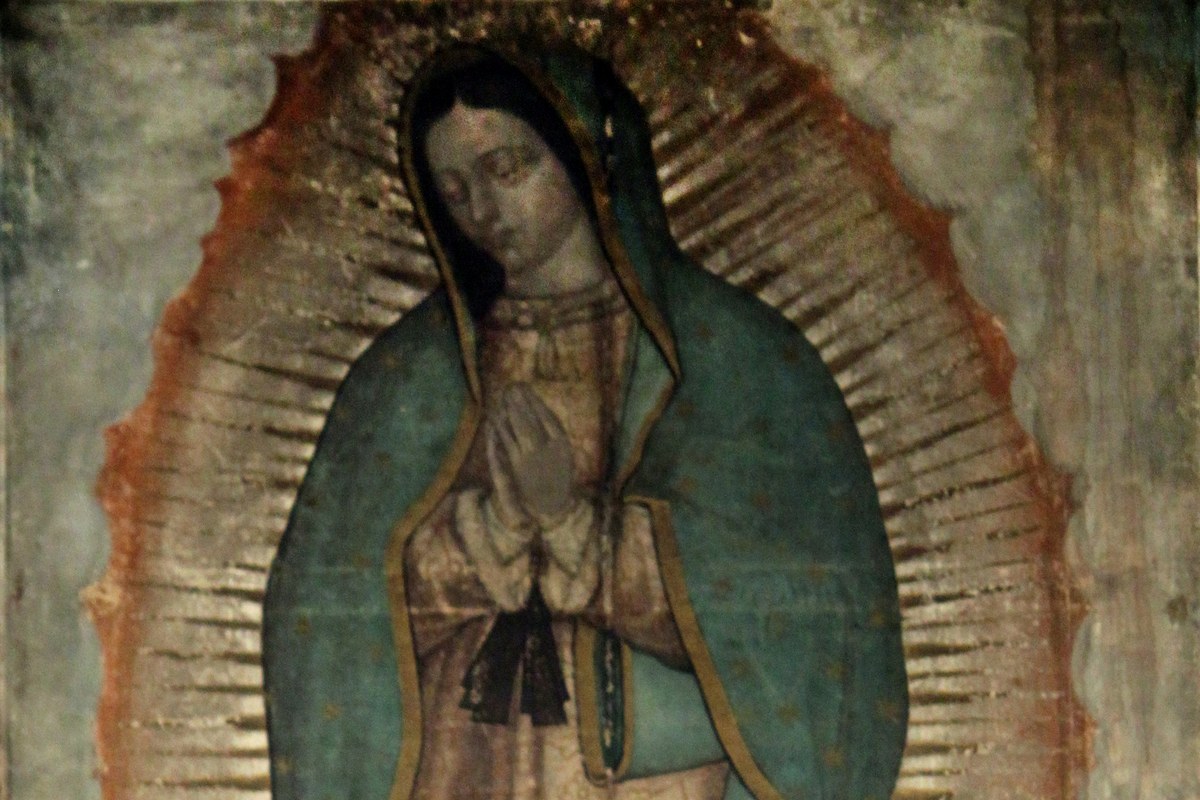
The tilma image of Our Lady of Guadalupe, 1531, Basílica de Guadalupe, Mexico City — public domain.
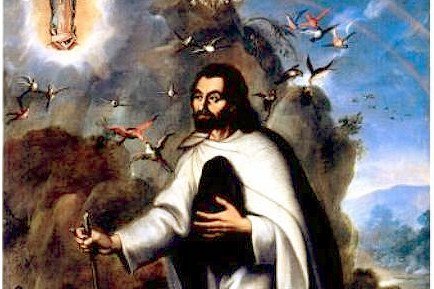
Juan Diego himself makes for an unusual figure at the center of one of the Church's most famous apparitions. He was a widower in his fifties, a recent convert baptized only a few years earlier, and by every account an ordinary layman with no particular standing in either Indigenous or colonial society — not a priest, not a nobleman, not someone whose word would automatically carry weight with a Spanish bishop. Tradition holds that Mary spoke to him in Nahuatl, his own native language, and that she referred to him with warmth and personal address, treating him not as a convenient messenger but, in the words later associated with the account, as someone she held dear.
A sign the bishop couldn't explain away
On December 12, the final apparition, Mary instructed Juan Diego to gather Castilian roses — flowers not native to the region and out of season in December — from the top of the hill and carry them to the bishop in his cloak. When Juan Diego opened the cloak in the bishop's presence, the roses fell out, and the cloak itself was found bearing an image of Mary that had not been there before. That cloak, known as the tilma, is the same image displayed today at the Basilica of Our Lady of Guadalupe, and it was that physical, unexplained sign — not the earlier reports of apparitions alone — that led the bishop to act.
The tilma itself has been the subject of extensive study and debate over the centuries. Made of a rough cactus-fiber cloth called ayate, which typically deteriorates within a few decades under normal conditions, it has instead survived for nearly five hundred years, displayed in open air for much of that time — a durability that believers point to as part of the sign's ongoing significance. Various scientific examinations over the years have investigated the image's composition and origin, though, as with any matter tied to a reported apparition, the Church treats the conclusions as supporting evidence for a pious tradition rather than as proof compelling belief.
What the image itself shows
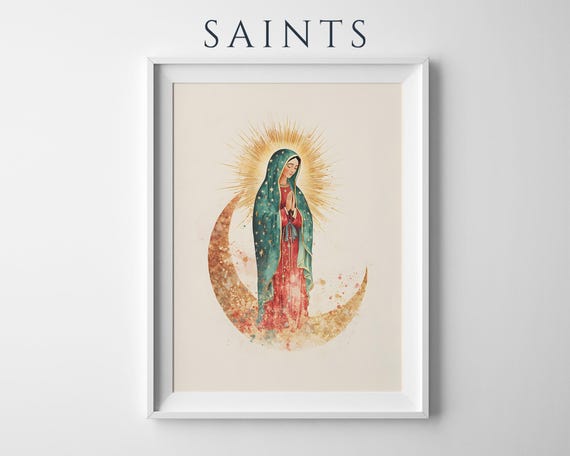
The tilma depicts Mary standing on a crescent moon, wrapped in a star-covered mantle, hands folded in prayer, supported by an angel below — a visual language that drew on both Christian symbolism and imagery already familiar to the region's Indigenous population, which is part of why the image resonated so immediately and so widely. Within years of the apparitions, conversion to Catholicism across the region accelerated dramatically, a shift many historians and the Church itself connect directly to the impact of the Guadalupe image.
Much of that impact came from how precisely the image spoke to its audience. Mary appears with features and coloring that many viewers read as mestiza, neither purely European nor purely Indigenous, and she stands on a crescent moon and before rays of sun — imagery that overlapped meaningfully with existing Aztec symbolism associated with their own deities, without directly copying it. For a population only recently introduced to Christianity, often through a colonial conquest they had no reason to trust, an image of Mary that seemed to meet them partway, visually and linguistically, carried a very different kind of persuasive power than a missionary's sermon alone could have offered.
A private revelation with an outsized legacy
Like all Marian apparitions, Guadalupe falls under what the Catholic Church calls "private revelation" — devotion the Church has approved and encourages, but doctrine no Catholic is formally required to accept, as distinct from the public revelation contained in Scripture. That distinction hasn't diminished its influence. Our Lady of Guadalupe was declared patroness of the Americas, and her feast on December 12 remains one of the most widely celebrated Marian feast days anywhere in the Catholic world — a devotion that began with one man, one hillside, and a cloak that convinced a bishop who had every reason not to believe him.
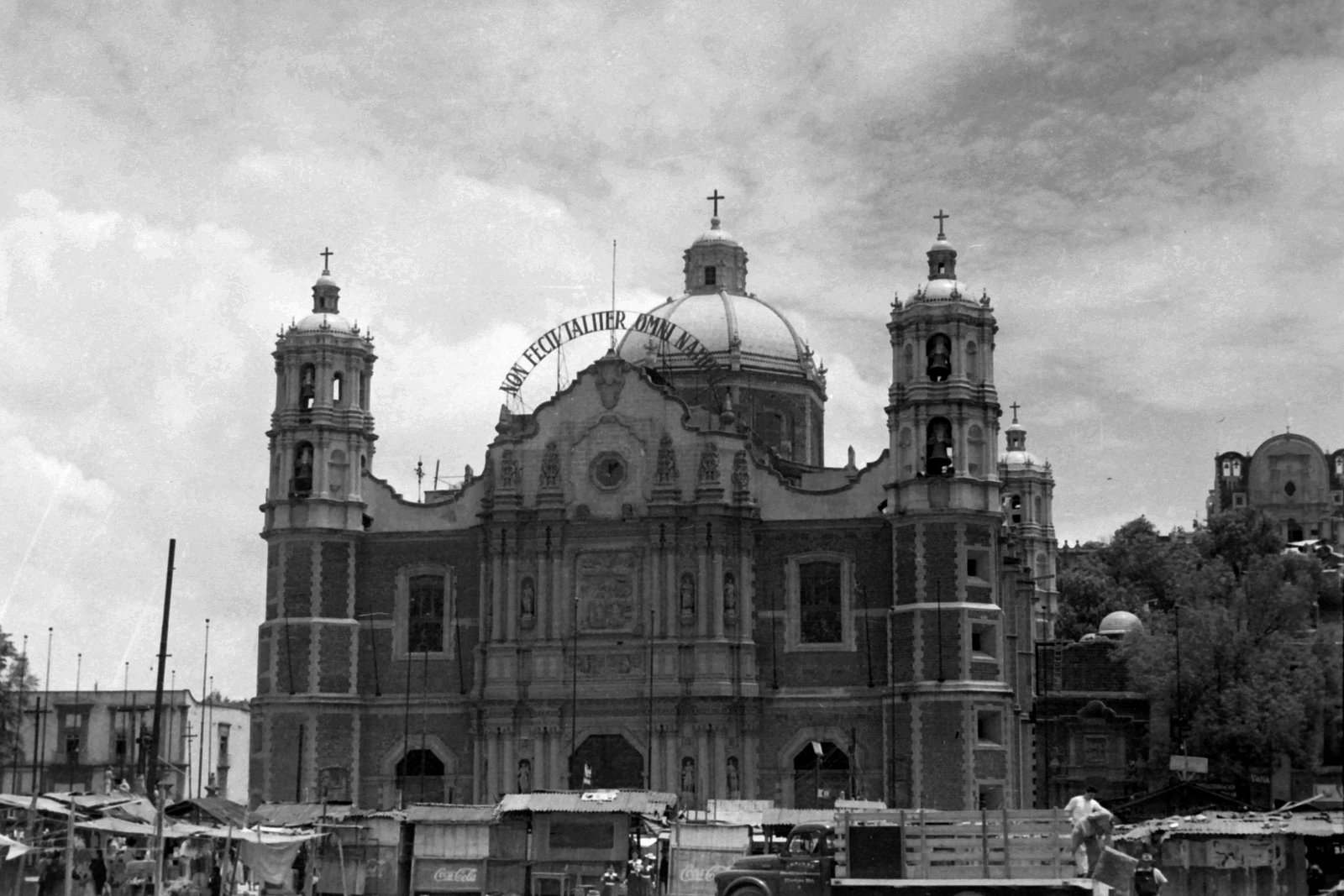
That legacy has only grown with time. Pope Leo XIII granted the tilma image a canonical coronation in 1895, and Saint John Paul II — whose own devotion to Mary ran deep, as explored in Pope John Paul II — canonized Juan Diego himself in 2002, the first Indigenous saint of the Americas. The modern Basilica of Our Lady of Guadalupe, completed in 1976 to accommodate the enormous crowds the older church could no longer hold, remains one of the most visited Marian shrines on earth, drawing millions of pilgrims each December to stand before the same faded image that once convinced a skeptical bishop to believe an ordinary man's extraordinary story.
Trivia
Who was Juan Diego?
What did Mary ask Juan Diego to do?
What is the image on the tilma?
Is belief in the Guadalupe apparitions required of Catholics?
Related Reading