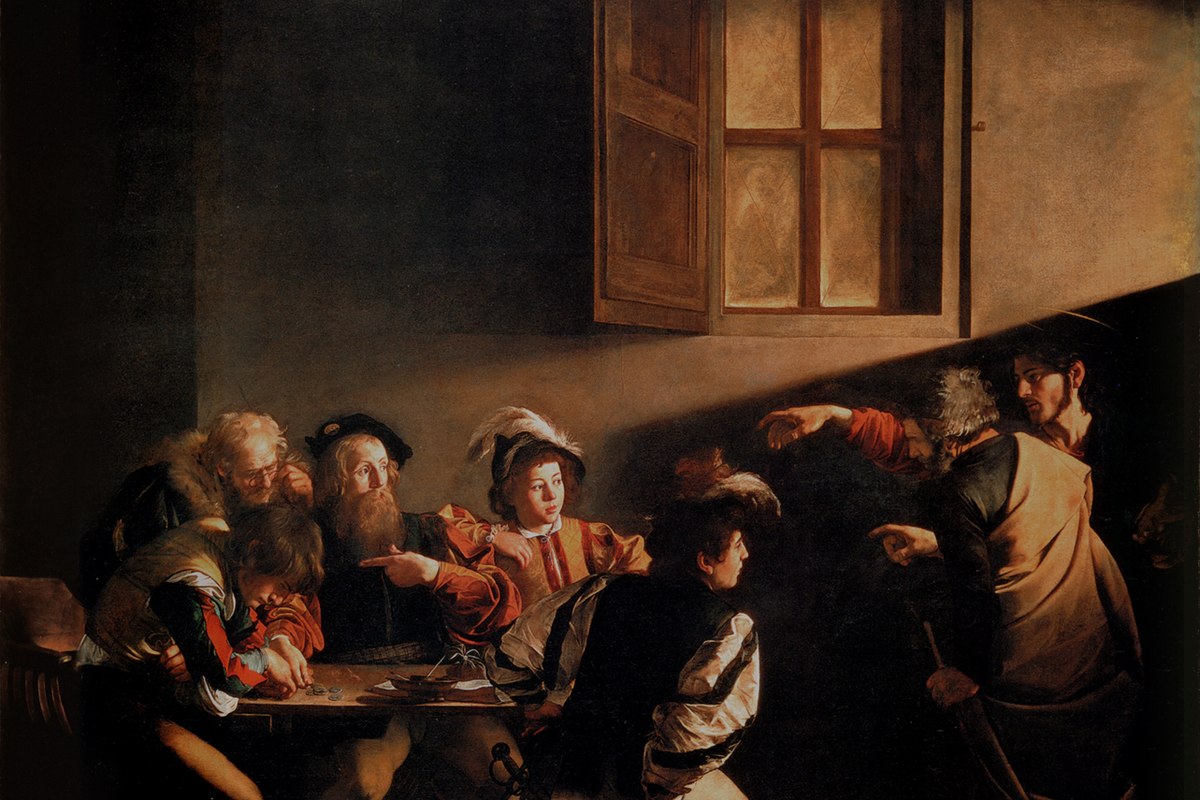
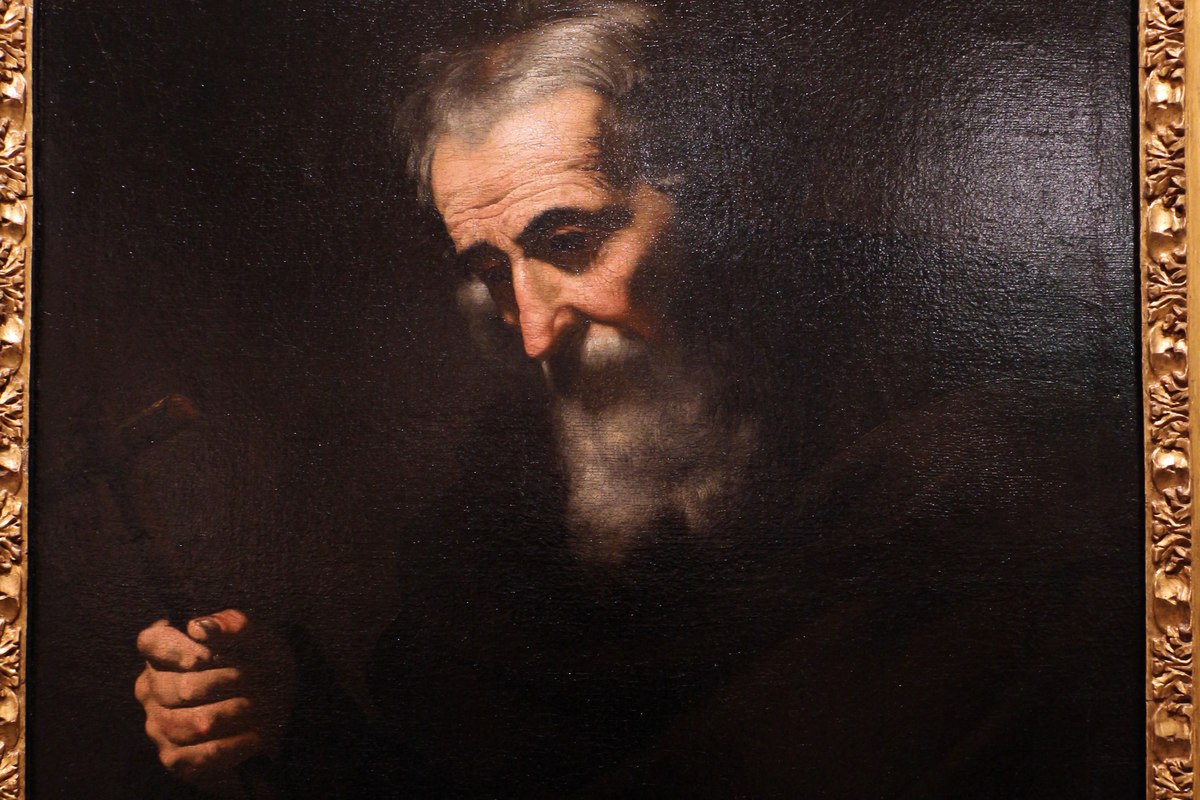
Saint John the Baptist

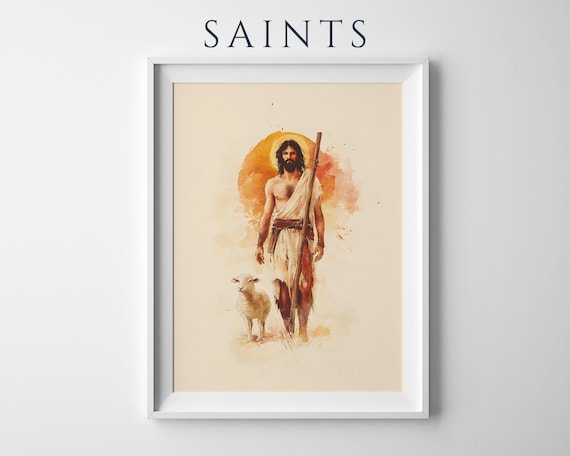
A birth already wrapped in miracle
John's story doesn't actually begin in the wilderness. Luke's Gospel opens with his parents, Zechariah and Elizabeth, an elderly priestly couple who had long given up hope of having a child. An angel appears to Zechariah while he is serving in the Temple and announces that Elizabeth will bear a son who is to be named John — news so unlikely that Zechariah questions it and is struck mute until the child is born. Elizabeth was also a relative of Mary, and when the pregnant Mary visits her at the Visitation, Luke records that the unborn John "leaped in her womb" at the sound of Mary's greeting — tradition has long read this as John recognizing, even before birth, the presence of Christ still hidden in Mary's womb.
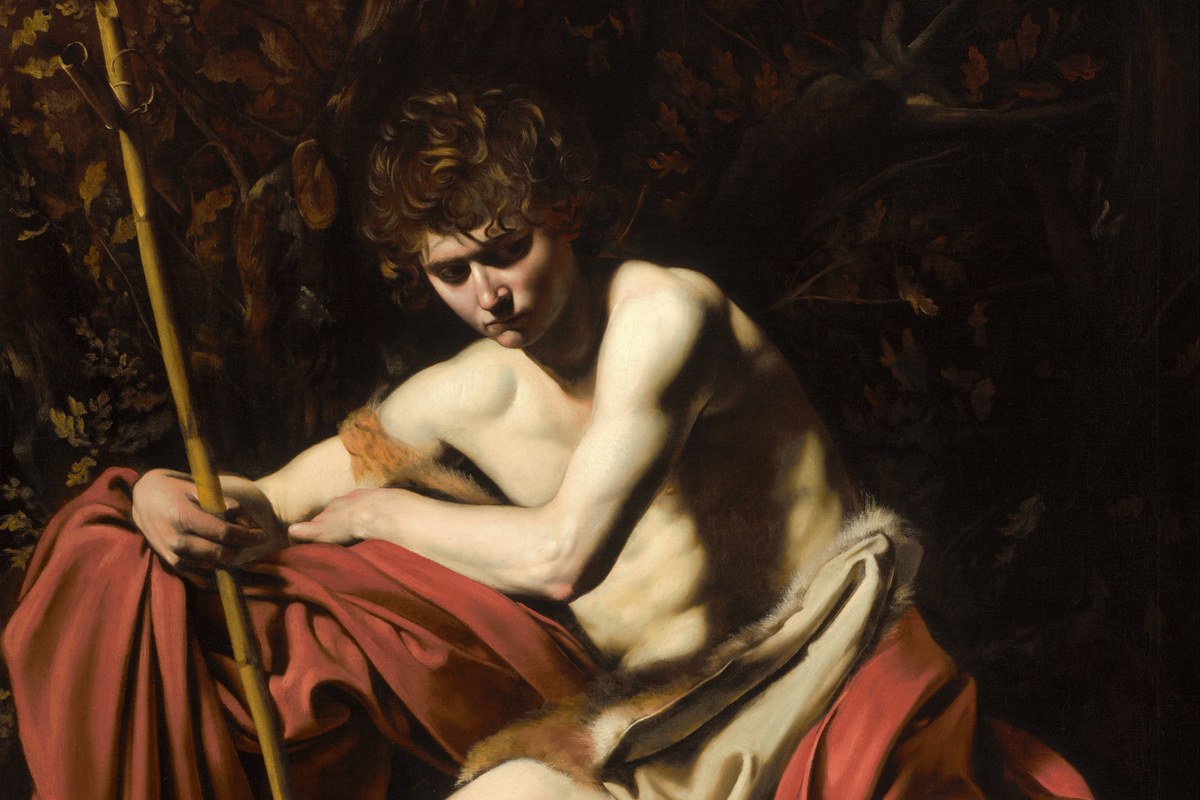
Caravaggio, "Saint John the Baptist in the Wilderness," c. 1604 — public domain.
A voice prepared in isolation
By the time John the Baptist appears in the Gospels as an adult, he has already spent an unspecified stretch of years living apart from ordinary society, in the wilderness of Judea, surviving on locusts and wild honey and wearing clothing of camel's hair. Nothing about his appearance or diet is incidental — it deliberately echoes the austere, uncompromising figure of the prophet Elijah, signaling to anyone familiar with the Hebrew Scriptures exactly what kind of figure was emerging before he says a word. Some ancient writers, including the Jewish historian Josephus, also describe a wilderness ascetic movement active in Judea around this period, and while nothing directly ties John to any specific group, his lifestyle would not have looked entirely unfamiliar to people living in that region and era.
A message that names its own smallness
When John does begin preaching, the content is blunt: "Repent, for the kingdom of heaven is at hand" (Matthew 3:2, RSV-CE). Matthew is careful to frame this not as John's own idea, but as the fulfillment of something written centuries earlier: "It was of him that the prophet Isaiah had spoken when he said: “A voice of one crying out in the desert, ‘Prepare the way of the Lord, make straight his paths.’" (Matthew 3:3, RSV-CE). The description is deliberately self-effacing — John isn't the message, he's the voice clearing space for one. That posture defines everything he does afterward.
His preaching drew enormous crowds to the Jordan River, people traveling out from Jerusalem and the surrounding towns of Judea to be baptized by him after confessing their sins — an unusual practice at the time, since ritual washing was common in Jewish life but this public, one-time act of repentance, administered by a single figure to penitents of every background, had no exact precedent. John also spoke sharply to those who assumed their ancestry alone guaranteed them God's favor, warning that "God can raise up children to Abraham from these stones" (Matthew 3:9, NABRE) — a reminder that the repentance he preached had to be real, not inherited.
Baptizing the one he pointed toward
The most theologically striking moment of John's ministry comes when Jesus himself arrives at the Jordan asking to be baptized. Matthew records that John tried to prevent it, saying he needed to be baptized by Jesus rather than the other way around, and Jesus persuading him to proceed anyway "to fulfill all righteousness" (Matthew 3:15, RSV-CE). The scene has puzzled and fascinated theologians for centuries, since Jesus, understood in Christian teaching to be without sin, had no personal need for a baptism of repentance — the Church has generally read the act instead as Jesus identifying himself fully with sinful humanity, and as the moment, described more fully in the baptism of Jesus, when the Spirit descended and a voice from heaven declared him God's beloved Son.
Pointing at someone else
The clearest picture of John's self-understanding comes at the moment Jesus approaches him at the Jordan. Rather than centering himself in the scene, John immediately redirects attention: "Behold, the Lamb of God, who takes away the sin of the world!" (John 1:29, RSV-CE). It's one of the most quoted lines in the entire Gospel of John, and it works precisely because of who says it — a man with his own considerable following, already known as a significant religious figure in his own right, using his authority in that moment for nothing except to point away from himself.
A death that matched the life
John's ministry ends as starkly as it began: imprisoned by Herod Antipas for publicly condemning his marriage, then beheaded after Herod's stepdaughter, prompted by her mother, requested his head as the price of a dance performed at a birthday banquet. There's no negotiated ending, no quiet retirement — just a direct, uncompromising life meeting a direct, uncompromising end. Christian art has often chosen to depict him not at that final moment but earlier, alone in the wilderness, exactly where his story began: a solitary figure doing the difficult, unglamorous work of getting ready for someone else's arrival.
A saint with two feast days
John holds an unusual distinction in the Church calendar: he's one of only a handful of saints whose birth, not just their death, is celebrated with its own feast, kept on June 24, roughly six months before Christmas, in keeping with Luke's timeline of the two pregnancies. A second feast, marking his beheading, falls on August 29. Jesus himself is recorded praising him in the strongest terms available — "Amen, I say to you, among those born of women there has been none greater than John the Baptist; yet the least in the kingdom of heaven is greater than he." (Matthew 11:11, RSV-CE) — a line the Church has taken seriously enough to give him a place in the liturgical calendar shared by very few other figures outside of Mary herself. He remains one of the most frequently painted saints in Christian art, usually shown gaunt, wrapped in animal skins, and pointing — toward a lamb, toward Jesus, or simply out of the frame, always directing the viewer's eye somewhere other than himself.
Trivia
What did John the Baptist preach?
Why is John connected to the prophet Isaiah?
What did John say when he saw Jesus approach?
How did John the Baptist die?
What is Saint John the Baptist the patron saint of, and when is his feast day?
Related Reading