The Holy Innocents

A king already known for killing his own
By the time the Magi arrived in Jerusalem asking about a newborn "King of the Jews," Herod the Great had already spent decades demonstrating exactly how he dealt with perceived threats to his throne — including threats from inside his own household. Herod had several of his own family members put to death over the course of his reign on suspicion of plotting against him, a level of paranoid cruelty that ancient historians, including the Jewish historian Josephus, documented at length. So when the Magi's question reached him, Herod's fear of a rival king wasn't an isolated overreaction; it fit a long-established pattern.
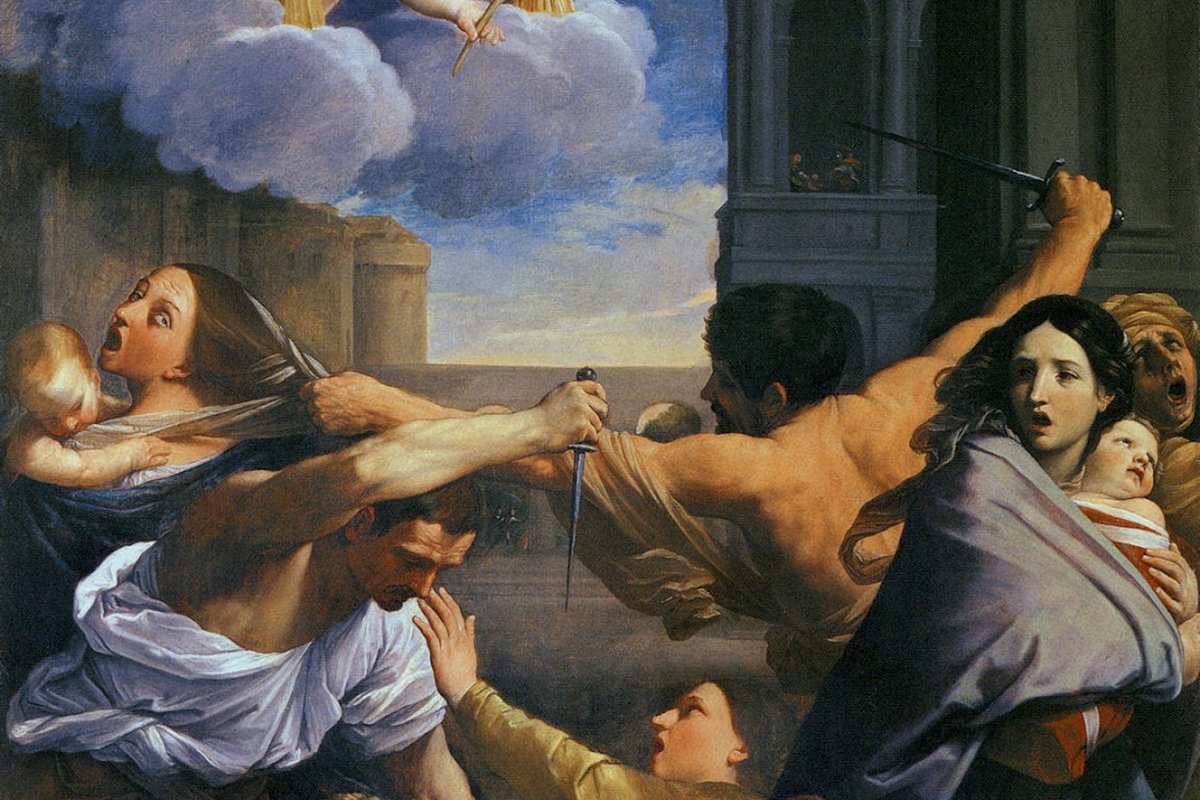
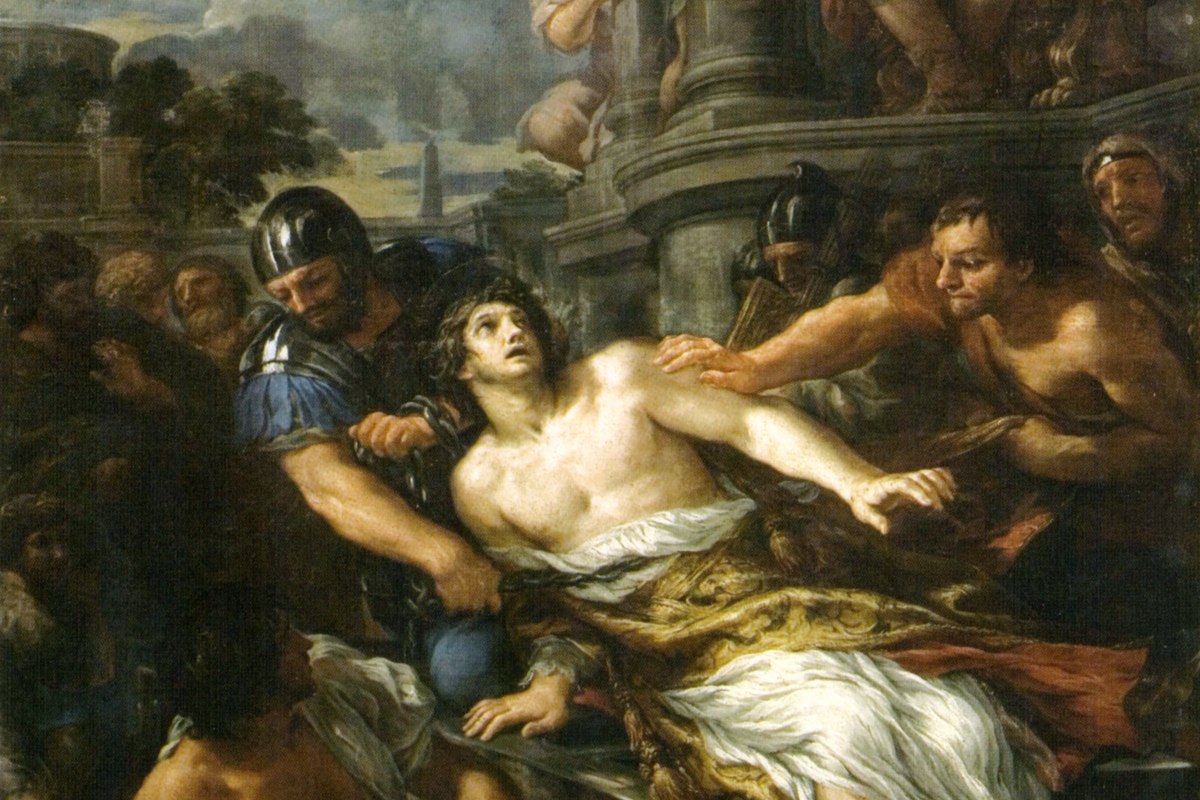
Guido Reni, The Massacre of the Innocents, 1611, Pinacoteca Nazionale di Bologna — public domain.
The order, in Matthew's own words
The Gospel of Matthew records what happened next directly. After the Magi, warned in a dream not to report back to Herod, returned home by another route, Matthew 2:16 (RSV-CE) states: "Then Herod, when he saw that he had been tricked by the wise men, was in a furious rage, and he sent and killed all the male children in Bethlehem and in all that region who were two years old or under, according to the time which he had ascertained from the wise men." It's a strikingly small-scale order in practical terms — Bethlehem was a modest town, not a major city — but devastating in what it demanded: the systematic killing of every young boy in the area, calculated by age against whatever timeline the Magi had given Herod for the child's birth.
Matthew's detail about calculating the age range "according to the time which he had ascertained from the wise men" reveals something specific about Herod's method: rather than a single wild lash-out, this was a deliberate, planned action based on information he'd extracted, indirectly, from the very visitors who had come to honor the child he now wanted dead. Scholars estimate Bethlehem's population in this period at only a few hundred people, meaning the number of boys actually killed, however horrifying, was almost certainly a small number in absolute terms — a detail that in no way diminishes the horror of the act, but helps explain why an event of this scale, confined to one small town, might not have registered prominently in the wider historical record of a ruler already responsible for far larger atrocities.
An escape that happened first
What makes the massacre even starker, in Matthew's telling, is that it was already too late by the time Herod gave the order. Matthew 2:13-15 records that an angel appeared to Joseph in a dream, warning him to take Mary and the infant Jesus and flee to Egypt, since Herod intended to search for the child and kill him. The Holy Family left before the soldiers ever reached Bethlehem — meaning the massacre Herod ordered to eliminate one specific child killed a town's worth of other families' sons without ever achieving what it was meant to accomplish.
Rachel weeping for her children
Matthew himself frames the massacre through an Old Testament lens, quoting the prophet Jeremiah directly. Matthew 2:18 (RSV-CE) reads: "A voice was heard in Ramah, wailing and loud lamentation, Rachel weeping for her children; she refused to be consoled, because they were no more" — a line originally from Jeremiah 31:15, describing the grief of the Babylonian exile centuries earlier, which Matthew applies to Bethlehem's grief as a way of placing this new atrocity within a much older biblical pattern of loss and lament.
What history outside the Gospel can and can't confirm
It's worth being honest about the limits of the historical record here. No source outside Matthew's Gospel — including Josephus, who wrote in considerable detail about Herod's cruelties, among them the killing of his own sons and wife — directly documents the massacre of the Bethlehem children. That silence has led many historians to treat the episode as historically unconfirmed rather than independently verified, even as many also note that it fits comfortably within what's otherwise known about Herod's willingness to kill perceived threats, including children of his own family, without hesitation. The honest position is that the event is plausible given everything else we know about Herod, and it's recorded as fact in Matthew's Gospel, but it isn't corroborated by an independent ancient historical source the way some other episodes of his reign are.
Martyrs "in fact though not in will"
The Church began venerating the children killed at Bethlehem as martyrs from a very early period, even though, obviously, none of them chose their deaths the way adult martyrs later would choose to die rather than renounce their faith. Christian tradition developed a specific theological formula to describe their status: martyrs "in fact though not in will" — meaning they gave their lives on account of Christ, targeted because of him, without being old enough to have made that choice themselves. It's a category unique to the Holy Innocents among the Church's martyrs, honoring genuine loss and genuine connection to Christ's story without pretending the children had any say in what happened to them.
Early Christian writers were themselves drawn to the paradox at the center of the story: infants too young to speak or believe anything, yet counted among the martyrs because of their proximity to Christ. Some patristic authors described them as the first flowers of the Church's martyrs, cut down before they had bloomed, a poetic image that became standard in later liturgical texts and hymns written for their feast. The Church places their commemoration deliberately within the Christmas octave, just days after celebrating Christ's birth, pairing the joy of the Nativity directly against the grief of Bethlehem's loss — a juxtaposition that Matthew's Gospel itself sets up by placing the massacre immediately after the story of the Magi's visit.
Their feast is kept on December 28, within the Christmas octave, and they're venerated today as patrons of children and foundlings.
Trivia
Who were the Holy Innocents?
What does the Bible actually say about Herod's massacre?
Is there historical evidence outside the Bible for the massacre of the Holy Innocents?
How did the Holy Family avoid the massacre?
In what sense are the Holy Innocents considered martyrs if they didn't choose to die for their faith?
You May Also Like
Related Reading