Saint George

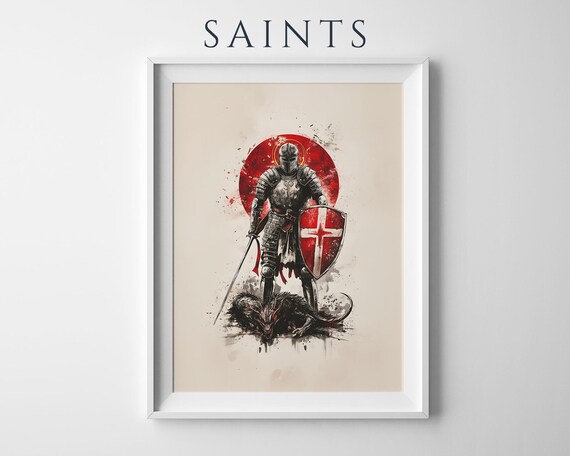
A soldier's death under Diocletian
Behind centuries of legend is a comparatively simple historical core: George was a Roman military officer of Cappadocian Greek descent, serving during the reign of Emperor Diocletian — a period marked by intense, empire-wide persecution of Christians. According to tradition, George was offered wealth and land in exchange for renouncing his faith, and refused. He was executed, most likely beheaded, on April 23, 303 AD, at Diospolis (also known as Lydda). That's the entirety of the earliest, most reliably attested version of his story: a soldier, an ultimatum, and a refusal that cost him his life.
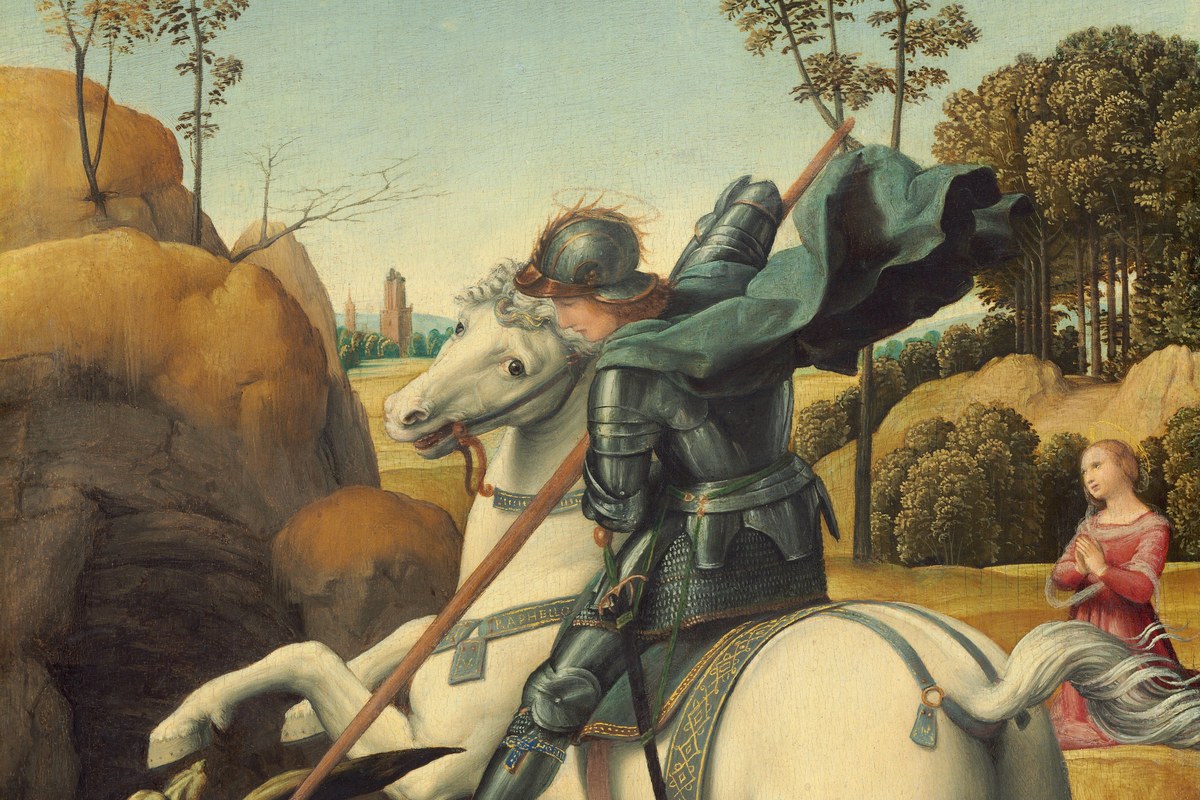
Raphael, "Saint George and the Dragon," c. 1506 — public domain.
Diocletian's persecution, which began in earnest in 303 AD, was among the most severe and systematic campaigns against Christianity in Roman history — churches were demolished, Scriptures confiscated and burned, and Christians in the military and civil service were specifically targeted and ordered to sacrifice to the Roman gods or lose their positions, and often their lives. George's situation was made sharper by his own rank: as an officer, he wasn't a marginal figure the empire could quietly overlook, but someone whose public refusal carried weight precisely because of the status he was giving up. Early accounts describe his martyrdom as unusually prolonged, with various tortures attempted before his execution — details that vary considerably between the different early versions of his Passion, and that scholars treat with caution, but that reflect how seriously the earliest Christian communities regarded the manner of his death.
A dragon that arrived 800 years later
The dragon has no place in that earliest account. It first appears in a 12th-century prologue added to the Greek Passion of George — roughly eight centuries after his actual martyrdom — and became, over time, the detail most people now associate with his name. The legend tells of George rescuing a princess and an entire city by slaying a dragon that had been terrorizing them, a story that spread widely through medieval Europe and became a fixture of Christian art and chivalric imagination, this article's own hero image included. But it's worth being clear-eyed about the layer of legend versus the historical man: the courage that actually defined George's life was the quieter, harder kind — standing firm under a real emperor's real threat, with no dragon required.
The story reached its widest medieval audience through the Golden Legend, a 13th-century collection of saints' lives compiled by Jacobus de Voragine, which became one of the most copied and read books of the entire Middle Ages. In that telling, a dragon menaces a city near Silene in Libya, demanding sheep and eventually human victims chosen by lot, until the lot falls on the king's own daughter. George arrives, subdues the dragon, and offers to kill it on the condition that the city convert to Christianity — a story clearly meant less as history and more as a symbol: the dragon representing evil or paganism, and George's lance representing the triumph of faith over it. The Catholic Church has never treated the dragon story as historical fact, and it plays no part in the official liturgical texts for George's feast day, which focus solely on his martyrdom.
Patron of England, and of far more than England
George's association with England dates specifically to the 14th century, when King Edward III (r. 1327-77) named him patron of the Order of the Garter, England's most prestigious order of chivalry — a decision that locked in his status as England's national patron saint from that point onward. Before George, England's patron had been Edward the Confessor; the switch reflected the growing popularity of crusader-era saints among the English nobility, many of whom had encountered George's cult firsthand while fighting in the Holy Land, where his veneration was already old and well established among Eastern Christians. His red cross on a white field became the flag of England and forms part of the Union Jack today, and his feast day, April 23, is still marked with parades and festivities in towns across the country, even though it isn't a public holiday.
What's less commonly known is how far beyond England his patronage extends: Portugal, Bosnia and Herzegovina, Bulgaria, Georgia, Ukraine, Malta, Ethiopia, Catalonia and Aragon, the city of Moscow, and Beirut have all historically claimed him as well — an unusually broad reach for one soldier's story, one that long predates the dragon that made him famous. Georgia's very name in most European languages is popularly, though not definitively, linked to his cult, and the country's flag likewise carries his red cross. He's also widely invoked as patron of soldiers, of farmers (from an association with the Greek root of his name, "georgos," meaning "worker of the earth"), and of those seeking protection from plague and skin diseases — a reach that reflects centuries of parallel, independently developing devotion across a remarkably wide swath of Christian Europe and the Middle East.
Iconography that outlived the empire that killed him
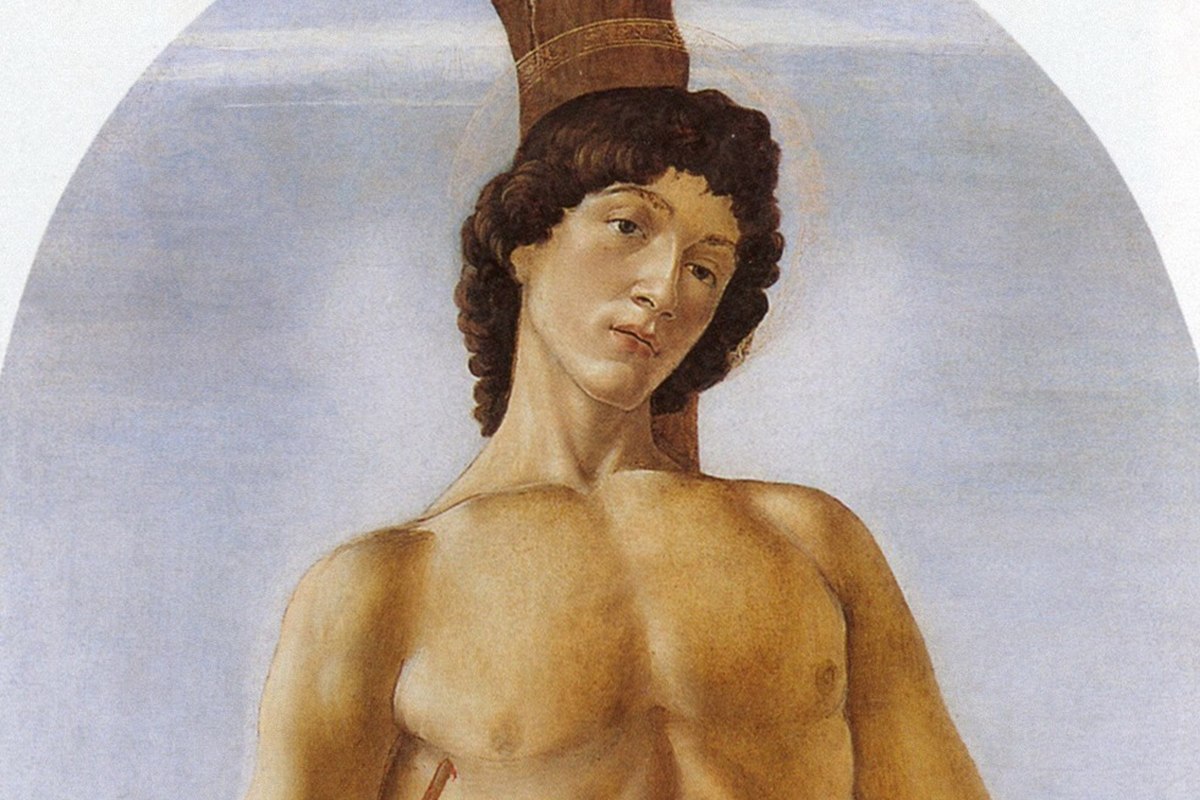
Long before Raphael painted the version reproduced as this article's hero image, George had already become one of the most instantly recognizable figures in Christian art — nearly always shown as a mounted knight in armor, lance lowered, spearing a dragon beneath his horse's hooves. Byzantine icon painters were depicting the scene by at least the 11th century, and the image spread from Eastern to Western Christian art over the following centuries, appearing in everything from parish church frescoes to the coinage of English monarchs. Related figures venerated for similar military martyrdom, like Saint Sebastian, share George's status as a soldier-saint of the early Church, though it's George's dragon, more than any other single image, that has carried Christian iconography into places — flags, coats of arms, football clubs — far removed from its original devotional purpose.
Trivia
Who was the historical Saint George?
Is the dragon-slaying story part of his earliest legend?
Why is Saint George the patron saint of England?
What other countries claim Saint George as a patron?
Related Reading