Pope Saint Damasus I

An election that turned violent
Damasus was born around 304, likely in Rome, and had risen to serve as a deacon under Pope Liberius by the time Liberius died in 366. What followed was one of the ugliest papal successions in Church history. Both Damasus and a rival deacon, Ursinus, were put forward as pope by their respective supporters, and the dispute didn't stay confined to argument. Ammianus Marcellinus, a pagan Roman historian with no particular reason to favor either side, recorded that fighting between the two factions left 137 people dead in a single day at the Basilica of Sicininus. Damasus's claim ultimately prevailed and he was consecrated pope, but the bloodshed that accompanied his rise to the office remains a documented, uncomfortable part of his story — one worth stating plainly rather than smoothing over.
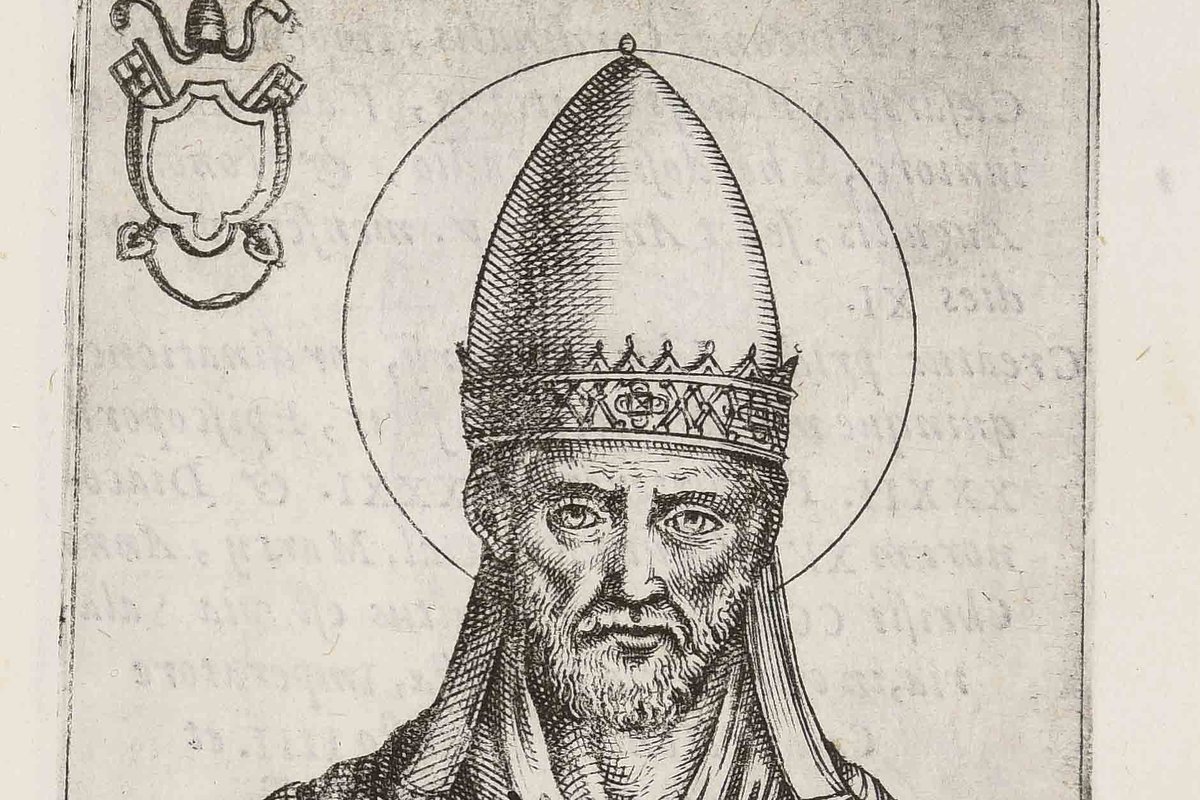
Giovanni Battista de' Cavalieri, engraved portrait of Pope Damasus I, from "Pontificum Romanorum effigies," Rome, 1580 — public domain.
Defending doctrine through church councils
Once in office, Damasus spent much of his eighteen-year papacy confronting theological disputes that threatened to split the Church he now led. He convened synods that formally condemned Apollinarianism — a teaching that denied Christ had a complete human soul — and Macedonianism, which denied the full divinity of the Holy Spirit. Both positions had real followings in the 4th-century Church, and Damasus's councils helped cement the doctrinal boundaries that would define orthodox Christian belief about Christ's nature and the Trinity going forward.
The commission that outlasted everything else he did
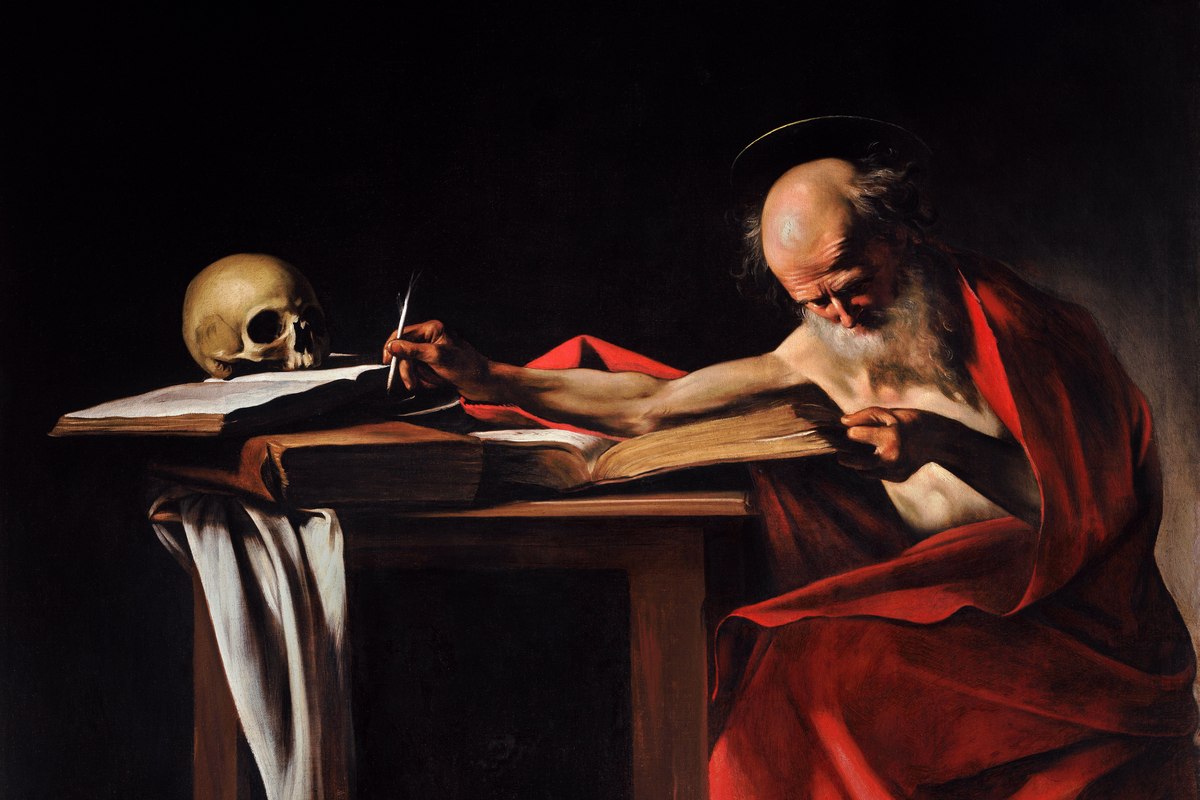
Damasus's single most consequential act as pope had nothing to do with councils or politics. By the early 380s, the Latin Bible circulating across the Western Church existed in a tangle of inconsistent, competing translations, none of them fully reliable. In 382, Damasus commissioned his secretary — a scholar named Jerome — to fix the problem by producing a single, accurate, standardized Latin version of Scripture. Jerome would go on to spend more than two decades on the project, eventually translating the Old Testament directly from Hebrew rather than the Greek Septuagint most earlier translations relied on. The result, later known as the Vulgate, became the Western Church's standard biblical text for well over a thousand years — a legacy set in motion entirely by Damasus's initial decision to commission it.
Poetry for the martyrs beneath Rome
Damasus also took a personal interest in the catacombs ringing Rome, where generations of early Christians, including many martyrs, had been buried during the centuries of persecution. He restored and clearly marked a number of these underground burial sites, and, being something of a poet himself, composed epigraphic verse — inscriptions carved in elegant Latin — honoring the martyrs entombed there. Several of these inscriptions survive today, giving historians some of the best surviving evidence for how the early Church remembered and venerated its own dead.
A saint without the usual trappings
Damasus died in 384 and is remembered with a feast on December 11. He was never declared a Doctor of the Church, unlike Jerome, the scholar he set to work on the Vulgate, and no widely established patronage attaches to his name the way it does for many other saints. His claim to sainthood rests almost entirely on the documented record of what he actually did as pope — a rarer and in some ways more solid foundation than legend, for a period of Church history where solid documentation is often hard to come by.
Rome after Constantine, and a Church still finding its footing
Damasus's papacy fell during a genuinely unsettled period for the Roman Church. Christianity had only been legalized within living memory under Constantine, and paganism, though losing state favor, still claimed real influence among Rome's old aristocratic families and in public life generally. Damasus worked to make the papacy itself a more visible and authoritative center of the Western Church during this transition, cultivating relationships with the imperial court and positioning Rome, as the city associated with the martyrdoms of both Peter and Paul, as carrying unique authority among the Church's major sees. His interest in publicly marking and honoring the catacomb martyrs fits into this same larger project: connecting the institutional authority he was building to the visible memory of Rome's own martyred dead, at a moment when Christian Rome was still working out exactly what its relationship to the city's older pagan identity would be.
Jerome's difficult years in Rome
Damasus's relationship with Jerome deserves a closer look, since the Vulgate commission is Damasus's single most consequential legacy. Jerome served as the pope's secretary and close advisor for several years in Rome, during which the two worked together not only on the fledgling Bible translation project but on Damasus's own correspondence, since Jerome's command of Greek and Latin scholarship exceeded that of most churchmen in the city. Jerome's blunt, often combative personality made him unpopular in parts of Roman clerical society, and after Damasus died in 384, Jerome's position in Rome became precarious enough that he left the city entirely, eventually settling in Bethlehem, where he completed the bulk of the Vulgate translation over the following decades. In that sense, Damasus set in motion a project whose most demanding work happened only after his own death, carried out by a scholar he had personally recruited and defended during the years both men spent together in Rome.
The catacomb inscriptions as historical evidence
Damasus's verse inscriptions in the catacombs are worth appreciating on their own terms, beyond their devotional purpose. Composed in careful classical Latin and often commissioned in a distinctive, elegant script created specifically for the purpose by a calligrapher named Furius Dionysius Filocalus, these inscriptions gave later archaeologists and historians some of the earliest reliable evidence for which martyrs were buried where in Rome's vast underground cemetery network, since many of the original tombs had lost any other identifying marker over the centuries. Fragments of Damasus's inscriptions, some rediscovered only in the nineteenth century, continue to help scholars map and identify specific catacomb sites today — a legacy that turns out to be simultaneously devotional poetry and, unintentionally, a durable historical record.
Trivia
How did Damasus become pope?
Why is Damasus most remembered today?
What did Damasus do about heresy during his papacy?
What did Damasus do for Rome's catacombs?
What is Damasus's feast day, and is he a patron saint of anything?
You May Also Like
Related Reading