Pope Saint Fabian

An election decided by a bird, not a ballot
Rome in 236 AD needed a new bishop. Pope Anterus, Fabian's immediate predecessor, had died after a papacy lasting barely a month — one of several unusually short pontificates in this turbulent stretch of the early Church's history, a period when Christian communities in Rome operated with only intermittent official tolerance and leadership could turn over with little warning. The city's clergy had assembled to choose Anterus's successor from among the obvious contenders — experienced priests with real standing in the community. Fabian wasn't one of them. He'd simply come in from his farm outside the city, likely for reasons that had nothing to do with church politics, and found himself standing in the crowd on election day.
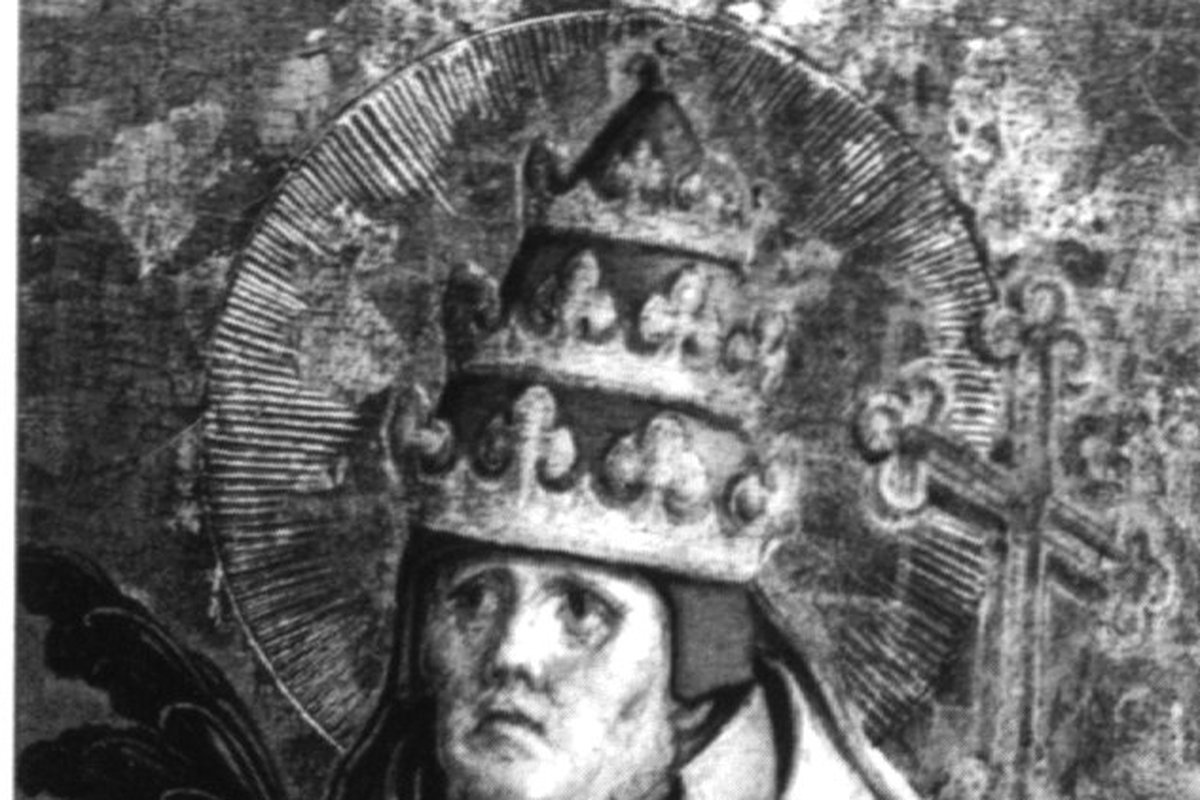
Master of Messkirch, "Heiliger Fabian als Papst und Märtyrer," c. 1535/40, Kunstsammlungen der Veste Coburg — public domain.
The historian Eusebius, writing in the following century with access to earlier Roman church records, reports that a dove flew down out of nowhere and landed on Fabian's head — and stayed there. Eusebius draws a deliberate echo here to the Gospel accounts of a dove descending at Christ's baptism, a symbol widely understood in early Christian writing as representing the Holy Spirit; whether the assembled clergy in 236 AD consciously made that same connection in the moment or historians simply frame the story that way in hindsight, the effect was the same. The assembly, reading it as a sign that the Holy Spirit had already made the choice for them, elected him unanimously and immediately. It's one of the strangest and most abrupt promotions in the Church's early history: a man arrives a farmer and leaves a pope.
Building the administrative bones of the early Roman church
Whatever the circumstances of his election, Fabian ran the job seriously for the fourteen years he held it — an unusually long and stable pontificate for an era when Christian leaders in Rome were operating under the constant threat of persecution, and one of the longest reigns of any pope before Constantine's later legalization of Christianity made the office considerably safer to hold. He divided the city into seven ecclesiastical districts, each placed under the care of a deacon responsible for organizing charity to the poor, maintaining records, and looking after that district's Christian community. That structure gave Rome's still largely informal Christian community something closer to a genuine local administration, coordinating relief for widows, orphans, and the poor across a city that, outside of periods of active persecution, was growing steadily in Christian population. It was administrative groundwork that later popes would build on for generations. He also sent seven bishops out from Rome into Gaul as missionaries — men later remembered in French tradition as the "apostles to the Gauls," among them Saint Denis of Paris and Saint Gatianus of Tours — helping plant the structures of the Church in territory well beyond Italy, a missionary effort whose effects on the later Christianization of Gaul are still traceable in the dedications of some of France's oldest cathedral sees.
Caught at the start of a new wave of persecution
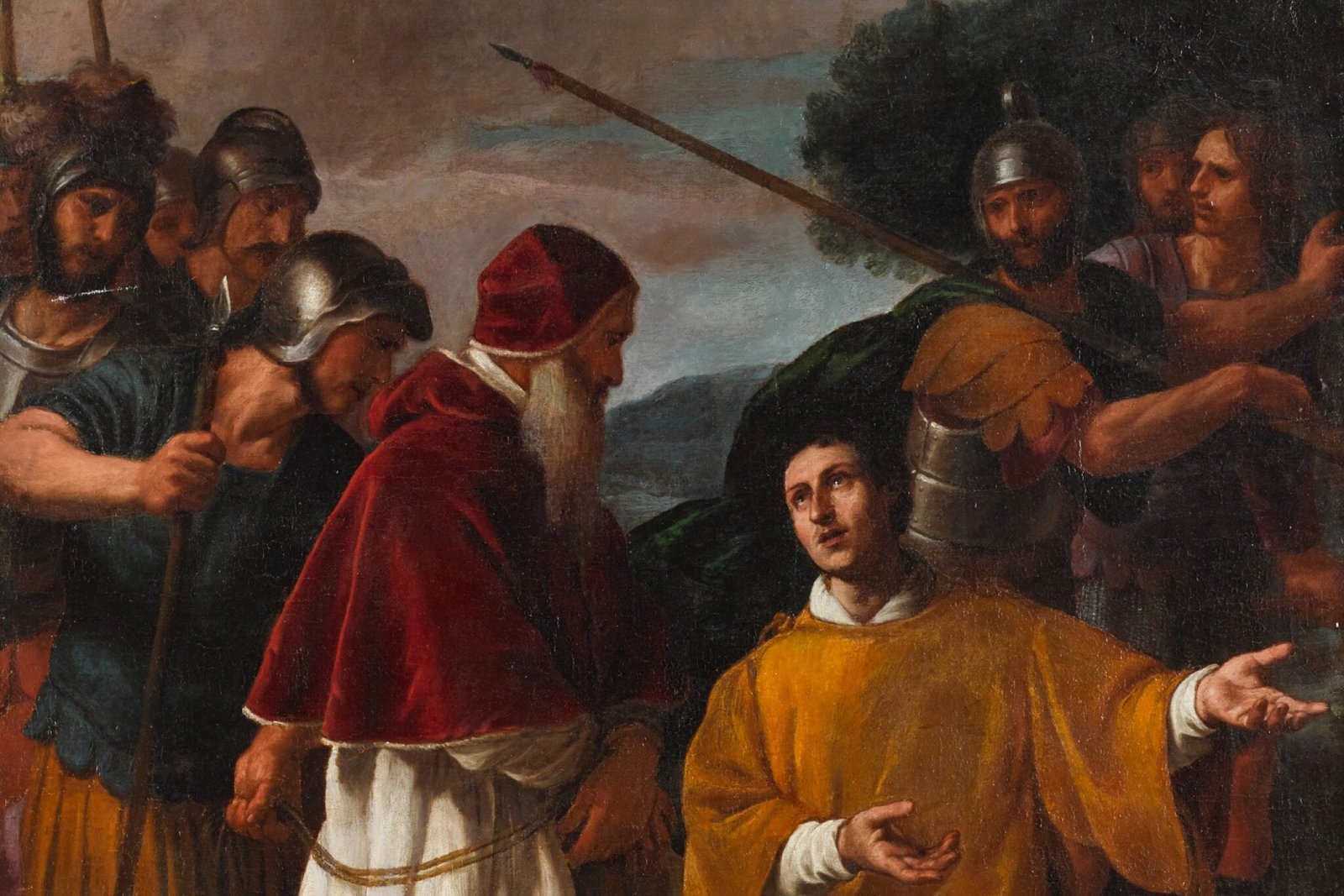
Fabian's fourteen relatively stable years ended abruptly in January 250 AD, when the Emperor Decius launched an empire-wide persecution aimed squarely at the Church's leadership, on the theory that removing the bishops would collapse the Christian communities beneath them. Decius's edict required citizens throughout the empire to perform a public sacrifice to the Roman gods and obtain a certificate proving they had done so, a policy that made avoiding detection as a practicing Christian far harder than it had been under earlier, more sporadic waves of persecution. Fabian, as the most visible Christian leader in the empire's capital, was among the first targeted for arrest, and he died within weeks — most likely in prison rather than through public execution, though ancient sources don't give a detailed account of his final days.
His death on January 20, 250, opened a period during which Rome's bishopric would sit vacant for over a year, since electing a successor under Decius's persecution was too dangerous to attempt safely — the position of pope was, in effect, too visible and too dangerous a target to fill while the persecution remained at its height. Cyprian of Carthage, a bishop in North Africa writing during this same persecution, described Fabian's death in terms that stressed the honor of his martyrdom, part of a wider body of correspondence among bishops of the period grappling with how the Church should respond to the crisis Decius had created.
A saint recognized long before the modern process existed
Fabian is venerated today as a martyr and one of the early popes canonized not through any formal Vatican process — which didn't yet exist in the 3rd century — but through the ancient practice of the Roman church recognizing its own martyrs by popular acclaim shortly after their deaths. His feast is kept on January 20, the traditional date of his martyrdom. Some later reference lists mistakenly duplicate him as a separate "Fabian II" — there was only ever the one Fabian, elected by a dove and killed at the opening of one of Rome's harshest persecutions.
Trivia
Was Fabian really just an ordinary layman before he became pope?
What did Fabian actually accomplish as pope?
How did Pope Fabian die?
Why is he sometimes listed as 'Fabian II' in some sources?
When is Saint Fabian's feast day?
You May Also Like
Related Reading