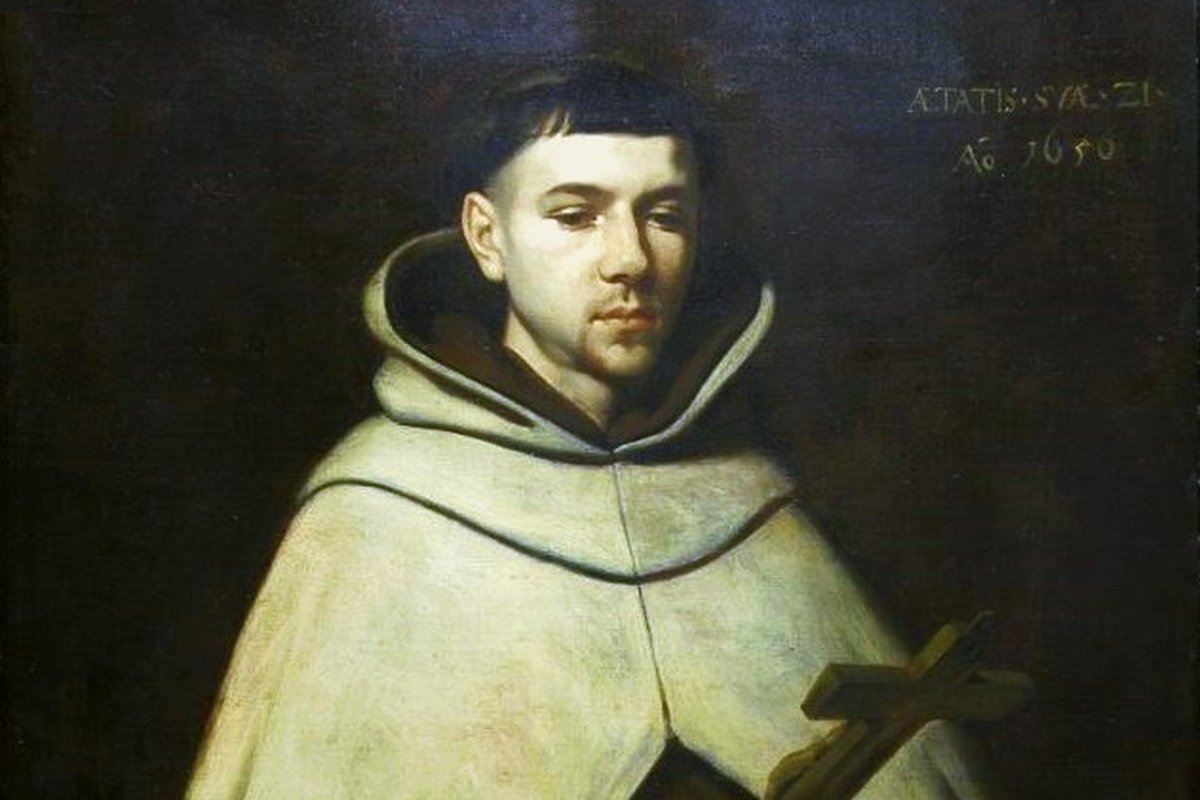
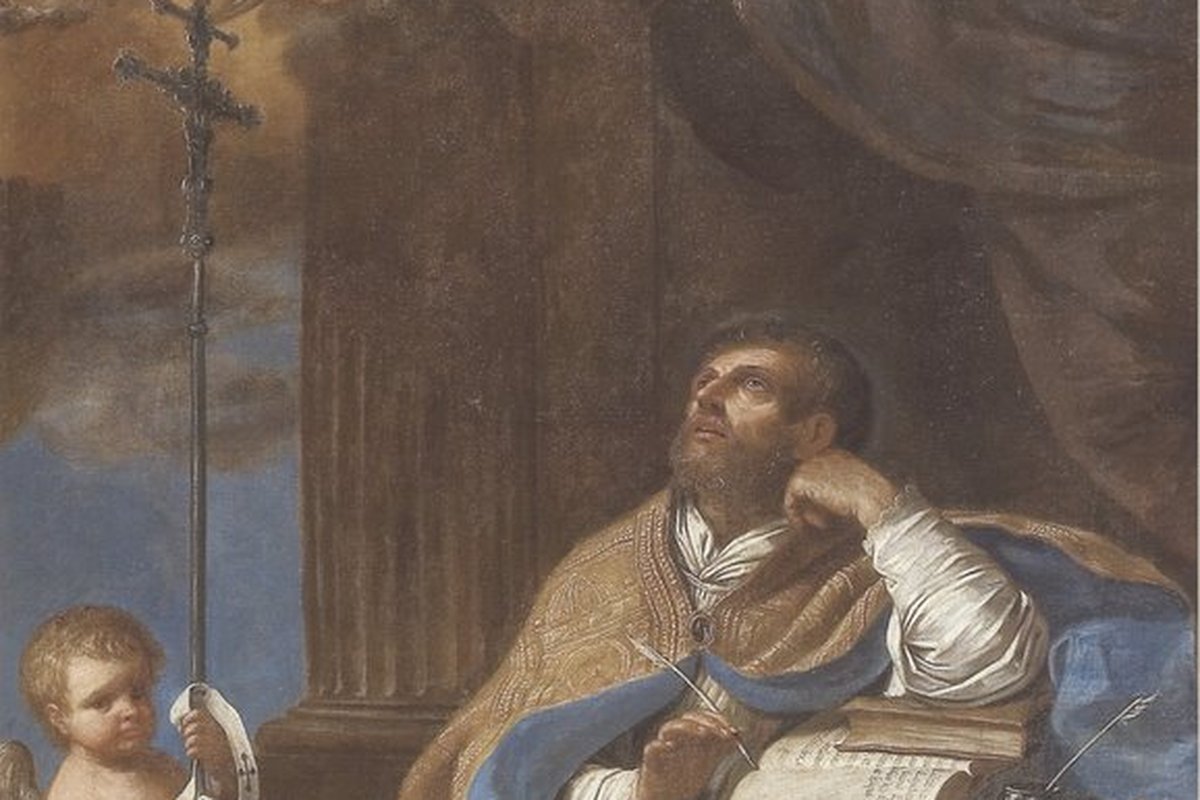
Pope Leo the Great

A pope for a collapsing empire
Little is known for certain about Leo's early life — even his birthplace is uncertain, though the ancient Liber Pontificalis names Tuscany and gives his father's name as Quintianus. By the time he was elected pope in 440, he was already an experienced Roman deacon who had handled sensitive diplomatic missions for his predecessors, including a mission to Gaul to help settle a dispute between two rival Roman generals — a sign of how much trust the Roman Church had already placed in his judgment even before he held its highest office. He inherited the office at one of the worst possible moments to hold it: the Western Roman Empire was disintegrating around him, invasions and civil breakdown were becoming routine, and the Eastern Church was locked in a bitter dispute over how to describe Christ's divine and human natures. Leo spent his twenty-one years as pope steering the Roman Church through both crises at once.
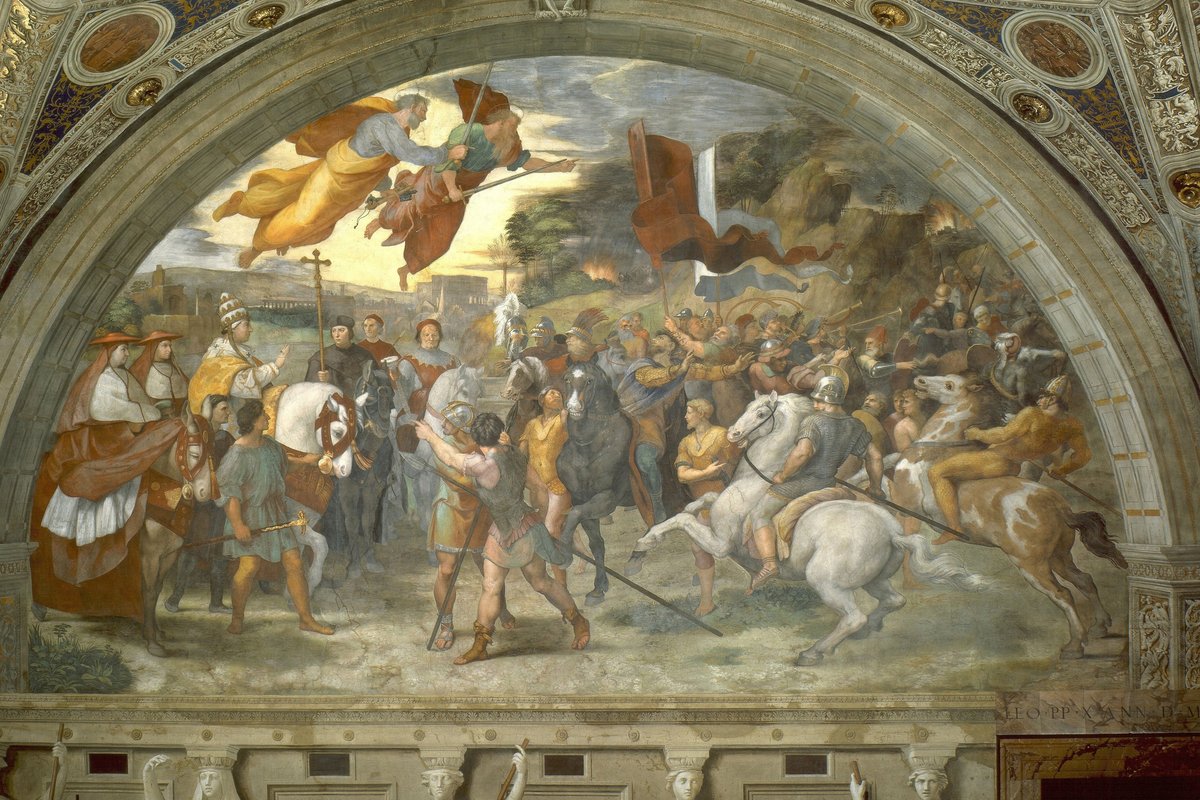
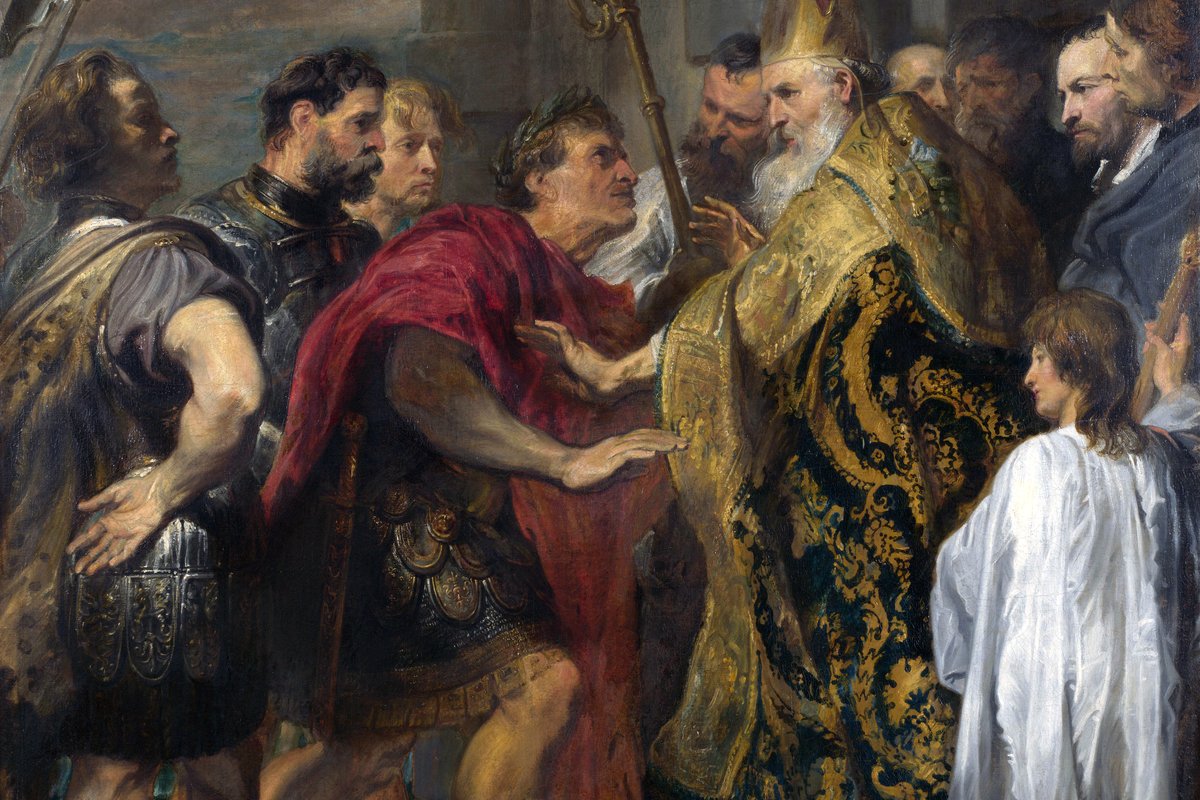
Raphael, The Meeting of Leo the Great and Attila, 1514, Stanza di Eliodoro, Vatican Museums — public domain.
Leo was also a prolific preacher, and roughly a hundred of his sermons survive, delivered to the people of Rome on major feasts throughout the liturgical year. They give a rare, direct sense of how a pope explained core Christian teaching to an ordinary congregation in the mid-5th century — clear, carefully structured, and often addressing the practical anxieties of a city that could see its own world visibly falling apart around it, from barbarian incursions to the slow collapse of Roman civil administration in the West.
The meeting that stopped an invasion
The more famous crisis came in 452. Attila the Hun's forces had already sacked Aquileia and several other northern Italian cities and were advancing toward Rome itself when Leo, heading a small delegation that included senior Roman officials, rode out to meet him near the Mincio River. No contemporary account records exactly what was said between them. What's certain is the outcome: Attila withdrew his army and left Italy shortly afterward, for reasons historians still debate — disease and famine among his own troops, pressure from the Eastern Roman army, or a negotiated tribute are all plausible factors alongside whatever Leo personally said. A later legend, popular enough that Raphael painted it into a Vatican fresco more than a thousand years afterward, adds that Attila described seeing two armed figures — Saints Peter and Paul — standing behind Leo with swords drawn. It's a striking image, and worth being clear about: no source from Leo's own lifetime records it. It's pious embellishment layered onto a real, much simpler meeting between an unarmed pope and the most feared warlord in Europe.
Three years later, in 455, Leo faced a second invasion with far less success — he met the Vandal king Genseric outside Rome's gates and couldn't talk him out of sacking the city, though tradition credits Leo with at least persuading Genseric to spare Rome's churches and refrain from murder and arson during the pillage, limiting the destruction and brutality compared to what a fully unrestrained sack might have brought. Taken together, the two episodes capture something essential about Leo's papacy: a man with no army and no political power beyond his own office, repeatedly stepping directly between the city of Rome and the warlords threatening to destroy it, with only partial success but real, tangible effect each time.
A tome that shaped a council
Leo's other lasting achievement was written, not spoken. In 449, a monk named Eutyches was teaching that Christ's human nature had effectively been absorbed into his divine nature, blurring the two into one — a position called Monophysitism, from Greek words meaning "one nature." A hastily convened council that same year, later branded the "Robber Council" of Ephesus for the intimidation and violence used to force through its conclusions, had actually sided with Eutyches, leaving the wider Church's teaching on Christ in real doctrinal disarray. Leo responded with a letter to Flavian, Bishop of Constantinople, that came to be known simply as the Tome of Leo. In it, he laid out the classic formulation still used today: "both natures retain their own proper character without loss," united in a single person without either nature swallowing the other. When the wider Church gathered at the Council of Chalcedon in 451 to settle the dispute and overturn the "Robber Council," the assembled bishops adopted the Tome's reasoning as the backbone of their own official definition of Christ — a rare case of one bishop's personal letter becoming the basis for an entire ecumenical council's doctrine. According to a tradition recorded by later chroniclers, the bishops at Chalcedon greeted the reading of Leo's letter with the acclamation "Peter has spoken through Leo," a line that, whatever its precise historical accuracy, captures how completely his reasoning came to define the council's outcome.
Doctor of the Church
Leo died in 461 and was buried in St. Peter's Basilica, one of the first popes given that honor. His feast is kept on November 10, and in 1754 Pope Benedict XIV named him a Doctor of the Church — one of only a handful of early popes, alongside Gregory the Great, remembered by history with the title "the Great" attached to his name at all.
Only two popes in the Church's entire history have carried that title — Leo and Gregory, separated by roughly a century and a half — and the overlap in their stories runs deeper than the shared honorific. Both men governed Rome during periods when the city's civil authority had effectively collapsed, and both found themselves acting as something closer to a civic protector than a purely spiritual leader, negotiating directly with hostile foreign powers because no one else with functioning authority remained to do it. Leo's specific contribution, though, was as much intellectual as diplomatic: the Tome that bears his name still underlies how the Catholic Church, and most of the rest of Christianity, defines who Christ is — one divine person holding two complete and distinct natures together without confusion, a formula reached at Chalcedon and never seriously displaced since.
Trivia
Who was Pope Leo the Great?
What happened when Leo met Attila the Hun?
Did Leo really see a vision of Saints Peter and Paul during the meeting?
What is the 'Tome of Leo' and why does it matter?
Why is Leo called a Doctor of the Church?
You May Also Like
Related Reading