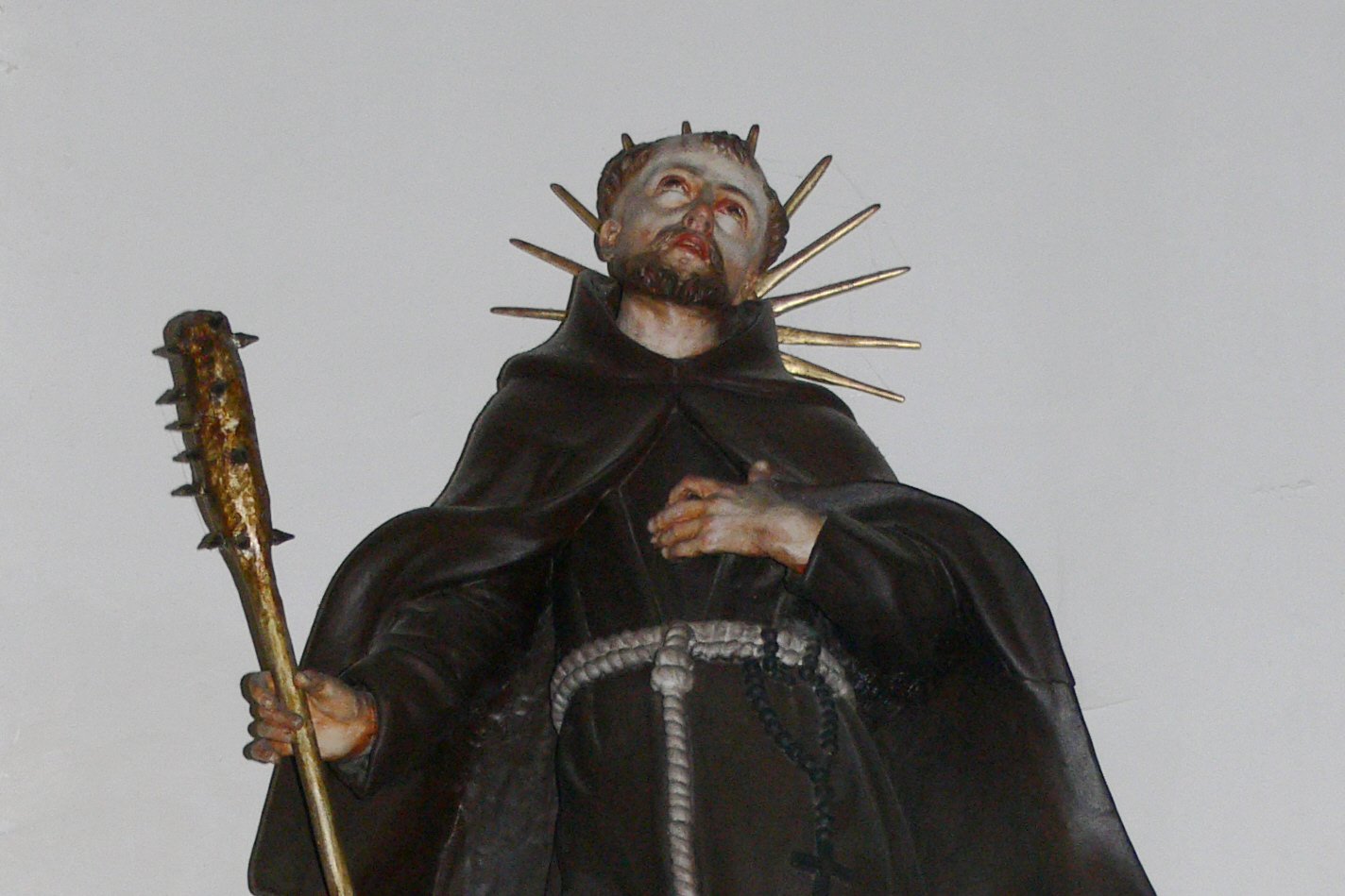
Saint Adalbert of Prague

A bishop who kept walking away
Adalbert was born in 939 into a noble Bohemian family, and nothing about that background predicted a life spent in conflict with the very diocese he was ordained to lead. He was educated in Magdeburg under Archbishop Adalbert of Magdeburg, from whom he took his name at confirmation — his birth name was Vojtěch — and he returned to Bohemia already formed by a school of continental reform-minded clergy who took a much stricter view of Christian conduct than most of Bohemia's still half-Christianized nobility was used to.
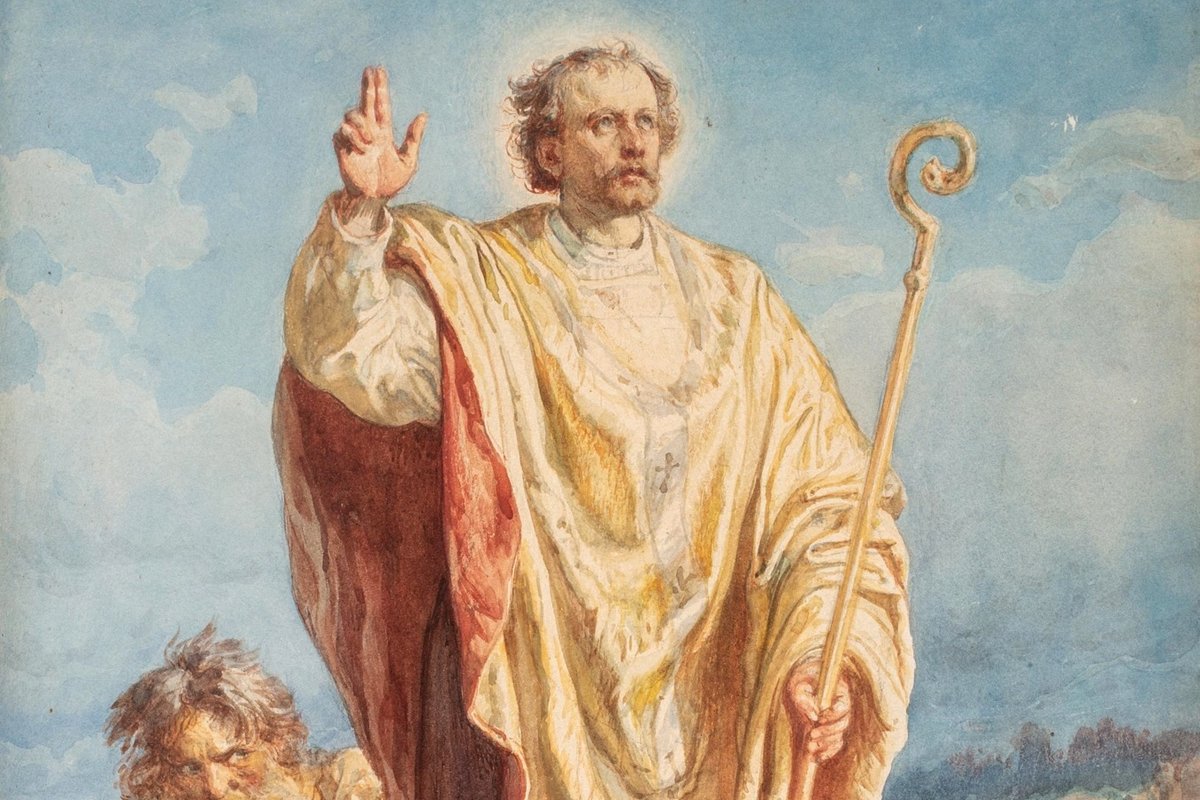
Wojciech Gerson, Święty Wojciech (Saint Adalbert), 1887, watercolor — public domain.
As Bishop of Prague, he pushed for reforms that put him at odds with a resistant clergy and a nobility unwilling to give up practices he opposed, including the slave trade and polygamy. The slave trade in particular was a genuinely lucrative business for parts of the Bohemian nobility at the time, with captives sold onward through Prague to buyers as far away as the Islamic world, and Adalbert's public opposition to it made him powerful enemies well beyond questions of personal piety. Twice, the friction grew bad enough that Adalbert simply left — withdrawing to monastic life in Rome rather than staying to fight a losing battle. Twice, he was persuaded or pressured to return to Prague, once by direct papal instruction. The second time he left, though, he didn't go back at all. Instead, he turned his attention outward, to a mission field far rougher than anything Bohemia had offered him: the still-pagan Prussians along the Baltic coast.
Death among the Prussians
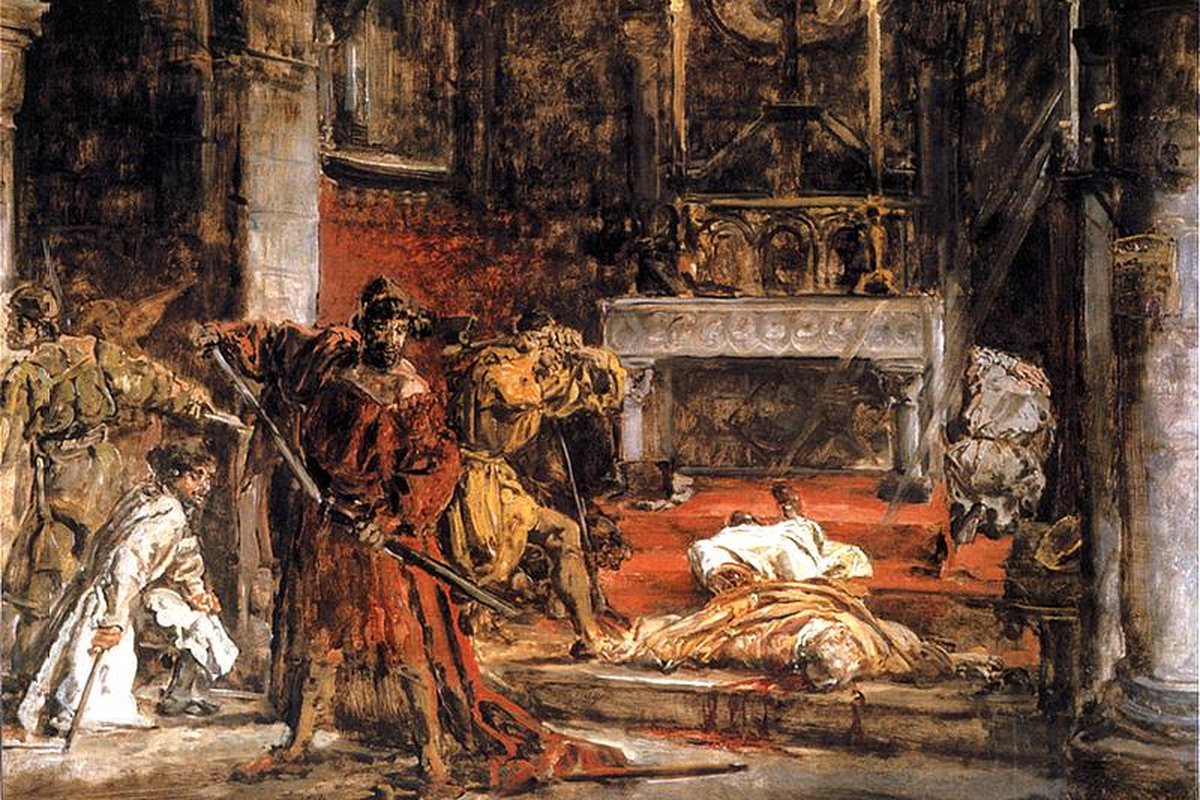
The missionary journey that took Adalbert to Prussia in 997 was, by any account, a dangerous undertaking — an unarmed Christian bishop preaching to a population with no particular interest in his message and every reason to view him as a trespasser. He traveled with a small group of companions, including his half-brother Radim, and by most accounts made only limited progress before local Prussians, wary of a foreign missionary crossing into what they regarded as sacred ground without permission, moved against the group. According to the Catholic Encyclopedia, Adalbert was killed on April 23, 997, in the Sambia region of the Baltic coast, struck down while at prayer. Tradition doesn't settle on the weapon — some accounts say an axe, others a spear — but the aftermath is consistently grim: his head was severed and set on a stake, a warning as much as an execution. It was the kind of death that could easily have gone unrecorded outside the small circle who knew him. Instead, it became one of the defining martyrdom stories of the early medieval Church.
According to tradition, Duke Boleslaw I of Poland ransomed Adalbert's body from the Prussians afterward, reportedly paying its weight in gold, and had the remains brought to Gniezno, which became a major pilgrimage site almost immediately. That act had lasting political consequences well beyond religious devotion: the presence of a canonized martyr's relics gave Gniezno enormous prestige, and it was there, in the year 1000, that Holy Roman Emperor Otto III made a celebrated pilgrimage that helped elevate Gniezno to the status of an independent archbishopric — a milestone in Poland's development as a fully organized Christian kingdom in its own right.
A saint made in two years
What happened next is genuinely unusual. Sainthood in the early medieval Church typically arrived through slow-building popular veneration, sometimes recognized formally only generations after a person's death. Adalbert's case moved at a completely different speed: Pope Sylvester II canonized him in 999, a mere two years after he died on that Baltic beach. Whatever combination of political urgency, personal reputation, and genuine popular devotion drove that timeline, the result was a saint's cult that spread almost immediately across exactly the region his death had touched — Bohemia, Poland, and the wider Baltic world all claimed him within a generation.
Patron of a crossroads of nations
Few saints end up claimed by as many different peoples as Adalbert. He's honored as a patron of Bohemia and the modern Czech Republic, where his time as bishop of Prague remains central to his legacy; of Poland, where his relics were brought after his death and where his cult took deep root; of Prussia, the mission field where he died; and, notably, of Hungary — a patronage that reflects real historical contact, since Adalbert is traditionally connected to the early Christianization of Hungary in the years before Saint Stephen of Hungary's reign. Tradition holds Adalbert personally baptized or influenced the young Vajk, the Hungarian prince who would later be crowned as Stephen, Hungary's first Christian king — a direct link between Adalbert's brief, restless ministry and the founding of an entire Christian kingdom.
For a single bishop who couldn't hold onto his own diocese in life, it's a striking afterlife: a saint whose name still marks the overlapping, often contested borderlands of Central Europe. His feast is kept on April 23, the date of his death. Prague's own great cathedral, St. Vitus, houses a chapel dedicated to him, and his image appears on Polish, Czech, and German church art alike — a rare saint whose memory belongs equally to several nations that have, at various points in history, been rivals rather than allies.
Trivia
Who was Saint Adalbert of Prague?
Why did Adalbert leave Prague as bishop, not once but twice?
How did Saint Adalbert die?
How quickly was Adalbert declared a saint?
What is Saint Adalbert the patron saint of?
You May Also Like
Related Reading