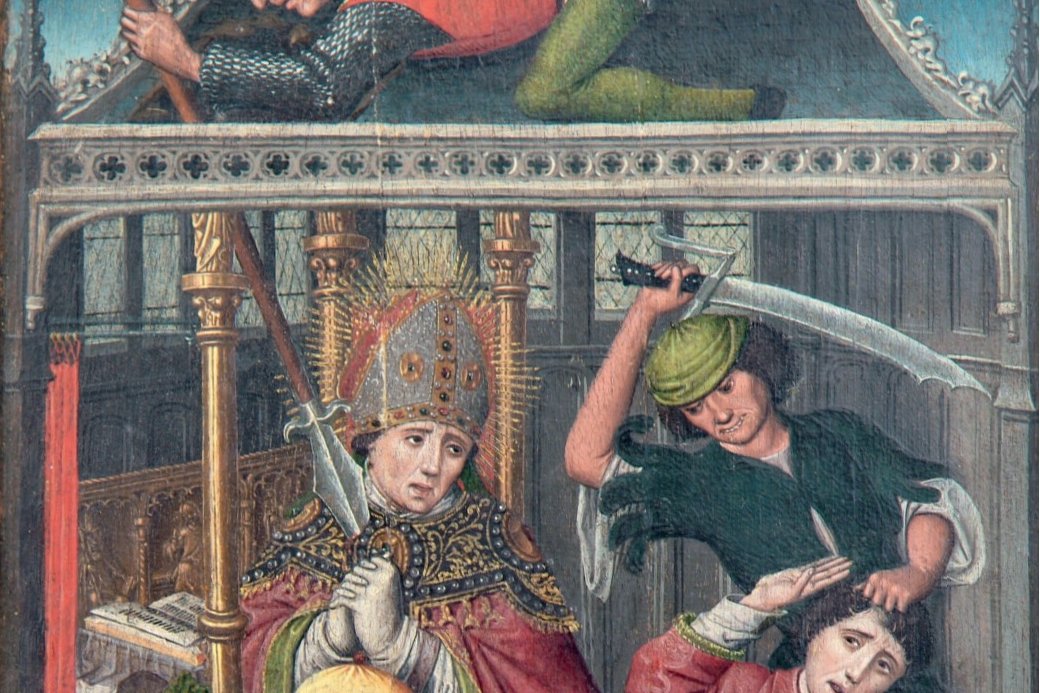
Saint Stanislaus of Krakow

From Szczepanów to the bishop's seat in Krakow
Stanislaus was born on July 26, 1030, in Szczepanów, in what was then the Kingdom of Poland, to a noble family of some means, and by tradition was the answer to his parents' prayers after years of a childless marriage — a detail common to many medieval saints' biographies, meant to underscore that the child was regarded as a gift from God from the very beginning of his life. He studied at cathedral schools in Poland and, according to some accounts, abroad, before entering the clergy and rising steadily through Church ranks. He was consecrated Bishop of Krakow in 1072, taking charge of one of the most significant sees in the country, at a time when the Polish church and state were still working out the balance of power between throne and altar, and when the Polish kingdom itself was in the process of consolidating its position among the Christian states of Central Europe.
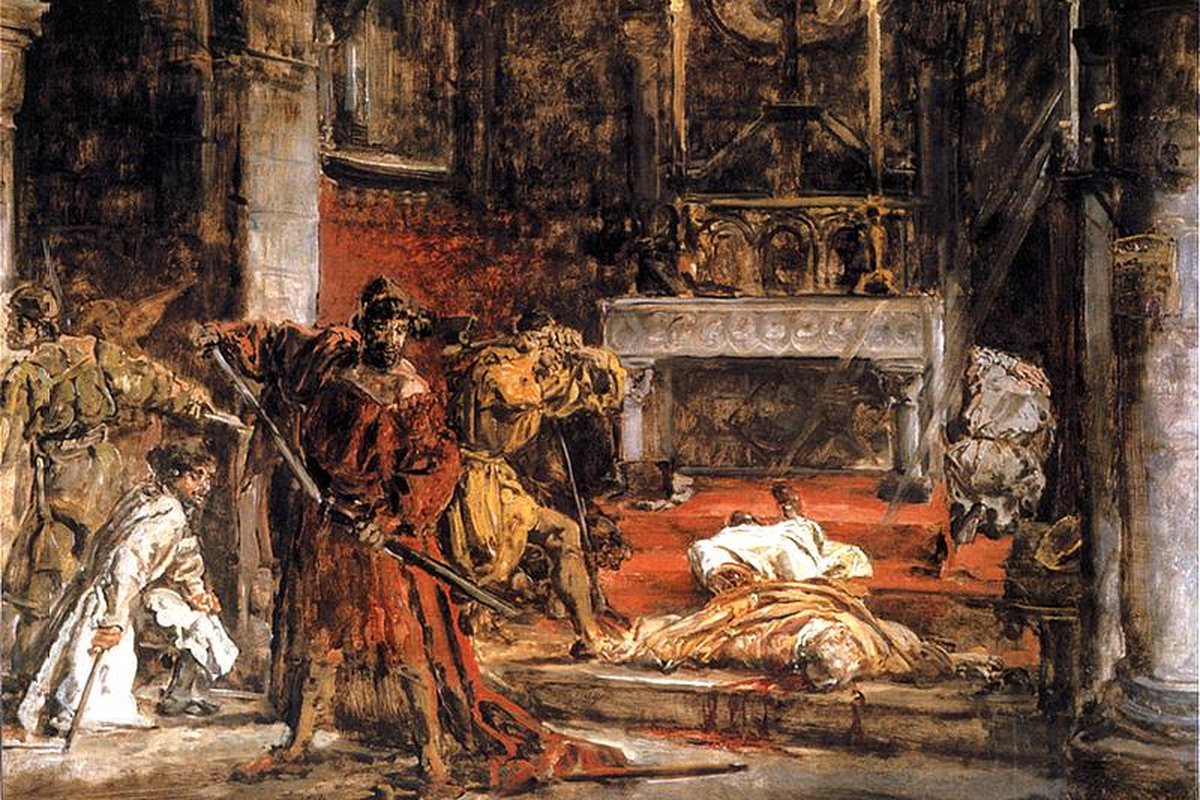
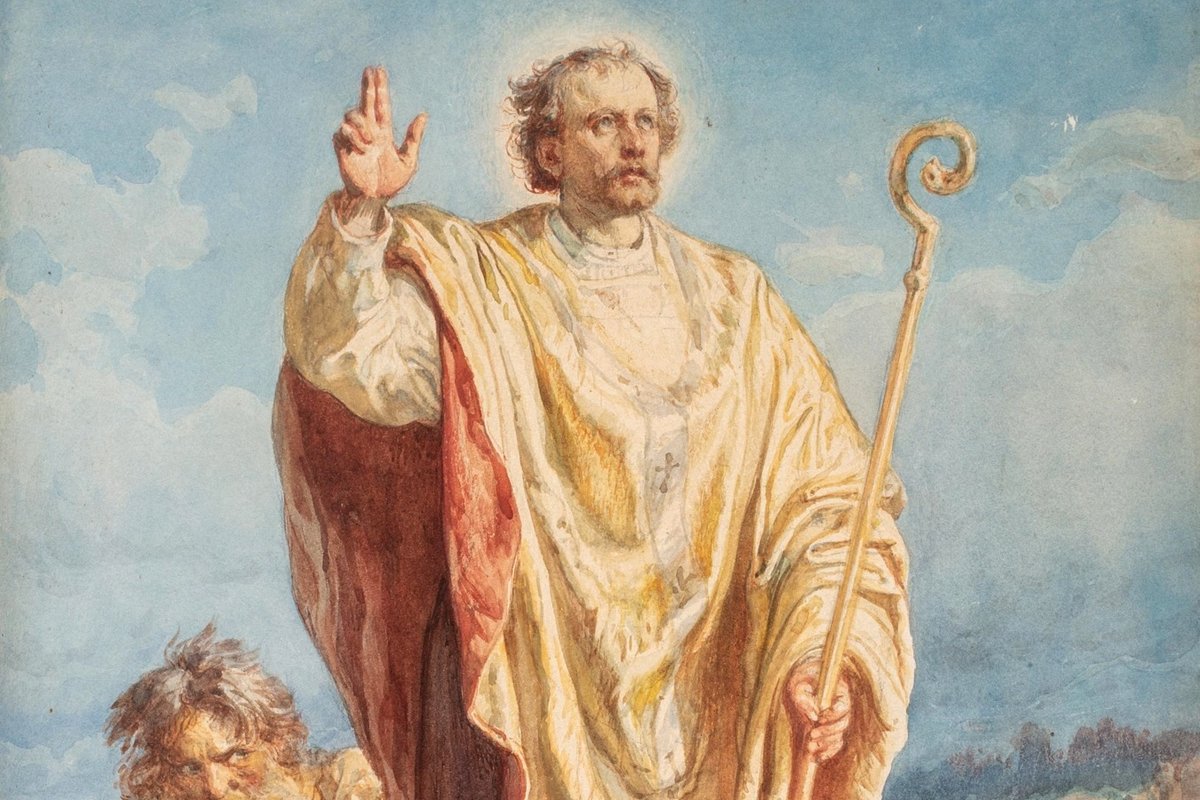
Jan Matejko, The Murder of Saint Stanislaus (oil sketch), 1892, Museum of Central Pomerania, Słupsk — public domain.
As bishop, Stanislaus built a reputation for a very particular kind of courage: a willingness to confront the king himself, King Bolesław II, over conduct Stanislaus considered unjust and immoral. It would have been far easier, and far safer, for a bishop in his position to look the other way. Stanislaus did not. The two men had not always been adversaries — Stanislaus reportedly supported Bolesław's coronation as king in 1076, a significant moment that elevated Poland's ruler from duke to king with papal recognition, which makes the later rupture between them all the more dramatic: a bishop who had helped secure his king's crown ended up excommunicating that same king only a few years later.
A bishop who excommunicated his king
The conflict between Stanislaus and Bolesław escalated over repeated confrontations, with the bishop pressing the king over injustices committed against his subjects and over the king's own moral conduct. Later tradition specifically accuses Bolesław of abducting the wife of a nobleman and of a pattern of cruelty toward his own subjects during a period of ongoing military campaigns, complaints Stanislaus is said to have raised directly and repeatedly with the king rather than letting them pass quietly, as many bishops in his position might reasonably have chosen to do given the risk involved. Eventually, Stanislaus took the step that no amount of royal favor could survive: he excommunicated Bolesław, formally cutting the king off from the sacramental life of the Church he ruled over. It was an extraordinary assertion of ecclesiastical authority over royal power, delivered by a bishop who clearly understood the risk he was taking — and Bolesław's response confirmed exactly how dangerous that risk was.
Death at the altar
Enraged by the excommunication, Bolesław sent royal guards to kill Stanislaus. According to the traditional account of what followed, the soldiers sent to carry out the killing hesitated to strike down a bishop, and when they faltered, the king himself stepped in and delivered the fatal blow. Stanislaus was killed on May 8, 1079, by tradition at or near an altar — a detail that, whether recorded with complete precision or shaped somewhat by later retelling, underscores how directly this was a killing of a churchman in the middle of his sacred duties, not an incidental death caught up in some unrelated violence. The parallel to Saint Thomas Becket's murder in Canterbury nearly a century later is one later generations have often drawn — two bishops, both once close to the kings who had them killed, both martyred for standing against royal overreach — though Stanislaus's death came first, and set its own precedent in Poland long before Becket's did in England.
Poland's patron saint
Stanislaus was canonized by Pope Innocent IV in 1253, nearly 175 years after his martyrdom, and became the principal patron saint of Poland and of the Diocese of Kraków — a status that has made him a central figure in Polish national and religious identity for the better part of a millennium. He's also invoked in battle, a patronage fitting for a saint whose defining act was refusing to retreat from a fight he knew could kill him. His feast is kept on May 8 in Kraków and on May 7 in the General Roman Calendar — a small discrepancy worth noting honestly rather than glossing over — with a separate feast on September 27 marking the later translation of his relics.
The killing had lasting political consequences well beyond Stanislaus's own lifetime. Bolesław was reportedly forced into exile shortly afterward, his reign effectively ended by the scandal, and Poland itself lost its royal title for a period, not being restored to full kingdom status again for decades — a striking example of how seriously medieval Christendom took the violation of clerical immunity, even when the violator was the reigning monarch. Wawel Cathedral in Kraków, the traditional coronation church of Polish kings, holds a shrine to Stanislaus that remains one of the country's most significant places of pilgrimage, and Polish kings for centuries afterward were customarily crowned in the presence of his relics — a striking historical irony, given that his death had been caused by exactly the kind of royal power his shrine went on to help legitimize.
Trivia
Who was Saint Stanislaus of Krakow?
How did Saint Stanislaus die?
Is Saint Stanislaus similar to Saint Thomas Becket?
When was Saint Stanislaus canonized?
What is Saint Stanislaus the patron saint of?
You May Also Like
Related Reading