Saint Aloysius Gonzaga

Born to inherit, drawn to give it away
Aloysius Gonzaga was born on March 9, 1568, in Castiglione delle Stiviere, a small Italian marquisate, the eldest son of a noble family whose position came with real political weight. His father, Ferrante Gonzaga, was a soldier of some renown who had served the Spanish crown, and he had exacting plans for his firstborn: by age five, Aloysius was already being dressed in miniature armor and taken along on military exercises, and by nine he'd been sent to the court of the Medici in Florence to learn the manners and politics expected of a future ruler. As heir, he was groomed from boyhood for the life expected of him — court etiquette, military training, eventual management of his family's lands and title.
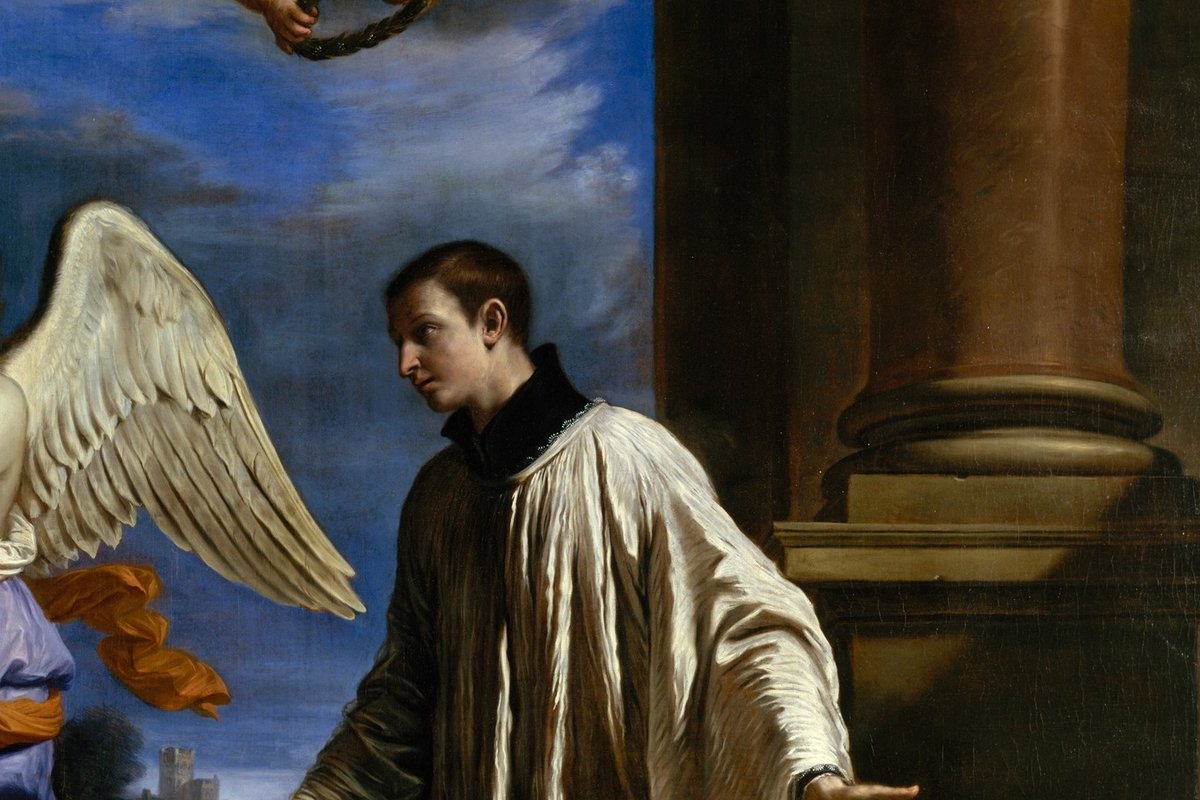
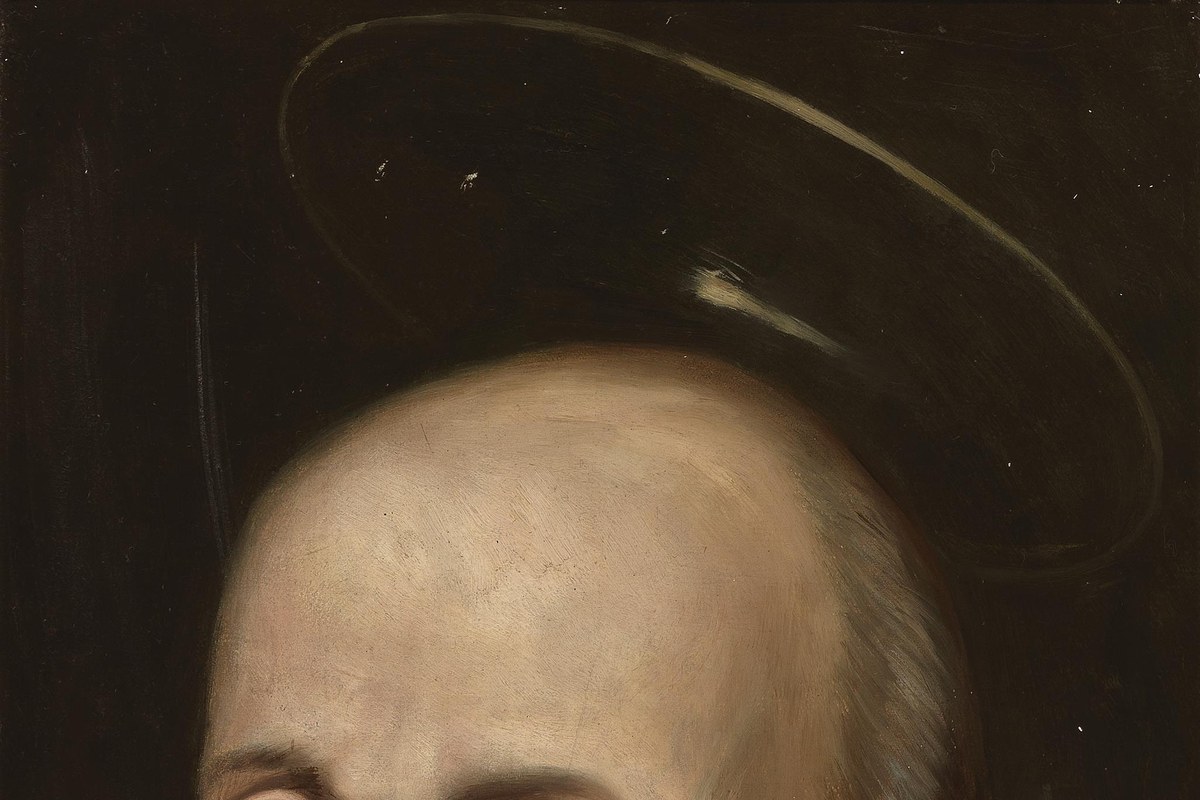
Guercino, "The Vocation of Saint Aloysius (Luigi) Gonzaga," 17th century, Metropolitan Museum of Art — public domain.
But by his early teens Aloysius had set his sights elsewhere. A serious kidney ailment that troubled him through much of his youth kept him away from the more physical training his father favored and left him more time for prayer and reading, and he grew into a young man of unusually intense personal discipline — he is said to have taken a private vow of chastity at age nine and later avoided even looking directly at women, a degree of asceticism that some modern commentators find severe, but which fit the spiritual culture of the Counter-Reformation nobility from which he came. A pivotal encounter came during a visit to the Spanish royal court at Madrid, where the Gonzaga family stayed for several years — it was there that Aloysius, still a teenager, resolved definitively on joining a religious order rather than accepting the title waiting for him.
He felt drawn to religious life with a seriousness that alarmed his father, who initially refused to allow it and took Aloysius on an extended tour of Italian courts in hopes of changing his mind. It didn't work. After years of family resistance, Aloysius formally renounced his inheritance rights in favor of his younger brother, Rodolfo, and entered the Society of Jesus that Saint Ignatius of Loyola had founded — the Jesuits — as a novice in 1585, walking away from a title most people in his position would never have questioned keeping.
A novice in a city under plague
Aloysius's Jesuit formation took him to Rome, where in 1591 a severe outbreak of plague struck the city. Rather than staying clear of the danger, he volunteered to work at a hospital the Jesuits ran for plague victims, taking on some of the most physically demanding and dangerous tasks available: carrying the dying from the streets and receiving them into the ward, feeding them, and tending to their basic needs by hand. It was unglamorous, exhausting, and about as directly exposed to contagion as work could get. Aloysius kept at it even as his own health — never especially robust — began to break down under the strain.
Death at twenty-three
He contracted the plague from that work, and after a period of decline, died in Rome on June 21, 1591, at just twenty-three years old. Accounts from his final months describe him continuing to visit and comfort other patients even as his own strength gave out, and his Jesuit superiors reportedly had to order him at times to rest rather than push himself further. There's no legendary embellishment layered onto this story the way there is with many ancient martyrs elsewhere on this blog — Aloysius's life is comparatively well-documented, close to modern record-keeping standards, and the core of what made him remarkable is exactly what it appears to be on the surface: a young man who had every reason to live comfortably and chose instead to spend his final months in a plague ward.
A model held up within the Jesuit order
Even before his formal canonization, Aloysius's short life became something of a template within the Society of Jesus for how a young religious might live — a combination of rigorous personal discipline, obedience to superiors, and a willingness to take on the hardest, least glamorous work available rather than seek out anything more comfortable or prestigious. Jesuit houses and colleges across Europe began honoring his memory within a generation of his death, well before Rome had completed the formal process of canonization, a sign of how quickly his reputation for holiness spread among people who had known him personally or trained in the same order.
In devotional art, Aloysius is most often shown as a young man in Jesuit cassock and surplice, sometimes holding a crucifix or lily — a traditional symbol of purity — and occasionally, as in the Guercino painting that accompanies this article, in the company of an angel marking the moment of his vocation. That youthful iconography reinforced the image the Church would later formalize: not an old, seasoned ascetic, but someone barely out of adolescence who had already made an irreversible choice about the shape of his life.
Patron of youth, and later of AIDS caregivers
Aloysius was beatified in 1605, just over a decade after his death, and canonized in 1726 by Pope Benedict XIII. In 1729, the Church formally declared him patron of youth, a recognition of a young man who made a defining, costly choice about how to live before he'd reached his mid-twenties. That patronage took on a further, more contemporary dimension in 1991, when he was also recognized as patron of AIDS patients and their caregivers — a natural extension of his own history caring for the sick at direct personal risk to himself. His feast is kept on June 21, the date of his death, and his story remains a rare case among the saints covered here where the record of his life needs almost no separating of fact from later legend. Many Catholic schools, youth groups, and university residence halls around the world still carry his name today, a living extension of the patronage first declared for him nearly three centuries ago.
Trivia
Who was Saint Aloysius Gonzaga?
How did Saint Aloysius Gonzaga die?
Why did Aloysius Gonzaga give up his inheritance?
When was Saint Aloysius Gonzaga canonized, and what is he patron of?
When is the feast day of Saint Aloysius Gonzaga?
You May Also Like
Related Reading