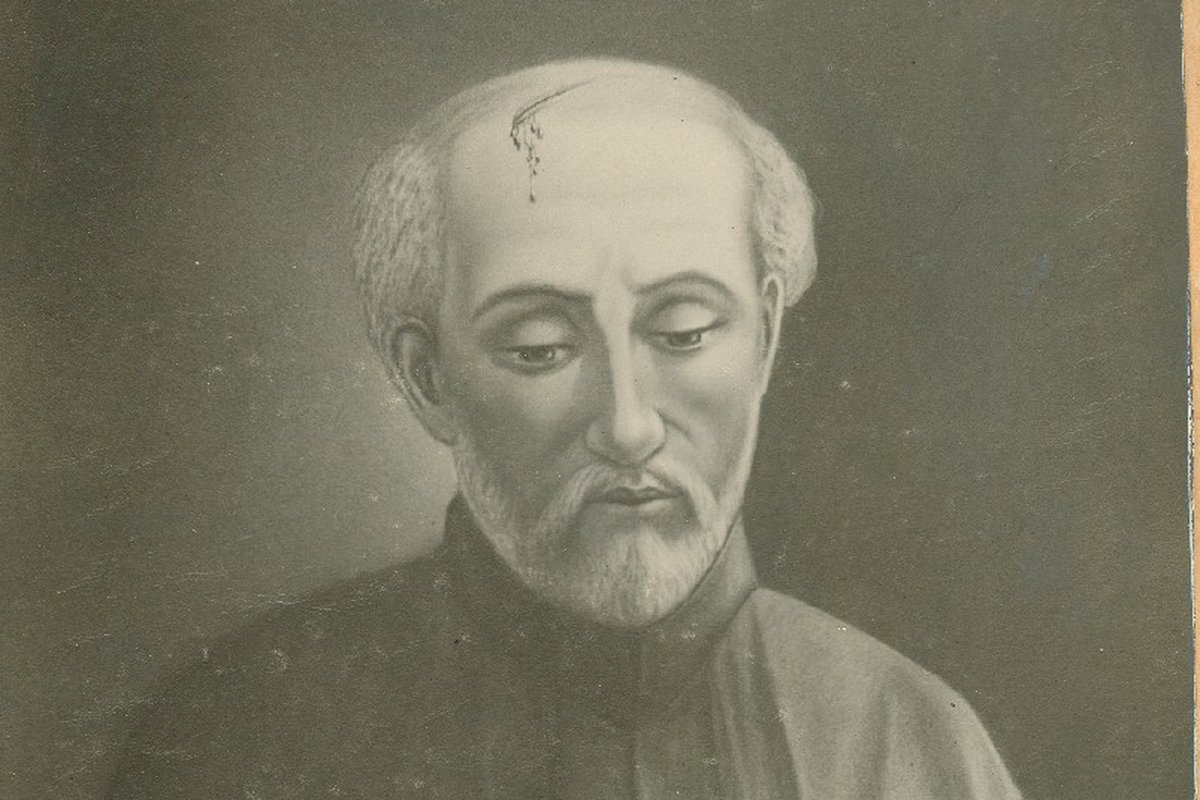
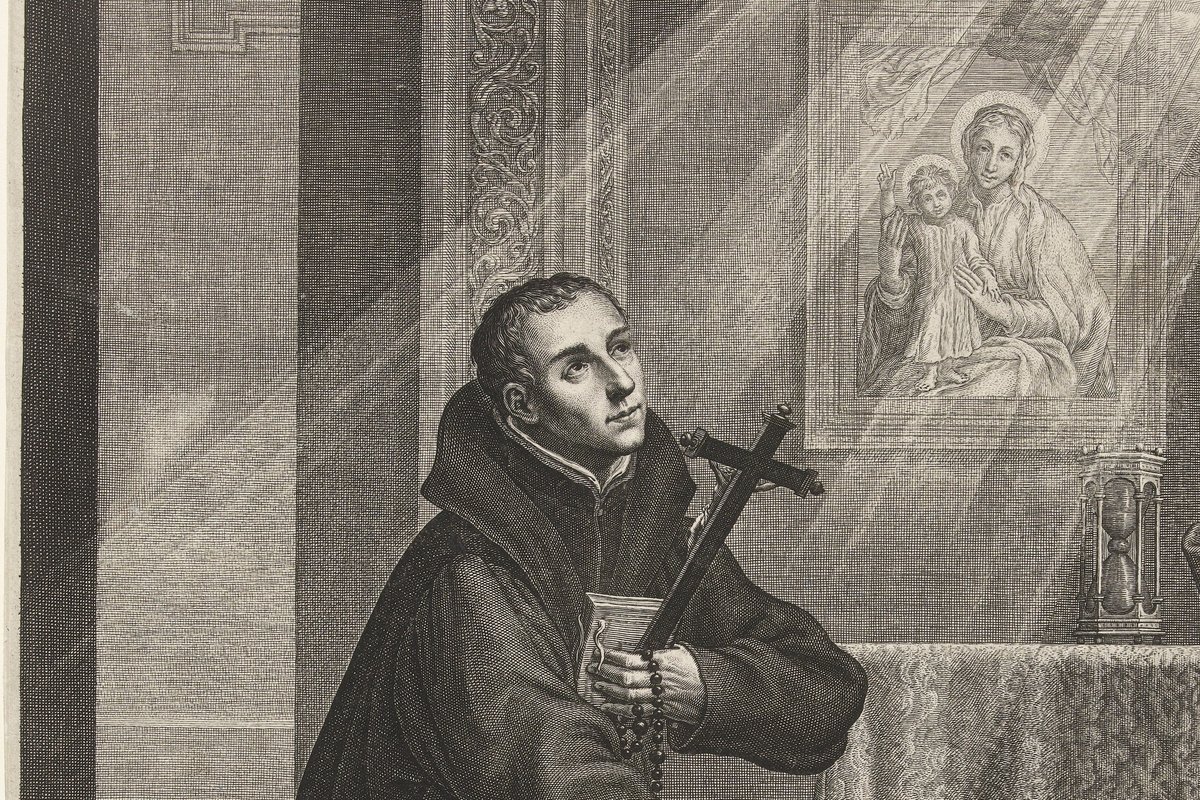
Saint Ignatius of Loyola

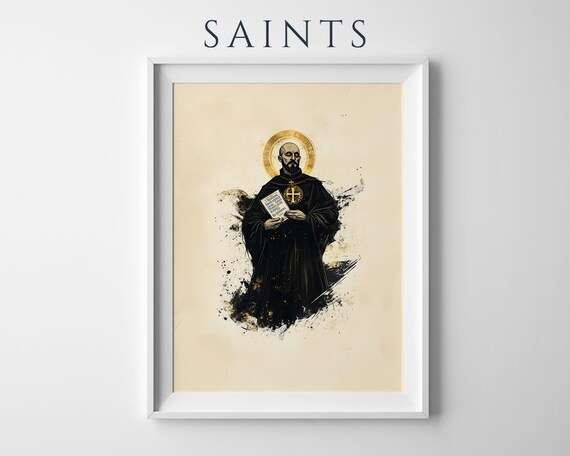
A soldier's career ended by a single cannonball
Ignatius's early life gave no hint of the direction it would eventually take. Born into a Basque noble family in 1491, he pursued a career as a soldier, and by his own later account was more interested in personal glory and reputation than religious devotion. That path ended abruptly on May 20, 1521, defending the citadel of Pamplona against French forces, when a cannonball struck him directly, badly fracturing one leg and damaging the other. He would never fight again.
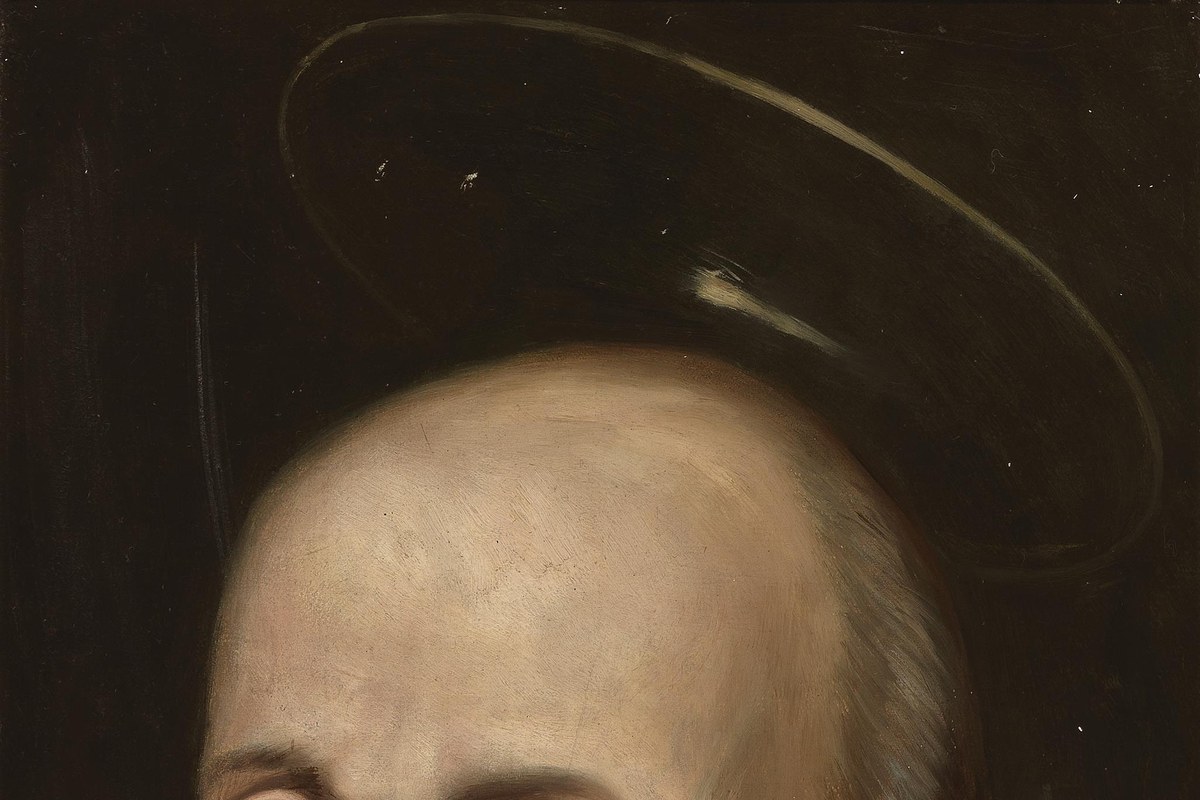
Bartomeu Maura, 1873 copy after Alonso Sánchez Coello's lost portrait of Saint Ignatius of Loyola — public domain.
Even the immediate aftermath of the injury reveals just how consumed Ignatius still was with worldly image at that point in his life. His leg had healed badly, leaving one bone protruding unattractively beneath the knee, and Ignatius — still focused entirely on how he'd look in the close-fitting hose and boots fashionable among noblemen of the period — insisted the leg be broken and reset a second time, and later endured having the protruding bone sawn off entirely, all without anesthesia, simply to preserve his appearance. It's a telling detail: the man who would later found an order built around radical self-denial began his convalescence still gripped by exactly the kind of vanity his later life would come to reject.
A conversion built out of boredom
What followed was a long, physically painful convalescence, and it's here that Ignatius's story takes its decisive turn — not through a dramatic vision, but through simple boredom. The only reading material available to him during recovery was a life of Christ and a collection of the lives of the saints. Having exhausted his appetite for the chivalric romances he would have preferred, he read what was on hand instead, and found himself increasingly drawn to the idea of a different kind of ambition entirely — one aimed at something other than his own reputation.
Ignatius later described a specific pattern he noticed during this period, one that became foundational to his entire later spiritual method: when he daydreamed about returning to a life of military glory and romantic conquest, he felt excited in the moment but empty and restless afterward; when he imagined instead living in imitation of the saints he was reading about, the good feeling lingered rather than fading. He came to interpret this difference — momentary excitement followed by emptiness versus a lasting, settled peace — as a way of discerning which impulses came from a genuinely good source and which didn't. That process of paying close attention to interior movements of consolation and desolation would later become the core of his teaching on spiritual discernment, one of his most distinctive and lasting contributions to Catholic spirituality.
A manual built from his own experience
Out of that period of reflection came what would become Ignatius's most lasting written legacy: the Spiritual Exercises, a structured, practical program of prayer, meditation, and self-examination distilled from his own process of conversion. Rather than keeping the method to himself, he made it a requirement for the small group of companions who joined him, and later for every man entering the religious order that would grow out of their partnership.
Getting to the point of writing the Exercises required years of further formation. After recovering, Ignatius spent nearly a year in the small town of Manresa, living in poverty and intense prayer, where he underwent what he later described as the most spiritually formative period of his life — including experiences of severe spiritual doubt and even thoughts of suicide, which he eventually worked through and which shaped his later sensitivity, as a spiritual director, to the very real psychological struggles that can accompany a sincere search for God. He then set out on pilgrimage to Jerusalem, studied Latin grammar alongside young boys as an adult beginner in Barcelona to prepare for university, and eventually earned a graduate degree in theology in Paris in his mid-forties — an unusually late and difficult academic path for a former soldier, but one he considered essential before taking on the responsibility of guiding others formally in the faith.
From six companions to a global order
That order — the Society of Jesus, or Jesuits — received official recognition from Pope Paul III on September 27, 1540, with Ignatius serving as its first Superior General, based in Rome rather than Paris, where the original companions had first bound themselves together by vows in 1534. What began with a small circle of companions grew rapidly into one of the most influential religious orders in Catholic history, known for education, missionary work, and rigorous intellectual formation. Ignatius himself spent his final years in Rome overseeing the order's rapid expansion, writing the Jesuit Constitutions that still govern the order today, and maintaining an enormous correspondence with Jesuits serving in missions as far away as India and Japan, most notably his close early companion Saint Francis Xavier, whose missionary work in Asia became one of the young order's most celebrated achievements during Ignatius's own lifetime.
Ignatius was canonized in 1622, a soldier turned founder whose entire second career traces back to nothing more dramatic than a long recovery and two books he hadn't originally wanted to read. His Spiritual Exercises remain in active use today, not only among Jesuits but among laypeople of many Christian traditions who make guided silent retreats based directly on his four-week structure of prayer and reflection — a practical spiritual discipline born, four centuries ago, out of one former soldier's tedious convalescence in a small Basque castle.
Trivia
What happened to Ignatius at Pamplona?
How did his convalescence lead to a religious conversion?
What are the Spiritual Exercises?
When were the Jesuits officially founded, and when was Ignatius canonized?
What is Saint Ignatius of Loyola the patron saint of, and when is his feast day?
Related Reading