Saint Alphonsus Liguori

A prodigy of the law, undone by one oversight
Alphonsus was born in 1696 near Naples, into a noble family that pushed him hard toward achievement from childhood — he reportedly earned his law degree in his teens and built a reputation as one of Naples's most capable young lawyers, going eight years without losing a case. That streak ended when he represented a powerful client in a major property dispute and, in reviewing the case afterward, discovered he had overlooked a crucial detail in the documentation — a detail that had cost his client the case and exposed Alphonsus's own carelessness in open court. It was a minor, human mistake by ordinary standards, but for a man who had built his entire identity around legal precision, it was devastating enough to end his career outright.
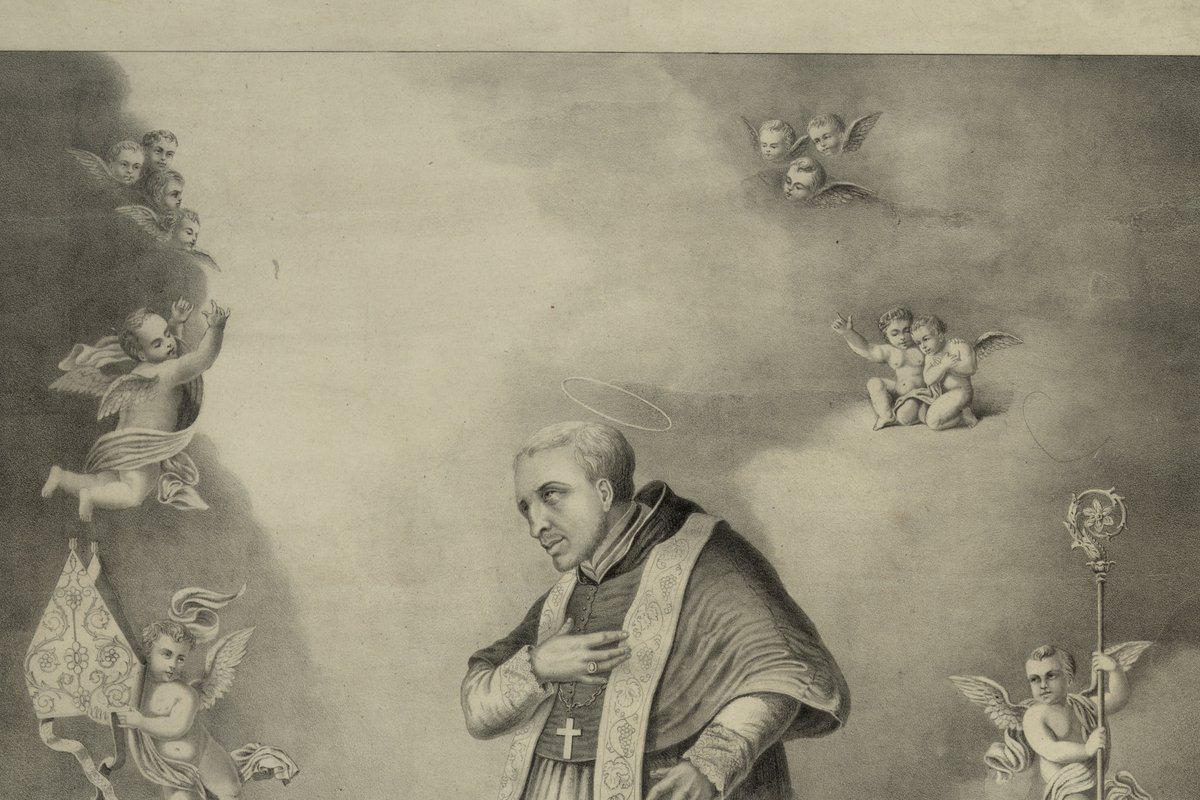
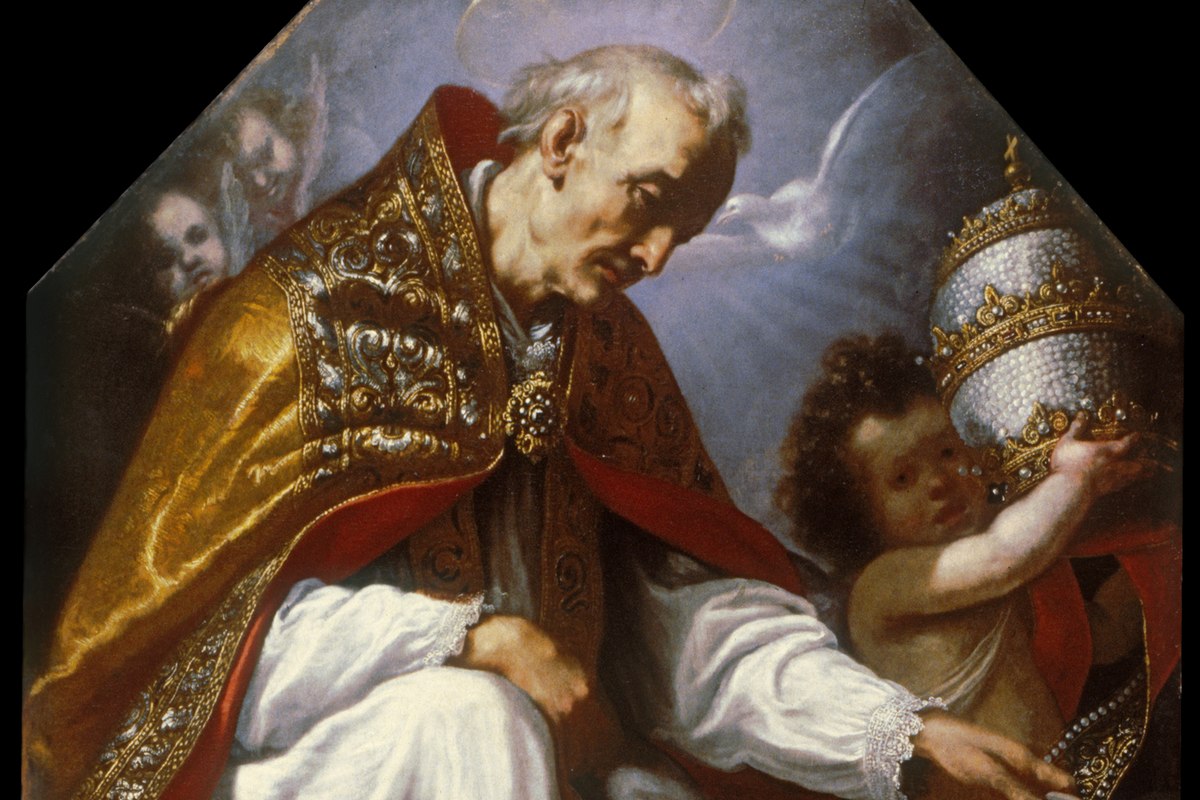
"St. Alphonsus," chromolithograph published by H. Schile, New York, 1871, Library of Congress — public domain.
From courtroom to confessional
Alphonsus walked away from law within months and turned toward the priesthood, drawn to ministry among the rural poor around Naples, who he found were often neglected by the same clerical establishment that served the city's wealthier parishes well. Ordained in 1726, he spent years preaching missions in small towns and villages, developing a pastoral style that valued patience and encouragement over the harsh, rigorist approach to confession that was common among some clergy of his era. He believed a penitent terrified of confession accomplished less spiritually than one gently, honestly guided back toward it.
The rural parishes Alphonsus targeted weren't simply under-resourced — many hadn't seen a resident priest in years, and generations of villagers had grown up with only the vaguest, often distorted understanding of Catholic teaching, mixed freely with local superstition. His preaching missions typically lasted one to two weeks in a single town: intensive daily sermons, long stretches spent hearing confessions, and a deliberate effort to make the sacraments approachable to people who had come to see them, if they thought about them at all, as remote and frightening rather than as ordinary parts of a Christian life.
That pastoral instinct eventually hardened into a full moral system Alphonsus called equiprobabilism, developed in reaction to two extremes he saw doing real damage in the confessional. Rigorism (also called Jansenism-influenced strictness) demanded near-certainty before a penitent could be excused from a strict interpretation of the law, often leaving anxious believers convinced they were perpetually in a state of sin. Laxism, at the other extreme, allowed penitents to follow almost any plausible opinion favoring freedom, however weakly supported. Alphonsus charted a middle course: when a genuinely solid opinion favored liberty and stood on roughly equal footing with an opinion favoring the law, a penitent could follow the more merciful path in good conscience. It sounds technical, but the practical effect was enormous — it gave two centuries of confessors a workable, humane framework for handling the vast gray area of ordinary moral life, rather than forcing them toward either extreme.
Founding the Redemptorists
In 1732, Alphonsus founded the Congregation of the Most Holy Redeemer — the Redemptorists, one of the religious orders founded in the Catholic tradition — a religious community dedicated specifically to preaching parish missions and staffing confessionals in rural areas that regular diocesan clergy rarely reached. The new congregation grew slowly and faced a painful crisis late in Alphonsus's life: in 1780, now in his eighties, nearly blind, and gravely ill, he unknowingly signed a revised rule that other Redemptorists had altered to satisfy the Kingdom of Naples's government. The Holy See responded by recognizing only the houses in the Papal States as authentically his congregation, stripping papal approval from the Naples houses he directly led and placing him, in his final years, under suspicion of having caused the split himself. The rift wasn't healed until 1794, seven years after his death — a hard final chapter for a man who had spent decades building the community from nothing.
A theologian who wrote for confessors and ordinary believers alike
Alphonsus wrote prolifically on moral theology, aiming much of his work directly at parish priests hearing confessions, trying to help them navigate a middle path between excessive strictness and excessive laxity. His devotional writing reached an even wider audience. In Del Gran Mezzo della Preghiera ("The Great Means of Prayer"), he makes his view of prayer's necessity unmistakably blunt: "He who prays is certainly saved; he who does not pray is certainly damned." It's a harder-edged line than most modern devotional writing allows itself, but it reflects how central Alphonsus believed ongoing prayer was to persevering in faith at all — an idea the Catechism of the Catholic Church still echoes in its own teaching on prayer's necessity.
A writer far beyond moral theology
Moral theology was only one strand of an enormous output. Alphonsus also wrote The Glories of Mary, an extended meditation on Marian devotion that became one of the most widely read Catholic devotional books of the 18th and 19th centuries, and he composed hymns and Christmas carols still sung in Italy today, most famously "Tu scendi dalle stelle" ("You Descend from the Stars"), a lullaby-like carol addressed to the infant Jesus that remains a fixture of Italian Christmas devotion more than two and a half centuries after he wrote it. He also had a genuine gift as a painter and composer of sacred music, talents he'd cultivated since childhood alongside his legal training. Taken together, the range of it — moral theology dense enough to shape confessional practice for generations, devotional prose read by ordinary laypeople, and a Christmas carol still hummed in Italian homes — says something about how completely Alphonsus redirected every capacity he had toward pastoral care once he left the courtroom behind.
Doctor of Moral Theology
Alphonsus died in 1787 and was canonized in 1839. In 1871, he was declared a Doctor of the Church, specifically honored as the Doctor of Moral Theology for his lasting influence on how the Church approaches confession and the pastoral care of sinners. His feast day is August 1, and he's venerated today as patron of confessors and moral theologians — a legacy built, in a strange way, on the same instinct for care and precision that once made him a formidable lawyer, redirected entirely toward souls instead of cases.
The Redemptorists he founded survived the crisis of his final years and grew into a genuinely global missionary order, still active today on every inhabited continent, running parish missions in much the same spirit Alphonsus first laid out: going to places ordinary parish structures struggle to reach, and meeting people where their actual moral and spiritual confusion lives rather than where a textbook assumes it should. Readers interested in other founders who built new religious communities around a specific pastoral need may also want to read about Saint Vincent de Paul, whose own congregations were built around organized care for the poor and sick of 17th-century France.
Trivia
Why did Alphonsus Liguori give up his career as a lawyer?
What order did Saint Alphonsus Liguori found?
Why is Alphonsus Liguori called the Doctor of Moral Theology?
What is Alphonsus Liguori's famous quote about prayer?
When is the feast day of Saint Alphonsus Liguori, and what is he patron of?
You May Also Like
Related Reading