Saint Thomas Aquinas

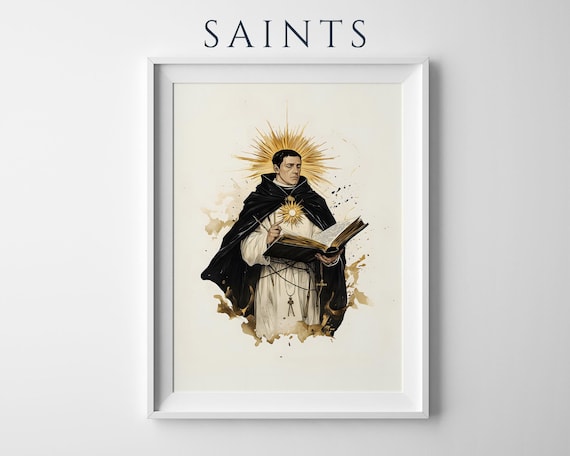
A quiet student with an outsized reputation waiting to happen
Born around 1225 near Aquino in Italy, Thomas Aquinas joined the Dominican order against his own family's wishes — they reportedly held him captive for close to a year trying to change his mind. As a student, his size and his silence earned him the nickname "the Dumb Ox" among classmates who mistook his quiet manner for slowness. His teacher, Albert the Great, is said to have disagreed, predicting that this particular ox would one day make itself heard around the world. History sided with Albert.
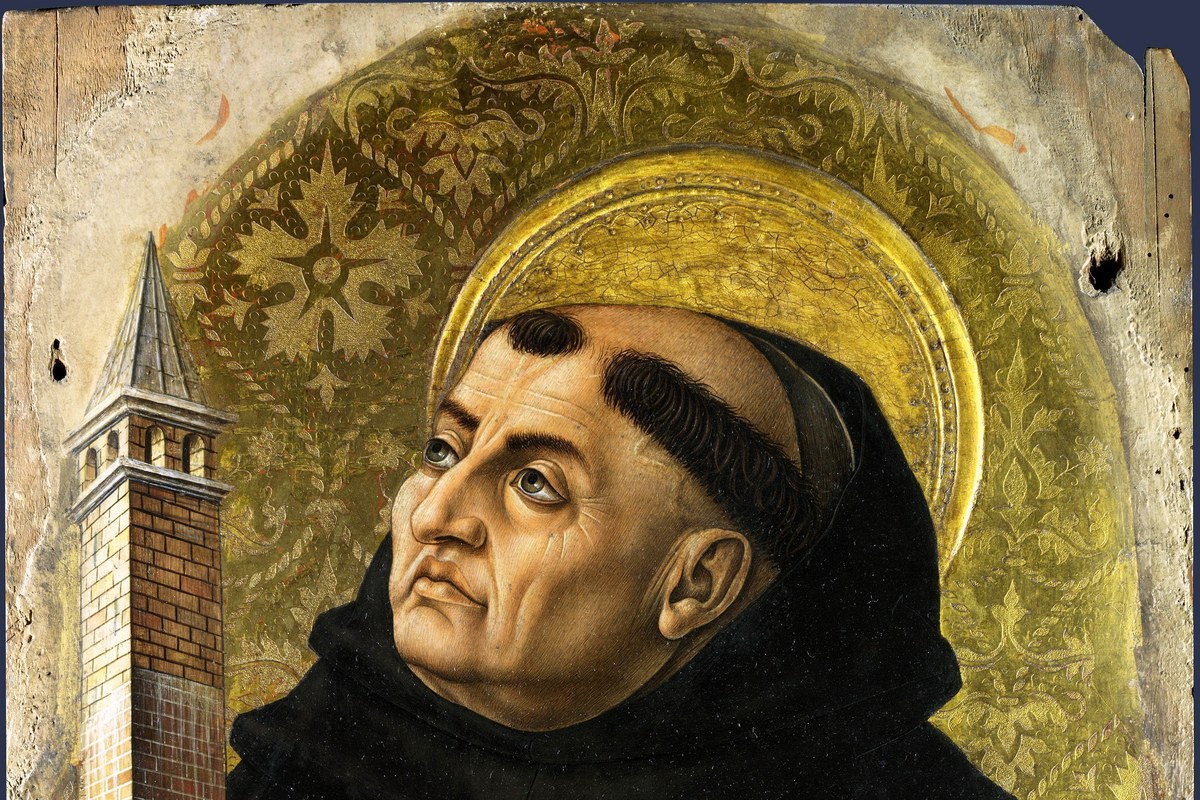
Carlo Crivelli, "Saint Thomas Aquinas," 1476 — public domain.
Thomas came from a family with real standing to lose. His father was a minor count related to several ruling houses of southern Italy, and the family expected Thomas, sent at five to be educated by the Benedictine monks of Monte Cassino, to eventually rise to abbot there — a prestigious, politically useful position for a noble family to control. Instead, at around nineteen, Thomas joined the Dominicans, a newer order built on poverty and public preaching rather than the settled wealth of an established monastery like Monte Cassino. His family's objection was severe enough that his own brothers intercepted him on the road and held him under house arrest at the family castle at Roccasecca for nearly a year, reportedly even sending a woman to his room in an attempt to tempt him into breaking his vow of chastity — an episode Thomas is said to have ended by driving her from the room with a burning stick from the fireplace. He never wavered, and his family eventually relented.
Once free, Thomas studied under Albert the Great first in Paris and then in Cologne, absorbing his teacher's deep interest in Aristotle, the ancient Greek philosopher whose works — lost to Western Europe for centuries and only recently recovered through Arabic translations and commentary — were reshaping how European scholars thought about logic, nature, and the physical world. Thomas would spend the rest of his career applying that same rigorous, question-and-argument method to Christian theology, teaching for years afterward at the University of Paris, then the intellectual center of Europe, where his lectures and disputations built the reputation that outlasted the schoolboy taunts about his silence.
Building a bridge between faith and reason
Aquinas's life's work was an attempt to show that faith and reason weren't in conflict, but partners — using the philosophical tools of Aristotle, newly available in translation during his lifetime, to systematically explain and defend Catholic doctrine. His most famous work, the Summa Theologica, begun around 1265, attempts exactly this: methodically working through the existence of God, the nature of creation, human morality, and Christ, addressing objections point by point rather than simply asserting conclusions. It became one of the most influential single works in the history of Christian thought — and it was never finished.
Perhaps the most famous single passage in the Summa is what later readers came to call the "Five Ways" — five distinct philosophical arguments for God's existence, each starting from an observable fact about the world (that things move, that things are caused, that things exist contingently rather than necessarily, that things display varying degrees of perfection, and that even unthinking things in nature behave in an ordered, goal-directed way) and reasoning from that fact toward the necessity of a first cause or highest reality, which Thomas identifies with God. The arguments weren't meant as an attempt to prove faith unnecessary; Thomas held that reason could establish God's existence, but that the deeper truths of Christian revelation — the Trinity, the Incarnation — remained beyond what unaided reason could reach on its own, requiring faith to complete what reason alone could only gesture toward.
The moment he stopped writing
In late 1273, while celebrating Mass, Aquinas reportedly experienced something so overwhelming that he set down his pen and never seriously returned to writing. When his secretary pressed him to continue the Summa, Aquinas is said to have replied that everything he had written now seemed like straw compared to what had been shown to him. He died a few months later, in March 1274, leaving the work incomplete — a strange, quiet ending for the most systematic theological project of the medieval Church, cut short not by failure but by an experience its own author considered beyond what argument could capture.
Why the Church still calls him a Doctor
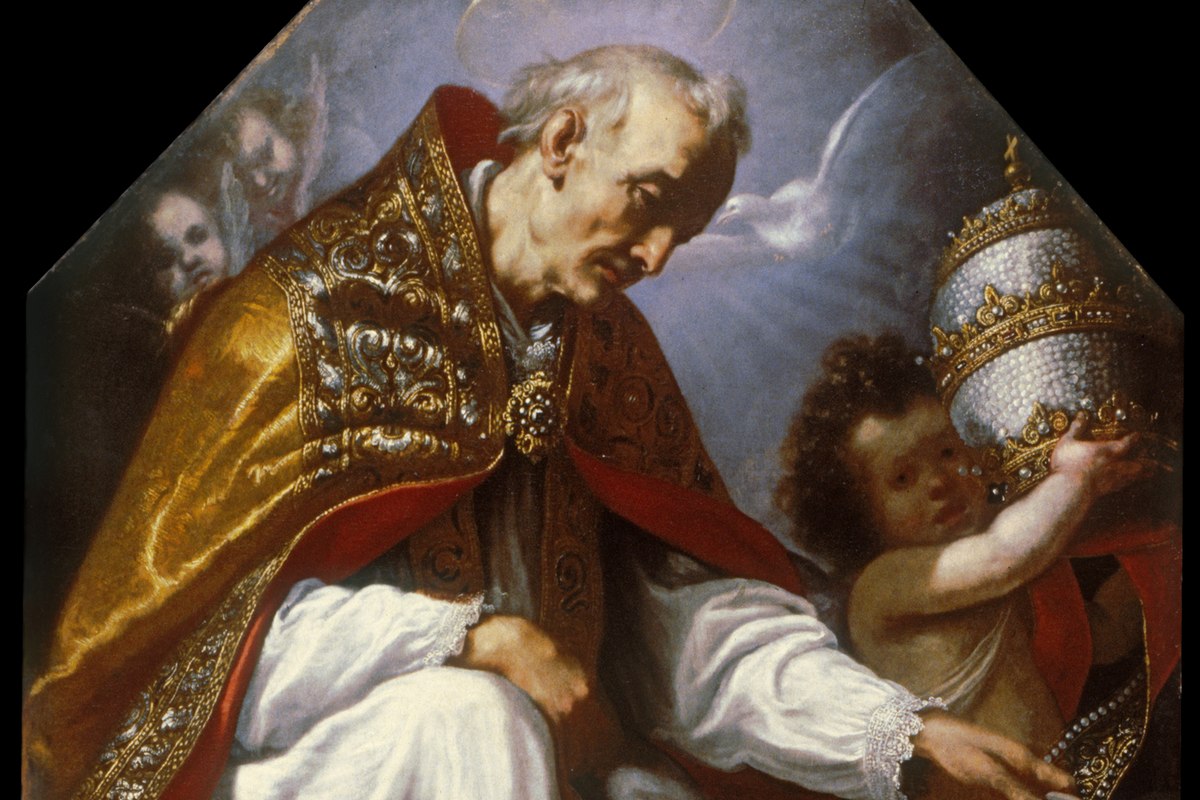
Aquinas holds the title Doctor Angelicus, "the Angelic Doctor," among several honorifics reflecting the outsized respect the Church has given his work in the centuries since. He's recognized today as the patron of students, universities, and scholars — a fitting legacy for a man once mocked as too slow to speak, whose patient, methodical reasoning ended up shaping Catholic theology more thoroughly than almost any other single mind in its history.
Thomas was canonized in 1323, less than fifty years after his death, and in 1567 Pope Pius V declared him a Doctor of the Church, one of the earliest to receive the title in its formal modern sense. His influence didn't stop growing there: in 1879, Pope Leo XIII issued the encyclical Aeterni Patris, urging Catholic schools and seminaries to make Thomas's philosophy and theology — a system that came to be known as Thomism — central to Catholic education, a directive that shaped how generations of priests and theologians afterward were trained. Even the manner of his death carried a note of the same humility that marked his life: traveling in 1274 to attend a Church council in Lyon, he fell ill along the way and died at the Cistercian monastery of Fossanova, a community of monks who were not even members of his own Dominican order, cared for by strangers in his final days rather than dying, as he might have expected, among his own brethren.
Trivia
Why was Thomas Aquinas nicknamed the Dumb Ox?
What is the Summa Theologica?
Why did Aquinas stop writing the Summa before finishing it?
What does "Doctor Angelicus" mean?
Related Reading