Saint Ansgar

A monk sent north
Ansgar was born in Picardy on September 8, 801, and entered monastic life at Corbie, one of the great Benedictine houses of the Frankish world. It was from there that he was sent on the mission that would define the rest of his life: carrying Christianity into Denmark and Sweden, regions with no meaningful Christian presence and no shortage of reasons to resist one. Ansgar traveled under royal escort rather than alone, a practical necessity in territory where a foreign monk preaching an unfamiliar religion could easily have met a violent end. He didn't just preach and move on, either — he founded a school at Schleswig specifically to train local clergy, betting on the same long-term, institution-building instinct that made missions like his actually outlast the missionary.
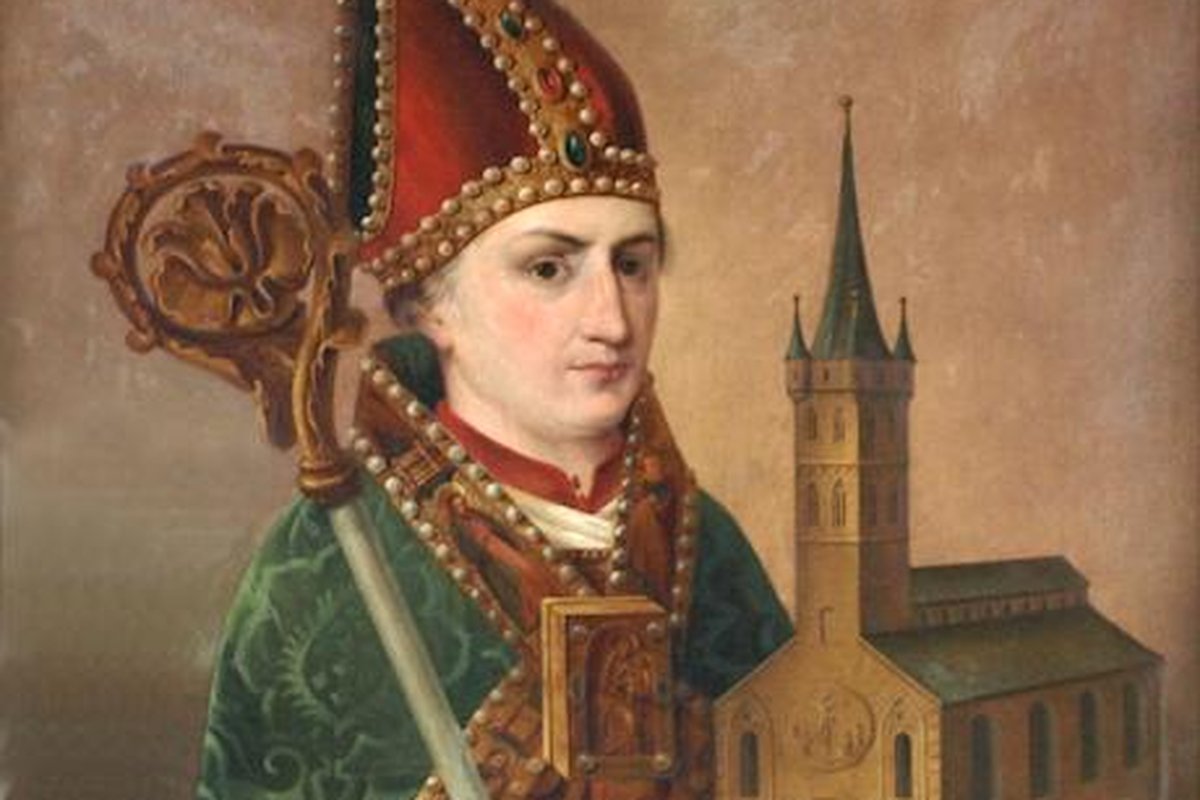
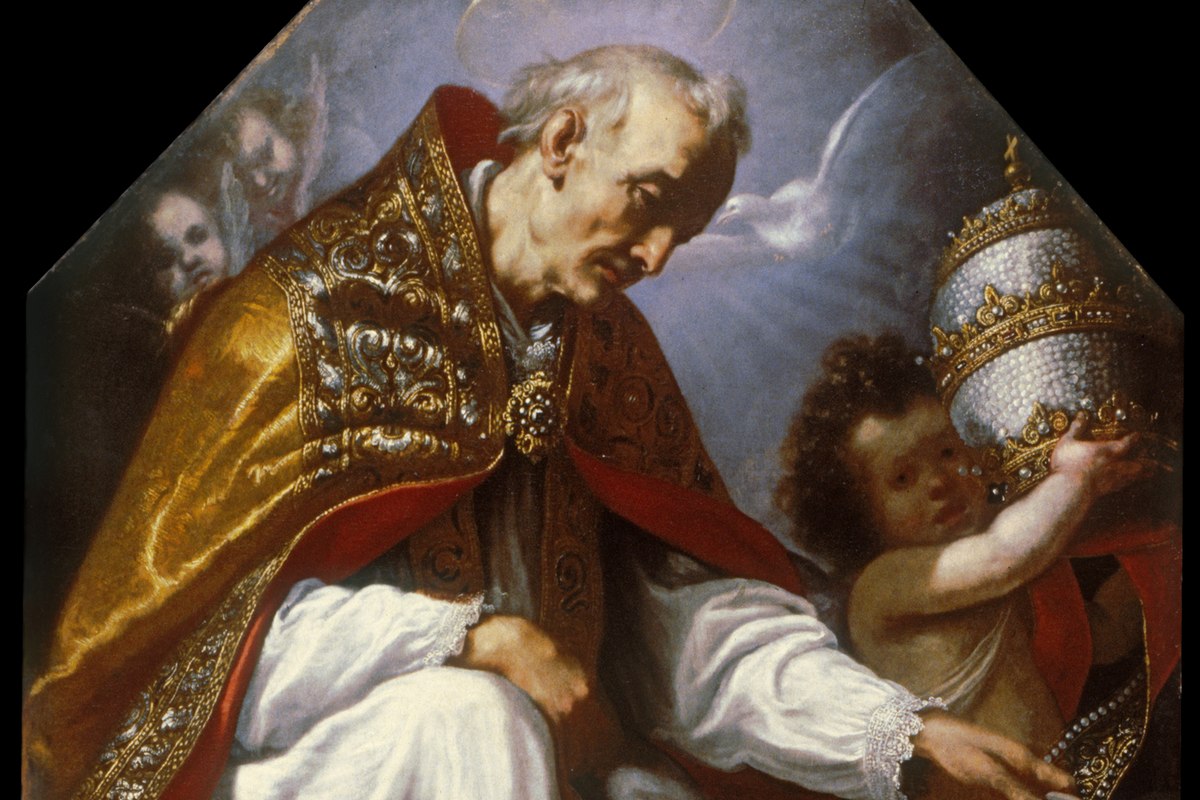
Siegfried Detlev Bendixen, after a 1457 painting by Hans Bornemann, Saint Ansgar, 1826 — public domain.
The sound no one had a word for
Among the many unfamiliar things Ansgar brought north with him, church bells turned out to be one of the most striking to the people who heard them. According to the record preserved in the Catholic Encyclopedia, the ringing was regarded by the local population as an object of real magical power — not a metaphor for something spiritual, but something closer to sorcery in its own right. It's a small, almost incidental detail next to the larger story of conversion and church-building, but it's a genuinely useful window into what first contact between Christian and Norse culture actually looked like on the ground: not a clash of abstract theologies, but ordinary people encountering an object that made an uncanny sound and had no ready explanation for it.
A mission of fits and starts, not a straight line
It's worth being clear that Ansgar's career wasn't a story of steady, uninterrupted progress. He first traveled to Denmark around 826, at the invitation of a Danish king who had converted to Christianity but was soon after driven from his throne, taking Ansgar's initial foothold in the region down with him. He then moved on to Sweden, establishing a small Christian community at the trading town of Birka, only to see that mission falter as well once political winds shifted against it. He was later named Archbishop of Hamburg, a see created specifically to support the northern missions, and had to rebuild much of his work again after Viking raiders destroyed Hamburg itself in 845, forcing him to relocate his episcopal seat to Bremen. Setbacks of this kind were the norm rather than the exception across his career — Ansgar's real achievement wasn't a single, decisive conversion of the North, but a stubborn willingness to keep returning and rebuilding after each collapse, planting institutions that could outlast any one political reversal.
Working against the slave trade
Ansgar's mission unfolded against the backdrop of the Viking world at the height of its reach, and part of his work took him directly up against one of its ugliest features: the active slave trade that ran through Scandinavian territory during this period. He worked against it where he could, a less dramatic thread in his story than founding schools or preaching to skeptical crowds, but a consistent one — evidence that Ansgar's mission wasn't only about winning converts in the abstract, but about pushing back against specific, concrete harms he encountered in the societies he was trying to reach.
Apostle of the North
Ansgar died in Bremen on February 3, 865, after decades spent moving between mission fields that could turn hostile with little warning. He was never formally canonized through any process resembling the Church's later procedures — his own successor as bishop, Rembert, proclaimed his sanctity shortly after his death, and Pope Nicholas I confirmed the veneration not long after. He's remembered today as the "Apostle of the North," a title earned by opening Scandinavia to Christianity a full two centuries before the region's more famous royal conversions took hold. No single, narrowly defined patronage has attached itself to his name over the centuries, but his association with Scandinavia as a whole remains, fittingly, the one honor that has stuck.
It would take much longer than Ansgar's own lifetime for Christianity to become the settled religion of the North. The more famous, decisive conversions of Denmark, Norway, and Sweden came later, under kings such as Harald Bluetooth in the 10th century and Olaf Tryggvason in Norway not long after — rulers who imposed Christianity with far more force and far more lasting political consequence than Ansgar, a foreign monk with no army of his own, ever could. But those later, better-remembered conversions built on ground Ansgar had already broken: churches already standing, a clergy-training school already established at Schleswig, and a Frankish institutional memory of Scandinavia as a mission field worth returning to, even after repeated setbacks. Historians of the period generally credit him as the man who made those later, more famous conversions possible, even if his own name is far less well known today than the kings who ultimately finished the work he began.
Trivia
Who was Saint Ansgar?
Why did church bells cause such a reaction in Scandinavia?
What did Ansgar do besides missionary preaching?
How was Saint Ansgar canonized?
When is the feast of Saint Ansgar?
You May Also Like
Related Reading