Pope Gregory the Great

A palace turned monastery
Gregory's early life gave little indication he would end up leading the Church at all. Born to a wealthy Roman patrician family around 540, he received a broad education spanning law, Scripture, and the writings of the Church Fathers, and was appointed Prefect of Rome by around age 30 — a prestigious civil post admired by both fellow citizens and imperial authorities. Everything changed after his father's death, when Gregory transformed his own family palace on the Celian Hill into a monastery dedicated to Saint Andrew, stepping away from public office for religious life.
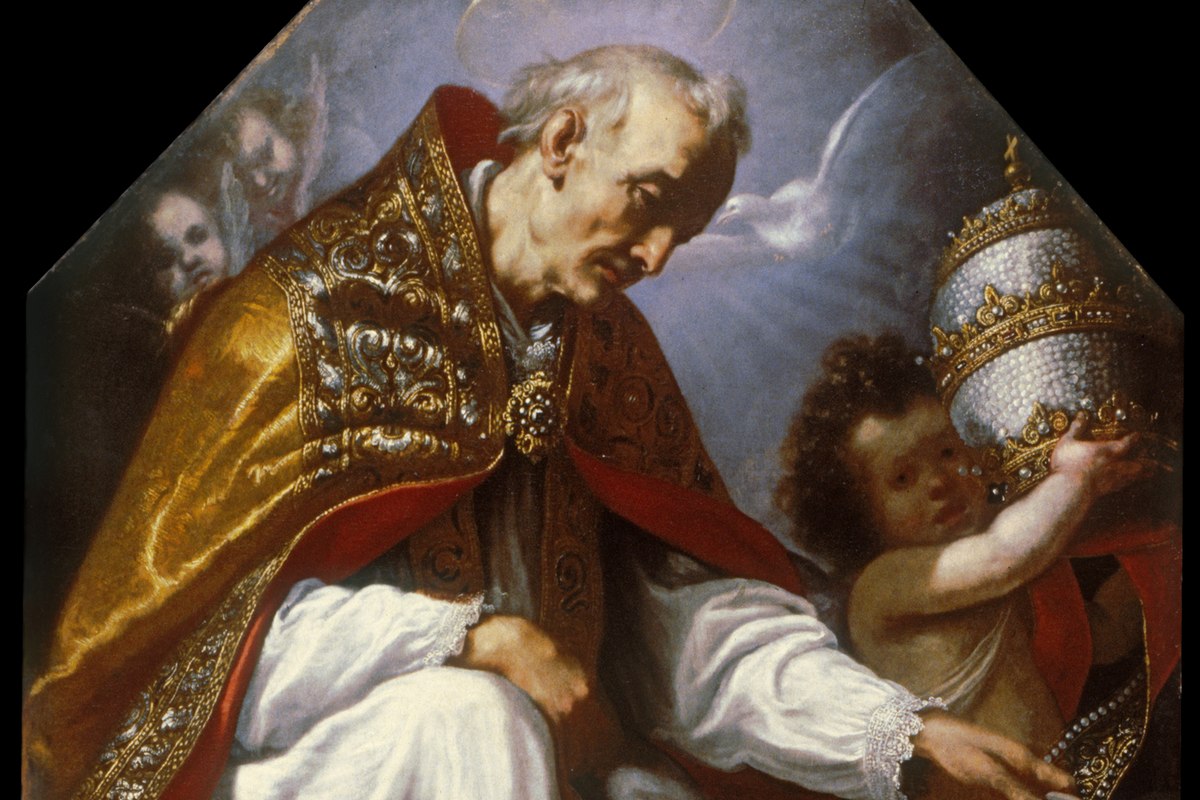
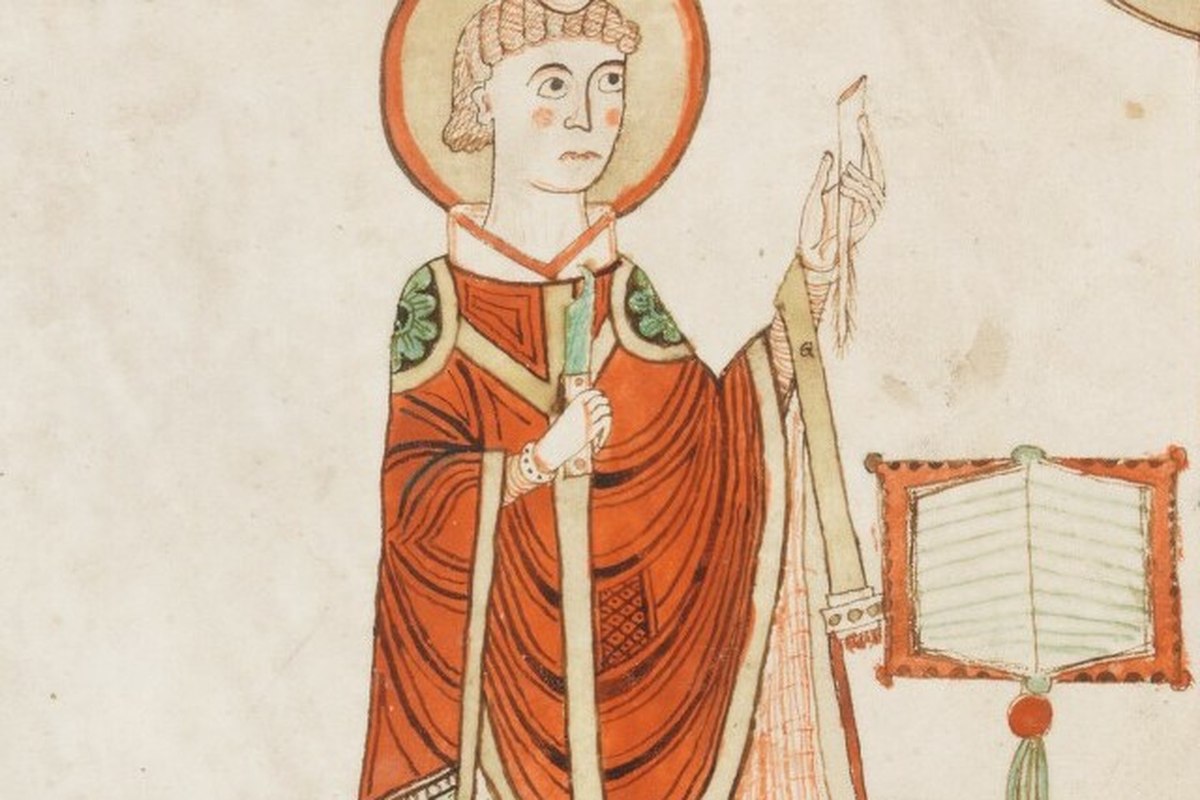
Jacopo Vignali, "Saint Gregory the Great," c. 1630 — public domain.
Gregory's Rome was a city in visible decline. A century after the fall of the Western Roman Empire, the old imperial capital had been reduced by war, plague, and repeated sieges to a fraction of its former population, its aqueducts damaged and its ancient civic institutions crumbling. It was against this backdrop of collapse that Gregory chose to abandon a comfortable public career for the austerity of monastic life — later writing that those years as a simple monk were the happiest of his life, a claim that makes his eventual, reluctant return to public responsibility all the more striking.
Elected pope, reluctantly
After serving as a papal representative and founding several monasteries, Gregory was elected pope in 590 — a position he accepted, by most accounts, only with genuine reluctance. Once in office, he moved quickly to become what historians consider the architect of the medieval papacy, centralizing papal administration to curb corruption, defining the calendar of Church festivals, enforcing clerical celibacy, and generally strengthening the institution he had been hesitant to lead in the first place.
Gregory took office in the middle of a genuine humanitarian crisis: Rome was suffering flooding, famine, and an outbreak of plague so severe that his predecessor, Pope Pelagius II, died from it. Rather than delegate the emergency, Gregory personally organized relief efforts, directing Church resources — grain, money, and the vast landholdings of the Church known as the Patrimony of Saint Peter — toward feeding the hungry and negotiating directly with the Lombard invaders threatening the city, at a time when Rome could no longer count on meaningful military protection from the distant Byzantine emperor. He is also remembered as the first pope to describe himself with the title "servant of the servants of God" — a deliberate rejection of the more grandiose titles some of his predecessors and rivals had used, and a phrase later popes have continued to use ever since.
A mission to a pagan island
Among Gregory's most consequential decisions as pope was one aimed far beyond Rome: sending a mission, later called the Gregorian mission, under Augustine of Canterbury — prior of the very monastery of Saint Andrew that Gregory had founded — to evangelize the pagan Anglo-Saxons of Britain. It was a deliberate, long-distance investment in a region with no guarantee of success, and it became the foundation on which the Christian conversion of England was built.
According to a well-known story recorded by Bede the Venerable more than a century later, Gregory's interest in England began years before he became pope, when he encountered fair-haired boys for sale in a Roman slave market and asked where they were from. Told they were Angles, Gregory is said to have replied, in a Latin pun difficult to fully render in English, "Non Angli, sed angeli" — "not Angles, but angels" — and resolved that such a people ought to hear the Gospel. Whether or not the exchange happened exactly as Bede describes it, the mission itself was real: Augustine and around forty monks landed in Kent in 597, converted King Æthelberht, and Augustine became the first Archbishop of Canterbury, a see that remains the symbolic center of the Church of England to this day, nearly fifteen centuries later.
The chant that carries his name
Gregory's legacy extends into liturgical music as well. The dominant form of Western plainchant, standardized in the late 9th century, came to be called Gregorian chant in his honor, and tradition credits him with compiling the Antiphonary, introducing new styles into church music, and founding the Schola Cantorum, the renowned training school for singers. Modern scholars are divided on exactly how much of the chant tradition that bears his name Gregory personally composed or codified, since the surviving musical notation dates from centuries after his death — but the attribution itself, spreading widely within a few generations of his papacy, reflects how quickly his reputation as a reformer of the liturgy took hold across the Western Church.
A prolific writer as well as an administrator
Beyond his practical reforms, Gregory left behind a substantial body of written work that shaped Western Christian thought for centuries. His Pastoral Rule, written soon after becoming pope, became the standard manual for bishops throughout medieval Europe, translated into Old English by King Alfred the Great and required reading for centuries of Church leadership. His Moralia in Job, a lengthy commentary on the Book of Job begun before his papacy, blended close scriptural interpretation with practical spiritual guidance in a style that influenced monastic teaching well into the High Middle Ages. Along with Ambrose, Augustine, and Jerome, he's counted among the four great Doctors of the Church — a reluctant pope whose name ended up attached to a reformed papacy, a missionary breakthrough in England, an enduring set of pastoral writings, and a musical tradition still sung today.
Trivia
What was Gregory's career before becoming pope?
Did Gregory want to become pope?
What is Gregory's connection to Gregorian chant?
What mission is Gregory best known for launching?
What is Pope Gregory the Great the patron saint of, and when is his feast day?
Related Reading