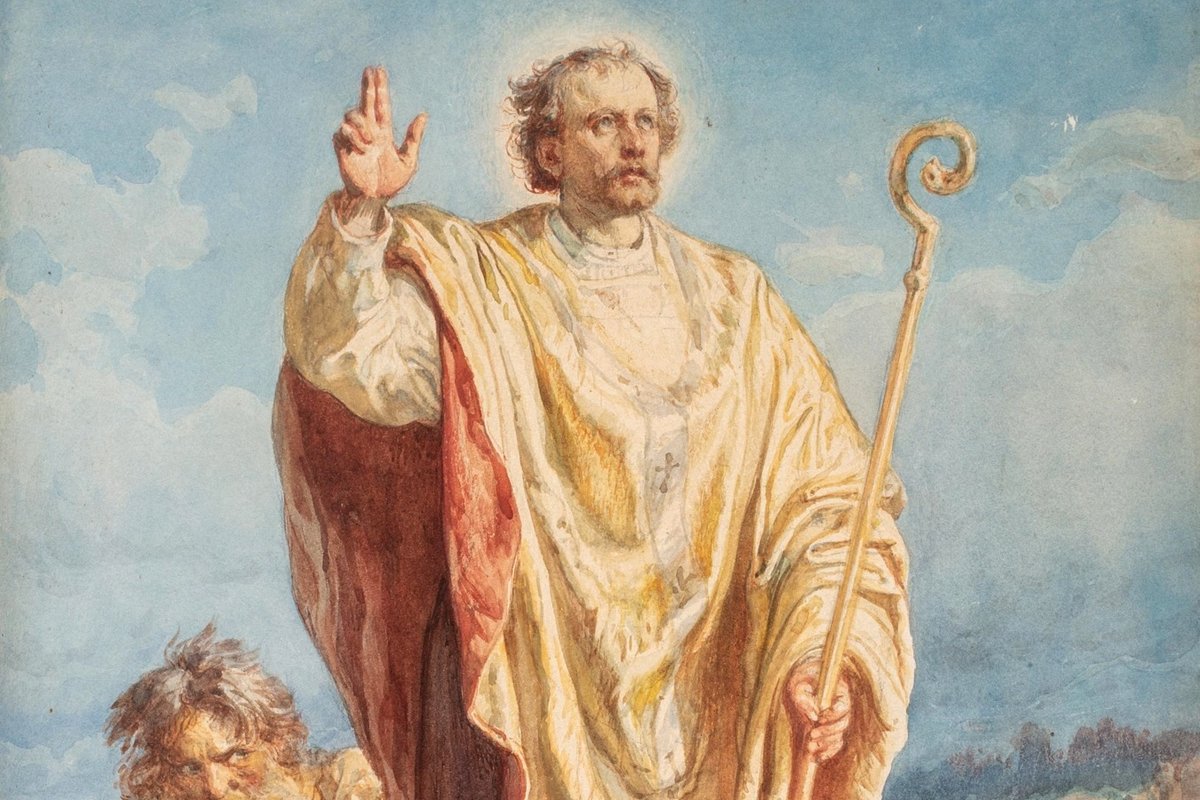
Saint Patrick of Ireland

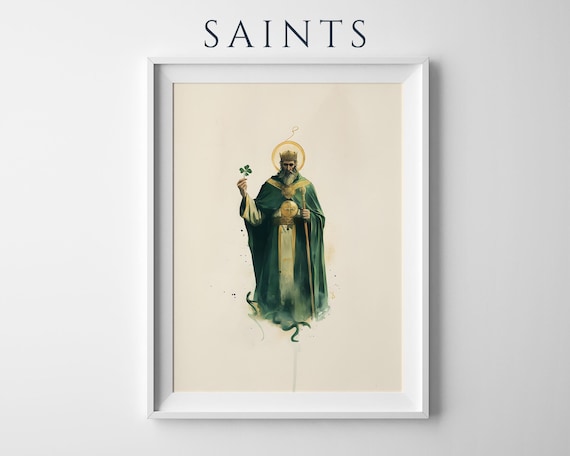
Stolen from home at sixteen
Patrick's own writings are the reason we know anything reliable about him at all, and they begin with catastrophe. Born in Roman Britain, likely toward the end of the 4th century — modern historians dispute the exact years, and even the traditional dates are treated with caution — he was the son of a minor Roman official. At around sixteen, Irish raiders swept through the area, captured him along with many others, and shipped him across the sea to be sold into slavery. He spent roughly six years in Ireland working as a shepherd, isolated on a hillside, cold and hungry, with only his own prayers for company. He later wrote that his faith, barely present in him before the kidnapping, grew steadily stronger under those conditions rather than breaking.
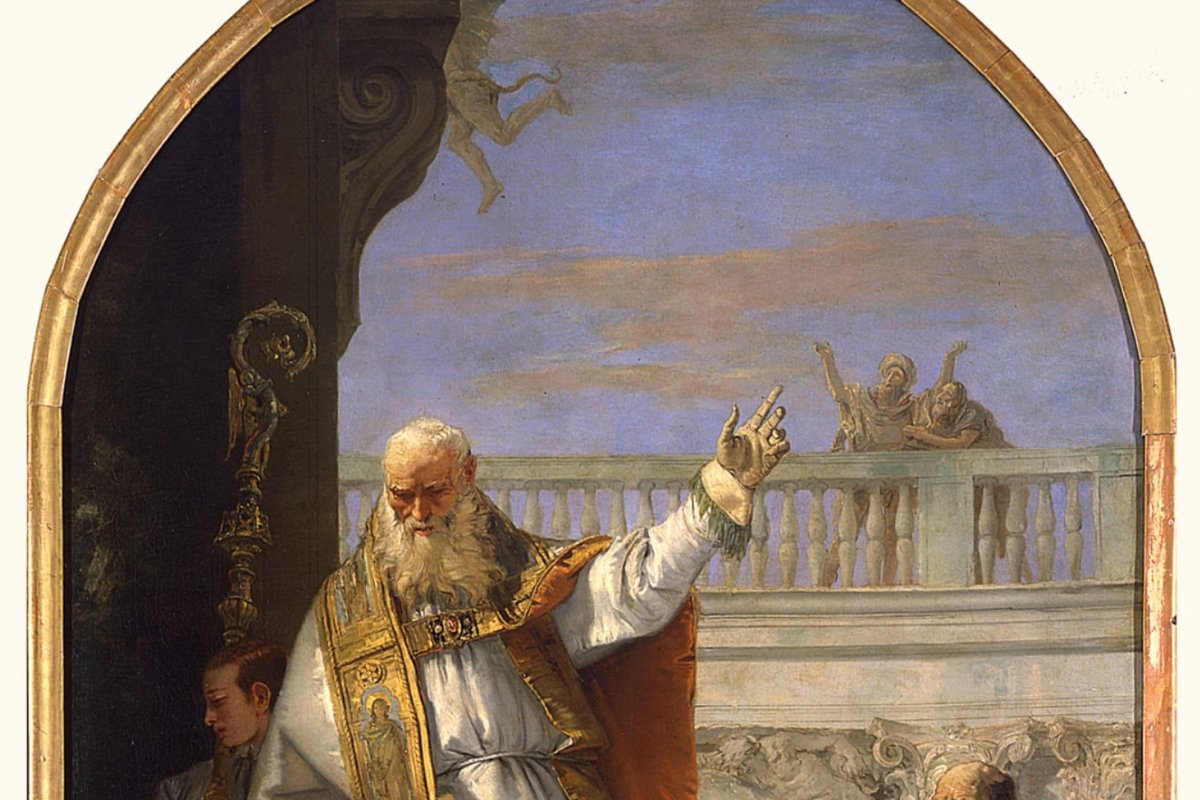
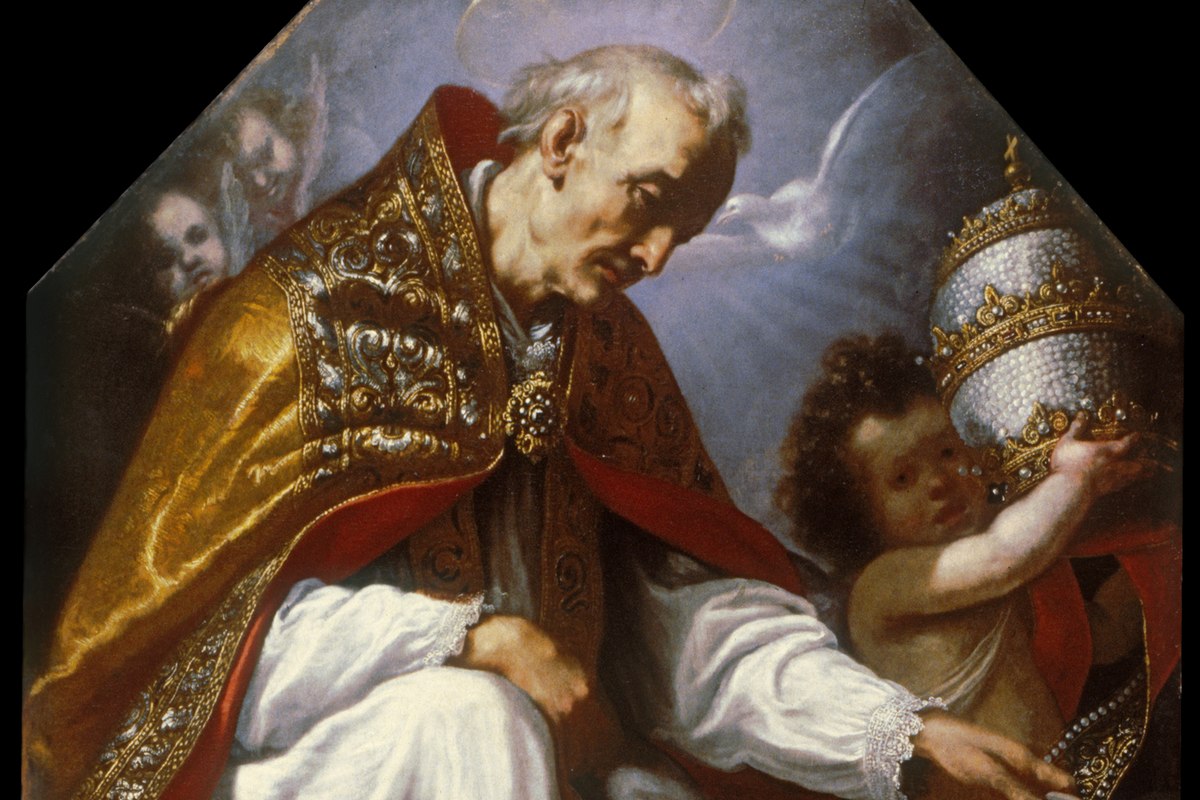
Giovanni Battista Tiepolo, "Saint Patrick, Bishop of Ireland," 1746, Musei Civici di Padova — public domain.
An escape, and an unlikely return
Eventually Patrick escaped, walked some 200 miles by his own account to find a ship, and talked his way onto it back to Britain, where he was reunited with his family. It's a striking image on its own: a young man with no map, no money, and no guarantee of welcome from a ship's crew, crossing unfamiliar territory on foot to reach a coastline he'd never actually seen as a free man. Most people who survive that kind of ordeal never go back. Patrick did — after years of training for the priesthood, most likely in Gaul, at monasteries where he continued studying Scripture and Latin theology despite the gaps in his early education, he returned to Ireland as a missionary bishop, to the very people who had enslaved him, driven by what he described as a call in a dream to go back and evangelize the Irish.
He spent the following decades establishing churches, baptizing converts, and training local clergy across a land with no previous Christian infrastructure to build on — no existing dioceses, no established religious communities, none of the institutional scaffolding missionaries elsewhere in the former Roman world could often rely on. Ireland had also never been part of the Roman Empire, which made Patrick's task different in kind from missionary work inside the old imperial borders: he was building the Church essentially from nothing, negotiating directly with local kings and chieftains whose favor could mean the difference between a mission that survived and one that didn't. His approach — winning over local rulers first, then building outward from their territories — became a template that later missionaries to non-Roman Europe, including Willibrord among the Frisians generations afterward, would follow in their own way.
What Patrick actually wrote, in his own words
Two documents survive that are genuinely his, and they matter more than any legend attached to his name later. The Confessio is a spiritual memoir and a defense of his mission, written in a plain, unpolished Latin that scholars take as a sign of its authenticity — Patrick himself worried openly about his own lack of formal education. It opens with striking directness: "My name is Patrick. I am a sinner, a simple country person, and the least of all believers." His other surviving work, the Letter to Coroticus, is a furious public rebuke of a British warlord whose soldiers had raided and enslaved a group of Patrick's newly baptized converts — a rare surviving example of a missionary bishop publicly shaming a Christian ruler for atrocities against his own flock.
The legend of the shamrock — and why it isn't history
The most famous story about Patrick, that he used a three-leafed shamrock to explain the Holy Trinity to Irish pagans, appears nowhere in his own writings and isn't recorded in any source until many centuries after his death. It's a charming teaching tool and a durable piece of Irish folklore, but it belongs to pious tradition, not documented history — a distinction worth holding onto, since so much of what circulates about Patrick today is legend layered over a much sparser, harder-won historical record.
Ireland's apostle, canonized by acclaim
Patrick died, traditionally, on March 17 — the date now kept worldwide as his feast and celebrated far beyond Ireland itself. He was never formally canonized in the modern sense; like many early saints, he was recognized through centuries of popular veneration long before the Church developed its current canonization process. He remains the patron saint of Ireland, remembered less for any single miracle than for the sheer improbability of his story: a man enslaved by the Irish who chose, freely, to spend his life among them anyway.
From a solemn feast to a global celebration
For centuries, March 17 was observed in Ireland primarily as a religious holy day — a break in the Lenten fast, marked by Mass rather than parades. The now-familiar public celebrations, parades, and wearing of green are largely a much later development, popularized above all by Irish immigrant communities in the United States during the 19th century, who used the day to assert a public, visible Irish Catholic identity in cities where that identity had often been met with prejudice. Ireland itself only began treating March 17 as a major public festival on anything like the current scale in the 20th century, in part reimporting the celebratory tone that had first taken hold abroad. That layered history — a solemn early medieval feast day, transformed by the diaspora, then re-exported back to Ireland — is part of what makes Patrick unusual among saints: few figures from the early Church have a feast day so thoroughly reshaped by the communities who carried his memory far from the country most associate him with.
Trivia
Was Saint Patrick actually Irish?
How did Patrick end up enslaved in Ireland?
Did Saint Patrick really use the shamrock to explain the Holy Trinity?
What did Patrick himself actually write?
Why is March 17 Saint Patrick's feast day?
Related Reading