Saint Apollonia

Violence before the persecution had a name
Apollonia's death predates the persecution most people associate with 3rd-century Christian martyrs. The organized, empire-wide campaign under Emperor Decius didn't begin until 250 AD — Apollonia was killed slightly earlier, in late 248 or early 249, during a spontaneous uprising of mob violence against Alexandria's Christian community rather than an official state persecution. Alexandria at the time was a major, cosmopolitan Roman city in Egypt, and anti-Christian sentiment there had been building for some time before it broke out into open, uncontrolled violence in the streets — the kind of event where a crowd, not a magistrate, decided who to target and how.
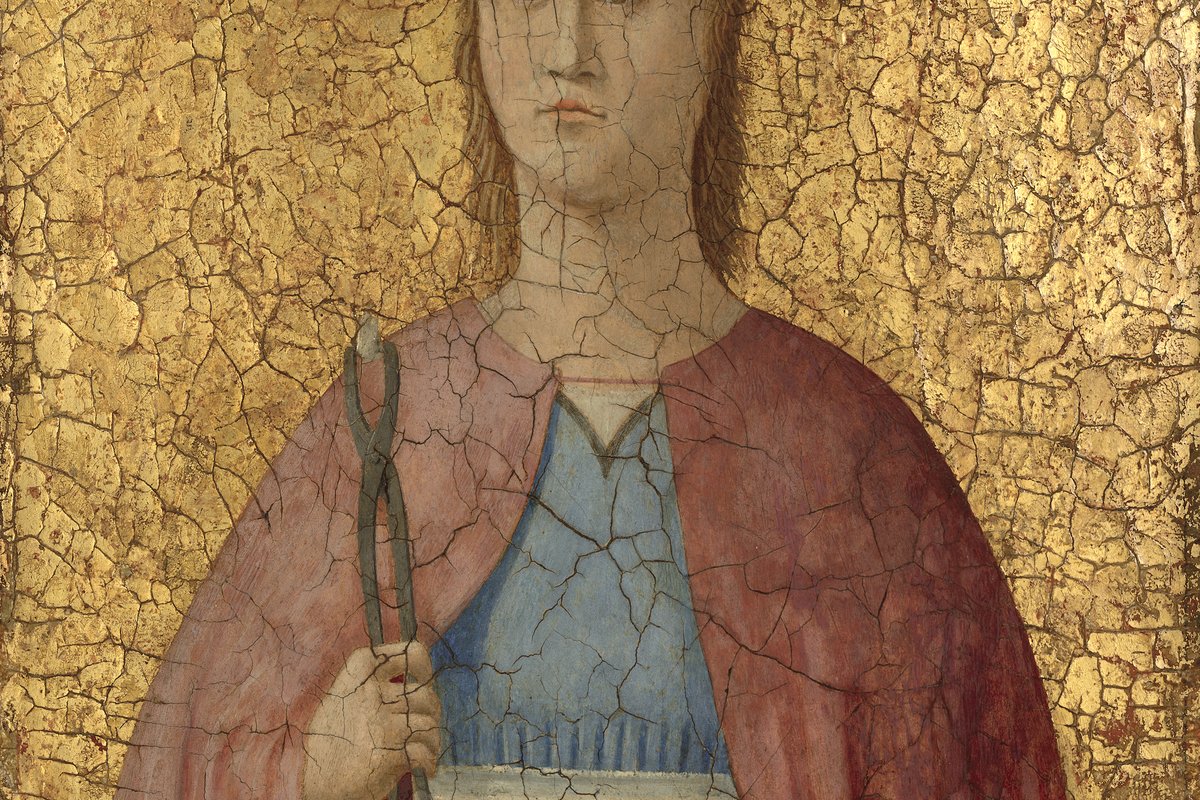
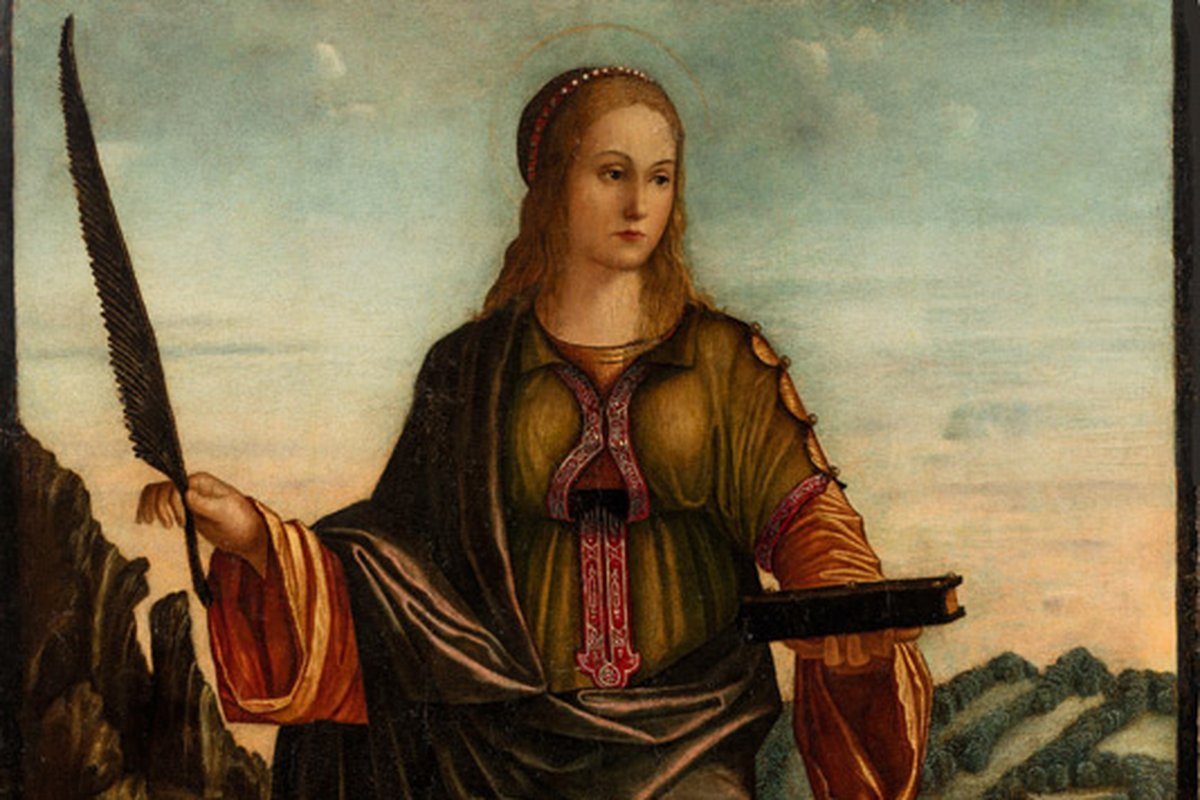
Attributed to Piero della Francesca, "Saint Apollonia," c. 1455–1460, National Gallery of Art, Washington — public domain.
A source closer to the truth than most
What sets Apollonia's story apart from many ancient virgin martyrs covered on this blog is the relative quality of the source behind it. The account comes from a letter written by Bishop Dionysius of Alexandria, who led the Christian community there at the time, and whose writing survives because the early Church historian Eusebius preserved it in his own history of the Church. That makes it a roughly contemporary account — written by someone with direct knowledge of the events, not a later hagiographer working from legend generations after the fact. It's still a fairly brief, sparse record by modern standards, and it doesn't answer every question a reader might have, but it stands on considerably firmer ground than the elaborate ancient Acts written about many of her contemporaries.
What the mob did, and what she chose
Apollonia was an elderly woman, identified in the tradition as a deaconess — a formally recognized role of service in the early Christian community. According to Dionysius's account, the mob seized her and violently knocked out or pulled her teeth during the attack, a detail specific and unusual enough that it became permanently attached to her memory. She was then threatened with being burned alive unless she renounced her Christian faith. Rather than be forced into the fire by her captors, tradition holds that she chose the moment herself, stepping into the flames voluntarily rather than being pushed — an act read ever since as a final, deliberate statement of faith rather than a passive execution.
What a deaconess actually did in the early Church
It's worth pausing on Apollonia's title, since "deaconess" meant something specific in the early Christian community and isn't simply an old-fashioned word for a laywoman who helped out. In the first centuries of the Church, deaconesses held a recognized, if not identical to the male diaconate, ministry: they assisted at the baptism of women (a rite that, at the time, involved full immersion and required attendants of the same sex for reasons of modesty), visited and cared for sick or homebound women, and served as a trusted go-between for women in the Christian community and the male clergy. Apollonia's status as a deaconess suggests she was likely an older, respected, established figure within Alexandria's Christian community by the time the mob turned on her — not a marginal or recently converted figure, but someone whose faith and service were already well known, which may be part of why she became a specific target when the violence broke out.
The patron dentists still call on
That detail about her teeth is the whole reason Apollonia remains a recognizable name today, nearly eighteen centuries later. She became, and remains, the patron saint of dentists and of anyone suffering a toothache, and she's traditionally depicted in religious art holding a pair of pincers gripping a single tooth — an image immediately recognizable even to people who know nothing else about her. Medieval and Renaissance depictions of her, including the panel attributed to Piero della Francesca that illustrates this article, follow that same visual formula with remarkable consistency across centuries and regions, which is itself a small testament to how thoroughly one grim physical detail can define a saint's entire visual identity. Her feast is kept on February 9, and compared to many other ancient virgin martyrs whose stories survive only in later, heavily embellished legendary Acts, her core story rests on a source close enough to her own lifetime that it carries real historical weight, even if it remains, by any standard, a spare and incomplete record of an extraordinary death.
A martyrdom debated even by early theologians
Apollonia's choice to step into the fire herself, rather than wait to be thrown in, became a genuine point of theological discussion among early Christian writers, including Saint Augustine of Hippo more than a century later. The Church had long taught that Christians should not seek out martyrdom or take their own lives even to avoid apostasy — deliberately courting death was viewed with real caution, distinct from bravely accepting death imposed by a persecutor. Augustine, addressing Apollonia's case specifically, concluded that her action should be understood as guided by a special, direct prompting of the Holy Spirit rather than as an example ordinary Christians should imitate on their own initiative — a careful theological distinction that let the Church honor her extraordinary witness without treating her final act as a general model for how any threatened Christian ought to respond.
Trivia
Who was Saint Apollonia?
How is the story of Saint Apollonia's martyrdom known?
What happened to Saint Apollonia's teeth?
Did Saint Apollonia die by jumping into a fire?
Why is Saint Apollonia the patron saint of dentists?
You May Also Like

Related Reading