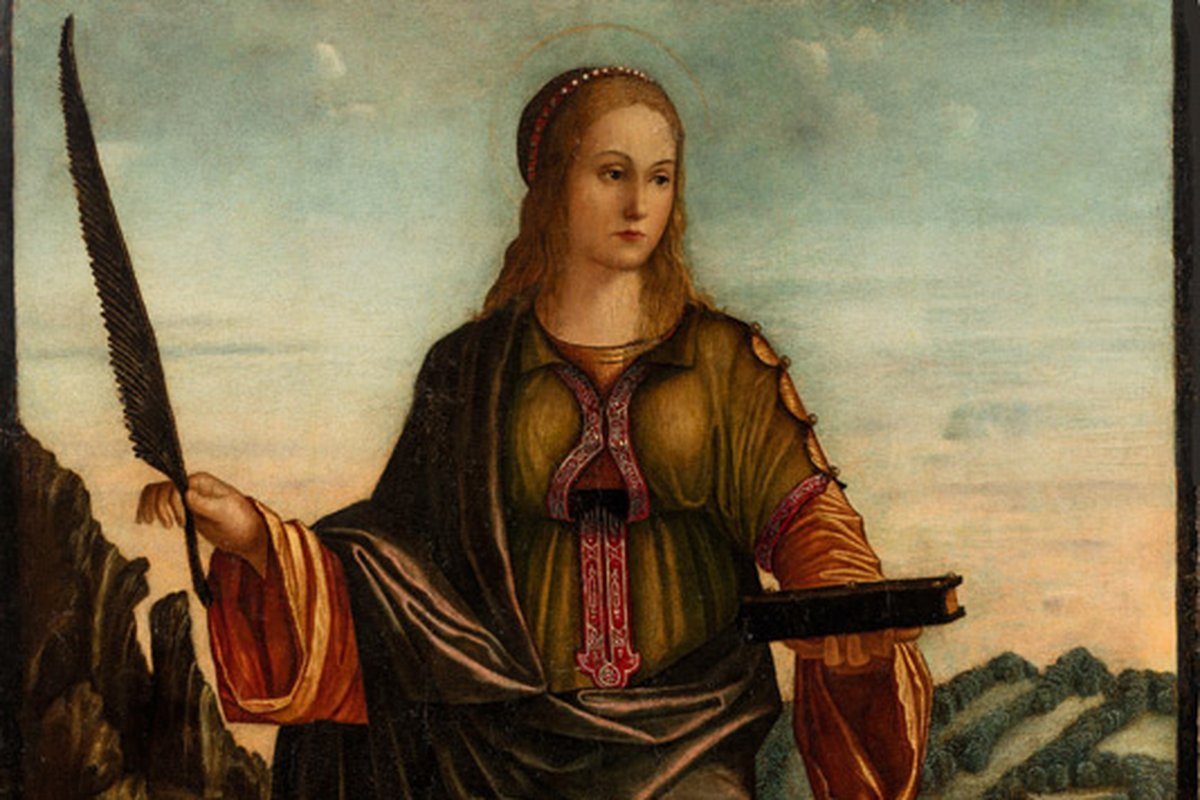
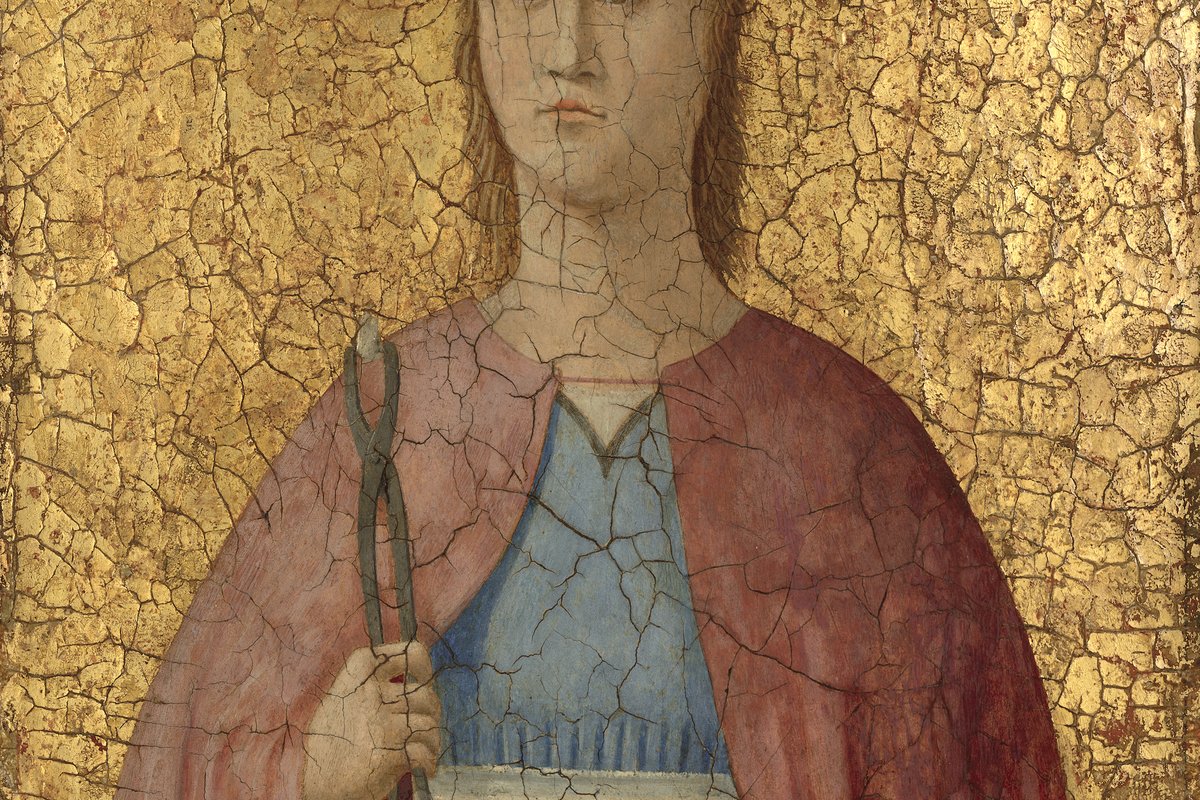
Saint Bibiana

One solid fact, and a name attached to it
Bibiana's entry in the historical record is short, and it's worth stating exactly how short before going any further. The earliest reliable evidence connected to her comes from the Liber Pontificalis, an early papal chronicle, which records that Pope Simplicius — who served as pope from 468 to 483 — consecrated a basilica in Rome built over her relics. That's essentially the entirety of what can be considered historically solid: a real woman named Bibiana, venerated enough by the mid-5th century that a pope dedicated a church to her memory. The Catholic Encyclopedia is unusually blunt about this, stating that "we have no further historical particulars" about her beyond that basilica record.
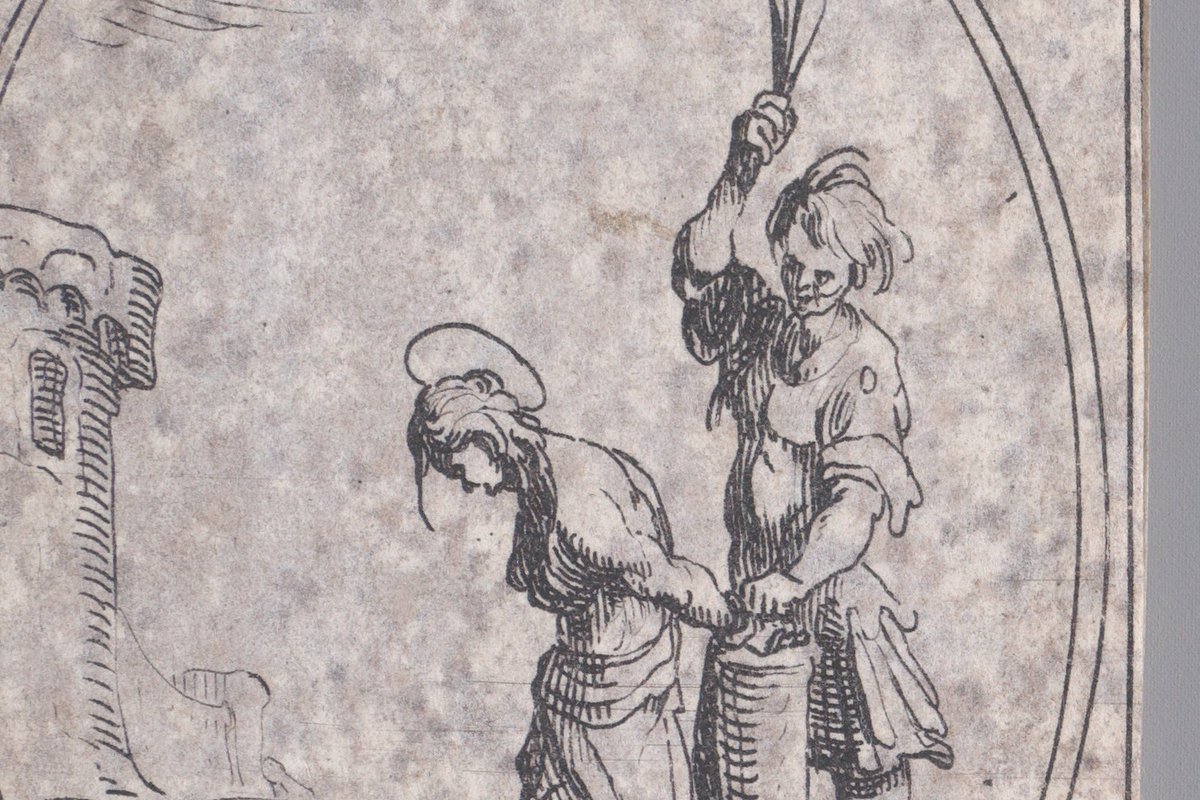
Jacques Callot, "St. Bibiana, Virgin and Martyr," engraving, 17th century, Metropolitan Museum of Art — public domain.
Simplicius's papacy fell in a genuinely turbulent period for Rome — the city had recently been sacked, the Western Roman Empire was in its final years of collapse, and yet the Church was still actively consecrating new churches over the tombs of martyrs whose cults were already established among the local population. That context matters: a basilica dedication of this kind wasn't a casual act. It signals that Bibiana's grave was already a recognized site of local devotion by the time Simplicius formalized it with a church, which pushes her actual veneration back earlier than the written record that survives, even if nothing further about her life can be reconstructed from it.
Why so many early Roman martyrs are this thin on detail
Bibiana's case is not unique, and it helps to understand why. Rome's catacombs and cemeteries held the graves of hundreds of early Christians who died under various waves of persecution, many remembered locally by name and little else — no surviving trial record, no eyewitness account, sometimes not even a securely dated death. Centuries later, when written martyrologies (calendars of saints with short biographical notes) were compiled, their authors sometimes filled in the gaps around a bare name with plausible-sounding narrative details drawn from the general pattern of Roman persecution stories, rather than from any specific surviving source about that particular person. Modern critical scholarship, especially the work of the Bollandists — a society of scholars, founded in the 17th century, dedicated to sorting reliable evidence about the saints from later legendary accretion — has applied exactly this kind of scrutiny to figures like Bibiana, which is precisely how the Catholic Encyclopedia arrives at its blunt conclusion above.
A martyrdom story the Church itself discounts
Centuries after Bibiana's death, a fuller narrative began circulating: that she was the daughter of a Roman prefect banished from the city under Emperor Julian the Apostate, the 4th-century emperor who attempted to roll back Christianity's growing influence in the empire, and that she was ultimately tied to a pillar and scourged to death with lead-weighted whips after refusing to abandon her faith. It's a vivid, specific story — the kind that makes for memorable religious art — but it needs to be treated with real caution. The Catholic Encyclopedia states directly that this martyrdom narrative "has no historical claim to belief." In other words, essentially the entire dramatic story most people would encounter about Bibiana's life and death is later legendary invention, layered onto a name the Church can otherwise document almost nothing else about.
A church, and later, a sculptor
What survived and grew, regardless of how thin the underlying history is, was the cult itself. The Basilica of Santa Bibiana in Rome, built on the traditional site of her burial, remained a place of pilgrimage and devotion for centuries. In the 17th century, the basilica was renovated under Pope Urban VIII, and the young sculptor Gian Lorenzo Bernini — early in what would become one of the most celebrated careers in Baroque art — was commissioned to carve a statue of Bibiana for the church, an image of serene composure that still draws visitors today regardless of how little can be verified about the woman it depicts. It's considered one of Bernini's earliest major religious commissions and an important early example of the emotionally direct devotional style he would go on to perfect in later, more famous works. The renovation also uncovered what were believed at the time to be the relics of Bibiana along with two other early Roman martyrs, Demetria and Dafrosa, traditionally identified in later legend as her mother and sister — though, consistent with everything else about her story, that family connection rests on the same unverifiable later tradition rather than independent historical confirmation.
Local Roman folklore also attached a plant to Bibiana's memory: a shrub said to have grown near her tomb was traditionally called "Saint Bibiana's herb," believed in popular medicine to have curative properties, particularly for the same afflictions — epilepsy and headaches — later associated with her intercession. It's the kind of small, specific detail that tends to accumulate around a local shrine over centuries, whether or not it connects to anything verifiable about the person being honored.
Patronages without a documented origin
Over time, popular devotion attached Bibiana to a specific set of causes: she's traditionally invoked against epilepsy and headaches, and — in a lighter, more folkloric register — against hangovers, as well as being regarded as a patron of torture victims and single laywomen. None of these associations trace back to a clear, documented historical origin; they developed the way many folk patronages do, through centuries of accumulated popular practice rather than any single decree or event that can be pointed to. Her feast is kept on December 2. Bibiana's story is worth keeping deliberately short and honest, because that brevity is itself the most accurate thing that can be said about her — a real woman, a real basilica, and very little else that survives real scrutiny.
Trivia
Who was Saint Bibiana?
Is the legend of Saint Bibiana's martyrdom historically reliable?
What does the legend say happened to Saint Bibiana?
Why is Saint Bibiana invoked against epilepsy and headaches?
When is the feast of Saint Bibiana, and where is she venerated?
You May Also Like
Related Reading