Saint Basil the Great

A bishop from a family of saints
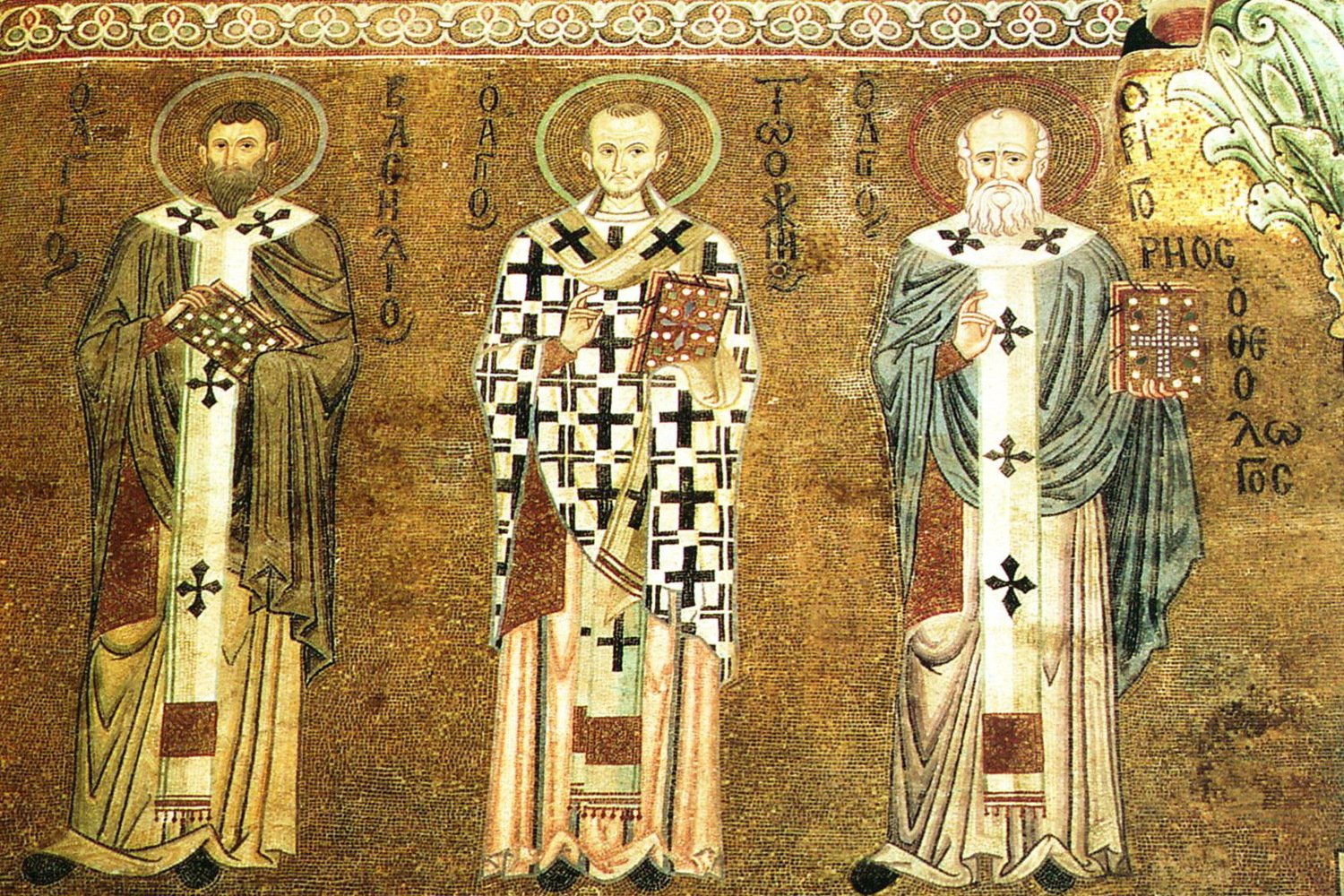
Basil was born around 329 in Caesarea, the capital of the Cappadocia region in what is now central Turkey, into a family remarkable even by the standards of the early Church — several of his siblings, including his brother Gregory of Nyssa and his sister Macrina, are venerated as saints in their own right, and his grandmother Macrina the Elder is venerated as well, making the household one of the rare examples of sanctity running through three generations of the same family. He studied rhetoric and philosophy in Constantinople and Athens, where he formed a close, lifelong friendship with a fellow student named Gregory, later known as Gregory Nazianzen. Together with Gregory of Nyssa, the three are remembered today as the Cappadocian Fathers, whose combined theological work did more than almost anyone else's to clarify the Church's teaching on the Trinity during a century of bitter doctrinal conflict.
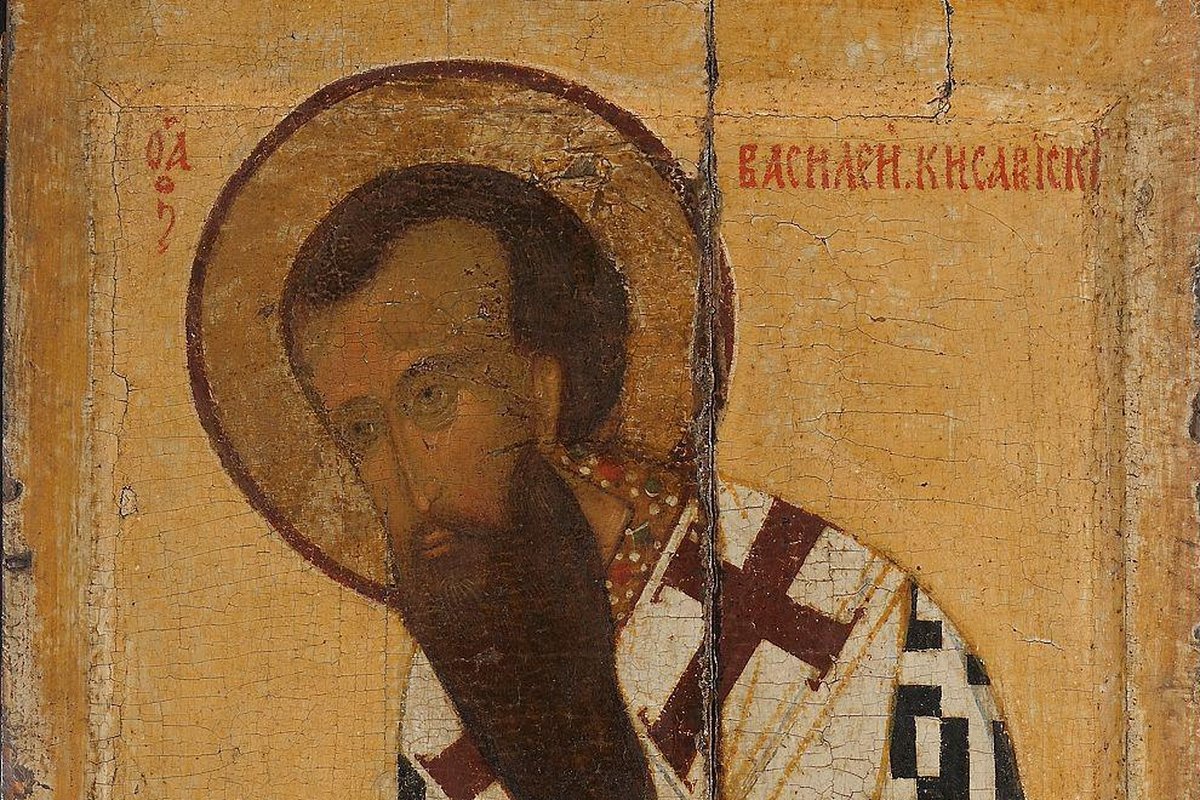
Novgorod school, icon of Saint Basil the Great, 15th century, National Museum of Art, Architecture and Design, Oslo — public domain.
After finishing his studies, Basil didn't head straight into Church leadership. He traveled through Egypt, Syria, and Palestine visiting the monastic communities that had grown up in the desert, observing how different groups of ascetics organized their daily life, prayer, and manual labor. That firsthand research shaped everything he did afterward — rather than adopting the solitary hermit model he'd witnessed in Egypt wholesale, he came home convinced that community life, with monks living, praying, and working together under a shared discipline, was both more spiritually sound and more practically sustainable than solitary asceticism.
Building a city for the poor
After years drawn to ascetic monastic life, Basil became bishop of Caesarea around 370. It was in this role that he built the project that became his most visible legacy: a sprawling complex just outside the city walls providing hospitals, housing for travelers, and one of the era's few organized places of care for people with leprosy, who were otherwise shut out of ordinary society entirely. Contemporaries called the complex the "Basiliad," and it stood as one of the most ambitious organized charitable institutions the Christian world had yet produced — a scale of structured care for the poor that went well beyond individual almsgiving.
Basil personally funded much of the project by giving away his own family's considerable wealth, and he preached forcefully, in sermons that survive to this day, against the wealthy of Caesarea hoarding grain during a famine rather than sharing it — telling them plainly that surplus grain left to rot while neighbors starved was theft from the poor, not simply the fortunate exercise of private property. That combination of personal example and public preaching gave the Basiliad real credibility in a city where charity could otherwise have looked like empty gesture. By some later accounts, the complex grew large enough to function almost as its own suburb of Caesarea, complete with housing for the staff who ran it.
Writing the rule that shaped Eastern monasticism
Basil is equally remembered for his written rule for monastic life, developed from his own experience with ascetic communities. Rather than favoring the solitary hermit life common in the Egyptian desert tradition, Basil emphasized community, shared labor, and structured prayer among monks living together — an approach still foundational to Eastern Orthodox and Eastern Catholic monasticism today, playing a role roughly comparable to what the Rule of Saint Benedict later became in the West.
A word of caution about "Basil quotes"
Basil is one of the most misquoted Church Fathers online, with many popular sayings attributed to him that can't be traced to any of his actual surviving writing. One line that does check out, from his Address to Young Men on the Right Use of Greek Literature — advice to Christian students on reading pagan authors selectively — reads: "Therefore the soul must be guarded with great care, lest through our love for letters it receive some contamination unawares, as men drink in poison with honey." It's a rare case of a Church Father directly addressing how to engage with secular learning without either rejecting or naively absorbing it.
Doctor of the Church, patron of the sick and dying
Pope Pius V formally recognized Basil as a Doctor of the Church in 1568, cementing a reputation for theological depth that had already stood for well over a millennium. His feast day, January 2, is kept jointly with his old friend Gregory Nazianzen. He's honored today as patron of hospital administrators — a direct line back to the Basiliad — as well as of monks, of Cappadocia, and of Russia, where Eastern Christian devotion to him remains especially strong.
Basil's influence on Christian worship also extends into the liturgy itself: the Divine Liturgy of Saint Basil the Great remains one of the principal eucharistic liturgies used in the Eastern Orthodox and Eastern Catholic Churches, celebrated on major feasts throughout the liturgical year, a living link between the ordinary Sunday worship of millions of Eastern Christians today and a bishop who died over 1,600 years ago. In several Eastern European and Orthodox cultures, Basil is also woven into New Year's traditions, since he died on January 1 — children in Greece, for instance, traditionally receive gifts from "Saint Basil" rather than from Santa Claus, a custom that ties his memory directly to the turning of the calendar year. For readers interested in the wider circle of bishops who shaped Trinitarian theology in this same turbulent century, Saint Cyril of Jerusalem makes a natural next read — another 4th-century bishop who spent much of his career defending the same Nicene faith Basil and the other Cappadocian Fathers worked so hard to articulate clearly.
Trivia
Who was Saint Basil the Great?
What was the Basiliad?
Who are the Cappadocian Fathers?
Why is Basil the Great a Doctor of the Church?
When is the feast day of Saint Basil the Great?
You May Also Like
Related Reading