Saint Valentine of Rome


A priest and physician under a persecuting emperor
Valentine was a Roman priest and physician martyred during the persecution of Christians carried out by Emperor Claudius II Gothicus, around 270 AD — a period when Christianity was still an illegal religion in the empire, decades before Constantine's Edict of Milan would grant it legal protection. Little else about his life survives in reliable historical records; what has come down to us is a mix of a few administrative facts and a much larger body of legend that accumulated around his name over the following centuries. He was buried on the Via Flaminia, the great Roman road running north out of the city, and Pope Julius I later built a basilica over his grave in the fourth century — one of the few concrete facts historians largely agree on regarding his life, since it points to an already well-established local cult of veneration only decades after his death.
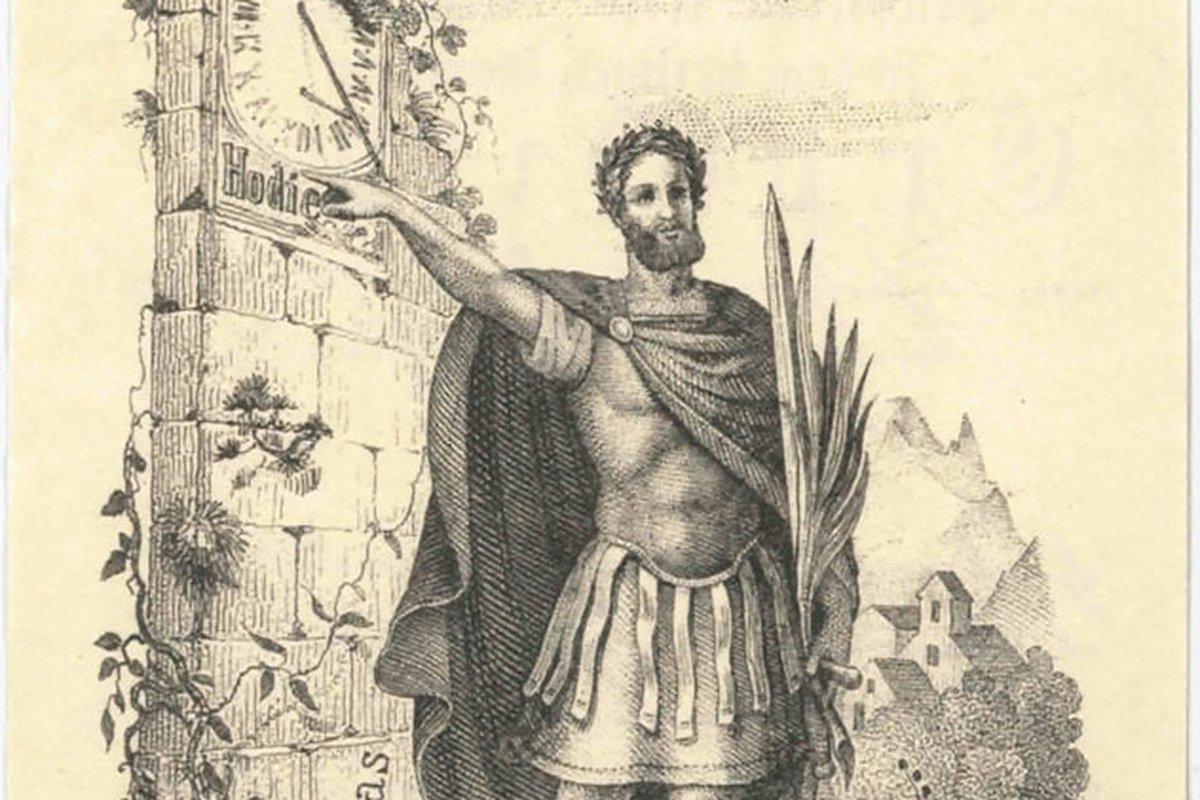
Traditional depiction of Saint Valentine of Rome, public domain.
A name attached to more than one man
The Catholic Encyclopedia identifies at least three Saints Valentine connected with February 14: a Roman priest martyred under Claudius II, a bishop of Interamna (present-day Terni, north of Rome), and a third Valentine martyred in Africa about whom almost nothing is known. The Roman priest and the bishop of Interamna were buried at different points along the same road outside Rome, and some historians suspect the two may in fact be the same man, with local traditions in different towns each claiming him as their own. The lack of reliable information distinguishing between them led the Church, during its 1969 revision of the liturgical calendar, to remove Valentine from the General Roman Calendar of universal feast days — not a denial that he existed or was a genuine martyr, but an acknowledgment that too little verified historical detail survived to justify a fixed, universal feast. He continues to be honored on local calendars and remains listed among recognized saints.
The legends behind the holiday
Two stories account for his later association with romance, both preserved only in legend rather than in contemporary historical sources, and neither should be taken as verified fact. In one, he is said to have signed a farewell letter "from your Valentine" to his jailer's daughter, a young woman he had befriended and reportedly healed of blindness while awaiting execution — the origin, by tradition, of the phrase still printed on cards every February. In another, he defied the emperor's orders by secretly marrying young couples, sparing husbands from being conscripted into Rome's wars, an act of quiet defiance built directly into the legend's core. Neither story appears in the earliest records of his martyrdom; both emerged later, likely shaped by medieval writers, including Geoffrey Chaucer, who in the fourteenth century helped popularize the association between Valentine's feast day and the springtime pairing of birds — an image that, over time, folded into the wider tradition of romantic love.
A sentence carried out on February 14
Valentine was arrested and brought before the prefect of Rome, who, according to tradition, first tried to persuade him to renounce his faith and worship the Roman gods before condemning him. He was sentenced to be beaten to death with clubs and then beheaded, a sentence carried out on or about February 14, around the year 270. The date itself may also owe something to Lupercalia, an older Roman festival held in mid-February associated with fertility, which some historians believe influenced how a Christian martyr's feast day came to be linked, centuries later, with courtship and romance — though this connection remains debated among scholars rather than settled fact. He is remembered today as the patron saint of lovers, of people with epilepsy, and of beekeepers, alongside saints like Saint Agnes of Rome, another young Roman martyr of the early Church whose story likewise survives mostly through pious tradition rather than contemporary record — a small, historically uncertain figure who nonetheless gave his name to the world's most widely celebrated day of romance.
From a Roman grave to a global holiday
The basilica Pope Julius I built over Valentine's grave on the Via Flaminia became, in the following centuries, an important pilgrimage site, and portions of what are venerated as his relics were eventually distributed to churches across Europe, a common practice in the medieval Church that helped spread a saint's veneration well beyond the place of martyrdom. Dublin's Whitefriar Street Church in Ireland and the Basilica of Santa Maria in Cosmedin in Rome both display relics associated with him today, drawing visitors especially around his feast day. The transformation of that feast into a global celebration of romantic love owes less to anything documented about Valentine's own life than to centuries of literary and commercial accretion, from medieval poetry linking mid-February to courtship, to the Victorian-era boom in mass-produced greeting cards, to the modern holiday recognized, in some form, on nearly every continent. It is a striking arc for a man about whom almost nothing certain survives beyond the fact that he died for his faith on a February day in ancient Rome.
Trivia
Who was Saint Valentine of Rome?
Why is his identity uncertain?
What legends are associated with him?
How was he executed?
Related Reading