Saint Cecilia — Heavenly Music


A wedding sung silently to God
Cecilia was born to a noble Roman family at the beginning of the third century, and is popularly believed to have been martyred around 230 AD under Emperor Alexander Severus — though, as with many early Roman martyrs, the surviving details of her life come from a much later account, the fifth-century "Passio," rather than from contemporary records, so historians treat the specifics as pious tradition layered onto a genuine, ancient cult of veneration. Despite her private vow of virginity, her parents forced her to marry a pagan nobleman named Valerian, a match arranged for social and financial reasons typical of the Roman aristocracy of her time. According to the legend, during the wedding itself, Cecilia sat apart, singing to God in her heart rather than joining the celebration around her — the moment tradition credits as the foundation of her later patronage over music, even though the story as it survives says nothing about her actually performing music herself.
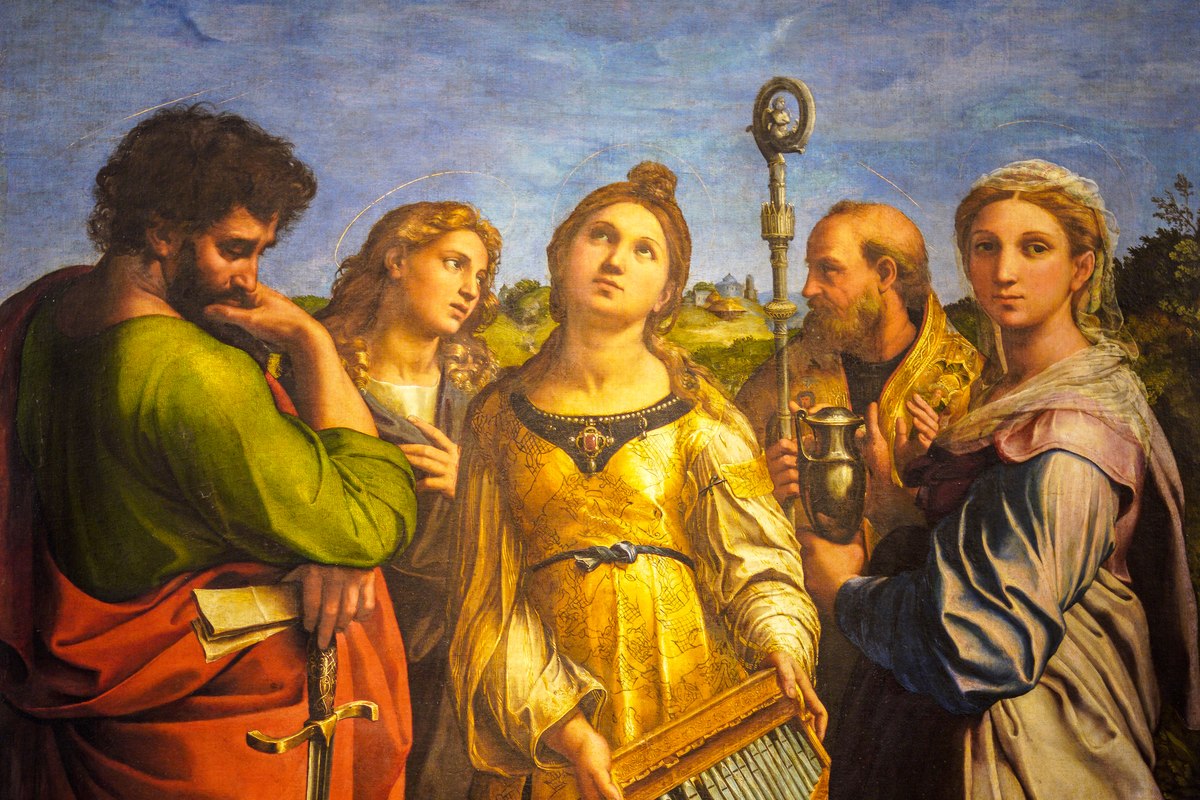
Traditional depiction of Saint Cecilia, public domain.
A husband converted by an angel's condition
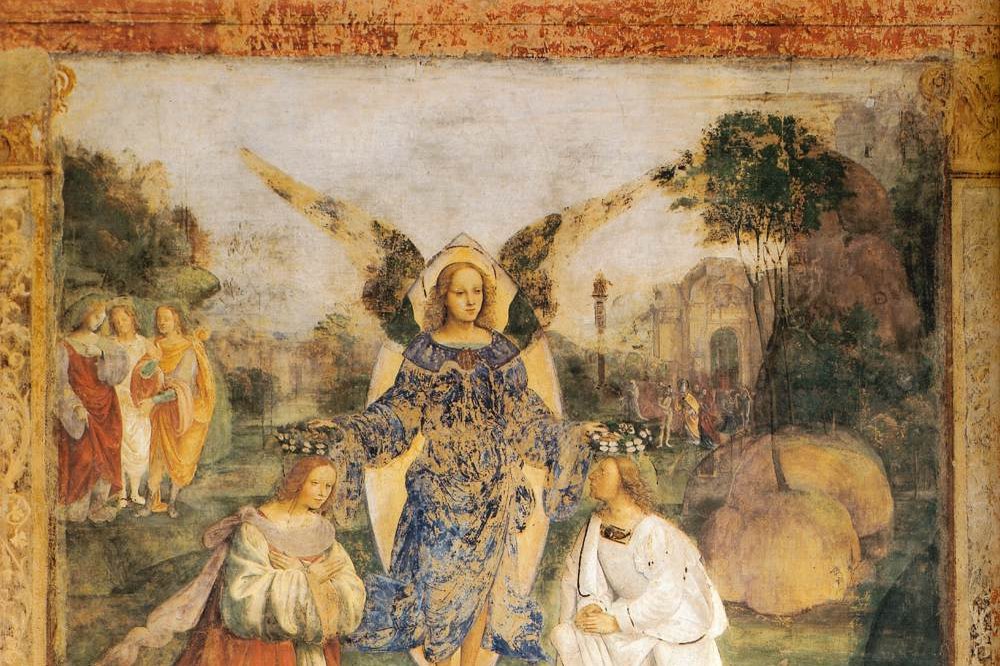
On their wedding night, Cecilia is said to have told Valerian that an angel watched over her and guarded her virginity, and that he would be struck down if he touched her with impure intent. When Valerian asked to see this angel for himself, she gave him a specific condition: he would have to travel to the third milestone on the Via Appia, the ancient road leading south out of Rome, and be baptized there by Pope Urban I, who at the time was living in hiding due to the persecution of Christians. Valerian did so, and was converted; Cecilia then brought his brother Tiburtius to the same faith, and both men reportedly saw the angel she had spoken of before both were arrested and martyred ahead of her for burying the bodies of other executed Christians — an act of mercy that was itself a capital offense under Roman law at the time.
A martyrdom that took three days
Legend holds that Cecilia herself was sentenced to death by suffocation in the steaming Roman baths beneath her own house, on the orders of the prefect Almachius, but survived an entire day and night unscathed, untouched by the heat. Condemned next to beheading, the executioner's axe struck three times without fully severing her head — Roman law limited an executioner to three blows — leaving her with three wounds instead. She lingered for three days afterward, using the time, according to tradition, to distribute her remaining possessions to the poor and to ask that her house be turned into a church, before finally dying around 230 AD.
Relics discovered incorrupt
At the beginning of the ninth century, Pope Paschal I discovered Cecilia's relics, reportedly incorrupt, in the catacomb of St. Praetextatus outside Rome, and had them moved to a basilica in the Trastevere neighborhood that now bears her name, built over what tradition holds was the site of her own house. Centuries later, in 1599, workers restoring the church reportedly found her body still undecayed when her tomb was opened, an event the sculptor Stefano Maderno commemorated in a marble statue beneath the altar showing her exactly as witnesses described finding her — a work that remains one of the most visited images connected to her cult today. The Mass for her feast day, November 22, still opens with an antiphon recalling the wedding-day legend that made her the Church's patron saint of music: "while the organs played, she sang in her heart only to the Lord." Her patronage has extended over centuries to composers, choirs, and instrument makers alike, and her feast remains particularly associated with sacred music societies, much as Saint Luke became patron of painters through a tradition that likewise grew up long after his own lifetime.
An inspiration for centuries of composers
Cecilia's association with music grew so strong over the centuries that her feast day became, in many European cities, an occasion for elaborate musical performance in her honor. Confraternities and academies of musicians dedicated to her sprang up across Italy, France, and England beginning in the Renaissance, commissioning new works specifically for her feast; George Frideric Handel and Henry Purcell both composed odes for Saint Cecilia's Day celebrations in London, and countless other composers across the centuries wrote Masses, motets, and instrumental pieces bearing her name. Raphael's early sixteenth-century painting of her, showing her surrounded by musical instruments and listening to a choir of angels, became one of the most influential images of her in Western art and helped cement the organ, in particular, as her most recognizable attribute — even though the instrument would not have existed in anything like its later form during her own lifetime in ancient Rome.
Choirs, conservatories, and music schools across the Catholic world continue to bear her name today, and her feast day each November remains, in many dioceses, an occasion for special concerts and liturgical music honoring the connection between beauty, prayer, and sound that her legend first suggested nearly eighteen centuries ago.
Trivia
Who was Saint Cecilia?
Why is she the patron saint of music?
What is the story of her husband Valerian?
How was she martyred?
Related Reading