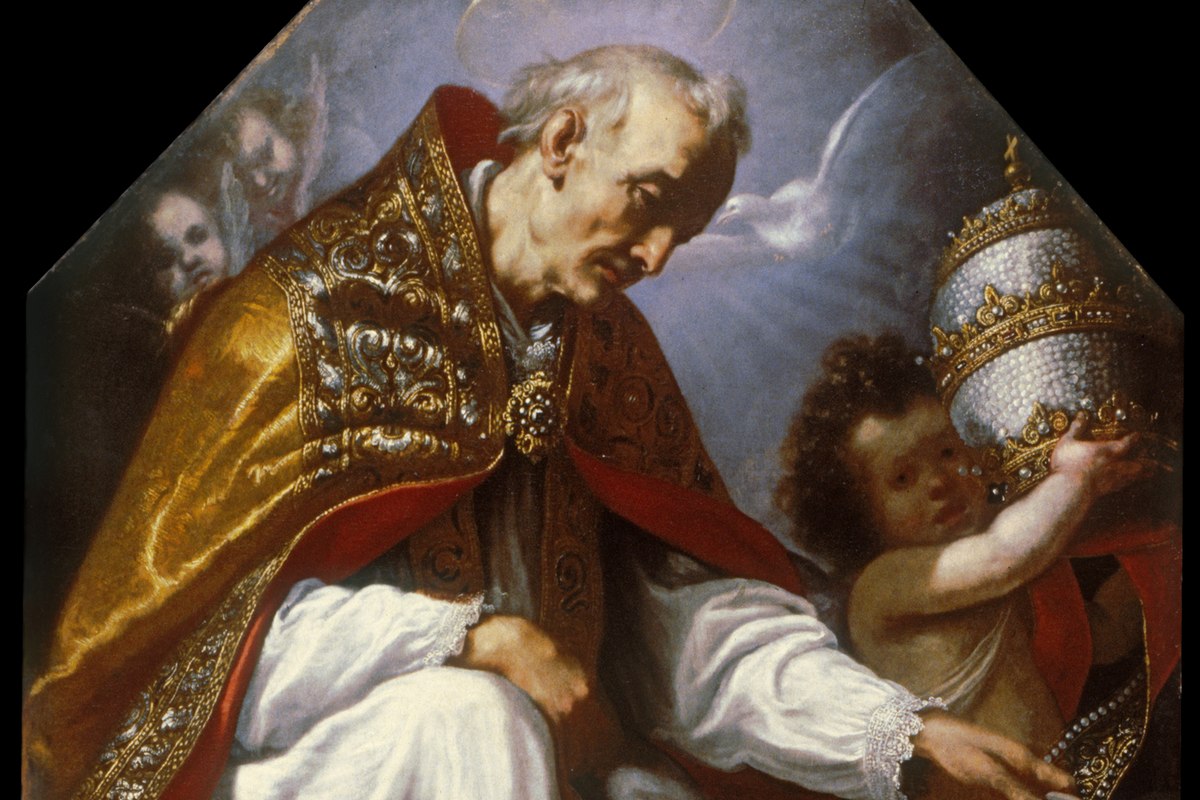
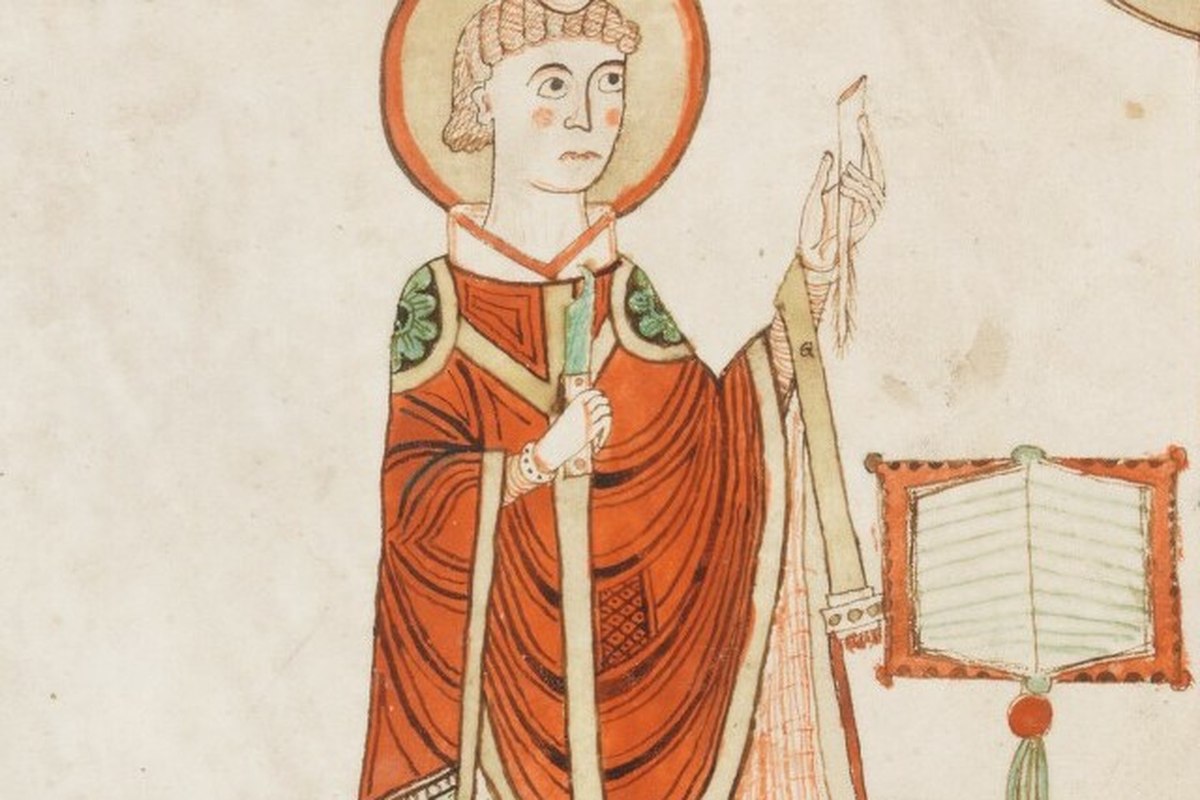
Saint Bonaventure

A Franciscan theologian trained in Paris
Bonaventure was born Giovanni di Fidanza in 1221 in Bagnoregio, a small town in central Italy. He entered the Franciscan order as a young man and went on to study and teach at the University of Paris, at the time the intellectual center of Western Christendom, where he crossed paths with Thomas Aquinas — the two were close contemporaries, Bonaventure representing the Franciscans' more mystical, Augustinian theological tradition and Aquinas the Dominicans' more systematically Aristotelian approach. Their friendship, by most accounts, was genuine, even as their two orders sometimes competed for influence and status within the university.
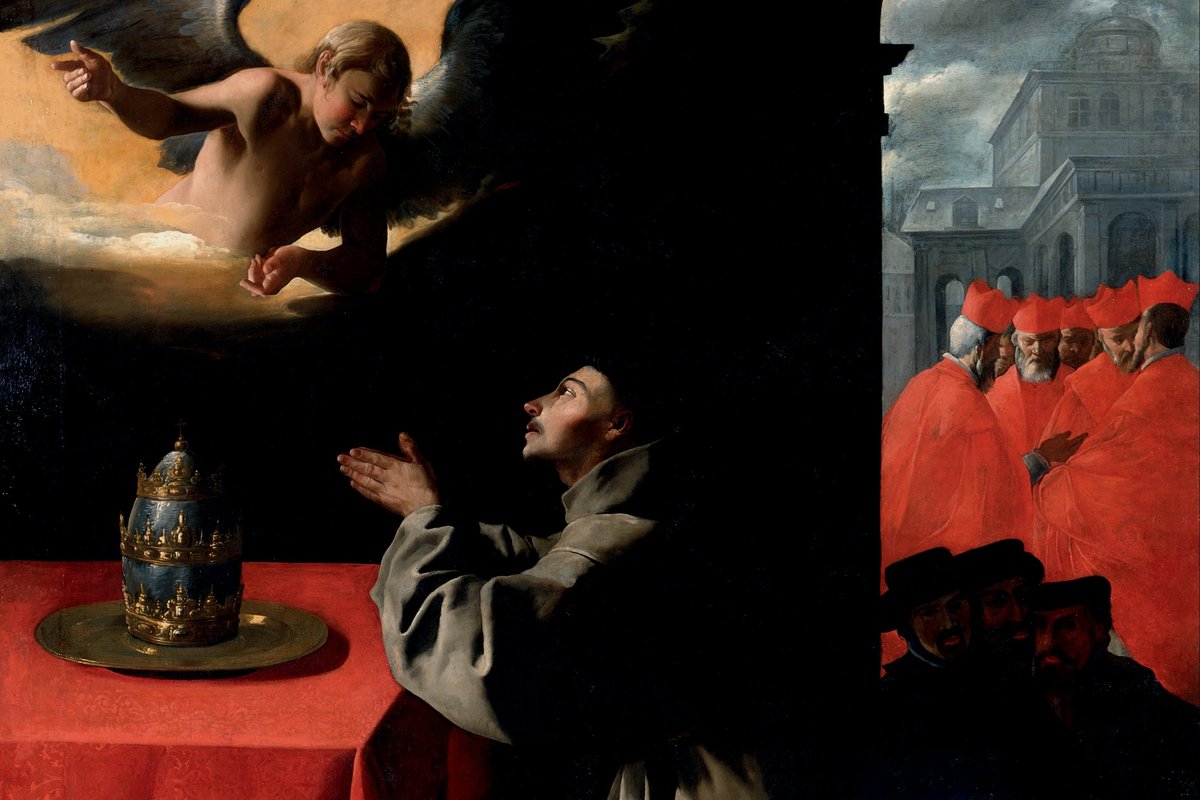
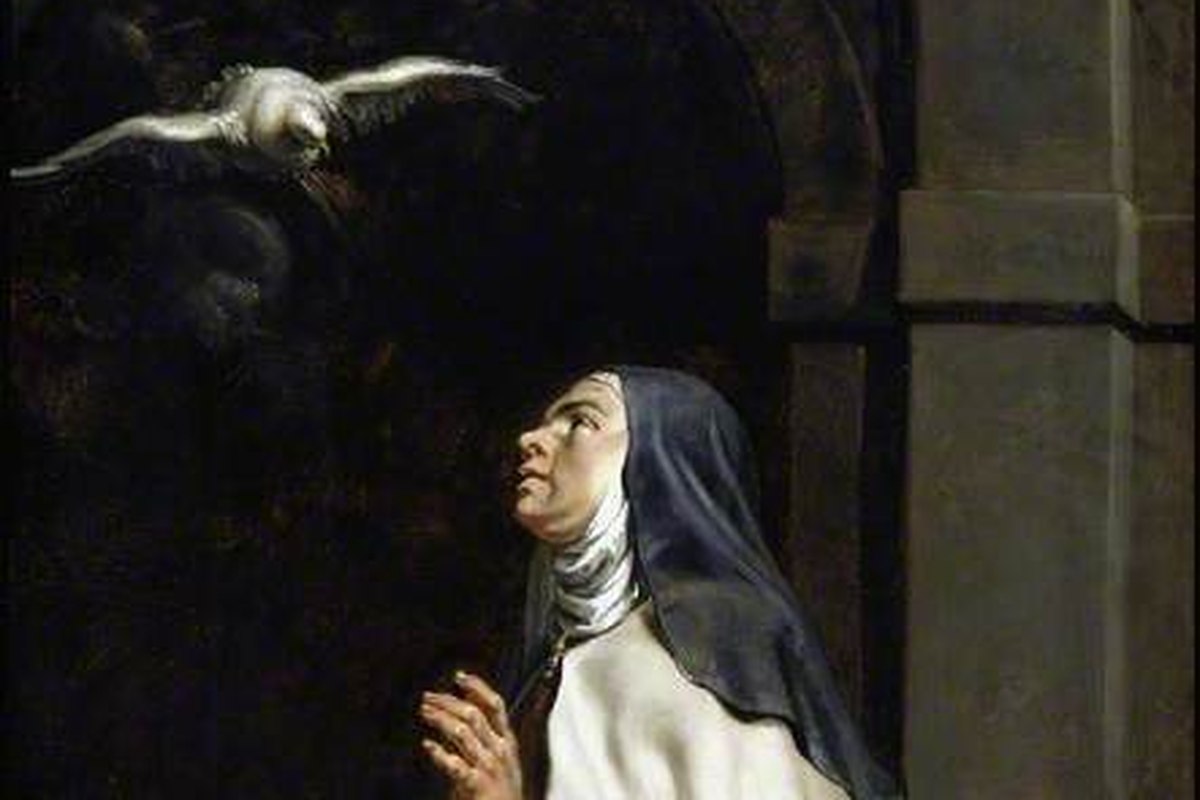
Francisco de Zurbarán, "The Prayer of St. Bonaventura about the Selection of the New Pope," c. 1629, Gemäldegalerie Alte Meister, Dresden — public domain.
A legend worth setting aside
A popular story holds that Bonaventure owed his very name to Francis of Assisi himself — that as a gravely ill child, he was healed through Francis's prayers, and Francis, seeing the boy restored, exclaimed "O buona ventura!" ("oh, good fortune!"), which later became the friar's name. It's a lovely story, and a persistent one, but historians generally treat it as a later embellishment rather than documented fact — there's no reliable contemporary source connecting it directly to Bonaventure's actual childhood. It belongs with the category of pious legend that grows up around beloved saints over time, not with the verified record of his life.
Leading the Franciscans through internal crisis
In 1257, Bonaventure was elected Minister General of the Franciscan order, at a moment when the Franciscans were badly split over how strictly to interpret Francis of Assisi's original, radical vision of poverty. One faction, later called the Spirituals, insisted the order must own nothing at all, not even collectively, exactly as Francis himself had lived; another argued that an order that had grown to thousands of friars running schools, preaching missions, and staffing university chairs across Europe needed some institutional stability to keep functioning. Bonaventure spent years working to hold the order together, steering a middle path between factions that wanted absolute, literal poverty and those who argued the growing order needed practical flexibility to function at all — a role that earned him the informal title of the order's "second founder," since it was largely his diplomacy, not new revelation, that kept the Franciscans from splitting apart entirely in his own lifetime. His own writing on the subject, along with his official biography of Francis, the Legenda Maior, became the order's standard account of its founder's life; in 1266, the Franciscans' general chapter went so far as to order all earlier biographies of Francis destroyed so that Bonaventure's version alone would stand as the authoritative account, a decision that shaped how later centuries would remember Francis every bit as much as Francis's own life did.
Bonaventure was also, by multiple accounts, instrumental in the 1271 election of Pope Gregory X — the very pope who would later make him a cardinal — after a papal vacancy so prolonged, nearly three years, that frustrated townspeople in Viterbo reportedly tore the roof off the building where the cardinals were deliberating to force a decision. The scene became a favorite subject for later painters, including the Zurbarán canvas that illustrates this article, showing Bonaventure in prayer beside the empty papal tiara as the choice was being made.
The Seraphic Doctor's theology of ascent
Bonaventure's theological writing is distinctively mystical in character, most famously in the Itinerarium Mentis in Deum, "The Journey of the Mind to God" — a structured meditation describing the soul's step-by-step ascent from the created world, through self-knowledge, toward direct contemplation of God. Rather than quoting any single line out of that dense, carefully built argument, it's worth simply naming its central idea: that everything in creation, examined rightly, works as a kind of ladder pointing the searching mind back toward its maker — a very different theological temperament from the more systematic, question-and-answer method his friend Aquinas was using in the same city at almost exactly the same time.
Death in the middle of a council
In 1273, Pope Gregory X made Bonaventure a cardinal-bishop and drew him into preparations for the Second Council of Lyons, convened in 1274 with the ambitious goal of healing the Great Schism that had divided the Western and Eastern Churches since 1054. Bonaventure played a central role in the council's opening sessions — and then died there, in Lyon, before its business had concluded. The reunion the council achieved on paper proved fragile and collapsed within years, but Bonaventure's death mid-council remains a striking image: a theologian who spent his life writing about the soul's journey toward unity with God, dying in the middle of the Church's own unfinished effort at unity with itself.
Doctor of the Church
Bonaventure was canonized in 1482 and declared a Doctor of the Church in 1588, earning the title "Doctor Seraphicus," the Seraphic Doctor, for the ardent, devotional quality of his theology. His feast day is July 15, and he remains one of the central figures of Franciscan intellectual life — proof that the order founded by a saint who owned almost nothing could also produce, within a few decades, one of the Middle Ages' most respected theological minds.
Trivia
Who was Saint Bonaventure?
Is the story about Francis of Assisi naming Bonaventure 'O buona ventura' true?
What is Bonaventure's connection to Thomas Aquinas?
How did Bonaventure die?
Why is Bonaventure called the 'Seraphic Doctor'?
Related Reading