Saint Francis of Assisi

A wealthy son who chose to have nothing
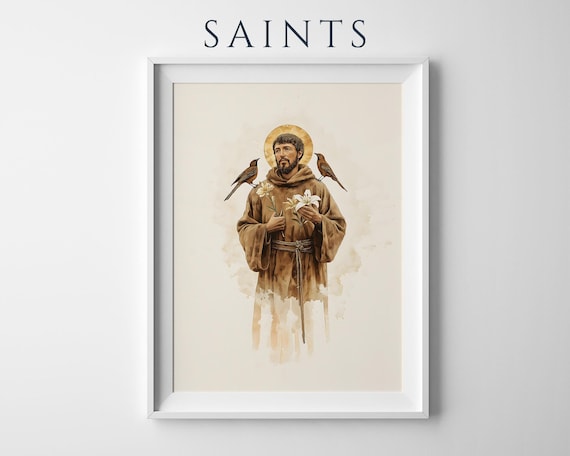
Francis's early life gave no hint of what was coming. Born in 1181 to a prosperous cloth merchant, he grew up with money, and by most accounts enjoyed spending it — until a period of illness following military service and imprisonment left him reconsidering the direction of his life. The break, when it came, was total and public: Francis renounced his inheritance in the town square of Assisi, reportedly removing even the clothes his father had given him, choosing deliberate poverty over the comfortable future that had been laid out for him.
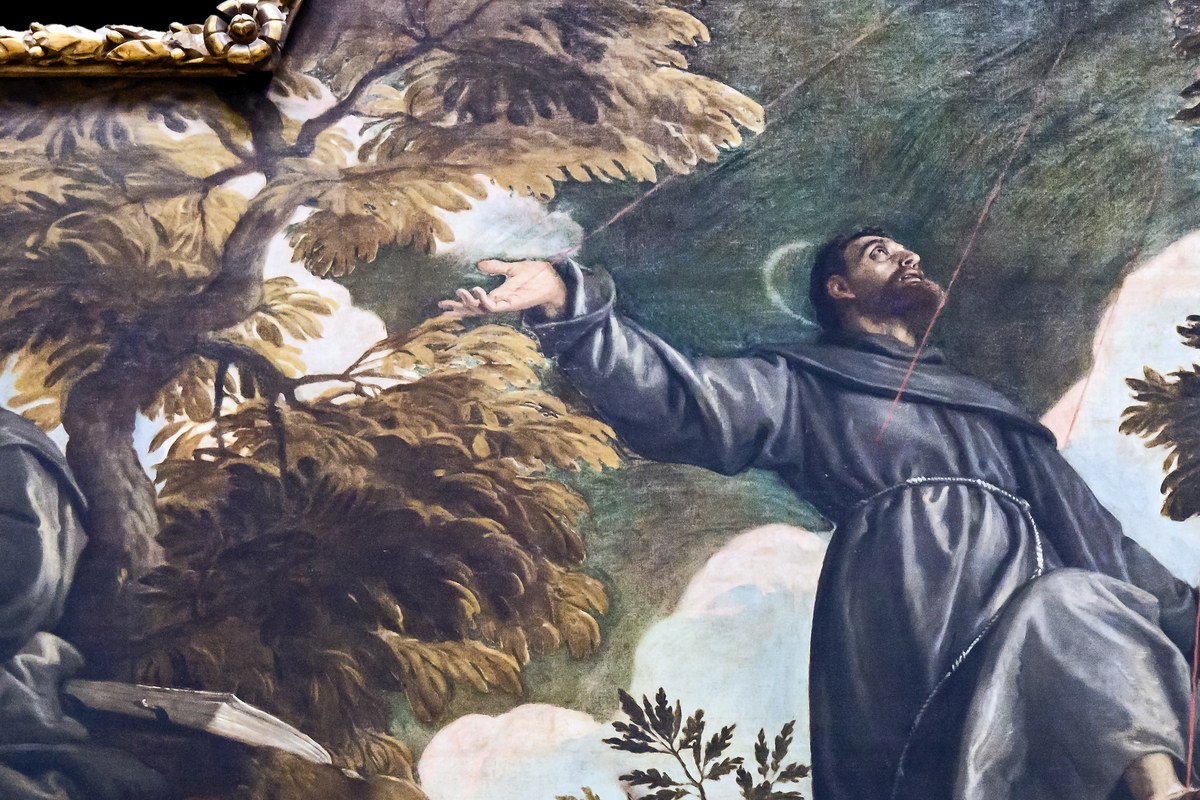
Paolo Veronese, "Saint Francis Receiving the Stigmata," 16th century, Gallerie dell'Accademia, Venice — public domain.
Before that final break, Francis had already spent time rebuilding a crumbling chapel outside Assisi called San Damiano, after reportedly hearing a crucifix there speak to him with the words "Francis, rebuild my church, which as you see is falling into ruin." He initially took the instruction literally, selling cloth from his father's shop to pay for stone and mortar — a decision that triggered his father's fury and led to the public confrontation in the town square. Only later would Francis and his followers come to understand those words as pointing to something much larger than a single building: not a chapel in need of repair, but the wider Church itself, which Francis's own reform would help renew from the ground up.
Founding a movement built on having nothing
By 1209, Francis had gathered a small circle of followers committed to living out the Gospel as literally as possible — owning nothing, begging for what they needed, and preaching openly rather than staying cloistered. What began as a handful of men in patched robes grew, within Francis's own lifetime, into one of the largest religious orders in the Church, and the model he set — radical simplicity, direct engagement with ordinary people, a refusal to accumulate anything — became the defining character of the Franciscan movement that still carries his name today.
Francis's model of poverty proved so persuasive that women soon sought a similar path. In 1212, a young noblewoman from Assisi named Clare left her family in the middle of the night to join Francis, becoming the founder of what would become the Poor Clares — a parallel women's order built on the same radical commitment to owning nothing. You can read more about her own remarkable story in Saint Clare of Assisi. Francis also traveled to Egypt during the Fifth Crusade in 1219, crossing enemy lines to meet personally with the Sultan al-Kamil in an attempt at peaceful dialogue rather than warfare — an encounter that ended without conversion on either side, but that left both men, by most accounts, with genuine respect for one another.
The stigmata at La Verna
Near the end of his life, in 1224, Francis retreated to Mount La Verna for a forty-day fast leading up to the feast of Saint Michael. During that retreat he reported an intense vision, and afterward was found bearing the stigmata — wounds mirroring the crucifixion, appearing on his hands, feet, and side. It stands as one of the earliest and most thoroughly documented cases of this phenomenon in Christian history, and it deepened, for his followers, an already-clear sense that Francis's identification with the suffering of Christ was not simply devotional language but something he carried, quite literally, in his own body.
Francis died two years later, in October 1226, in a small hut beside the Portiuncula chapel near Assisi, the same modest church that had become the spiritual home of his order. He was canonized remarkably quickly — less than two years after his death, in 1228, by Pope Gregory IX, a pace that reflects just how widely and immediately his holiness had been recognized across Christendom. The great Basilica of San Francesco, built in Assisi to house his remains, was completed within the same decade, its walls eventually covered with fresco cycles, including famous scenes attributed to Giotto, depicting the major episodes of his life for pilgrims who could not read.
Brother Sun, Sister Moon
Toward the end of his life, nearly blind and in poor health, Francis composed the "Canticle of the Sun" — a hymn praising God through the created world itself: the sun, the moon, wind, water, and what he called "Brother Fire." Paired with the many legends that grew up around him, including his famous sermon to the birds, this vision of creation as a family of siblings under one Creator is why Francis remains, centuries later, one of the Church's clearest patrons of the natural world — a man who gave up every material possession he had, and found, in exchange, a kinship with everything that was left.
That legacy carries directly into the present day. Pope Francis, elected in 2013, chose his papal name specifically in honor of Assisi's saint — the first pope in the Church's history to do so — citing Francis's concern for the poor and for creation as a model for his own papacy, including the 2015 encyclical Laudato si', whose title borrows directly from the opening line of the Canticle of the Sun. Francis of Assisi is also traditionally credited with creating the first nativity scene, arranging a live reenactment of Christ's birth in the town of Greccio in 1223 to help ordinary people, many of them unable to read, feel the reality of the Nativity for themselves — a devotional practice that spread across the Christian world and remains a fixture of Christmas celebrations eight centuries later.
Trivia
Was Francis of Assisi born poor?
When did Francis found the Franciscan order?
What happened at La Verna in 1224?
Why is Francis associated with animals and nature?
Related Reading