Saint Caesarius of Arles

Forty years in one see
Caesarius was born around 470 or 471 in Chalon-sur-Saône, in Burgundy, and entered monastic life at Lérins, the island monastery off the southern coast of Gaul that trained a remarkable number of the region's future bishops. His time at Lérins nearly ended his career before it began: he reportedly practiced such severe personal austerities as a young monk that his health broke down, and he had to be sent away from the monastery to recover, spending time in Arles itself under the care of the local bishop, Eonius — the very city where he would later serve as bishop for four decades.
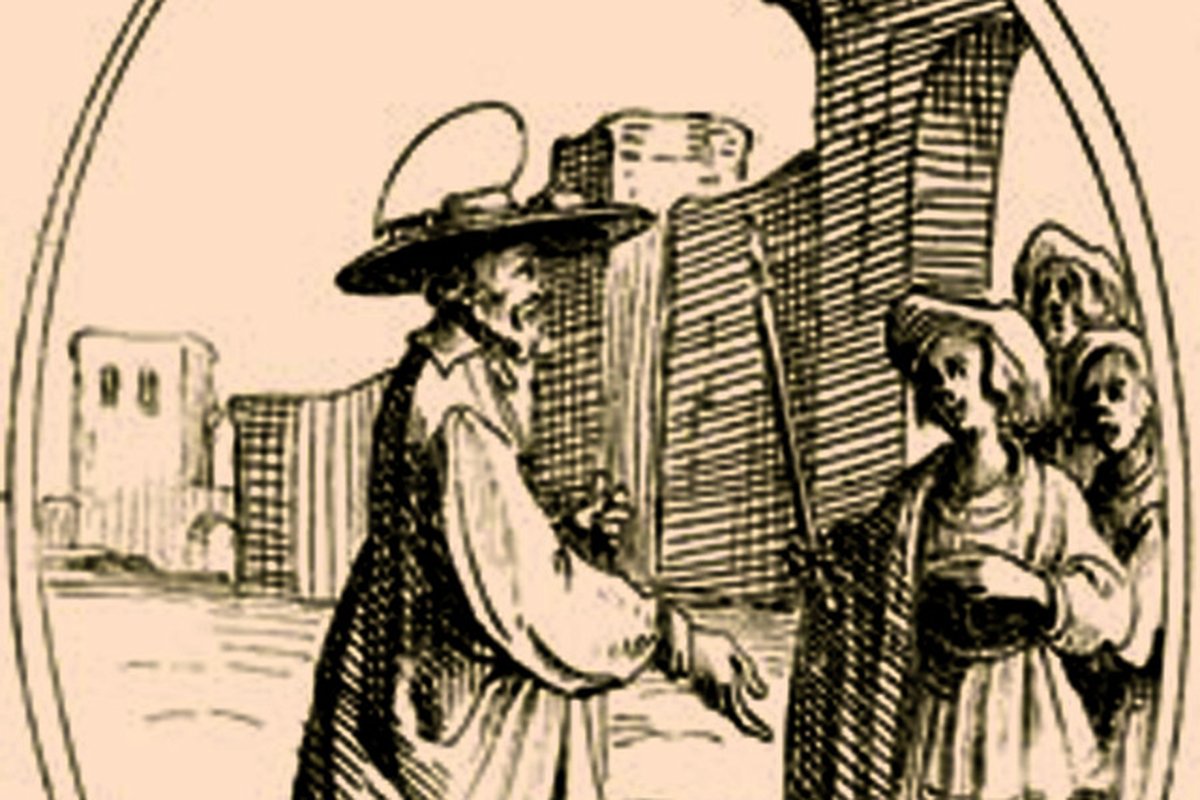
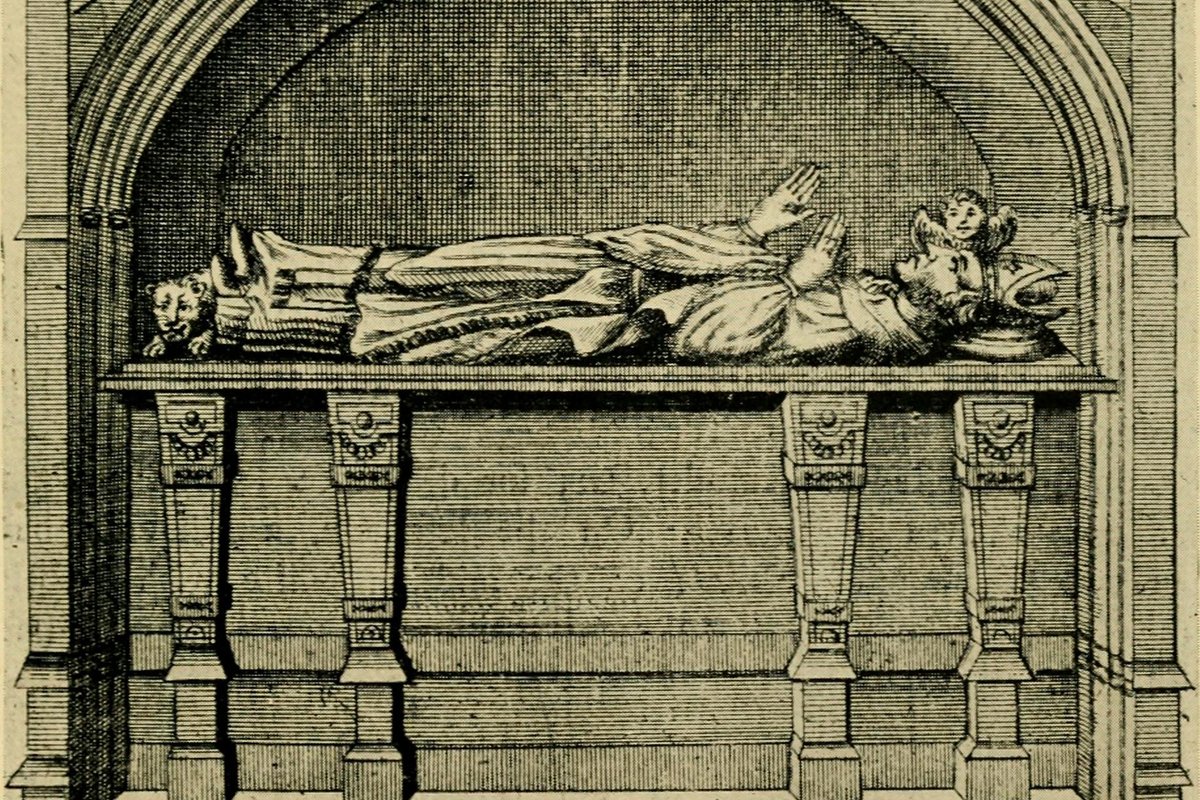
Anonymous 19th-century engraving, Césaire et sa sœur Césaria (Caesarius and his sister Caesaria) — public domain.
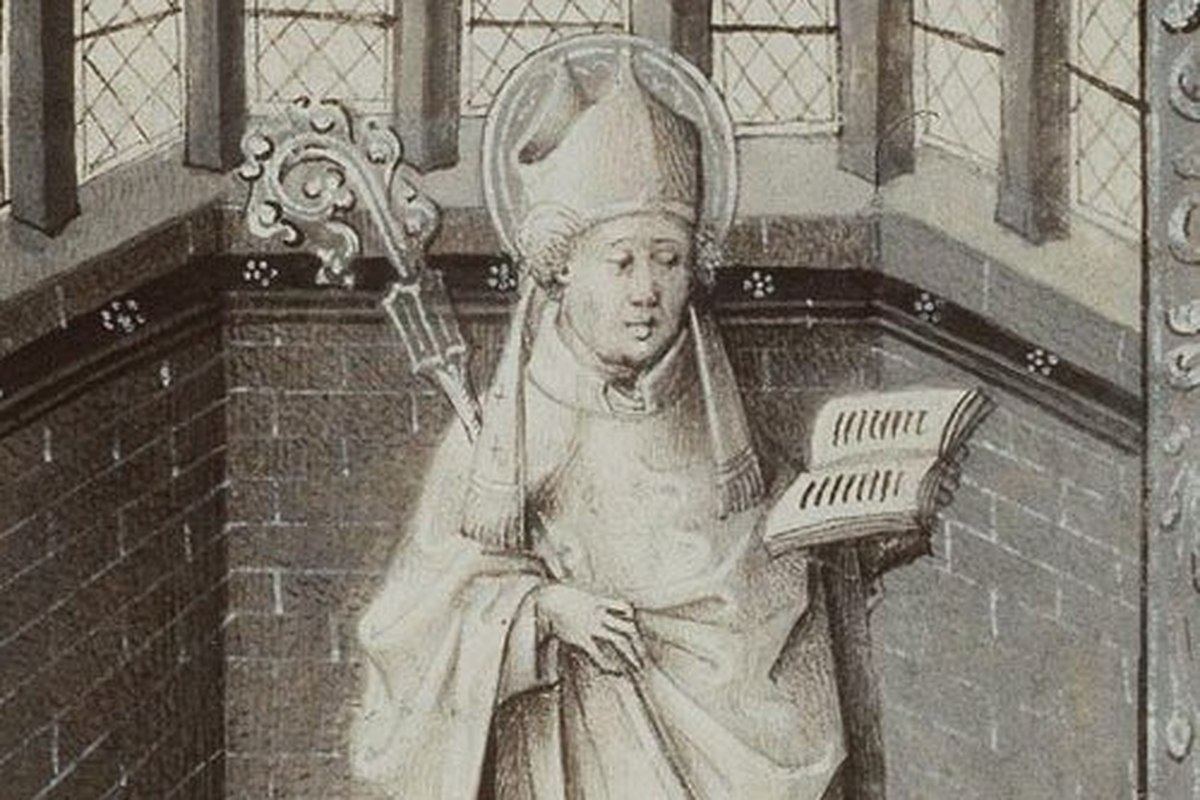
In 502, he became Bishop of Arles, a post he held without interruption for the next forty years — an extraordinary span of stability in an era when Gaul was being repeatedly fought over by Visigothic, Burgundian, and Frankish rulers, and a bishop's tenure could end abruptly for reasons that had nothing to do with his own conduct. That longevity mattered: it gave Caesarius time to shape the religious and civic life of his region in ways a shorter episcopate never could have. It also came with real danger; at one point political enemies accused him of plotting to hand Arles over to the Burgundians, and he was exiled briefly before being cleared and allowed to return, one of several moments across his long tenure when shifting political control of the city put his own position and safety at genuine risk.
Organizing law and canon alike
Caesarius's influence extended well beyond preaching. He presided over the Council of Agde in 506, one of the significant gatherings of Gallic bishops working to bring order and consistency to Church discipline in a fractured political landscape. He was also closely tied to the Breviarium Alarici, a simplified adaptation of Roman law compiled for use across Visigothic Gaul — a reminder that bishops in this period weren't operating in some separate spiritual sphere but were frequently pulled directly into the machinery of civil governance, drafting and applying the law that ordinary people actually lived under.
Caesarius was also an unusually direct and practical preacher, and hundreds of his sermons survive — far more than for most bishops of his era — largely because he actively encouraged other clergy to copy and reuse them in their own parishes, aware that not every rural priest in Gaul had the training or resources to compose original homilies of his own. That decision to circulate ready-made sermons for wider use was itself a small but practical innovation, aimed squarely at raising the baseline quality of ordinary preaching across an entire province rather than showcasing his own rhetorical skill.
A convent, a sister, and a rule for women
Among Caesarius's most enduring projects was the community of nuns he founded at Arles, placing his own sister, Caesaria, at its head. For that community, he wrote a monastic rule — one of the earliest surviving rules composed specifically to govern the life of women religious in the Western Church, at a time when most existing monastic guidance had been written with men in mind. It's a less-discussed side of his legacy than his theological battles, but it shaped religious life for women in Gaul for generations after his death.
The rule Caesarius wrote emphasized strict enclosure — the nuns were not to leave the monastery grounds once they had entered, a stricter standard than many earlier women's communities had followed — alongside a strong emphasis on literacy and education within the community; nuns were expected to be able to read, an expectation not universally applied to religious women elsewhere in this period. The convent Caesarius founded reportedly grew to house well over a hundred women during his lifetime, an unusually large community for the era, and the rule itself continued to influence women's monastic life in Gaul long after both Caesarius and Caesaria had died.
Settling the argument over grace
Caesarius's most consequential fight, though, was theological. For over a century, Western Christianity had wrestled with a dispute now known as Semi-Pelagianism — the question of whether the very first movement of the human will toward faith could originate on its own, or whether even that first step required God's grace. The dispute traced back to the original controversy between Saint Augustine of Hippo and the British monk Pelagius, who had taught that human beings could achieve salvation largely through their own moral effort; Semi-Pelagianism was a softer, more moderate version of that position that continued to attract support in Gaul long after Augustine's stricter emphasis on grace had won out elsewhere.
Caesarius argued forcefully against the Semi-Pelagian position, insisting that grace had to come first, and his advocacy played a central role in bringing the dispute to the Second Council of Orange in 529, where the Semi-Pelagian view was formally rejected. Pope Boniface II later confirmed the council's decisions, giving Caesarius's local, regional victory the weight of a decision binding on the wider Western Church. It's not every bishop who gets to say his own preaching helped close out a century-old theological argument, but by most accounts, that's exactly what Caesarius did.
Death and a quiet feast
Caesarius died in Arles on August 27, 543, and was venerated as a saint through the same ancient, informal process common to his era, well before the Church's later formal canonization procedures existed. No widely established patronage has attached itself to his name over the centuries — his legacy rests instead on the tangible, specific things he actually built: a settled theological consensus, a functioning civil legal code, and a rule of life still followed in spirit by the religious community he founded for his own sister.
Caesarius's career is a useful reminder of how much of the early medieval Church's most consequential work happened not in Rome or Constantinople, but in the day-to-day governance of a single provincial see, sustained over decades by one bishop who simply stayed in place while empires and kingdoms rose and fell around him. Readers interested in other bishops whose long, patient tenures shaped both Church doctrine and the practical life of ordinary believers may find a natural comparison in Saint Isidore of Seville, another sixth- and seventh-century bishop who spent decades quietly building institutions — schools, in Isidore's case — that outlasted the political turmoil of his own era by a very wide margin.
Trivia
Who was Saint Caesarius of Arles?
What is Semi-Pelagianism, and why does Caesarius matter to it?
What was the Breviarium Alarici, and what did Caesarius have to do with it?
Did Caesarius of Arles found a monastery for women?
When is the feast of Saint Caesarius of Arles?
You May Also Like
Related Reading