Saint Nicholas of Myra

A bishop from a persecuted church
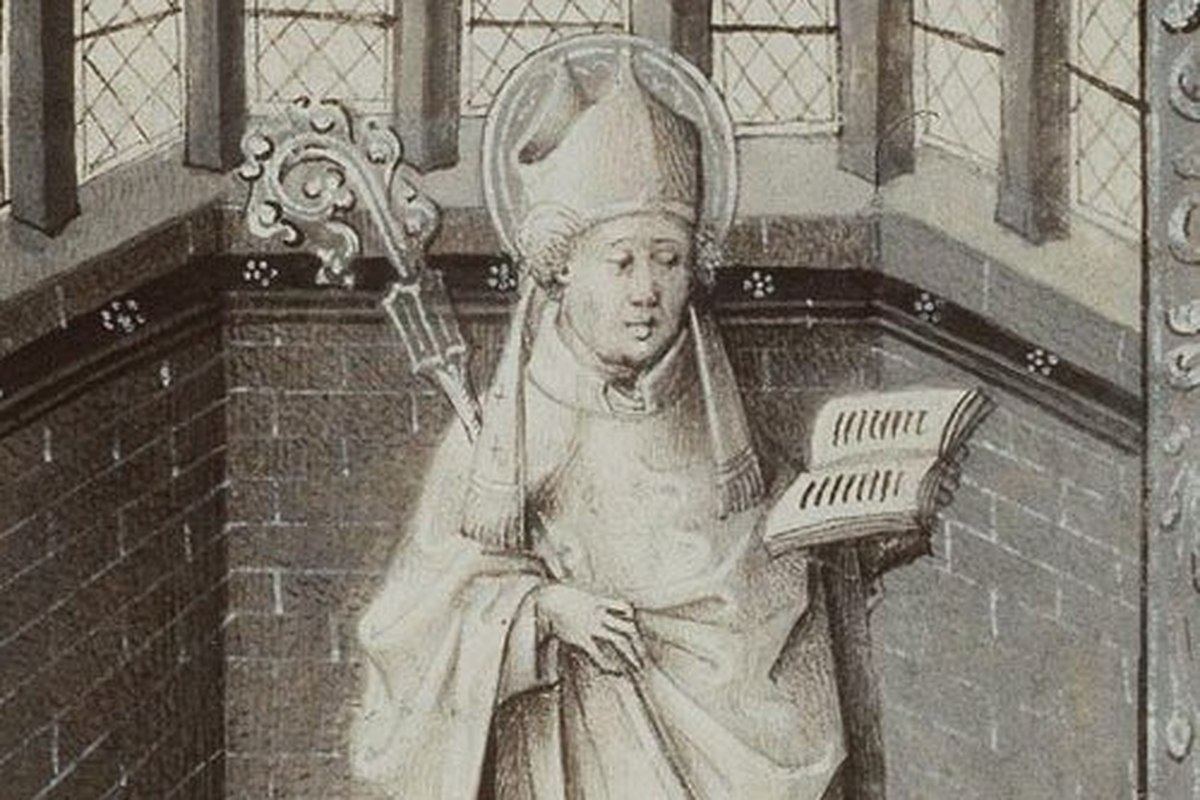
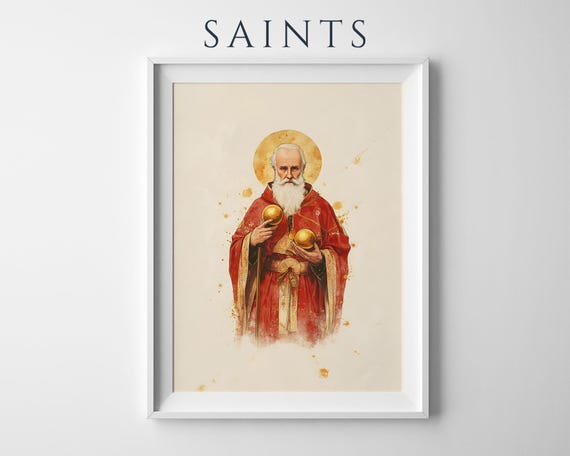
Nicholas served as bishop of Myra, a coastal city in what is now Turkey, during the early 4th century — a dangerous time to hold that role publicly. The empire-wide persecution of Christians under Emperor Diocletian fell within his lifetime, and tradition holds that Nicholas himself was imprisoned for his faith during this period. He is thought to have died around 343 AD, and some accounts place him among the bishops present at the Council of Nicaea in 325, though this detail isn't confirmed with certainty across every historical source.
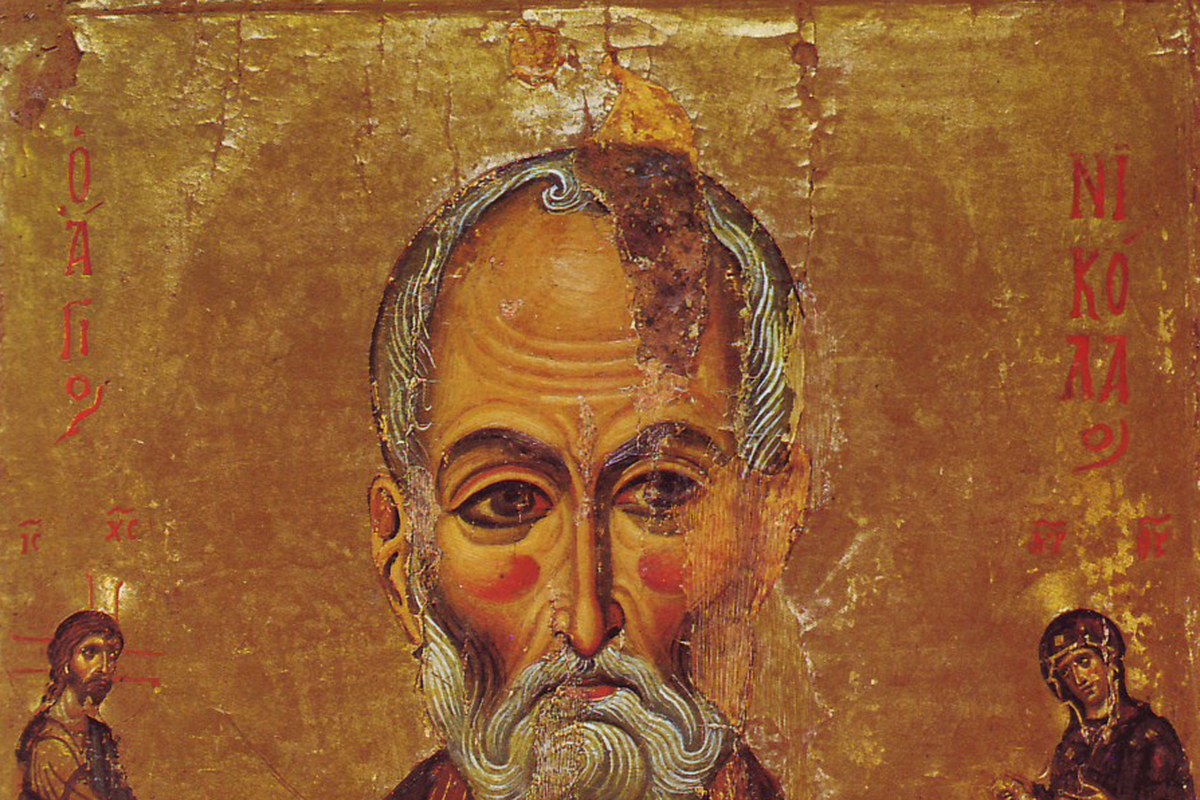
13th-century icon of Saint Nicholas, Saint Catherine's Monastery, Sinai — public domain.
Three bags of gold, given in secret
The story most responsible for Nicholas's enduring fame has nothing to do with councils or persecution. According to longstanding legend, a poor man in his city had three daughters he couldn't afford to marry off, leaving them at risk of being sold into prostitution for lack of any other option. Nicholas, hearing of the family's desperation, is said to have secretly delivered three bags of gold — one for each daughter's dowry — without ever seeking recognition for the gift. The detail that matters most in the story isn't the money itself, but the secrecy: generosity given specifically so that no one would know its source.
A collection of legends, not just one
The dowry story is the best known, but it's far from the only legend attached to Nicholas. One widely told account describes him calming a violent storm at sea after sailors, caught in the tempest, called out for his help — the origin of his patronage over sailors and travelers by water, a role that made him one of the most invoked saints in harbor towns across the Mediterranean and beyond for centuries. Another, more disturbing legend tells of three young boys murdered by a butcher during a famine, their bodies hidden away, whom Nicholas miraculously restored to life — a story that, over time, became linked to his patronage of children specifically. A separate and more combative tradition, popular in Eastern Christianity, claims that at the Council of Nicaea, Nicholas grew so outraged at the heretic Arius's denial of Christ's full divinity that he struck him — a story almost certainly legendary rather than historical, but one that captures how strongly later generations wanted to associate Nicholas with uncompromising defense of orthodox belief, distinct from the gentler gift-giving image that eventually became more dominant in the West.
Relics, manna, and an enduring cult
Nicholas's physical remains became the object of one of the more dramatic relic stories in medieval Christianity. In 1087, Italian sailors from Bari removed his bones from Myra — by that point under Muslim rule following centuries of political upheaval in the region — and transported them to Bari, on Italy's southeastern coast, where the Basilica di San Nicola was built to house them and quickly became a major pilgrimage destination. Pilgrims and clergy at Bari have long reported that the relics exude a clear, watery liquid known as manna di San Nicola, still collected today and regarded by many of the faithful as a sign of ongoing blessing associated with the tomb. Nicholas remains one of the most universally venerated saints across both Eastern Orthodox and Western Christianity, honored as a patron of entire nations, including Russia and Greece, an unusually broad reach for a bishop of a relatively small provincial city whose own detailed biography survives only in fragments.
A saint who became a Christmas tradition
That single act of quiet generosity did something few individual legends manage: it became a tradition in its own right. Devotion to Nicholas as a gift-giver spread across medieval Europe, eventually merging with regional customs — most directly the Dutch "Sinterklaas" figure — and, through centuries of cultural adaptation, evolving into the modern Santa Claus. The red robes and reindeer are later additions, but the essential shape of the story hasn't changed: a night visit, an unearned gift, and no credit demanded in return.
Dutch settlers carried their Sinterklaas traditions to colonial New Amsterdam, present-day New York, where the name gradually anglicized into "Santa Claus." American writers and illustrators reshaped the figure considerably in the nineteenth century — Washington Irving's satirical writings and the 1823 poem widely known as "'Twas the Night Before Christmas" helped popularize a jolly, sleigh-riding version of the character, and the cartoonist Thomas Nast, drawing for Harper's Weekly in the decades after the Civil War, is generally credited with fixing the now-familiar image of a portly, white-bearded Santa in a fur- trimmed suit — well before any soft-drink advertising campaign, contrary to a popular but inaccurate modern myth that Santa's red-and-white look was invented for a mid-twentieth-century marketing campaign.
Why the legend still lands
What makes Nicholas's story unusual among saints associated with dramatic miracles or martyrdom is how ordinary — even domestic — his most famous act actually is. No vision, no confrontation with an emperor, just a bishop who noticed a family in trouble and quietly made sure they didn't stay that way. Nearly seventeen centuries later, that same instinct — give generously, and don't make it about yourself — is still, every December, being reenacted by millions of people who may never have heard his name.
Trivia
Who was Saint Nicholas of Myra?
What is the legend of the three bags of gold?
Did Nicholas attend the Council of Nicaea?
How did Saint Nicholas become connected to Santa Claus and Christmas gift-giving?
What is Saint Nicholas of Myra the patron saint of, and when is his feast day?
Related Reading