Saint Nicetius of Trier

A world remembered mostly through one chronicler
Almost everything known about Nicetius survives because of a single source: Gregory of Tours, the great Merovingian-era bishop and historian whose History of the Franks and other writings preserve most of what remains of sixth-century Gallo-Roman church life. Gregory had a personal connection to Nicetius — the two were, by some accounts, distantly related — and it's largely through his pen that later generations know Nicetius existed at all, let alone anything about his character or conduct. That dependence on a single narrator is itself worth noting: much of what survives about minor saints from this period survives only because a better-documented contemporary happened to mention them in passing.
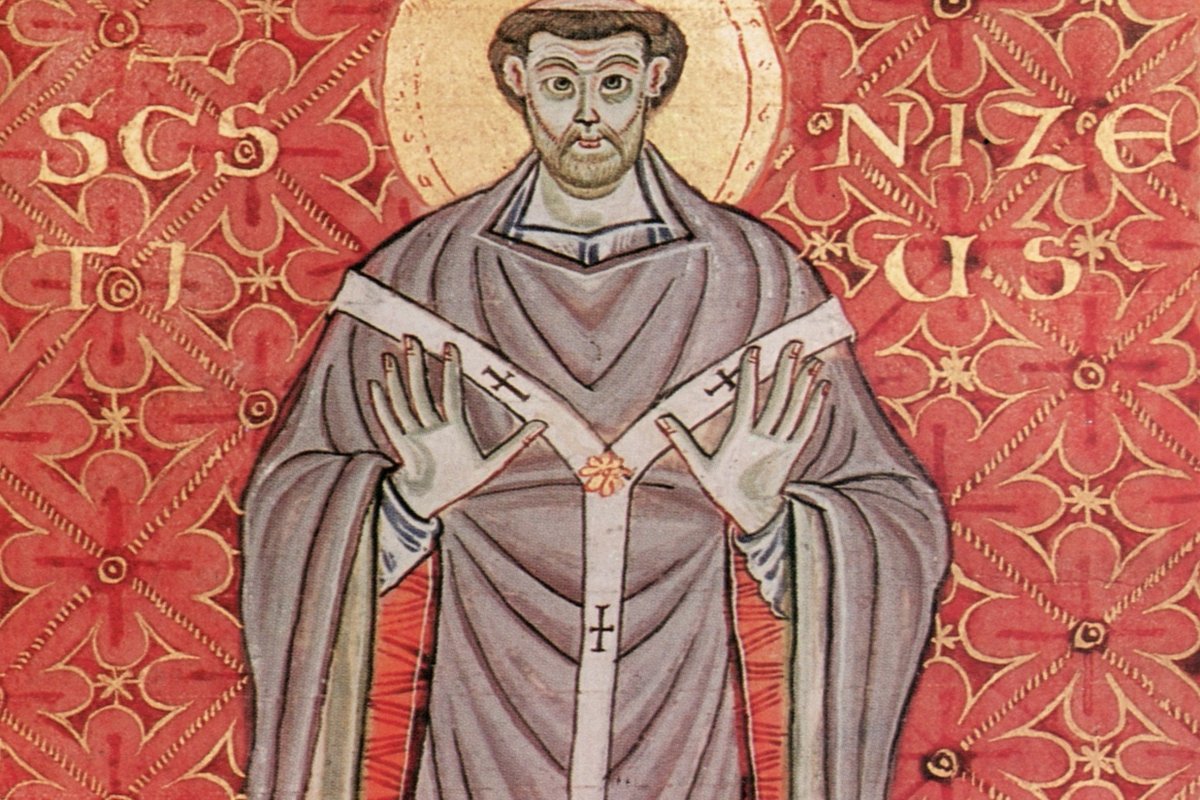
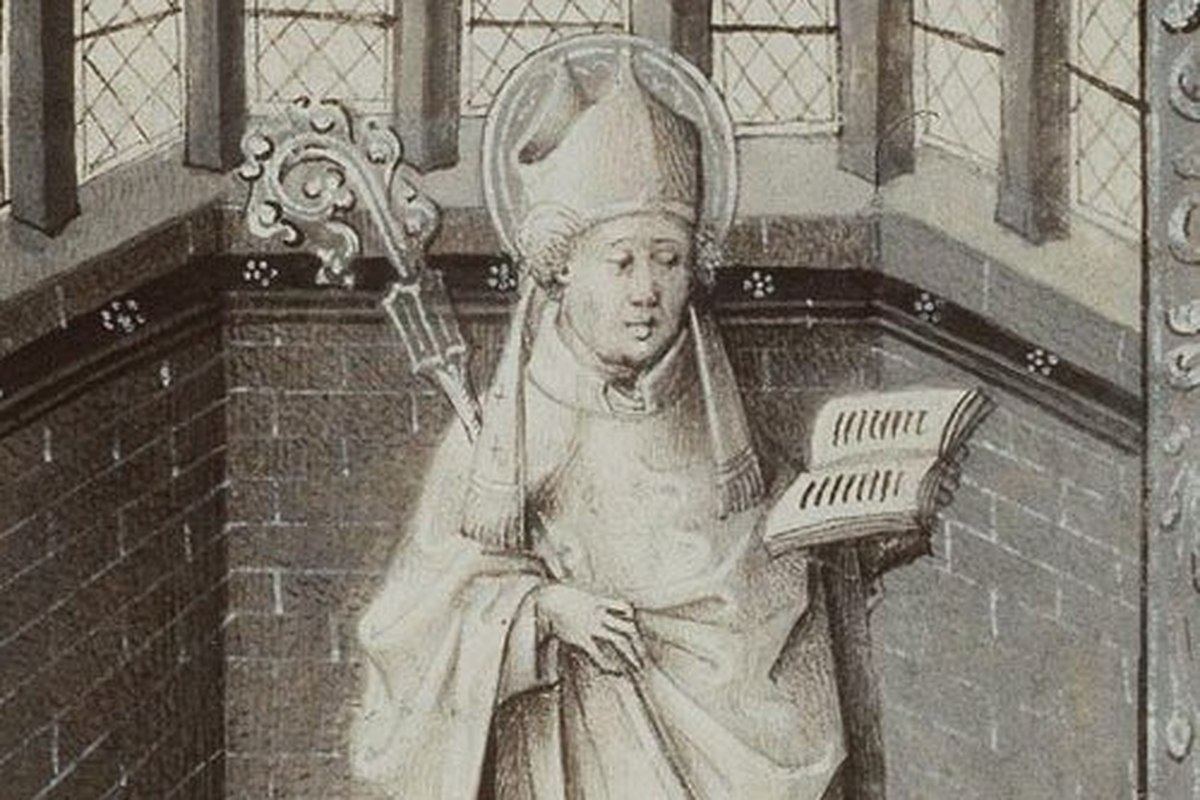
Egbert Psalter, fol. 99r, depicting Saint Bishop Nicetius of Trier, 10th century — public domain.
A monastery abbot before a bishop
Nicetius was born in the late 5th century, most likely into a Gallo-Roman family from the Auvergne region — one of the old Roman provincial families that continued to produce bishops and abbots long after imperial authority in Gaul had collapsed. Before he ever became a bishop, he had already earned a solid reputation as the respected abbot of a monastery, the kind of quiet administrative and spiritual credibility that made him a natural candidate when Trier needed a new bishop around 527. It's worth pausing on that detail, modest as it is, because it's one of the few things about his early life that multiple sources actually agree on.
A city inherited from an empire already gone
Trier itself makes Nicetius's appointment worth understanding in context. Once one of the grandest cities of the Western Roman Empire — briefly even an imperial capital, with an amphitheater, baths, and a basilica still standing today — Trier by the sixth century had passed from Roman to Frankish control, its old imperial infrastructure now serving a very different kind of ruler. Bishops in cities like Trier inherited an unusual role in this transition: they were often the last functioning link to the old Roman administrative order, expected to manage church affairs, mediate with new Frankish kings, and hold together communities that had watched one entire political system collapse within living memory. Taking on Trier's bishopric wasn't a quiet provincial posting — it placed Nicetius at the center of exactly the kind of instability that defined the Merovingian world.
Holding a king to account
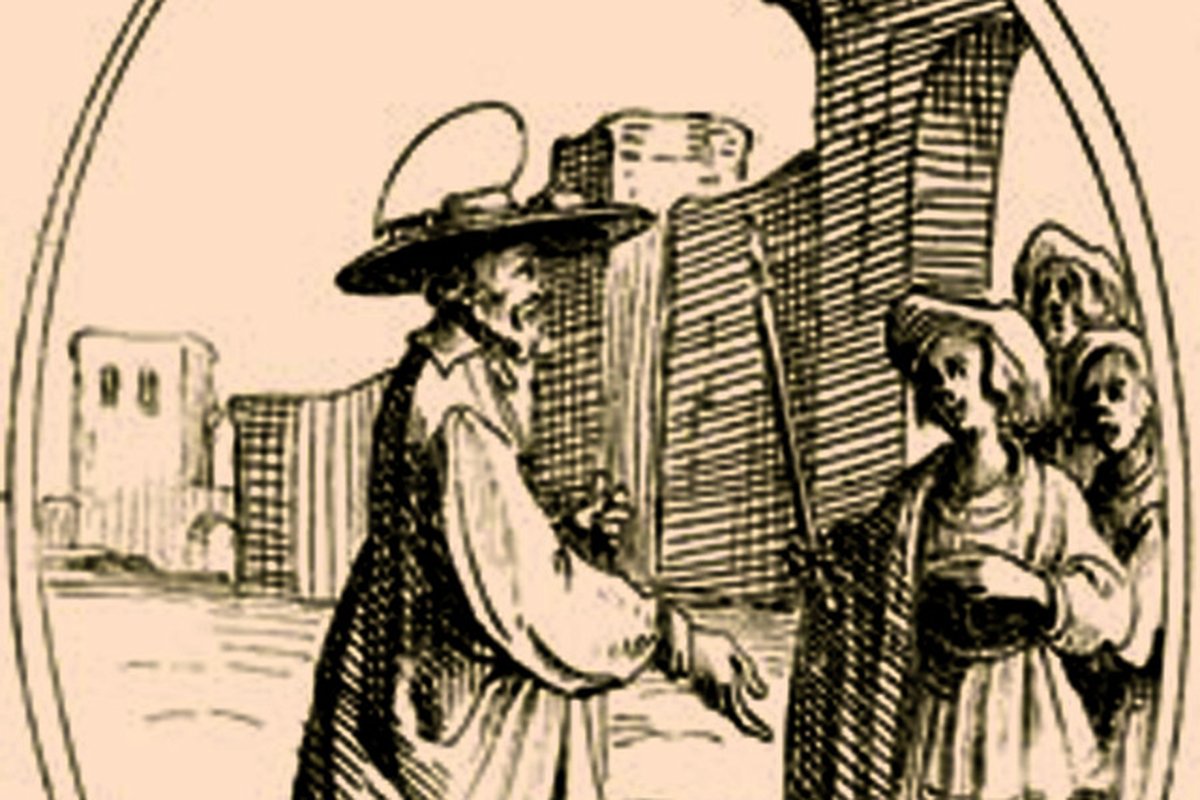
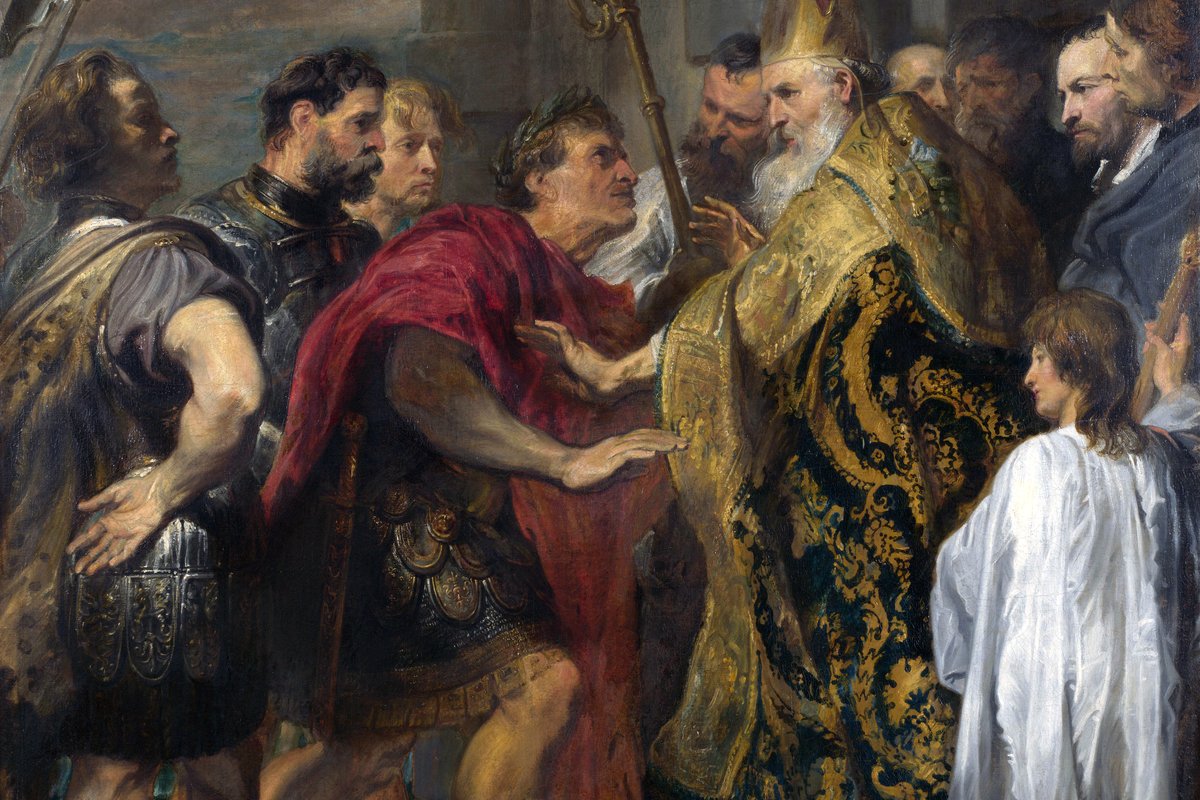
The single story that survives about Nicetius with any real texture is also the most striking one: as Bishop of Trier, he directly rebuked the Frankish King Theuderic I for wrongdoing — not through an intermediary, not in some indirect or diplomatically hedged way, but face to face. In the political world of 6th-century Gaul, where Frankish kings held the power of exile, imprisonment, and execution over bishops who displeased them, this was a genuinely risky thing to do. What makes the story worth telling isn't a dramatic reversal or a miracle — it's the plain fact that Nicetius said what needed saying and kept the king's favor anyway. It's a small, human-scale example of a churchman holding royal power accountable, in an age when there was no guarantee that accountability would be tolerated.
Nicetius's willingness to confront royal power wasn't limited to Theuderic I alone. Later tradition also credits him with standing up to subsequent Frankish rulers over their conduct, part of a broader pattern in his episcopate of treating a bishop's moral authority as real and binding even on kings who held the power of life and death over nearly everyone else around them. It's the kind of behavior that could easily have ended in exile — a fate that did befall other outspoken bishops of the era — which makes the fact that Nicetius appears to have died peacefully, still in office, a small detail worth noting in its own right.
A life the record barely holds onto
Beyond the rebuke of Theuderic, honest scholarship has to admit that documentation of Nicetius's life is genuinely sparse. Even his death date is disputed — some sources place it in 563, others in 566 — and there isn't much independent narrative material to fill in the rest of his three decades as bishop of one of Gaul's most significant sees. That thinness shows up again in his feast day: locally in Trier, he's commemorated on October 1, but the Roman Martyrology lists December 5 instead. Rather than paper over that kind of discrepancy, it's more honest to treat it as what it is — further evidence of how incomplete the record of his life has always been, even within the Church's own tradition. Nicetius carries no title of Doctor of the Church and no established patronage; what remains of him is a name, a see, a handful of approximate dates, and one good story about telling a king the truth.
That sparseness is worth sitting with rather than smoothing over. Not every saint the Church remembers comes with a richly documented life, miracles catalogued in careful detail, or writings that survive intact. For every figure like Saint Benedict of Nursia, whose life and Rule were preserved and copied for fifteen centuries, there are dozens like Nicetius, whose memory survives on the strength of one contemporary's passing mention and a single act of courage that happened to get written down. The thinness of the record doesn't diminish what he did; if anything, it sharpens the single story that did survive — a bishop, in an age of kings who could crush him without consequence, choosing to say the hard thing to a king's face anyway.
Trivia
Who was Saint Nicetius of Trier?
When did Saint Nicetius of Trier live?
Why does Saint Nicetius have two different feast days?
What did Saint Nicetius do as Bishop of Trier?
Is Saint Nicetius the patron saint of anything?
You May Also Like
Related Reading