Saint Germanus of Constantinople

A life before the crisis
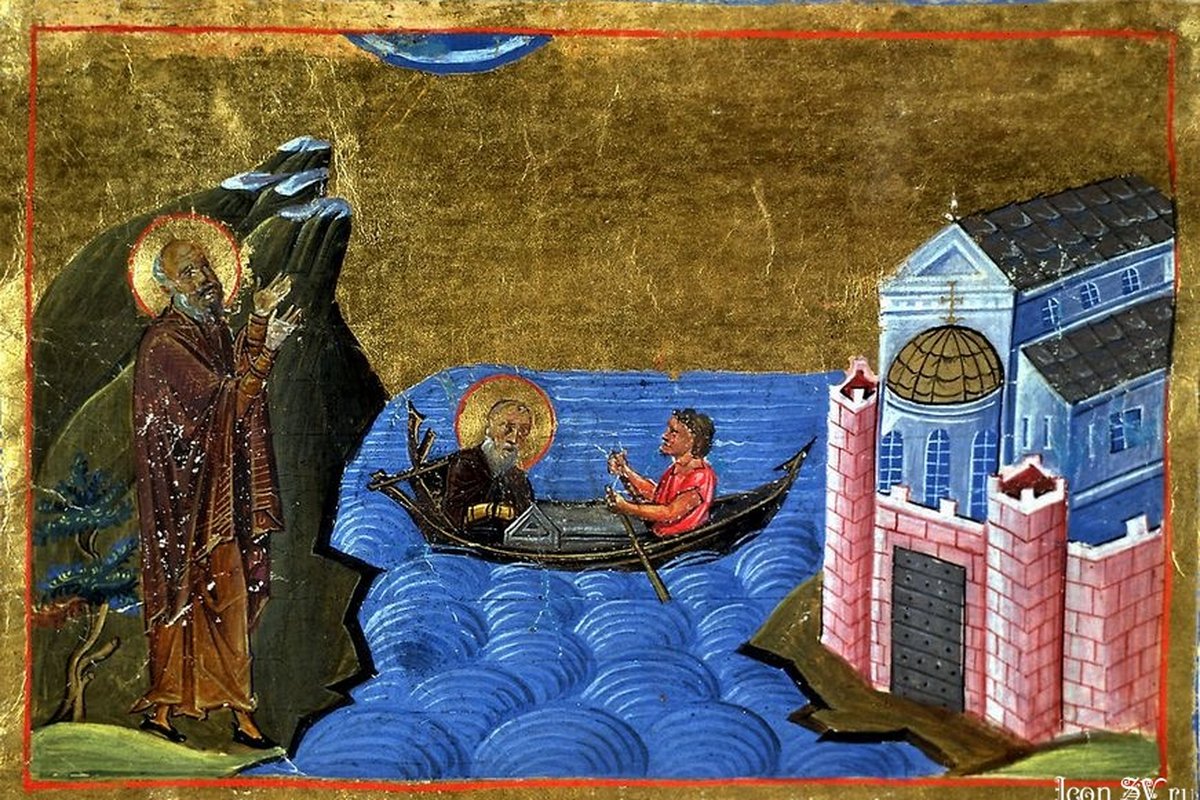
Germanus was born around 634 into a prominent Constantinopolitan family, and his early life carries its own mark of imperial politics: his father was reportedly executed for involvement in a plot against Emperor Constantine IV, and the young Germanus was consequently forced into the clergy — a common fate for the sons of disgraced officials in Byzantine society, since it removed any political ambition they might otherwise carry. What began as a kind of exile turned into a genuine vocation. Germanus rose steadily through church ranks, eventually becoming bishop of Cyzicus, a city on the Sea of Marmara, before his election as Patriarch of Constantinople in 715 — already a man in his eighties by the standards some historians propose, though the exact chronology of his early life remains difficult to pin down precisely.
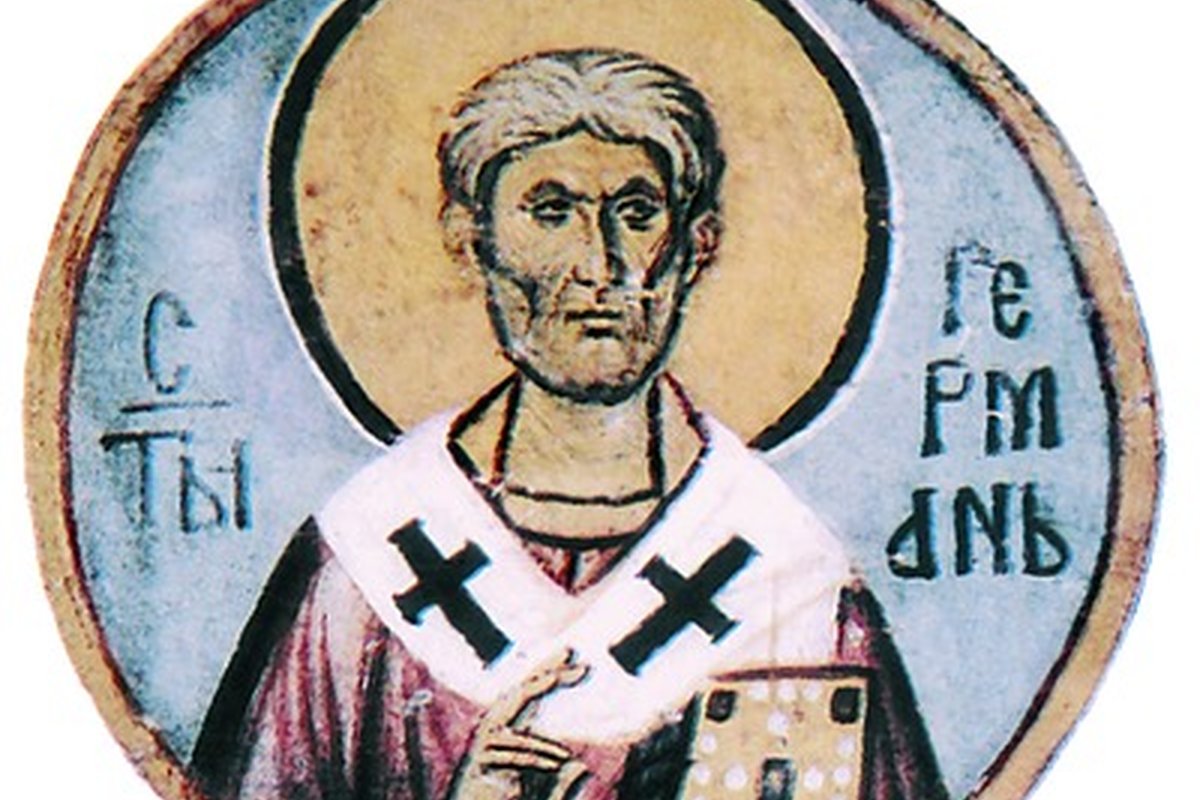
Fresco medallion of Patriarch Germanus I of Constantinople, Church of the Theotokos Evergetis, Studenica Monastery, Serbia, 1208–1209 — public domain.
A patriarch caught in an imperial power struggle
Germanus became Patriarch of Constantinople in 715, at a moment when the Byzantine Empire was already unstable, and he held the office for fifteen years before the controversy that would define his legacy reached its breaking point. In the 720s, Emperor Leo III began pushing a sweeping policy against icons — the painted images of Christ, Mary, and the saints that had been part of Christian worship for centuries — arguing that venerating them amounted to idolatry. This position, known as iconoclasm (from Greek roots meaning "image-breaking"), put the emperor directly at odds with his own patriarch, who saw icon veneration as a legitimate and theologically sound expression of Christian devotion rather than a violation of the commandment against graven images.
Leo's motives were a mix of theology and politics. Some historians point to military setbacks and a devastating volcanic eruption in the Aegean, which Leo and others read as signs of divine displeasure, as part of what pushed him toward a more austere religious policy. Others note the influence of Islamic and Jewish critiques of Christian image veneration circulating in the border regions of the empire, which Leo may have absorbed during his military campaigns in the east. Whatever combination of motives drove him, by the early 720s he had begun removing and destroying icons in the capital itself, including, according to tradition, an image of Christ that stood over the Chalke Gate of the imperial palace — an act that reportedly provoked a riot among the citizens of Constantinople.
Germanus in defense of icons
Germanus did not stay silent while the policy took shape. He wrote letters — several of which survive — defending the veneration of icons on theological grounds, distinguishing carefully between the worship owed to God alone and the honor given to an image that pointed beyond itself to the person it depicted. That distinction, between latria (worship due to God) and veneration or honor given to saints and sacred images, would become the central theological argument used to settle the controversy decades later at the Second Council of Nicaea. Germanus's correspondence on the subject was read into the acts of that council as part of the case for restoring icons, which is part of why the council singled him out by name for praise. His younger contemporary Saint John Damascene, writing from monastic safety outside Byzantine imperial reach in the Umayyad Caliphate, made much the same argument in his own influential treatises defending icons around the same period — the two men never coordinated directly, as far as the record shows, but their writings reinforced each other and became the twin theological pillars of the eventual Orthodox response to iconoclasm.
Refusing to sign, giving up the throne
Around 730, the conflict came to a head: Leo III moved to formalize his position with an imperial edict banning the veneration of icons outright, and he needed the backing, or at least the compliance, of his patriarch to give the policy religious legitimacy. Germanus refused to sign it. Rather than bend to imperial pressure on a matter he considered a question of authentic Christian practice, he resigned his office and was forced out of the patriarchate — a clean, direct consequence of his refusal, without ambiguity about why it happened. It was a costly decision for a man well into old age, giving up the highest church office in the Byzantine capital rather than compromise on a single point of doctrine.
Vindicated at the council that settled the question
Germanus did not live to see the controversy resolved. Iconoclasm continued to divide the Byzantine Church for decades after his death, through multiple emperors and shifting policies, until the Second Council of Nicaea convened in 787 and formally restored the veneration of icons as legitimate Christian practice. That council did something else worth noting: it praised Germanus by name, recognizing his earlier resistance to the iconoclastic policy as having been correct all along. It's a rare case of a churchman's stand being vindicated so explicitly, decades later, by an authoritative council of the universal Church.
Remembered as a Confessor
Germanus is venerated today primarily in the Eastern Christian tradition, honored with the title "Confessor" — used for saints who suffered real cost for their faith, in his case the loss of his office, without being put to death for it. His veneration traces back to antiquity rather than through a later formal canonization process, consistent with how many early saints came to be recognized by the Church. His feast is kept on May 12. No historical record establishes a specific patronage attached to his name in the Western tradition, and no quotation from his own writing has been reliably verified — what survives most clearly is the fact pattern of his life: an old patriarch who chose to lose his throne rather than sign away what he believed was true.
After his resignation, Germanus withdrew to a family estate to live out his remaining years in obscurity, and he died not long after, sometime around 733. He did not live to see the controversy reignite under later emperors, nor did he live to see it resolved. The Byzantine Church would swing between iconoclast and icon-venerating emperors for more than a century afterward, with a second wave of iconoclasm breaking out decades after Nicaea before icon veneration was permanently restored in 843 — an event still celebrated in the Eastern Church as the "Triumph of Orthodoxy." Germanus's place in that longer story is as one of its earliest and clearest voices: a churchman who staked his career on a theological distinction that outlived him by a century before it was finally settled for good.
In Byzantine and later Orthodox iconography, Germanus is typically depicted as an elderly bearded bishop in the white and gold vestments of a patriarch, often holding a scroll or Gospel book, as in the 13th-century Serbian fresco that illustrates this article — a reminder that the very art form he defended became, in time, the medium through which the Church remembered him.
Trivia
Who was Saint Germanus of Constantinople?
Why did Germanus resign as patriarch?
How was Germanus vindicated after his death?
Is Germanus of Constantinople a canonized saint?
When is the feast day of Saint Germanus of Constantinople?
You May Also Like
Related Reading