Saint Hilary of Poitiers

A bishop from Gaul enters a fight from the East
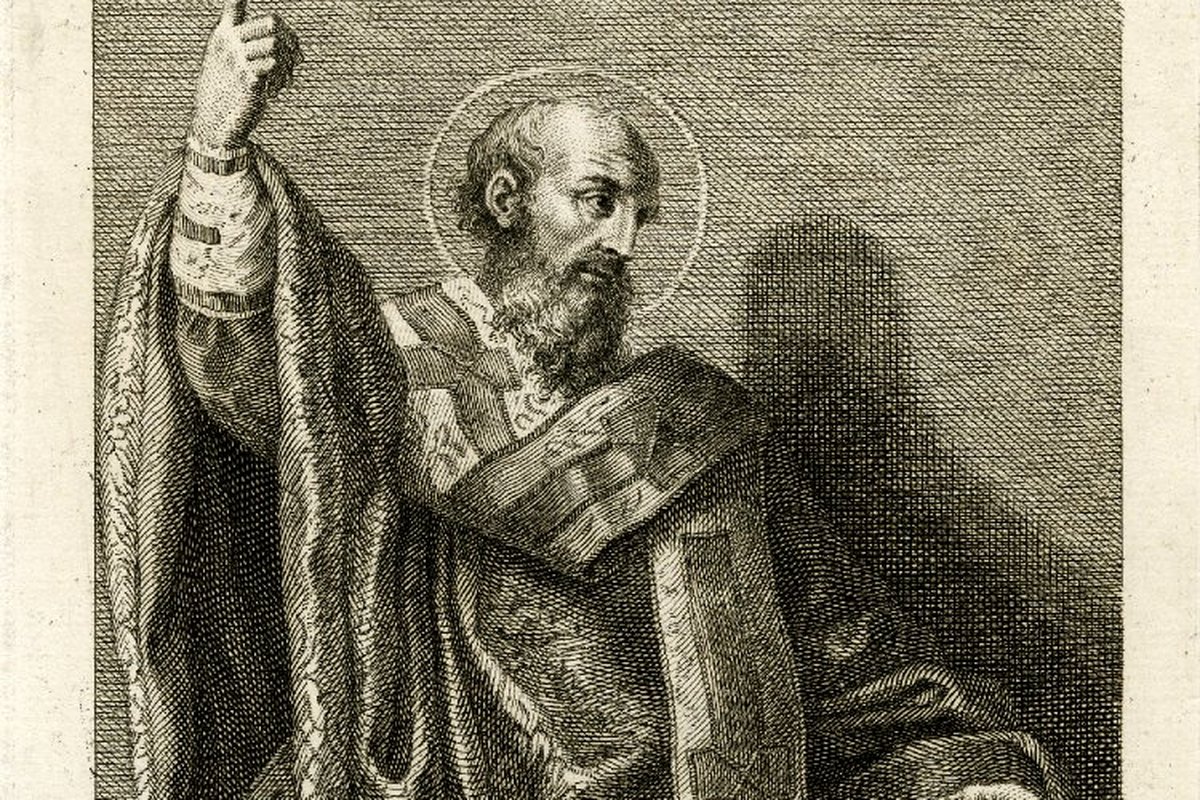
Hilary was born around 310 in Poitiers, in the Roman province of Gaul, to a well-off pagan family, and converted to Christianity as an adult after his own study of Scripture and philosophy convinced him of its truth. He became bishop of Poitiers around 350, stepping into the role at a moment when the controversy over Arianism — the teaching that Christ, the Son, was a created being rather than fully and equally divine with God the Father — had spread from its origins in Alexandria across the entire Roman world, including into Gaul, where few bishops were prepared to argue the case against it in any depth. Hilary became one of the very few in the West who did, earning him, centuries later, the nickname "Athanasius of the West," a comparison to Athanasius of Alexandria's own famous, isolated stand against the same heresy in the East.
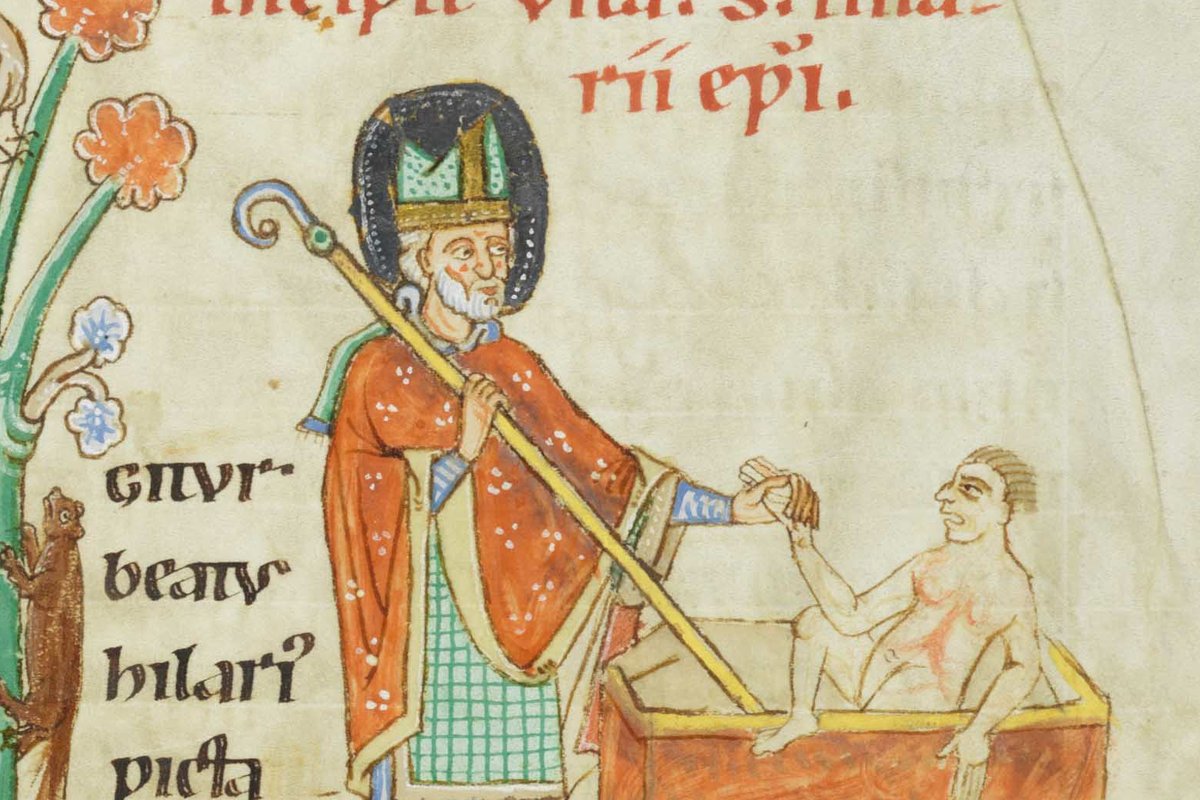
Saint Hilary miniature, Passionary of Weissenau, c. 1170–1200, Fondation Martin Bodmer, Cologny, Switzerland (Cod. Bodmer 127, fol. 144r) — public domain.
Hilary's own conversion story, which he recounts in the opening pages of De Trinitate, is unusually personal for a bishop of his era. He describes coming to Christianity not through a dramatic vision or a family tradition, but through philosophical searching — reading widely among pagan philosophers first, finding their accounts of the divine unsatisfying, and only then turning to the Hebrew and Christian Scriptures, where he found, in his own account, a description of God that finally made sense of what he'd been looking for all along. That intellectual, almost academic route into the faith shaped the kind of bishop and writer he became: precise, reasoned, and unusually well-equipped to engage Arian arguments on their own philosophical terms rather than simply asserting orthodoxy against them.
Exiled to Phrygia, and put to work
Hilary's opposition to Arianism drew the attention of the emperor Constantius II, who favored a compromise position closer to Arian teaching and had little patience for bishops who wouldn't fall in line. Around 356, Constantius had Hilary banished from Gaul and sent into exile in Phrygia, a region deep in Asia Minor, far from his own diocese and his own people. Rather than treating the exile as a sentence to be endured passively, Hilary used the years there to study Eastern theology firsthand and to write, producing De Trinitate, a sustained theological defense of the doctrine that Father, Son, and Holy Spirit are one God in three persons — widely considered the first major work on the Trinity written in Latin, and one that gave the Western Church a theological vocabulary for the subject it had largely lacked before.
"A sower of discord" — and a forced return
Hilary's exile did not go quietly. By most accounts, he remained active even from Phrygia, engaging Eastern bishops in theological argument and refusing to soften his position, to the point that historians record his Arian-leaning opponents in the East eventually wanted him gone, remembered as having dismissed him as a troublemaker who stirred up division wherever he went. Around 360, he was released and returned to Gaul, welcomed back by his own people, where he continued working to restore Nicene orthodoxy among Gallic bishops for the remainder of his life.
Once home, Hilary didn't simply retire to quieter pastoral work. He convened local synods to reassert Nicene teaching among the Gallic bishops, some of whom had drifted toward compromise positions during his years away, and he took the unusual step of publicly opposing Auxentius, the powerful Arian bishop of Milan, traveling to confront him directly and pressing the emperor Valentinian I for a hearing on the matter. It was a bold move for a bishop only recently allowed back from exile, and it underscores how little the years abroad had tempered his willingness to take on entrenched opposition.
A teacher and hymn writer as well as a theologian
Beyond De Trinitate, Hilary left behind commentaries on the Gospel of Matthew and on the Psalms, along with what are considered among the earliest Latin hymns written for congregational use — an innovation credited more famously to Saint Ambrose of Milan a generation later, but which Hilary appears to have pioneered first, even if few of his own hymn texts survive intact. His commentary work shows the same instinct that shaped his theological writing: a conviction that Scripture, read carefully and in its fullness, already contained the answers that heretical teachers like the Arians were distorting through selective quotation. Hilary is also remembered as the teacher of Saint Martin of Tours, whom he ordained and who would go on to become one of the most influential monastic founders in the early Western Church — a reminder that Hilary's legacy extended well past his own writing, into the formation of the next generation of Gallic Christian leadership.
Doctor of the Church, remembered by Augustine
Hilary died in Poitiers in 367 or 368. His reputation only grew after his death: writing decades later, Augustine of Hippo described him as "the illustrious doctor of the churches" — a mark of esteem from one of the most significant theologians in Christian history, aimed squarely at the Gallic bishop who had done more than almost anyone else in the West to give Trinitarian doctrine a Latin voice. In 1851, Pope Pius IX made that recognition official, declaring Hilary a Doctor of the Church. His feast is kept on January 13.
Trivia
Who was Saint Hilary of Poitiers?
Why is Hilary of Poitiers called the 'Hammer of the Arians'?
What is 'De Trinitate'?
Is Hilary of Poitiers a Doctor of the Church?
What did Saint Augustine say about Hilary of Poitiers?
You May Also Like
Related Reading