Saint John Chrysostom

A preacher's rise in Antioch and Constantinople
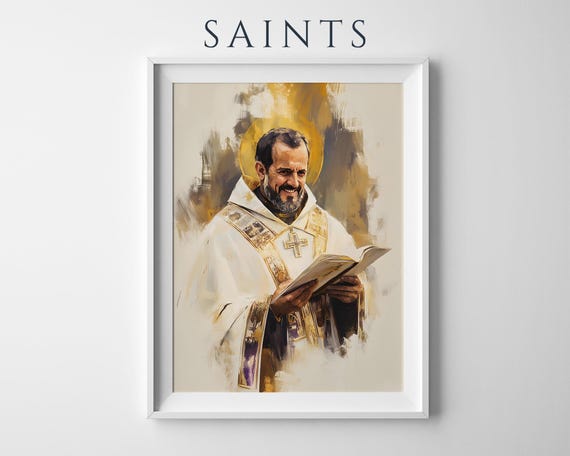
John was born around 347 in Antioch, one of the great cities of the Eastern Roman Empire, and trained in rhetoric before turning to a life of ascetic withdrawal and, eventually, the priesthood. His preaching in Antioch — plainspoken, biblically grounded, and unafraid of naming specific sins among specific people — built him a reputation that reached the imperial capital itself. In 397, he was made Patriarch of Constantinople, the most prominent church office in the Eastern Empire, largely against his own wishes; he preferred quiet study to high office.
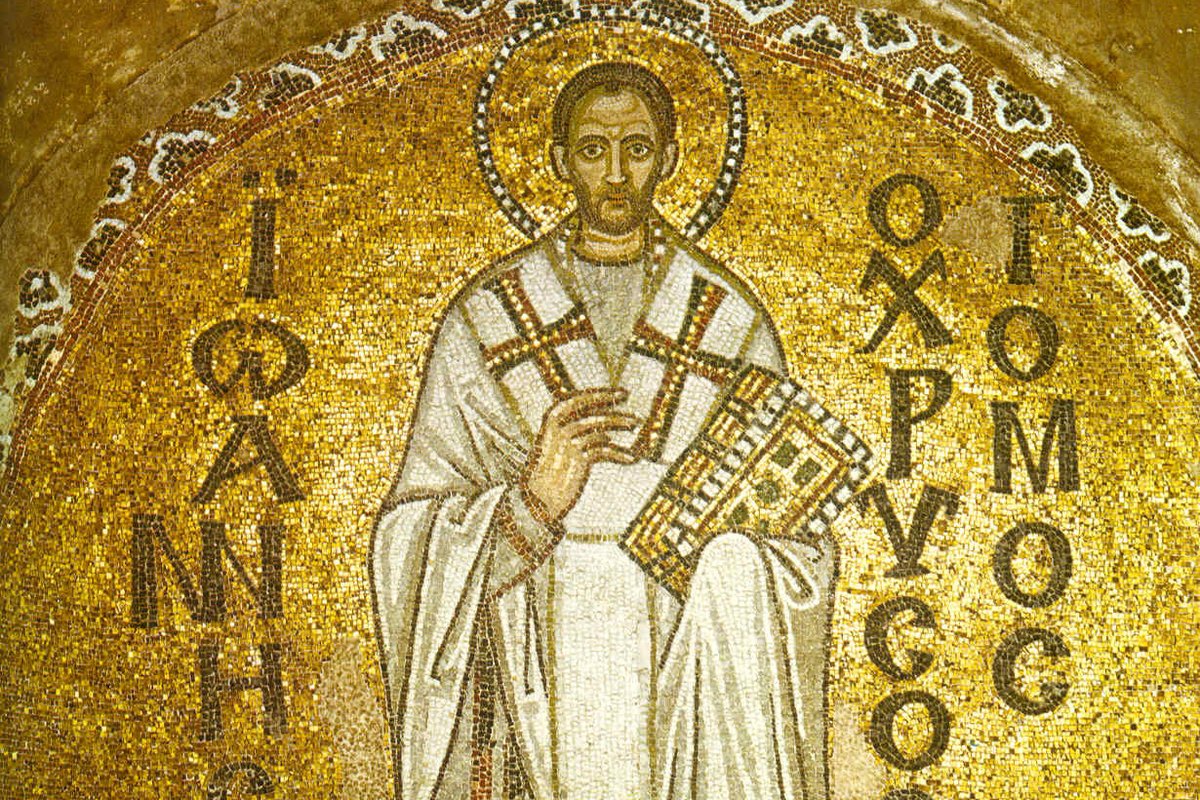
Byzantine mosaic of Saint John Chrysostom, c. 1030s, Hagia Sophia, Istanbul — public domain.
Years alone in the wilderness, before the pulpit
Before any of Constantinople's drama, John spent several formative years living as a monk in the mountains outside Antioch, part of a wave of ascetic withdrawal that shaped much of 4th-century Eastern Christianity. He reportedly pushed the discipline hard enough — long fasts, minimal sleep, standing vigils through the night with a book propped in front of him so he wouldn't doze off — that his health suffered permanent damage, a debt his body would keep paying for the rest of his life, including during the brutal marches of his final exile decades later. He eventually returned to Antioch when his health made continuing the extreme monastic life impossible, and it was there, back among people rather than alone on a mountainside, that his gift as a preacher first became widely known, developed over roughly a dozen years serving as priest to one of the empire's largest Christian congregations.
A court that didn't want to be preached at
Constantinople's court under Emperor Arcadius and Empress Eudoxia was exactly the kind of audience Chrysostom's plain style was least equipped to flatter. He preached against the extravagant wealth and moral laxity he saw among the city's elite, criticism that Eudoxia in particular took personally. The conflict escalated for years — rival bishops jealous of his influence piled on with charges of their own — until Chrysostom was formally deposed and exiled in 403, briefly recalled after public unrest in his favor, then exiled again, more permanently, in 404.
Exile, forced marches, and death in Pontus
The second exile was designed to be harsher than the first. Chrysostom was pushed through difficult overland routes toward the remote Caucasus region, and his guards, on explicit orders to spare no comfort for him, marched him through extreme weather and exhausting terrain. His health, never strong to begin with, collapsed under the strain. He died on September 14, 407, in Comana, in the Roman province of Pontus, before ever reaching the final place of his exile — a bishop worked to death, in effect, for the content of his sermons.
Words that survive in full
Unlike many early Church Fathers whose writing survives only in fragments, an enormous body of Chrysostom's preaching has come down to us complete, including his Instructions to Catechumens, homilies prepared for new converts before baptism. In the second of these instructions, he makes a characteristically blunt point about wealth and hardship: "poverty is far more conducive to piety for us than wealth, and work than idleness; since wealth is even a hinderance to those who do not take heed" — the same plain, uncompromising voice that got him exiled twice, preserved intact for anyone willing to read it sixteen centuries later.
A liturgy still bearing his name
Chrysostom's influence on Eastern Christianity goes well beyond his written sermons. The Divine Liturgy of Saint John Chrysostom — the standard eucharistic liturgy used on most Sundays throughout the year in the Byzantine Rite, followed by Eastern Orthodox and Eastern Catholic churches alike — bears his name to this day, reflecting a long tradition crediting him with shaping or revising the eucharistic prayers used in Constantinople during his time as patriarch. Scholars debate exactly how much of the liturgy's current text can be traced directly to Chrysostom himself versus later compilers who added his name to honor him, but the attribution has held for well over a millennium, and the liturgy remains one of the most frequently celebrated forms of Christian worship in the world today — a striking legacy for a bishop remembered just as vividly for the sermons that got him exiled.
His body of biblical commentary was equally vast: complete cycles of homilies on the Gospel of Matthew, the Gospel of John, the Acts of the Apostles, and most of Paul's letters survive, amounting to one of the largest single bodies of scriptural interpretation to come down from any Church Father. Unlike more allegorically minded interpreters of the period, Chrysostom favored a more literal, historically grounded approach to reading Scripture, associated with the school of biblical interpretation centered in Antioch — a method that later biblical scholars, including many well beyond Eastern Christianity, have continued to draw on.
A Doctor of the Eastern Church, and patron of preachers
Chrysostom is honored as one of the four great Doctors of the Eastern Church, grouped with Basil the Great, Gregory Nazianzen, and Athanasius for the lasting influence of his preaching and biblical commentary. His feast day falls on September 13 in the Western calendar. In 1908, Pope Pius X formally named him patron saint of preachers and orators — an honor that, given how his sermons actually ended his life, reads less like flattery and more like an acknowledgment of the cost his gift carried.
Trivia
Why was John Chrysostom nicknamed 'golden-mouthed'?
Why was Chrysostom exiled?
How did John Chrysostom die?
What does the Catholic Church honor Chrysostom as a Doctor of?
Why is John Chrysostom the patron saint of preachers?
Related Reading