Saint Ignatius of Antioch

A bishop already famous when he was arrested
By the time Roman authorities arrested him, Ignatius had already led the church at Antioch for years — tradition places him as its third bishop, following the Apostle Peter and a bishop named Evodius. Antioch was one of the most important Christian centers in the ancient world, the city where believers were first called Christians according to the Acts of the Apostles, and a bishop of that see carried real weight. Ignatius is counted among the Apostolic Fathers, a small group of early Christian writers close enough to the apostolic generation that tradition remembers some of them, Ignatius included, as having known an apostle personally — in his case, by long-standing tradition, the Apostle John. None of that protected him. Under the reign of Emperor Trajan, he was condemned to be sent to Rome and thrown to wild beasts in the arena, a common method of execution for Christians refusing to offer sacrifice to the Roman gods.
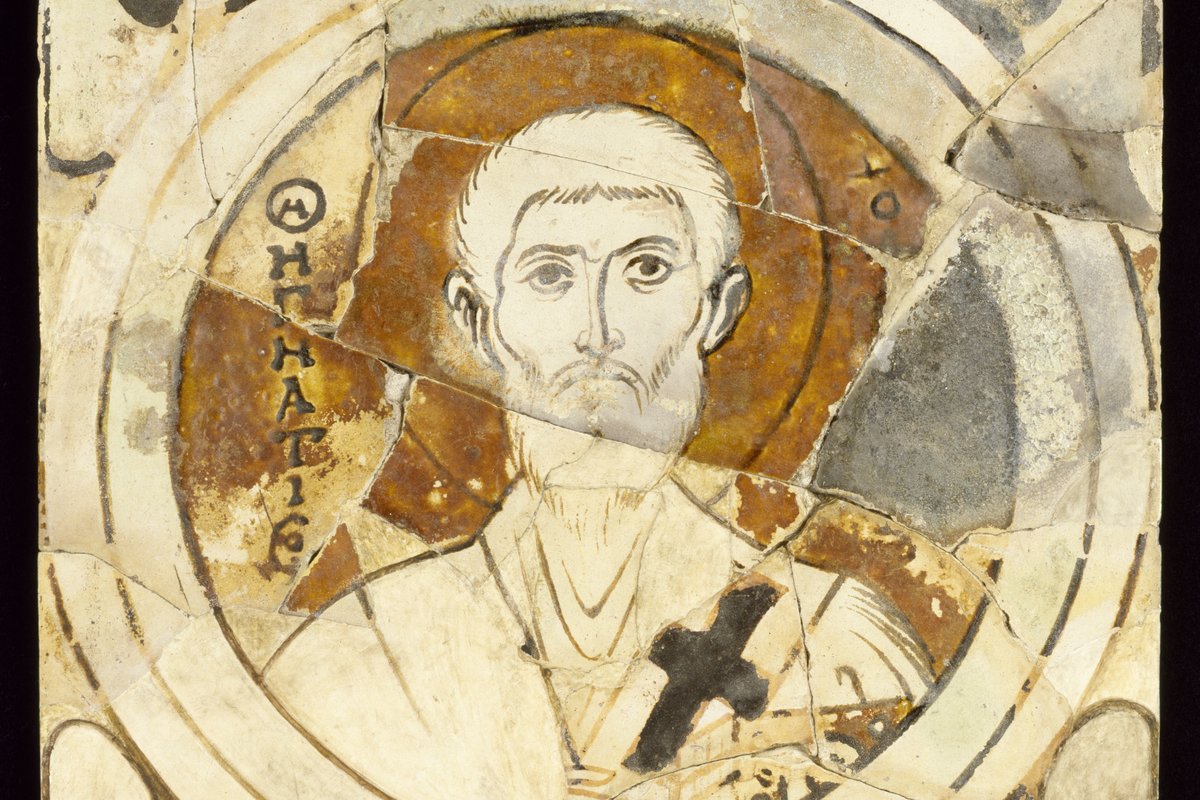
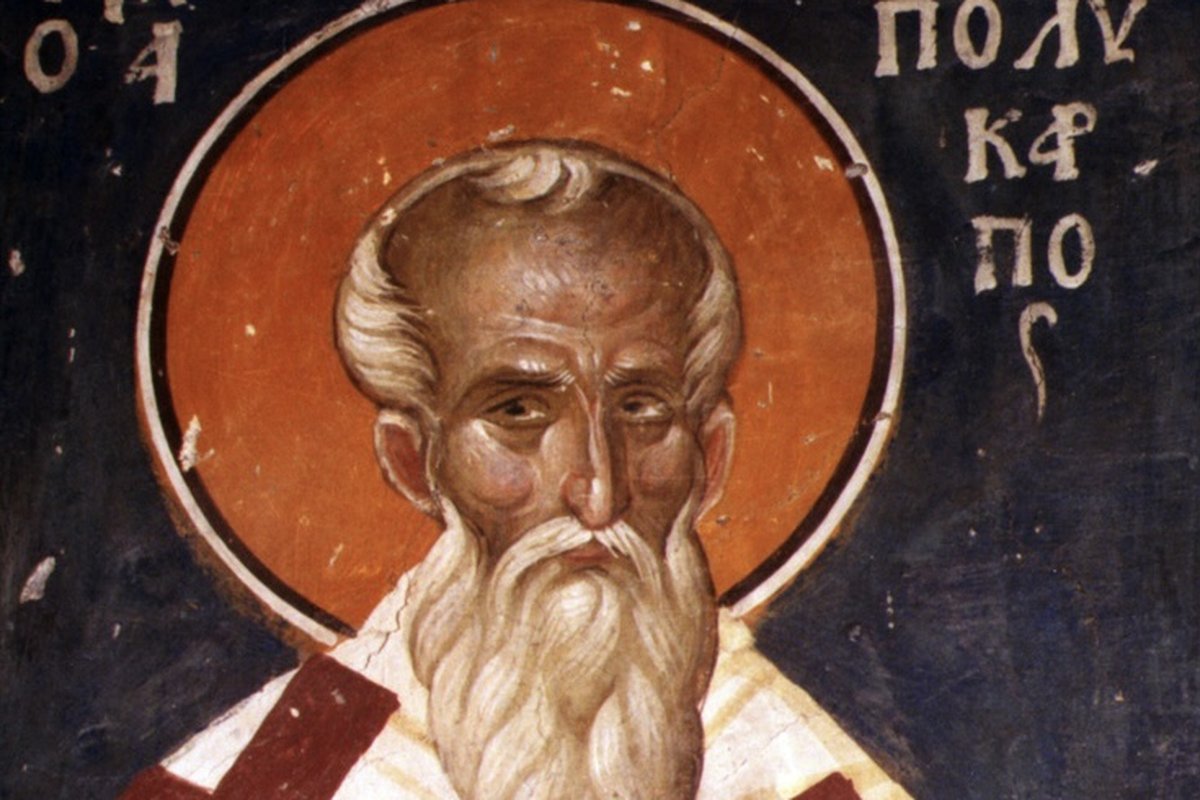
Byzantine icon fragment, Saint Ignatius of Antioch, 13th–14th century, Walters Art Museum, Baltimore — public domain.
Ten soldiers, one long road, seven letters
What makes Ignatius's story unlike almost any other early Christian martyrdom account is what happened on the way to his death. Rather than being executed locally, he was marched overland from Antioch toward Rome under a guard of ten soldiers — men he described, in one of his letters, as growing only more difficult to deal with the kinder he tried to be toward them. The journey took him through Asia Minor, and at several stops, delegations from nearby churches came out to meet him, encourage him, and see him off. Ignatius used the opportunity to write: seven letters in total, addressed to the churches at Ephesus, Magnesia, Tralles, Philadelphia, and Smyrna, one to the church at Rome itself warning them not to try to secure his release, and one personal letter to Polycarp, the bishop of Smyrna. Scholarly consensus holds all seven to be genuinely authentic — not later forgeries attributed to him, which was a real problem with some early Christian texts, but his actual words, written exactly when and how tradition says they were. That makes them among the earliest surviving pieces of Christian writing outside the New Testament itself.
"I am the wheat of God"
The most quoted line from any of the letters comes from the one addressed to Rome, and it says everything about how Ignatius understood what was coming. Aware that Christians in the capital might try to use their influence to have his sentence commuted, he wrote to stop them: "I am the wheat of God, and let me be ground by the teeth of the wild beasts, that I may be found the pure bread of Christ" (Letter to the Romans 4:1). It's not a resigned or fearful sentence. He frames his martyrdom as something closer to the Eucharist itself — grain ground into bread — and asks the Roman church to let it happen rather than intervene. Whatever else is uncertain about the details of his final days, that letter is not; it's his own voice, preserved almost word for word for over 1,900 years.
The first known use of "the Catholic Church"
Ignatius's letters matter for more than his martyrdom. In his Letter to the Smyrnaeans, writing about the authority of the local bishop, he produced the earliest surviving written use of a phrase that would go on to shape Christian vocabulary for the rest of history: "Wherever the bishop shall appear, there let the multitude [of the people] also be; even as, wherever Jesus Christ is, there is the Catholic Church" (Letter to the Smyrnaeans 8:2). The Greek word he used, katholikos, means "according to the whole" — universal. He wasn't naming a denomination in the modern sense; he was describing the Church united around its bishops as one body spread across the whole world. It's a small phrase in a much longer letter about church order, but it's the root of a term still used by well over a billion Christians today.
A martyrdom without embellishment
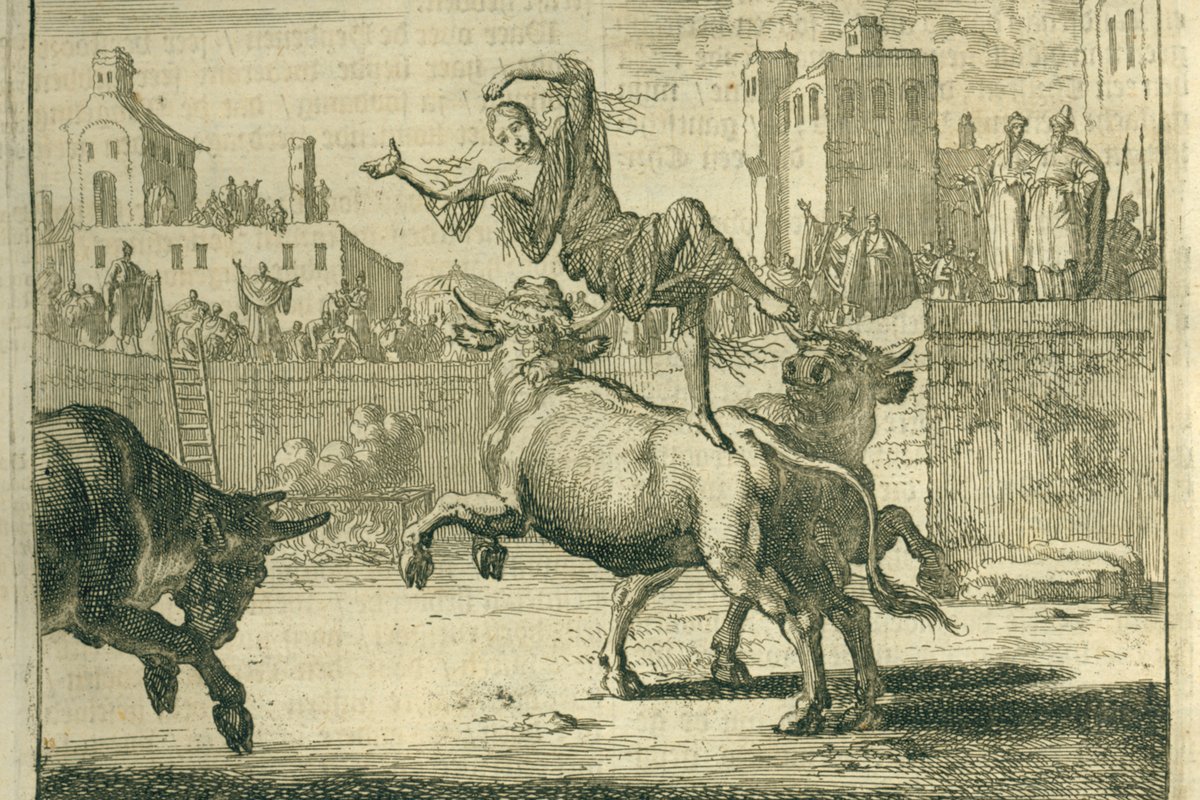
Unlike the Acts written for many later martyrs — accounts often composed generations after the fact, full of miraculous details that even the Church's own reference works now treat cautiously — Ignatius's story doesn't rest on that kind of secondhand legend. What we know of him comes directly from his own letters, written in his own hand (or dictated by him) during the very journey that ended in his death. Tradition holds that he was killed in Rome's arena as scheduled, thrown to wild beasts, fulfilling the fate he had written about so plainly on the road there. His feast is kept on October 17, and what endures isn't a miracle story built up around him after death — it's seven letters, written by a man who knew exactly how little time he had left and used it to write to strangers about unity, the Eucharist, and a death he refused to let anyone talk him out of.
Trivia
Who was Saint Ignatius of Antioch?
Why are Ignatius's letters historically important?
What happened to Saint Ignatius of Antioch?
What did Ignatius mean by calling himself 'God's wheat'?
Did Ignatius of Antioch coin the term 'the Catholic Church'?
Related Reading