Saint Polycarp

A living link to the apostles
Polycarp became bishop of Smyrna, a prosperous port city on the coast of what's now western Turkey, sometime in the late 1st or early 2nd century, and held that position for decades. What made him so significant to later generations wasn't just his long tenure — it was who had taught him. Irenaeus of Lyons, writing later in the 2nd century, recalled hearing Polycarp teach when Irenaeus himself was still a boy, and described Polycarp as a disciple of the Apostle John, someone who could speak from memory about what he'd heard directly from people who had known Jesus. That's a short, genuinely traceable chain — John to Polycarp to Irenaeus — connecting the apostolic generation to the Church of the mid-100s through a single living witness, which is part of why Polycarp's later martyrdom carried so much weight when it happened.
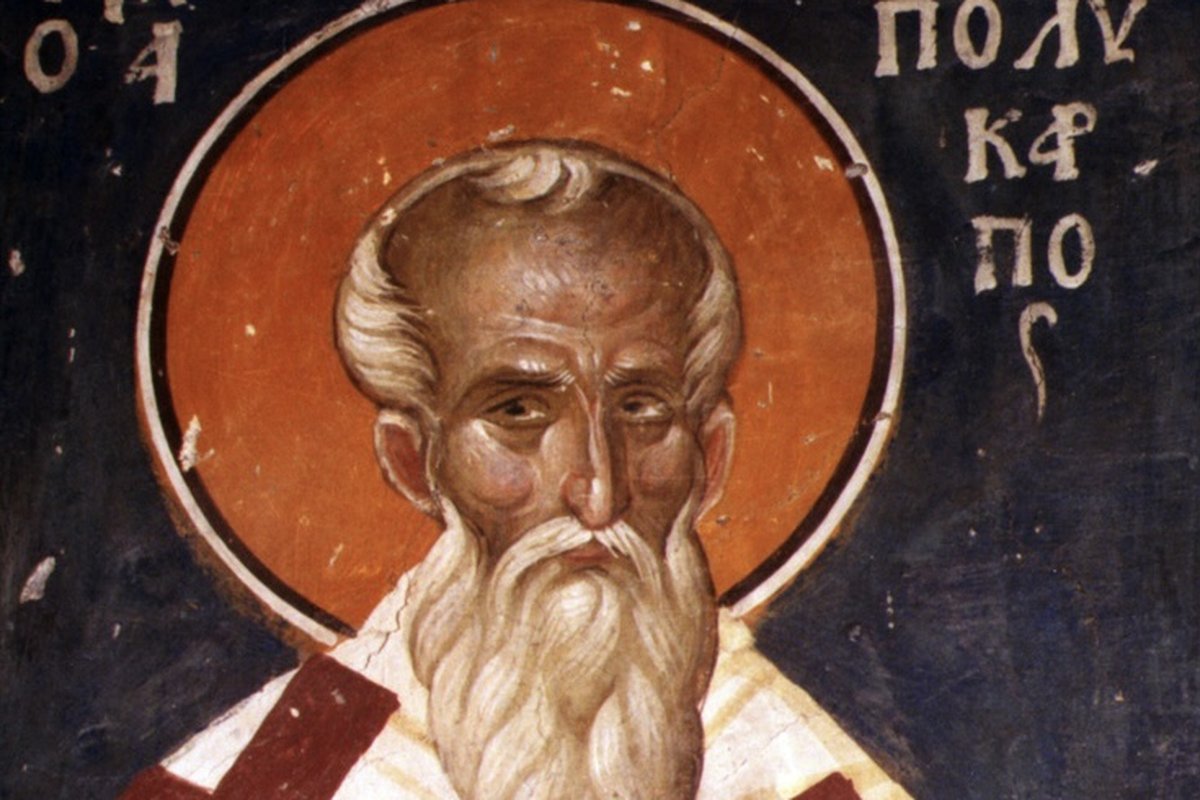
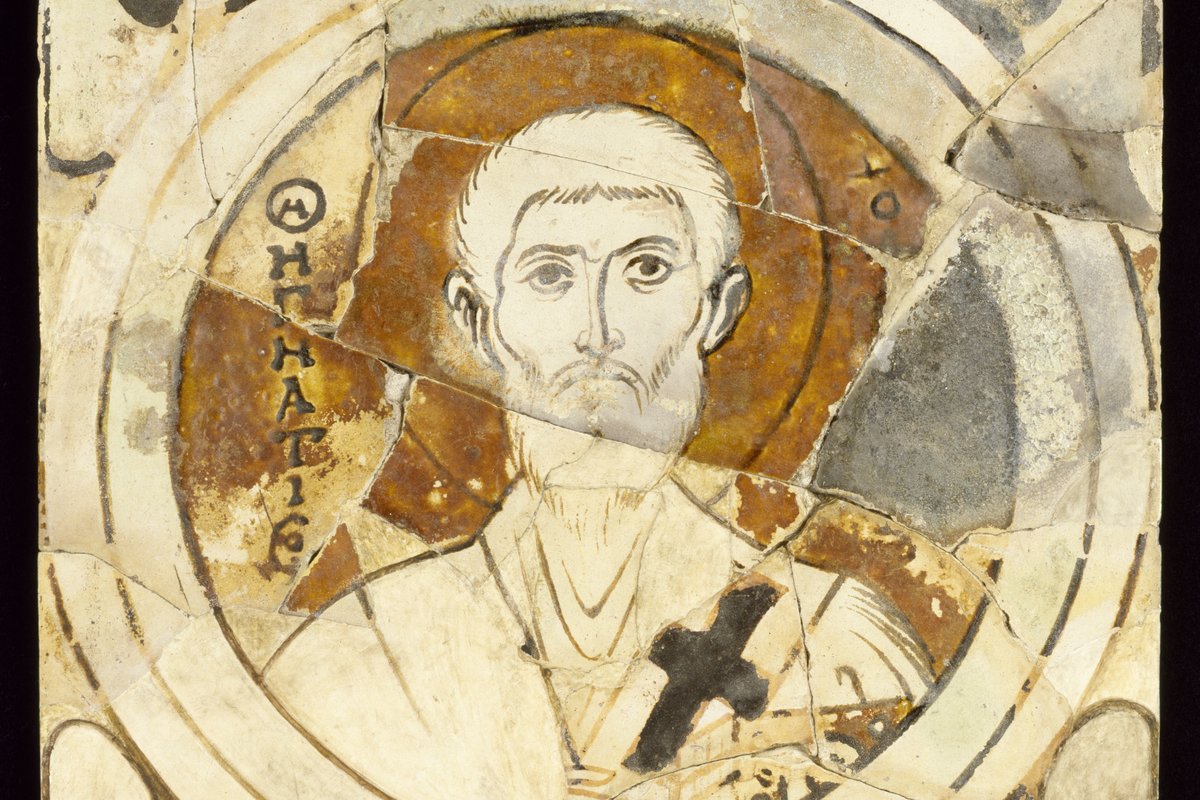
Orthodox fresco of Polycarp of Smyrna, Mount Athos tradition — public domain (CC0, released via Wikimedia Commons).
Polycarp belongs to a small group of early Christian writers and bishops now known as the Apostolic Fathers — figures close enough to the apostles, whether through direct discipleship or a single generation's remove, that their writings and testimony carry unusual historical weight. Saint Ignatius of Antioch addressed a personal letter to him during his own final journey to martyrdom. Polycarp's own surviving letter, written to the church at Philippi, is a plain, pastoral document rather than a theological treatise: it urges steadfastness, warns against greed among the clergy, and quotes extensively from the New Testament, showing that a substantial body of apostolic writing was already circulating and treated as authoritative within decades of the apostles' own lifetimes. That letter, on its own, would make Polycarp a significant figure in early Church history even without the drama of his death.
A bishop who confronted heresy in person
Polycarp's significance to the early Church wasn't limited to his martyrdom. As bishop of Smyrna, he was a central figure in the debates that shaped Christian teaching in the decades after the apostles, and he traveled to Rome late in life to discuss with Pope Anicetus a genuine disagreement between Eastern and Western churches over the date of Easter — a dispute the two men didn't fully resolve but discussed with evident mutual respect, agreeing to disagree while remaining in communion with each other. Irenaeus later cited that meeting as proof that unity in the essentials of the faith didn't require uniformity on every point of practice.
Polycarp also corresponded directly with other churches on doctrinal matters, most notably in his surviving Letter to the Philippians, written to encourage a community that had recently lost its own bishop to persecution. In it, he quotes extensively from the letters of Paul and from what would become the New Testament Gospels, offering modern scholars valuable early evidence of which Christian writings were already being treated as authoritative barely a few decades after the apostolic age ended. He's remembered, too, for actively opposing early Gnostic teachers, including Marcion, whom Irenaeus records Polycarp confronting face to face and calling "the firstborn of Satan" for distorting the Gospel.
An account written by people who were there
Most of what's known about Polycarp's death comes from a single source: the Martyrdom of Polycarp, a letter sent from the church at Smyrna to a neighboring Christian community not long after the events it describes, likely within a few years, possibly around 155–160 AD. That timing matters enormously. Unlike many later martyr Acts, composed generations after the fact and increasingly loaded with legendary detail, the Martyrdom of Polycarp is widely regarded by historians as one of the earliest and most reliable eyewitness-adjacent martyrdom accounts to survive from the ancient Church — a document written by people from Polycarp's own community, close in time to what actually happened.
"How then can I blaspheme my King?"
According to that account, Roman authorities arrested the elderly bishop and brought him before the proconsul, who — rather than wanting an execution outright — pushed hard for an easy way out: simply say "Caesar is Lord," swear by the emperor's fortune, and Polycarp could go free. It was a formula many Christians under pressure did recite to save their lives. Polycarp, by this point somewhere in his eighties, refused. His recorded answer is one of the most quoted lines to survive from the early Church: "Eighty and six years have I served Him, and He never did me any injury: how then can I blaspheme my King and my Saviour?" (Martyrdom of Polycarp 9). It's not a defiant speech built for effect — it's a plain statement of arithmetic and loyalty from a man doing the math on a lifetime of faith and finding no reason to abandon it now, with his own death standing right in front of him.
An old man who wouldn't run, until his friends made him
Before the arrest itself, the Martyrdom of Polycarp records a detail that softens the picture of a man rushing toward death: when persecution first broke out in Smyrna and other Christians were being rounded up, Polycarp's own congregation persuaded him to leave the city and hide at a nearby farm, which he did. He wasn't seeking martyrdom for its own sake. Soldiers eventually tracked him down anyway, reportedly after a servant under torture gave up his location, and found the old bishop calm enough that he ordered food and drink brought for his captors and asked only for an hour to pray before being taken — a request they granted. It's a detail that makes the later courtroom scene land harder: this wasn't a man performing defiance for an audience, but someone who had quietly tried to preserve his life through ordinary prudence and only refused to bend once the choice narrowed to a straightforward one, between the truth and his own survival.
Fire in the stadium
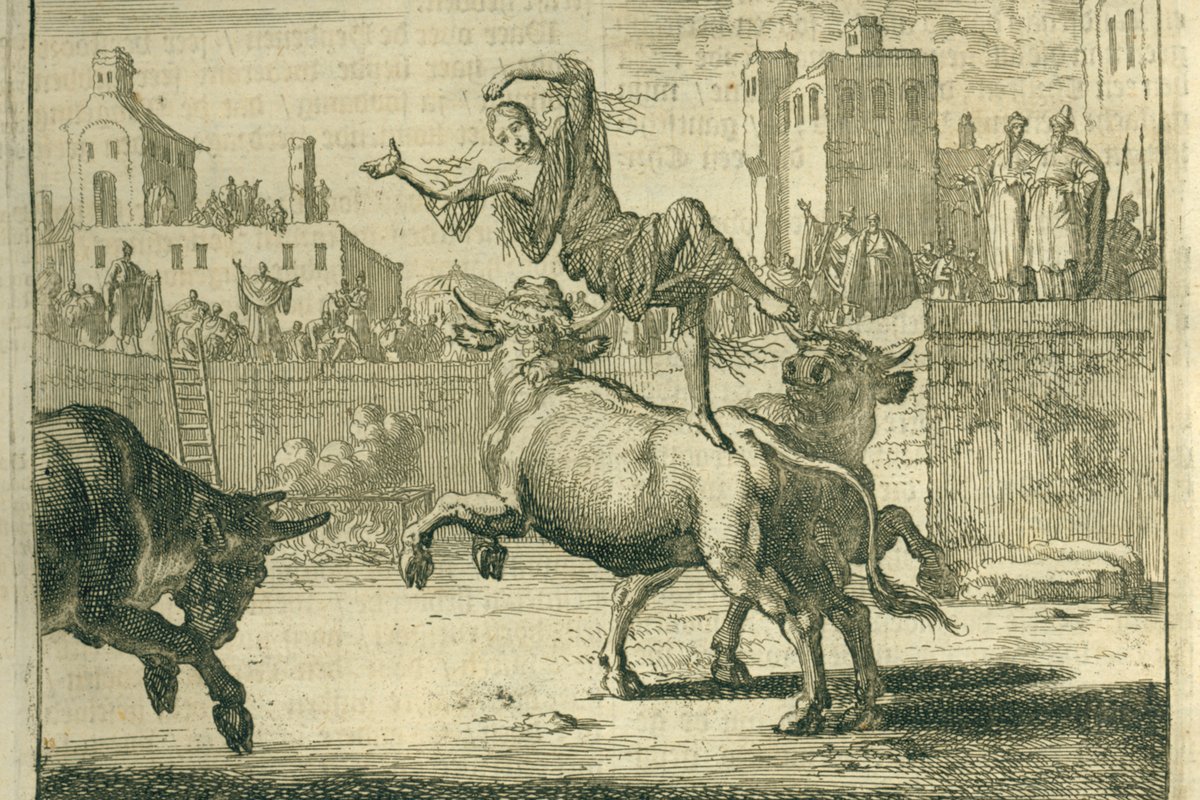
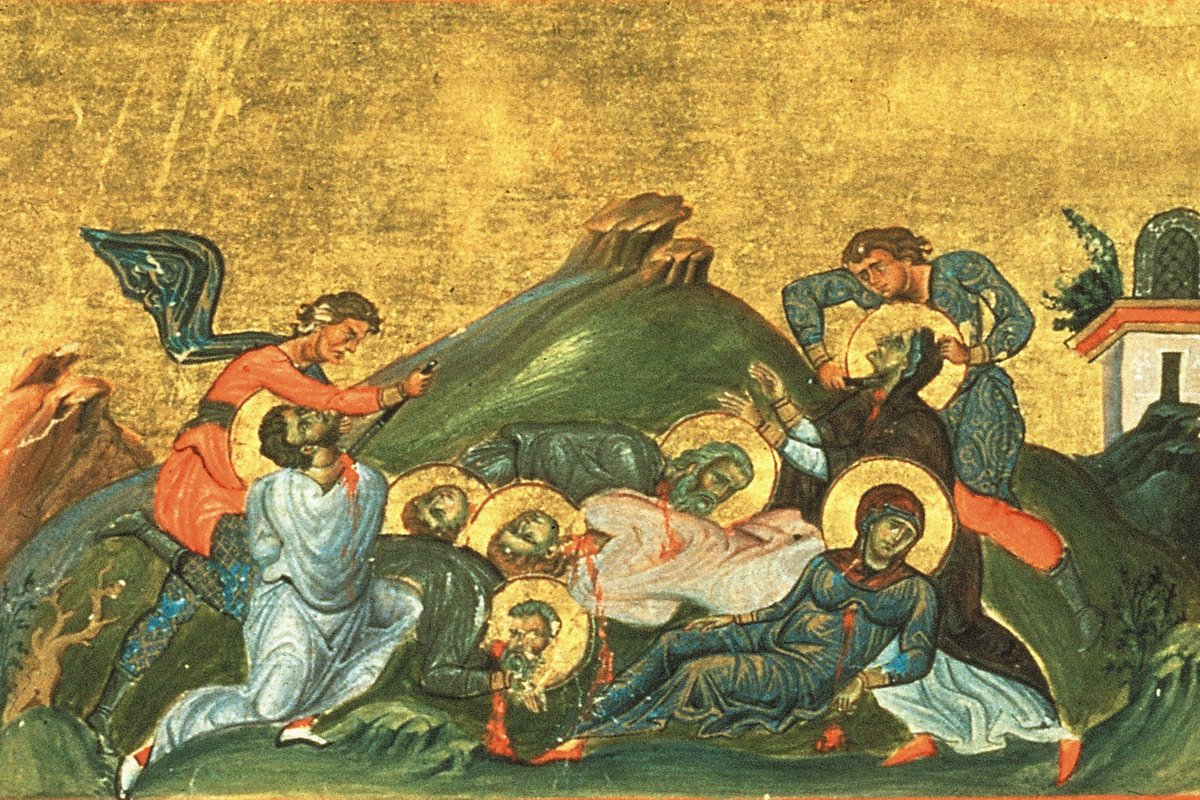
The crowd gathered at the Smyrna stadium wanted him dead, and got their way: Polycarp was burned at the stake. The Martyrdom of Polycarp includes a striking detail at this point in the narrative — that the flames arched around his body like a ship's sail filled with wind, or like bread baking in an oven, without touching him directly, forcing the executioner to finish him with a dagger instead. That detail sits differently from the rest of the account. The letter as a whole is treated by historians as a serious, early, historically grounded document, but this particular image reads like the kind of devotional embellishment that crept into even careful early accounts — a symbolic flourish rather than a claim anyone was trying to document as plain fact. It doesn't undermine the reliability of the letter's central facts: an elderly bishop was arrested, pressured to renounce Christ, refused, and was executed for it.
Feast day and legacy
Polycarp's feast is kept on February 23. He isn't remembered for a single miracle or a famous relic — he's remembered because his death was recorded almost as it happened, by people who knew him, in a document that historians still treat as one of the more trustworthy windows we have into how early Christians actually died for their faith. Between his direct link to the Apostle John and the near-contemporary account of his martyrdom, Polycarp occupies a rare place in Church history: a figure whose life and death both stand on unusually solid documentary ground for how early they occurred.
The Martyrdom of Polycarp is also historically significant for another reason: it's one of the earliest surviving Christian texts to describe the veneration of a martyr's remains, recording that Polycarp's fellow Christians gathered his bones afterward, calling them "more valuable than precious stones and finer than refined gold," and set the anniversary of his death aside for annual remembrance. That impulse — treating the physical remains of a faithful witness as worthy of honor and gathering yearly to remember the day of death rather than birth — is an early ancestor of the whole later Catholic and Orthodox practice of venerating relics and keeping saints' feast days. In that sense Polycarp's death shaped not just how one bishop was remembered, but part of how the Church came to remember its martyrs generally.
Trivia
Who was Saint Polycarp?
How do we know the story of Polycarp's martyrdom is reliable?
What did Polycarp say when ordered to renounce Christ?
How did Saint Polycarp die?
When is the feast of Saint Polycarp?
You May Also Like
Related Reading