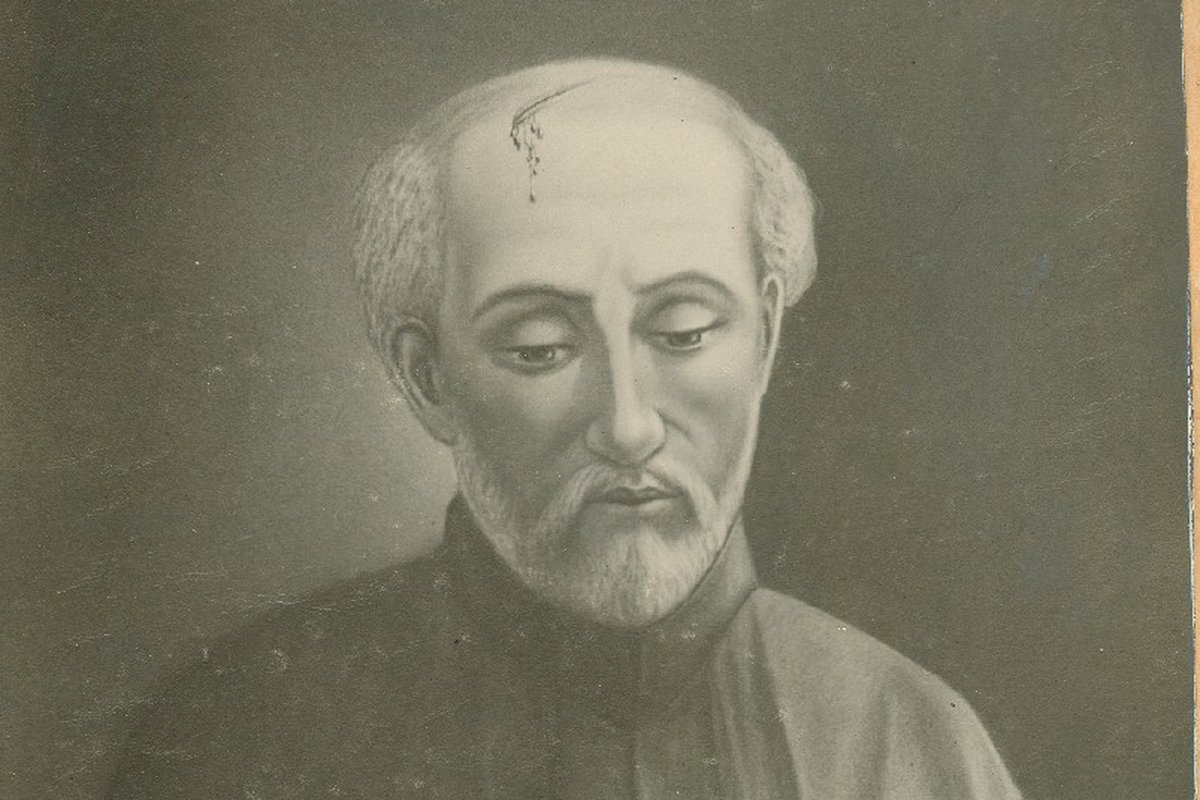
Saint John Berchmans

A student, not yet a priest
John Berchmans was born on March 13, 1599, in Diest, a town in the Duchy of Brabant, in what is now Belgium. He entered the Society of Jesus as a young man and spent the rest of his short life in Jesuit formation — first in the Low Countries, then in Rome, where he was sent to continue his studies at the Roman College. He never reached ordination. He died on August 13, 1621, at just twenty-two years old, still officially a scholastic: Jesuit terminology for a member of the order still working through years of study before priesthood. That fact alone sets him apart from most canonized saints, whose recognized sanctity is usually tied to a completed vocation — years of priestly ministry, a religious order founded, a body of theological work. Berchmans's entire recorded life took place inside the walls of seminary formation.
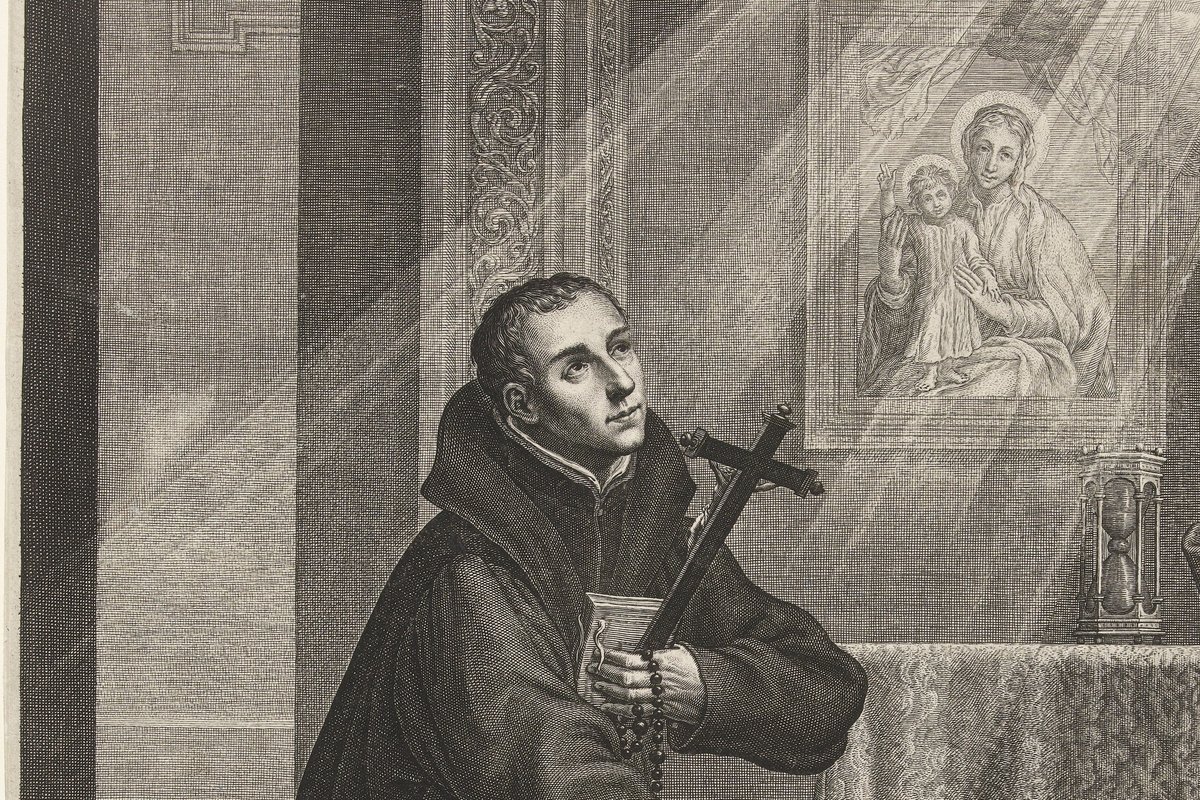
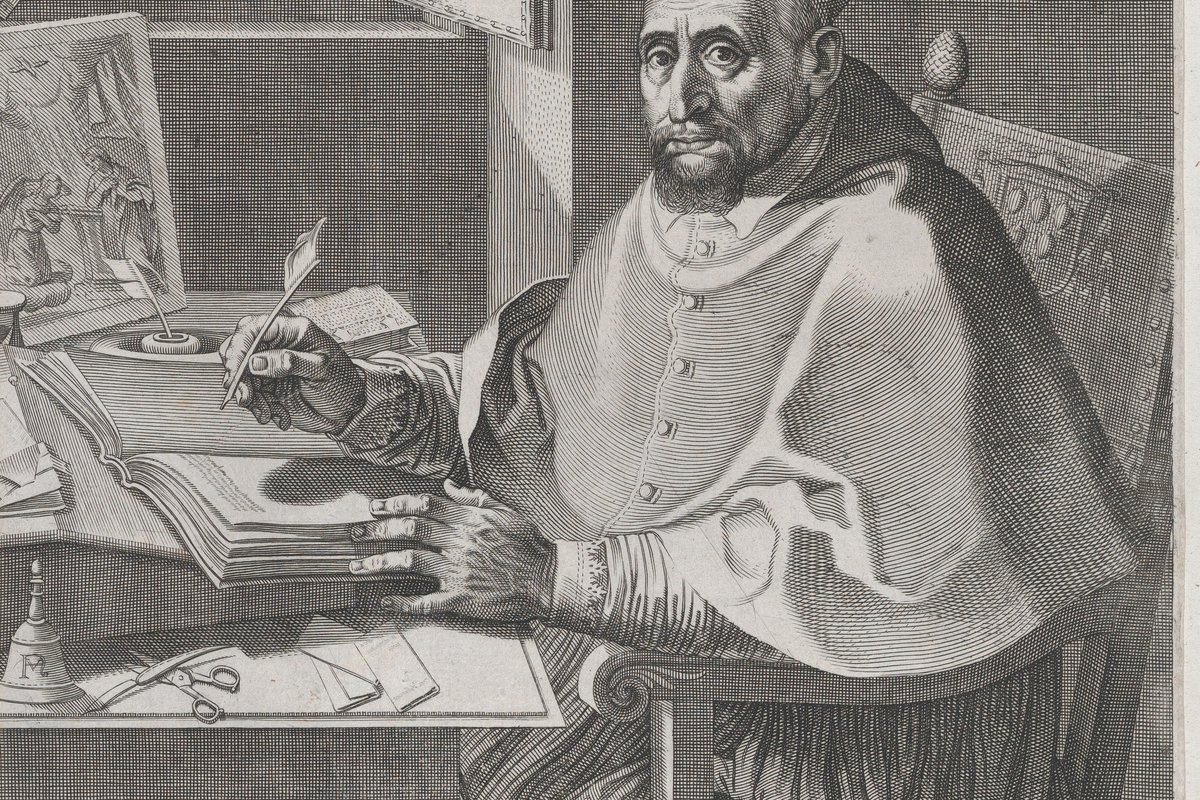
Boëtius Adamsz. Bolswert, engraved portrait of Jan Berchmans, circa 1621–1633, Rijksmuseum — public domain (CC0).
Holiness with no dramatic moment attached
What made Berchmans stand out to the people who lived alongside him wasn't a vision, a healing, or any single extraordinary event. It was consistency, applied to duties most people would consider beneath much notice at all: showing up on time, following the community's daily schedule without cutting corners, treating small acts of obedience and patience with fellow seminarians as seriously as any grand spiritual exercise. Several of his spiritual directors during his lifetime — among them men named Bauters, Cepari, and Piccolomini — later testified to a saying they consistently heard from him, one that summed up his entire approach to religious life: that the ordinary, shared routine of community itself was his greatest penance. The precise English wording of that saying differs slightly across the sources that record it — it's sometimes rendered as "my greatest penance is common life," sometimes as "common life is my greatest mortification" — because the underlying testimony was recorded in Latin by the people who knew him, not preserved as a single fixed quotation in his own words. But the substance of it, attested independently by multiple people close to him, is consistent: he treated staying faithful to the unglamorous rhythm of shared religious life as spiritually demanding in its own right, and as enough.
A formation shaped by an earlier Jesuit saint
Berchmans arrived at the Roman College carrying a devotion already common among young Jesuits of his generation: a deep attachment to Aloysius Gonzaga, an Italian Jesuit scholastic who had died decades earlier, in 1591, after contracting an illness while nursing plague victims in Rome. Aloysius had likewise died young and un-ordained, and his example gave Berchmans a concrete model for what sanctity inside ordinary seminary life could look like — not a future accomplishment to work toward, but a way of living each present day of formation seriously. Berchmans reportedly kept a small note listing personal resolutions tucked into his breviary, a practice modeled directly on similar resolutions Aloysius himself had kept, and companions later recalled him returning to it often, treating his own daily conduct as something worth examining and correcting in small ways rather than leaving to some imagined future when his "real" religious life would begin.
A rule of life built on small things
What survives of Berchmans's own writing and the testimony of those who knew him paints a consistent picture of someone who treated minor obligations as spiritually serious. He kept a strict personal schedule of prayer and study, was known for arriving early rather than merely on time, and took correction from his superiors without the defensiveness that so often creeps into how young people in formation respond to criticism. None of this made him a memorable figure in the way a famous preacher or miracle-worker might be; his fellow scholastics apparently respected him without regarding him, in the moment, as someone destined for canonization. It was only after his sudden death that companions and superiors, comparing notes, began to recognize how consistent and complete his fidelity to those small duties had actually been across years, not just in isolated moments anyone might manage under observation.
An ordinary death, not a martyrdom
Berchmans's death has none of the drama associated with many canonized saints of his era. He wasn't executed for his faith and wasn't a missionary lost to hostile territory — he simply fell ill, likely with a fever, and died in Rome in August 1621 while still a student. It's worth being clear about that distinction, because his story sits alongside so many martyr accounts in the Church calendar that it can be easy to assume every young saint who died early met a violent end. Berchmans didn't. His holiness was built entirely during ordinary life, and his death, when it came, was an ordinary one too — which is arguably part of why his example resonated so strongly with later generations of Jesuits and students: nothing about his path required extraordinary circumstances, only extraordinary attention to circumstances that weren't extraordinary at all.
Canonization and patronage
Pope Leo XIII canonized John Berchmans in 1888, formally recognizing a devotion that had already been building steadily since his death more than two and a half centuries earlier. His feast is kept on November 26 in the general calendar, with August 13 observed in some local calendars. He's honored today as patron of altar servers and of young students — both patronages that map directly onto his own brief life, spent almost entirely inside the routines of formation and study that so many young people preparing for religious life, or simply trying to take their own daily responsibilities seriously, can still recognize.
Trivia
Who was Saint John Berchmans?
What is Saint John Berchmans's famous saying about community life?
How did Saint John Berchmans die?
When was John Berchmans canonized, and what is he the patron of?
Why is Saint John Berchmans considered a model for ordinary holiness?
You May Also Like
Related Reading