Saint Dymphna

A legend born of grief and obsession
According to tradition, Dymphna was a seventh-century Irish princess, daughter of a pagan chieftain father and a Christian mother. When Dymphna was fifteen, her mother died, and her grief-stricken father became fixated on his daughter as a near image of his deceased wife — an obsession that curdled into a demand that she marry him.
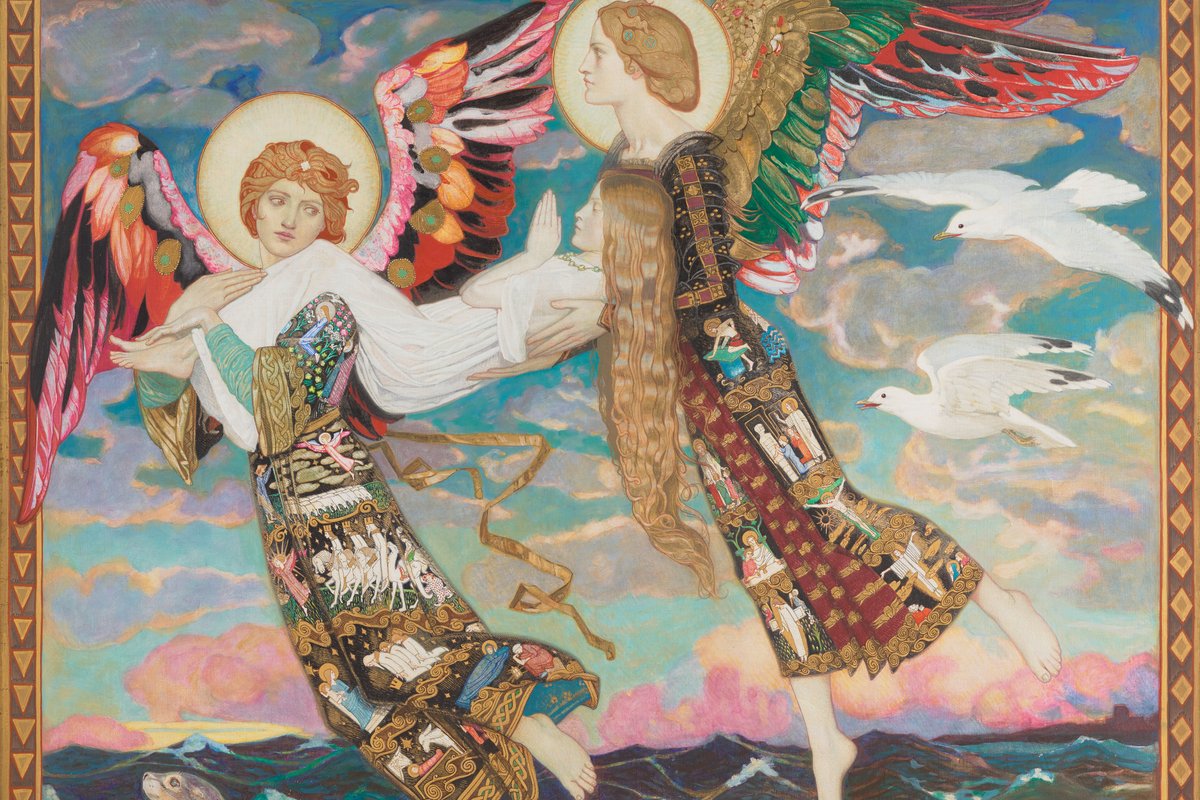
Traditional depiction of Saint Dymphna, public domain.
A flight across the sea
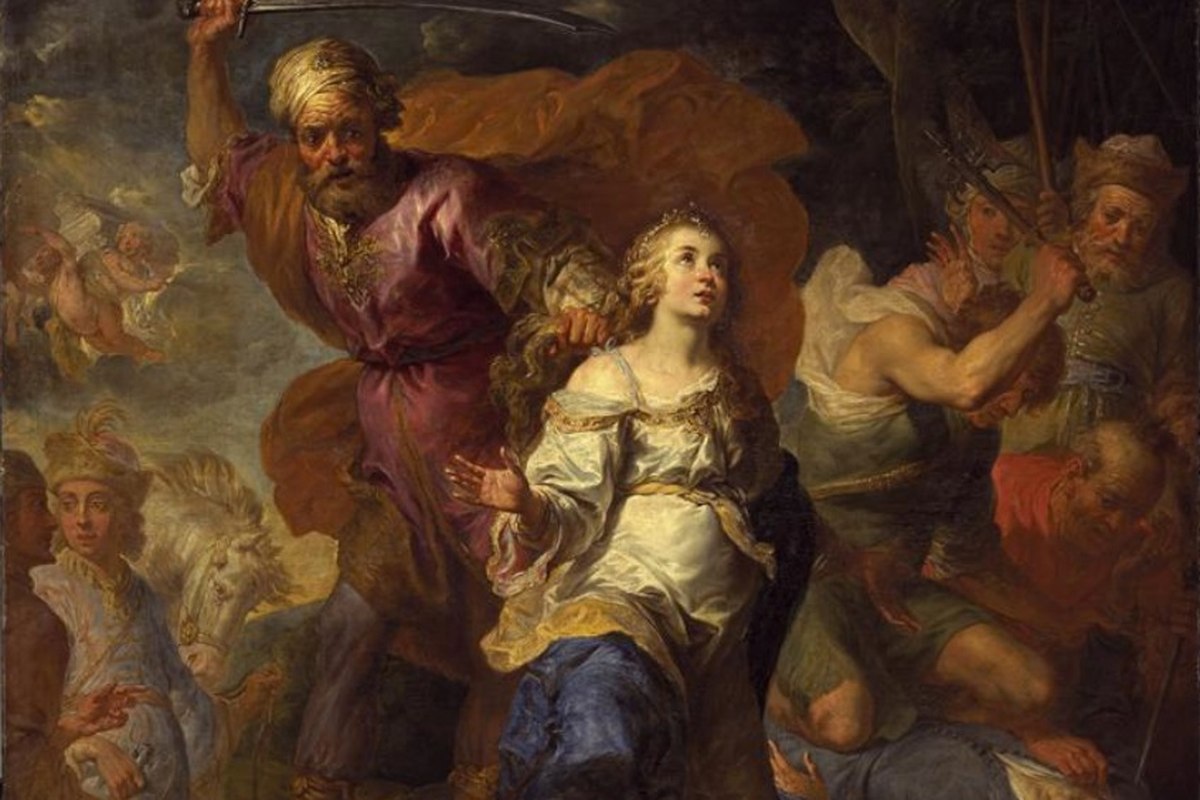
Dymphna refused to break her religious vows to satisfy her father's demand, and fled her home country for Geel, Belgium, hoping to escape his pursuit. He eventually found her there, and, according to the legend, martyred her himself rather than accept her refusal.
Relics that drew the afflicted
Her association with mental health and epilepsy grew out of stories attributing miraculous healings to people who came into contact with her relics after their discovery — at a time when both conditions were widely believed to result from demonic possession. By the time she was canonized in 1247, Geel had become a popular destination for people seeking relief from mental afflictions, and the infirmaries built to house them were already overflowing.
A town that took them in
Rather than turning pilgrims away, many townspeople in Geel began taking afflicted visitors into their own homes, where some stayed for years or even decades. That custom of "community recovery" persists in Geel today, still studied as a model for caring for people with intellectual disabilities, autism, and schizophrenia — a living legacy of a legend that began with one young woman's flight from her own father.
Legend, not documented history
It is important to be precise about what kind of source this story comes from. Dymphna's life is known almost entirely from a single hagiography written by a canon named Pierre, at the request of the Bishop of Cambrai, around 1240 — nearly six centuries after she is said to have lived. Pierre himself stated that he compiled the account from local oral tradition rather than any earlier written record, and no contemporary seventh-century source mentions Dymphna at all. This does not mean the Church treats her as fictional; her cult and the miracles reported at Geel were considered credible enough for canonization in 1247. But careful readers should hold her story the way the Church itself does — as venerable local tradition rather than verified biography, in the same category as many early medieval Irish and Anglo-Saxon virgin-martyr legends that survive only through later written retellings.
Iconography: the sword, the crown, and the chained figure
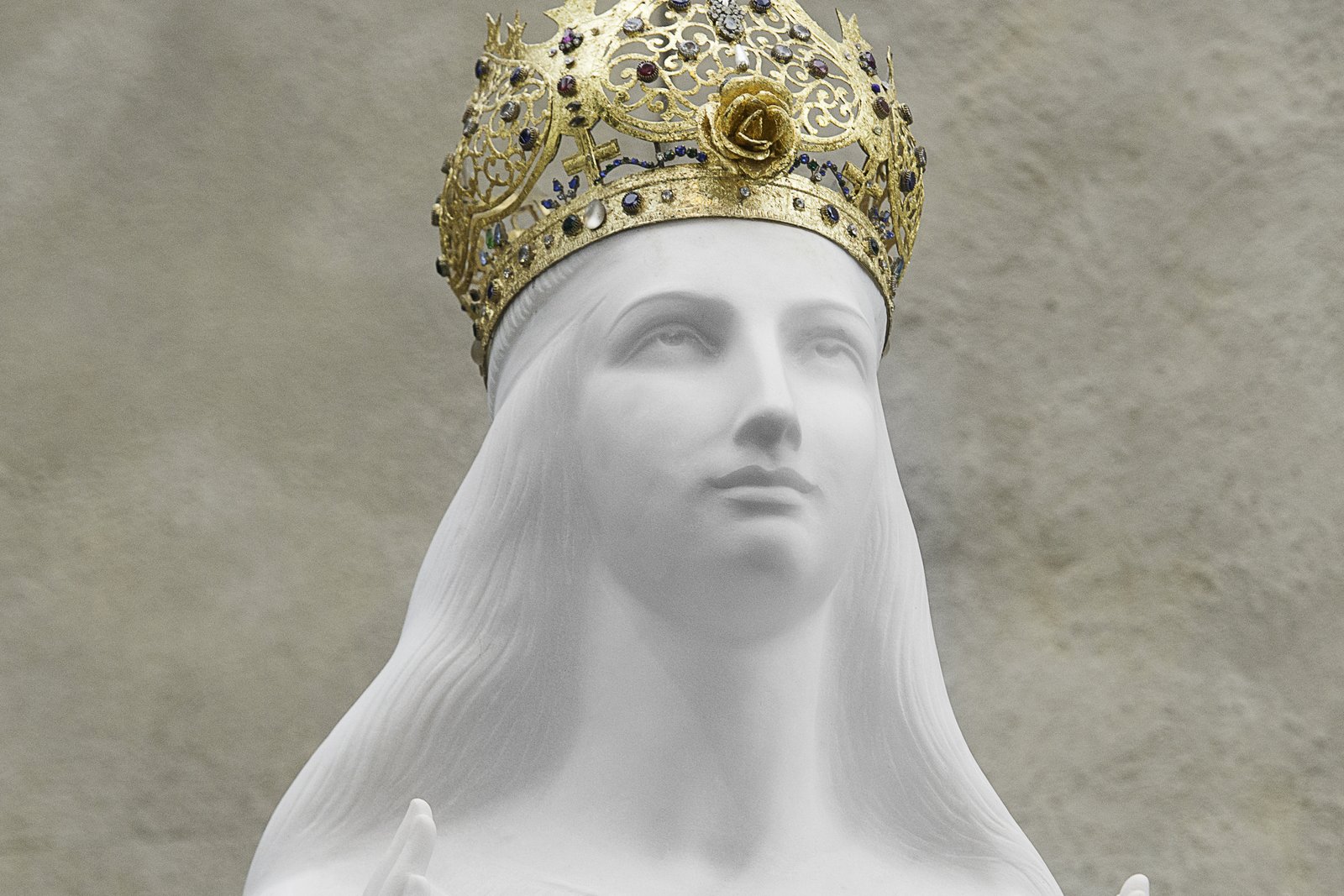
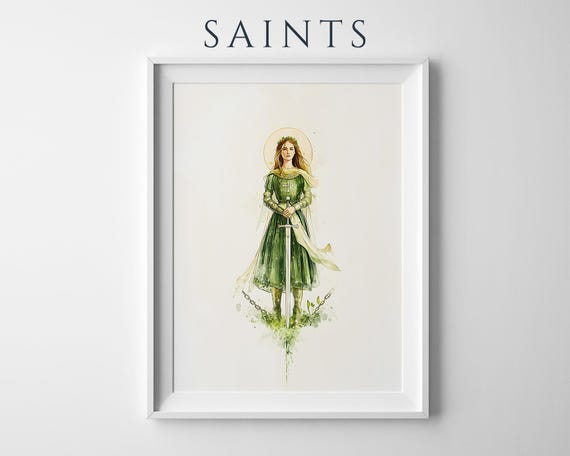
In devotional art, Dymphna is typically shown as a young crowned woman holding a sword — the traditional instrument of her martyrdom — and often standing over or beside a chained or shackled figure representing the mentally afflicted she is invoked to protect. Some depictions include a small demon or devil figure pinned beneath her feet, a common medieval visual shorthand for victory over the possession or affliction her intercession was believed to relieve. Because she is also honored as a patron of victims of incest and family violence, more recent devotional imagery sometimes emphasizes her youth and vulnerability rather than triumphant iconography, reflecting how her patronage has been reread by modern advocates for abuse survivors.
The shrine and church built around her relics
After Dymphna's relics were rediscovered at Geel, a church — the Sint-Dimpnakerk — was built on the site and became the center of her cult. Because the medieval hospital wards attached to the church could not keep pace with the number of pilgrims arriving for care, the town formalized what had begun informally: families would take a patient into their household, integrate them into daily work and community life, and receive a modest stipend in return. This system, now known as the Geel boarding-family tradition, has been documented by psychiatrists and social historians since the nineteenth century as one of Europe's oldest continuously operating forms of community mental-health care, predating modern deinstitutionalization movements by hundreds of years.
A feast day and a patronage that widened over time
Dymphna's feast is kept on May 15, and over the centuries her patronage broadened well beyond epilepsy and "madness" as those terms were understood in the medieval period. Today she is invoked for anxiety, depression, and a wide range of mental and emotional struggles, as well as by therapists, psychiatric nurses, and caregivers of the mentally ill. Devotion to her spread from Belgium into Ireland, where she is claimed as a native daughter despite the absence of any surviving local record of her, and later into immigrant Catholic communities across Europe and North America, particularly among families touched by mental illness who found in her legend — whatever its historical uncertainty — a saint who understood suffering inflicted by someone who was supposed to protect her.
Trivia
Who was Saint Dymphna?
Why did she flee Ireland?
Why is she associated with mental illness specifically?
What tradition grew out of her cult in Geel?
Is Dymphna's story historically documented?
What is Saint Dymphna's feast day?
What is she typically shown holding in art?
Related Reading