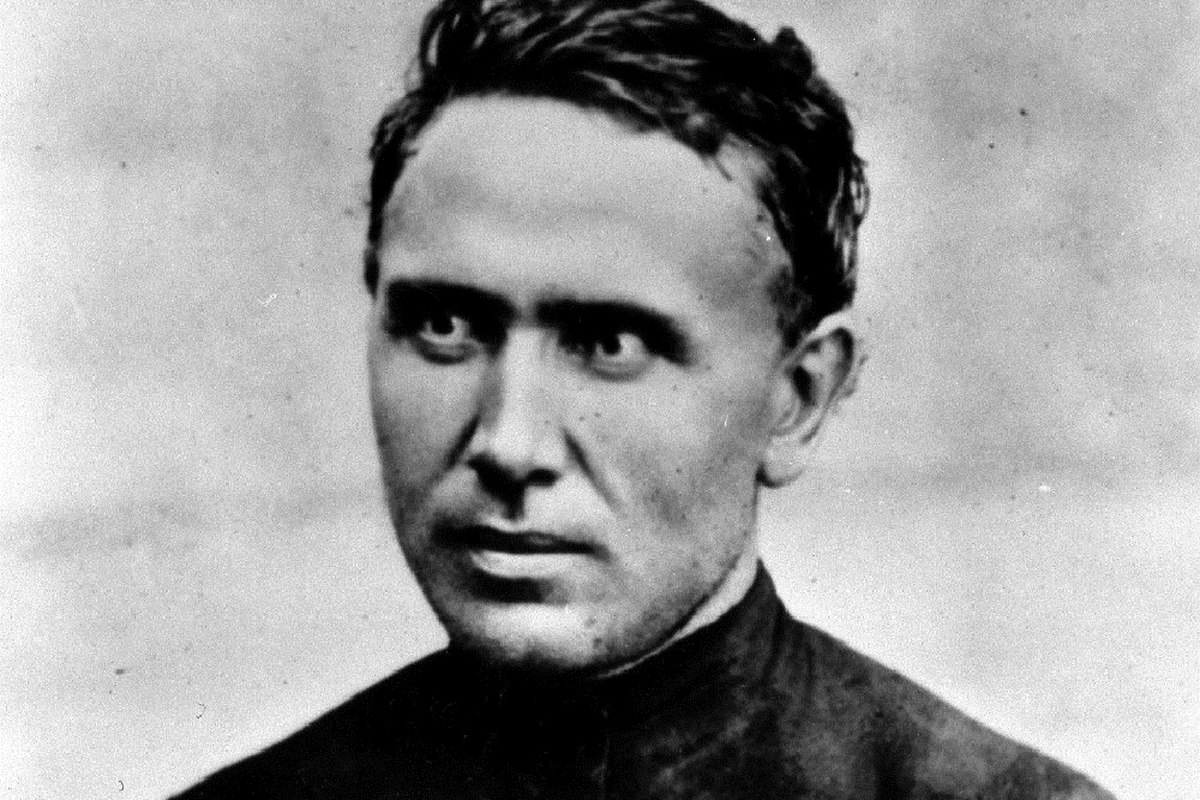
Saint John de Britto

From the Portuguese court to the Madurai Mission
John de Britto was born in Lisbon on March 1, 1647, into a family with real standing at the Portuguese royal court — his father served as a viceroy, and the young de Britto grew up around the kind of connections that could have carried him into a comfortable career close to the throne. Instead, he entered the Society of Jesus as a young man and volunteered for the foreign missions, arriving in South India in 1673 to join the Madurai Mission, a Jesuit effort focused on the Tamil-speaking region of what is now Tamil Nadu — more than a century after Saint Francis Xavier had first brought Jesuit missionaries to the subcontinent.
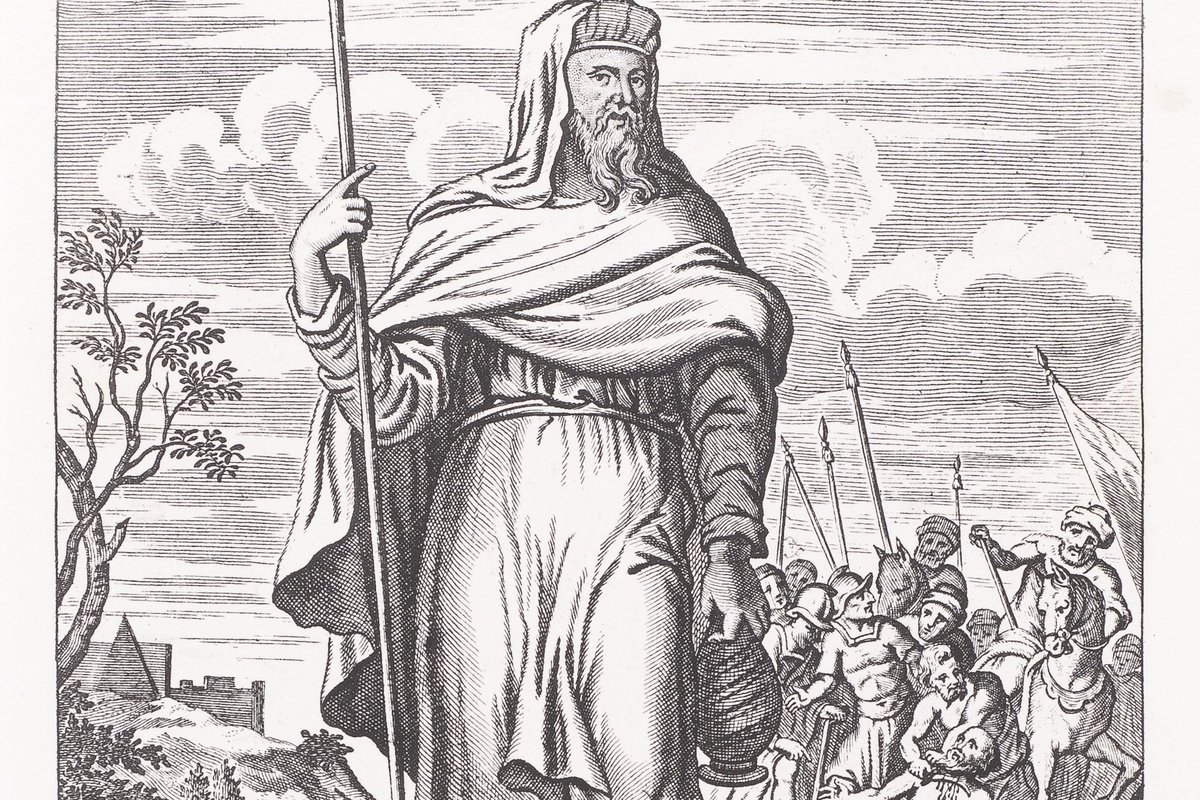
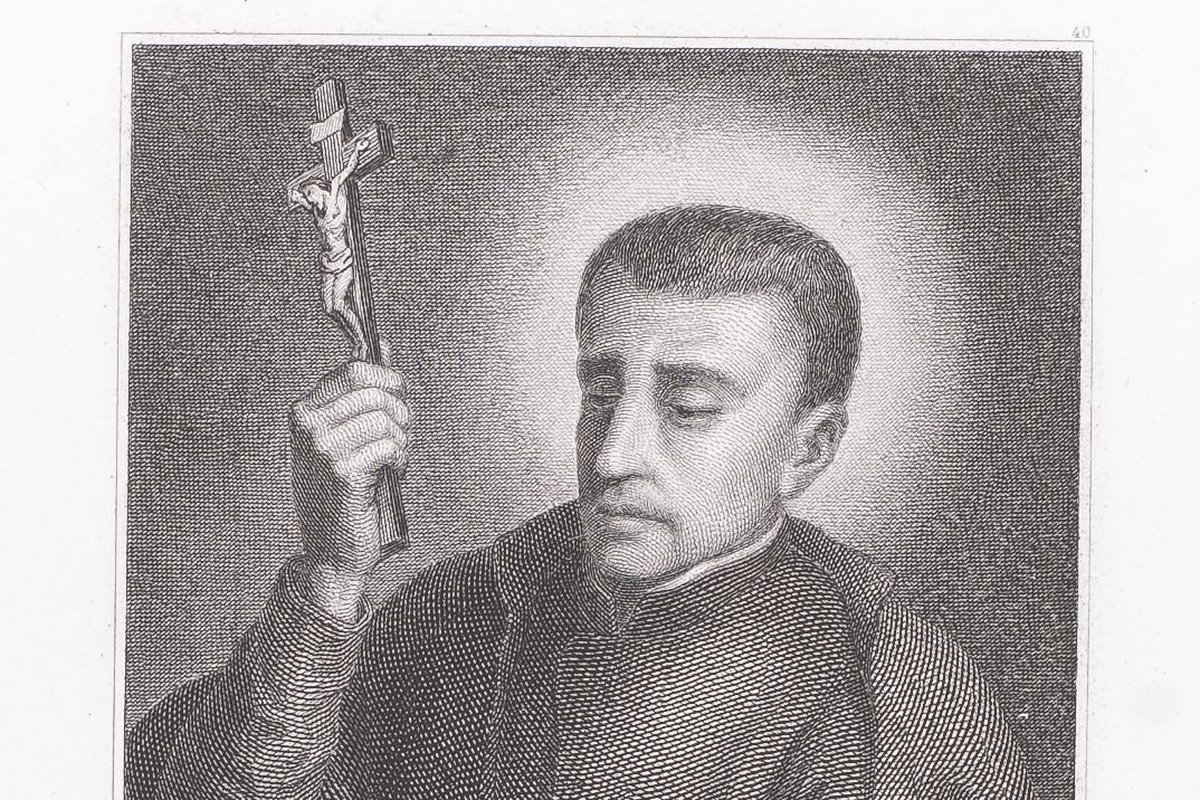
Jan Sebastiaen or Jan Anthony Loybos (designer), engraved by Hendrik Causé, Joannes de Britto, 17th century — public domain.
Living as a Tamil holy man
The Madurai Mission had already developed a distinctive and, for its time, genuinely unusual missionary approach before de Britto arrived. Decades earlier, the Italian Jesuit Roberto de Nobili had pioneered a strategy of cultural adaptation — inculturation, in later theological language — that involved living as a sannyasi, a wandering Hindu ascetic, rather than presenting Christianity in obviously European dress and customs. De Britto followed this same path, adopting the ochre robes, sandals, and simple lifestyle of a Tamil holy man, and it shaped how Tamil communities encountered him: not as a foreign authority imposing an outside religion, but as a figure who looked and lived like the ascetic teachers already familiar within Indian religious life. It was, by most historical accounts, a serious and effective strategy for making the Christian message intelligible on Tamil terms rather than Portuguese ones.
A prince's conversion, and its cost
De Britto's mission work brought him into contact with Thadiyathevan, a local prince or chieftain whom he eventually baptized. Conversion carried consequences beyond the personal: as part of accepting Christian marriage, Thadiyathevan was required to give up all but one of his wives, keeping only his first as a lawful spouse under Christian teaching. The change did not sit quietly. A powerful relative of one of the discarded wives, humiliated by her dismissal, denounced de Britto to the regional ruler, the Raja of Marava, framing the missionary's influence as a direct affront to the prince's household and, by extension, to the ruler's own authority.
Arrest and execution near Oriyur
The denunciation led to de Britto's arrest, and on February 4, 1693, he was beheaded near the village of Oriyur, in what is now Tamil Nadu. He was 45 years old and had spent roughly two decades in South India by the time of his death. The execution fit a broader, well-documented pattern in the history of the Madurai Mission, where missionaries' influence over local converts periodically collided with the political and family interests of regional rulers — de Britto's death is one of the mission's best-attested individual martyrdoms, resting on Jesuit records from the period rather than later legend.
Canonization, two centuries later
Pope Pius IX beatified John de Britto in 1852, and Pope Pius XII canonized him in 1947, formally declaring him a saint of the universal Church nearly 254 years after his execution. His feast is kept on February 4 in most calendars, though a small number of sources mark it February 11. He is venerated today as a patron of the Madurai Mission's legacy and of Tamil Catholics, a community that traces its roots directly back to the missionary work he and his Jesuit predecessors carried out across South India.
The controversy behind the inculturation strategy
The missionary method de Britto followed — adopting Tamil ascetic dress, customs, and even elements of caste-conscious social practice to make Christianity intelligible within Indian society — was not uncontroversial within the Church of his own time. Roberto de Nobili's original strategy had drawn sharp criticism from other missionaries and, eventually, formal scrutiny from Rome, in a long-running dispute historians call the Malabar Rites controversy, which asked whether accommodating local social customs (including distinctions of caste) crossed the line from cultural adaptation into genuine compromise of Christian teaching. The debate wasn't fully resolved during de Britto's lifetime, and it would resurface repeatedly over the following century until Rome eventually restricted several of the disputed practices. De Britto operated within this unsettled and genuinely debated missionary approach, which makes his own commitment to living as a Tamil ascetic — a costly, difficult daily discipline maintained over two decades in an unfamiliar climate and culture — a matter of real personal conviction rather than simple mission policy handed down from above.
A missionary who had already survived exile once
De Britto's final arrest in 1693 wasn't his first serious brush with danger. Earlier in his missionary career, regional political unrest had already forced him to leave South India temporarily; he returned to Portugal for a period, where King Peter II reportedly urged him to remain at court rather than risk his life again in India — an offer de Britto turned down in order to go back to the Madurai Mission, knowing well the dangers that had already driven him out once. That earlier decision to return, made with full knowledge of what South Indian mission work could cost, gives his eventual execution a different weight: not an unanticipated tragedy that caught an inexperienced missionary off guard, but the outcome of a man who had already weighed the risk once, at a royal court that offered him a comfortable alternative, and chose to go back anyway.
A martyrdom remembered locally long before Rome acted
Long before his formal beatification in 1852, local Catholic communities around Oriyur kept de Britto's memory alive through popular devotion — pilgrimages to the site of his execution, oral traditions passed through Tamil Catholic families, and a shrine that grew up at the place of his death well before any official Church process examined his case. This pattern, common among missionary martyrs in regions far from Rome, meant that by the time Vatican investigators formally reviewed his cause, centuries of continuous local veneration already stood behind it — one reason his eventual canonization felt, to the Tamil Catholic community that had never stopped honoring him, less like a discovery than a confirmation of what they already knew.
Trivia
Who was Saint John de Britto?
Why did John de Britto dress like a Hindu ascetic?
What led to John de Britto's execution?
When was John de Britto canonized?
What is Saint John de Britto the patron of, and when is his feast?
You May Also Like
Related Reading