Saint Peter Claver

A Catalan novice bound for the Indies
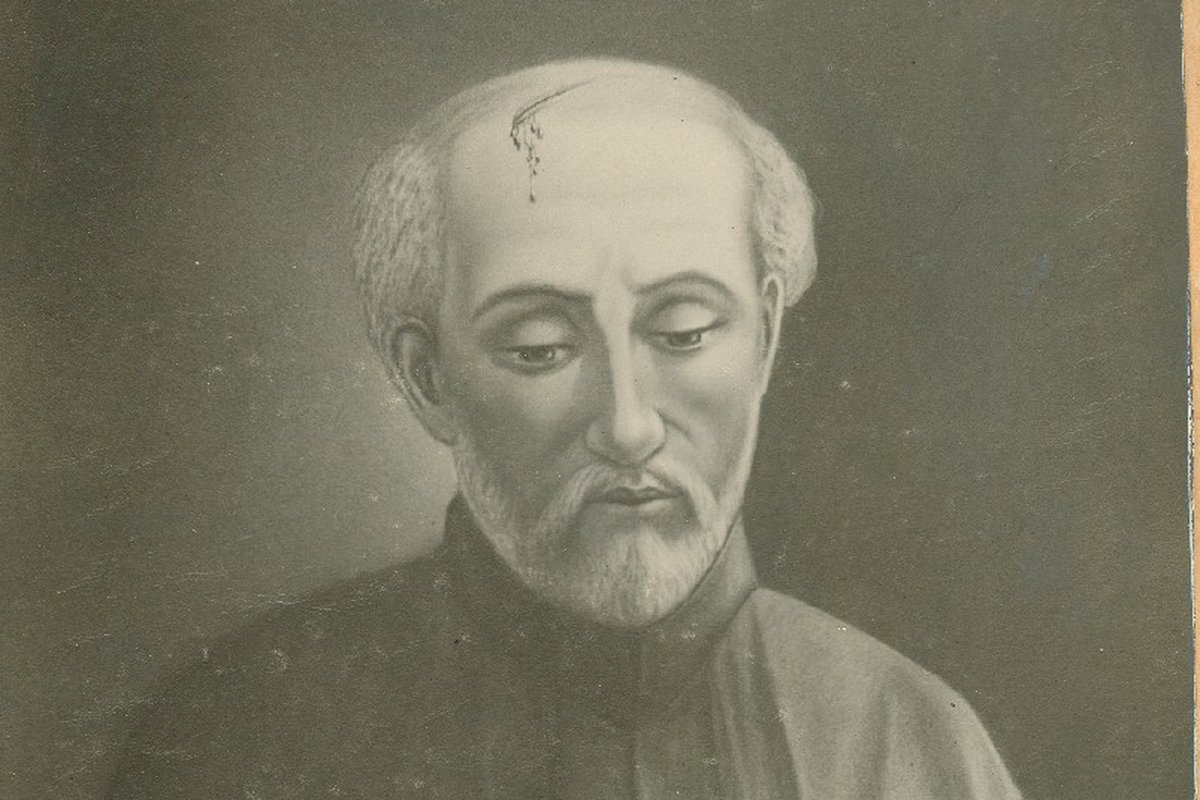
Peter Claver was born on June 26, 1580, in Verdú, a small town in Catalonia, Spain, and entered the Society of Jesus as a young man, training in Barcelona and later at the Jesuit college on Mallorca, where a porter and doorkeeper named Alphonsus Rodriguez — later canonized himself — reportedly encouraged him toward missionary work in the Americas. Claver sailed for the New World in 1610 and was sent to Cartagena, on the Caribbean coast of what is now Colombia, then one of the principal ports through which enslaved Africans were brought into Spanish South America. He was ordained a priest there in 1616 and would spend virtually the rest of his life, nearly forty years, in that one city.
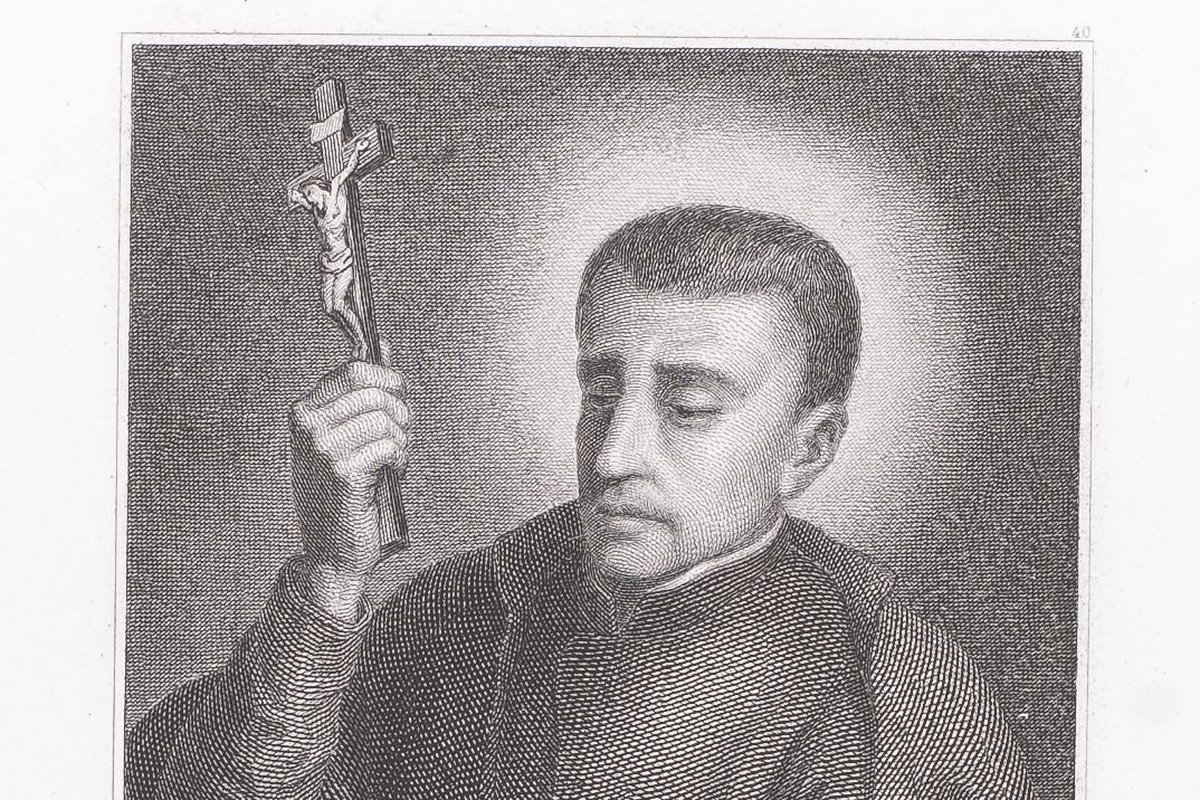
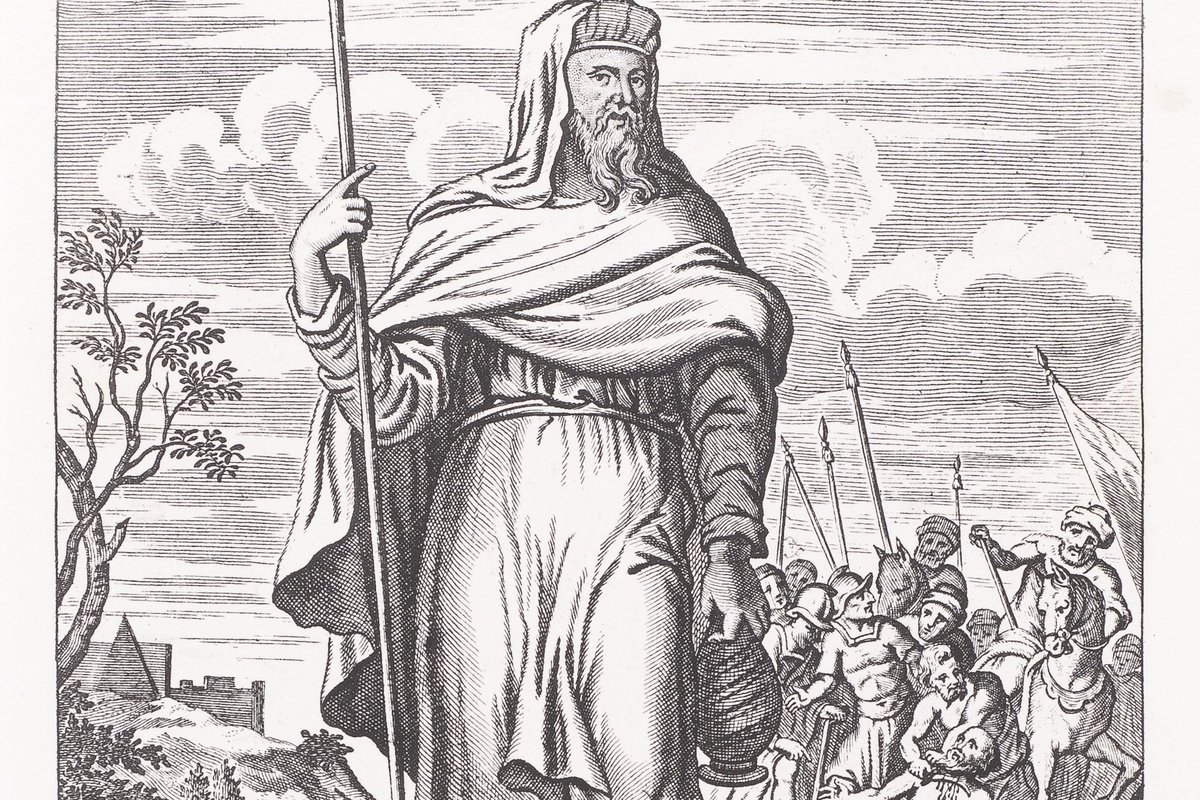
Unknown engraver, Saint Peter Claver, plate from Galerie illustrée de la Compagnie de Jésus, Paris, 19th century, KU Leuven Libraries — public domain.
Meeting the ships at the dock
Cartagena's harbor received slave ships on a grim, regular schedule, and the conditions belowdecks were catastrophic even by the standards of the trade: overcrowding, disease, and a death toll during the crossing that routinely ran into the hundreds per voyage. Claver made it his practice to board these ships as soon as they arrived, before the enslaved men, women, and children were moved into the pens and warehouses where they'd be sold. He climbed down into the hold itself, bringing water, bread, lemons, brandy, and whatever medicine he could gather, tending to people who were sick, injured, and terrified, often working through disease outbreaks that killed sailors and dock workers around him. He learned enough of several African languages and worked with interpreters to speak directly to the newly arrived, offering basic instruction in the Christian faith and, in enormous numbers over the years, baptism — sources estimate the total baptized across his ministry in the hundreds of thousands, though the record-keeping of the period makes an exact figure impossible to pin down with real precision.
"Slave of the Africans, forever"
Claver described his own vocation in a phrase he attached to his name in mission records: Petrus Claver, aethiopum semper servus — "Peter Claver, slave of the Africans forever." It's a striking, well-documented piece of self-description, and it captures something real about how he understood the work: not as an occasional charity but as a permanent identity he'd taken on. Beyond the docks, he continued visiting the enslaved population of Cartagena in the plantations and households where they were held, and he ministered as well to prisoners and to the condemned on their way to execution — anyone the rest of colonial society treated as beneath ordinary pastoral attention.
What his ministry was, and wasn't
It matters to be honest about the shape of Claver's work rather than smoothing it into a simpler story than it actually was. He did not campaign against the institution of slavery or the transatlantic slave trade itself, and nothing in the record suggests he saw that as his mission. The economic and legal system that brought ships full of enslaved people into Cartagena's harbor continued operating around him for his entire life, unchallenged by him in any organized way — a fact modern readers should sit with honestly rather than resolve into an easier, more anachronistic label like "abolitionist," which doesn't fit what he actually did. What he did do was insist, ship after ship, decade after decade, that the individual human beings arriving in that hold deserved water, medicine, dignity, and the same faith he held himself — and he backed that insistence with his own body, exposing himself repeatedly to contagious disease and grueling physical labor most of his fellow clergy in the city avoided entirely. That's a real, personally costly, and radical form of compassion within a monstrous system, even though it stopped well short of opposing the system's existence.
A model followed by later missionaries
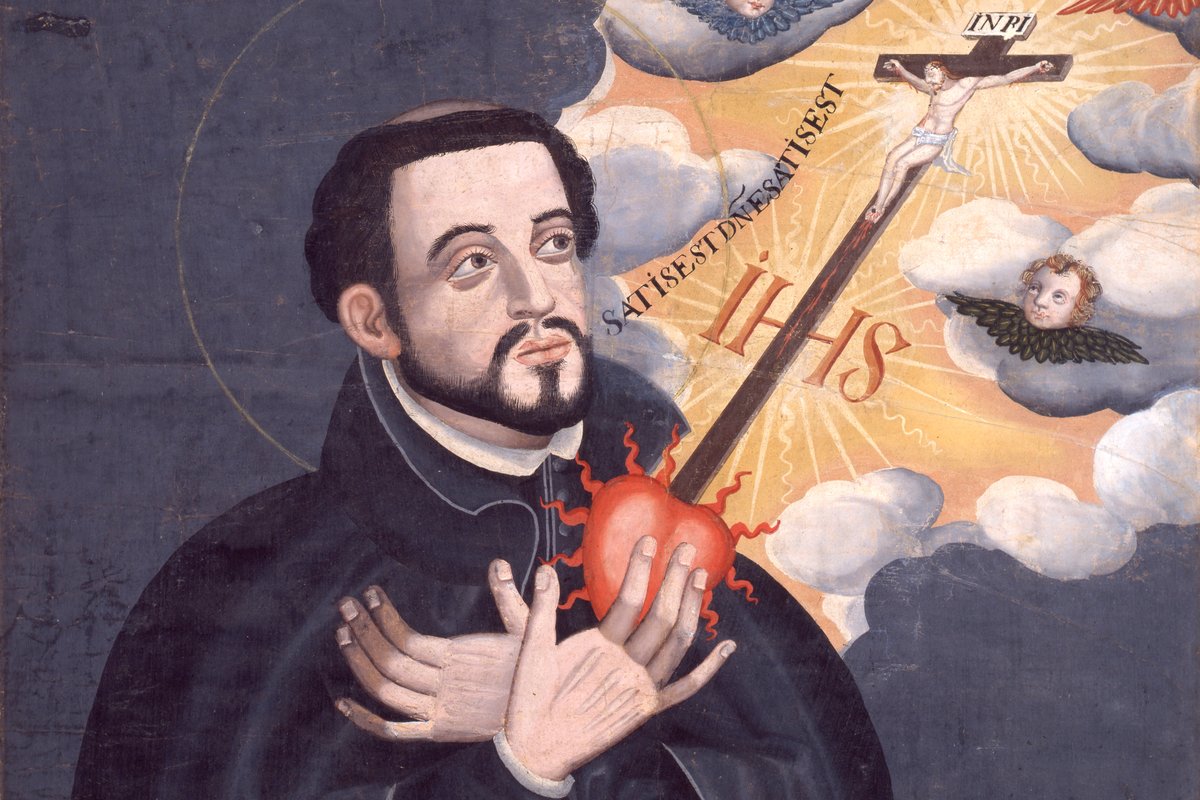
Claver's specific method — meeting the enslaved at the moment of their arrival, treating their immediate physical suffering as inseparable from their spiritual care, rather than waiting until they were baptized or catechized to show them basic kindness — became a frequently cited model for later Catholic missionary work among enslaved and oppressed populations in the Americas. Jesuit historians and later popes pointed to Claver specifically as an example of the order's ideal of finding God "in all things" — the same missionary spirit that had carried Saint Francis Xavier to Asia a century earlier — now applied in a slave ship's hold, one of the least likely places colonial society expected to find Him. His example is often paired with that of Saint Martin de Porres, a contemporary of mixed African and Spanish descent working a continent away in Lima, Peru, whose own ministry to the poor and enslaved sprang from a similar instinct to meet suffering directly rather than at a comfortable distance. Together, the two saints are often invoked as examples of a colonial-era Catholicism capable of real, personal solidarity with the enslaved even where it failed, institutionally, to confront slavery itself.
Canonization and patronage
Peter Claver died in Cartagena on September 8, 1654, worn down by decades of the work and by a final illness that left him largely forgotten and neglected in his own final months — a detail some accounts note with a certain bitterness, given how much of the city he'd spent himself serving. He was canonized by Pope Leo XIII in 1888, together with Alphonsus Rodriguez, the porter whose encouragement had helped set him on this path decades earlier. Leo XIII also declared Claver a patron of missionary work among Black people and people of African descent, a designation that endures. His feast is kept on September 9, and his remains rest in the church in Cartagena that today bears his name, alongside the shrine that draws pilgrims from across Latin America and beyond.
Trivia
Who was Saint Peter Claver?
What does 'aethiopum semper servus' mean, and did Peter Claver really sign his name that way?
Did Peter Claver oppose slavery itself?
How many people did Peter Claver baptize?
What is Saint Peter Claver the patron saint of, and when is his feast?
You May Also Like
Related Reading