Saint John of God

A restless life before the turning point
John of God was born in 1495 in Montemor-o-Novo, Portugal, and by his own later account left his family home as a child, ending up first as a shepherd in Spain and later as a soldier fighting in various campaigns across Europe, including conflicts against the Turks and the French. Army life in that period offered little structure beyond the fighting itself, and John drifted for years between military service and odd manual labor, without a fixed trade, a settled home, or any clear sense of where his life was headed. By his forties he had also spent time as a travelling bookseller, hawking devotional texts and popular pamphlets from town to town in Spain — a detail that later gave rise to one of his more unusual patronages.
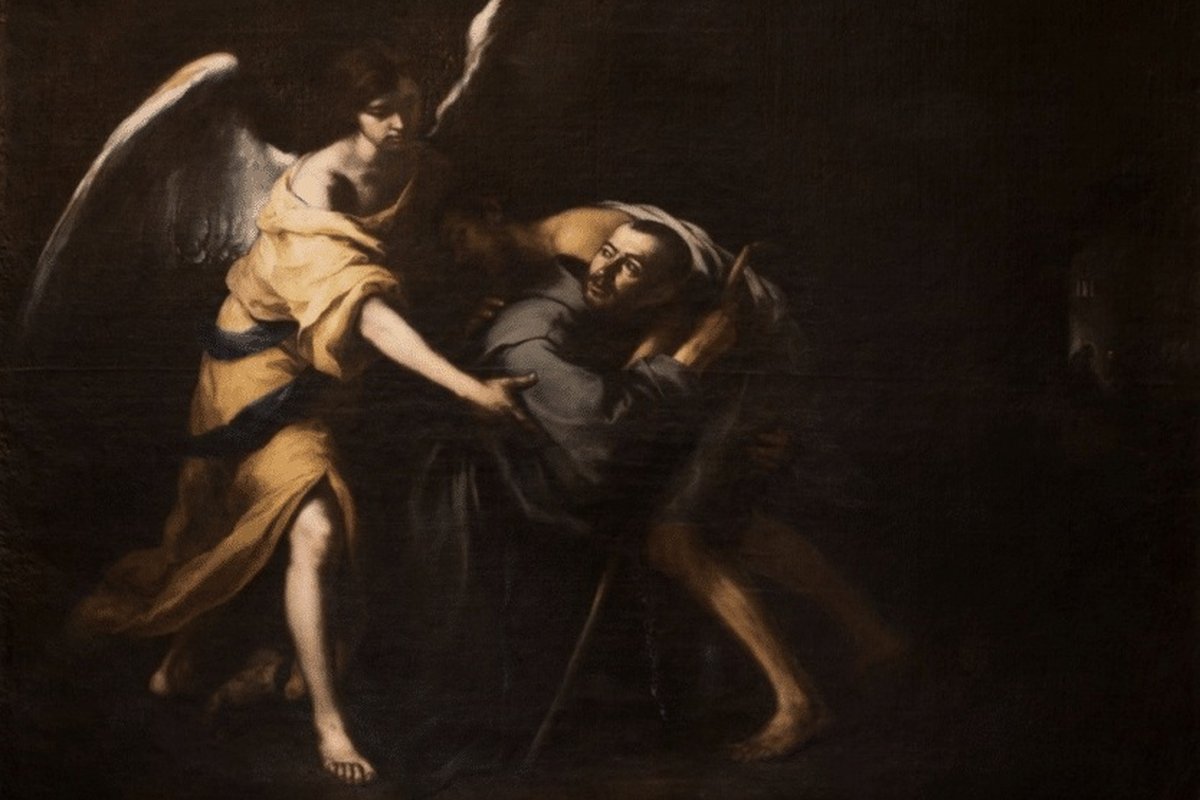
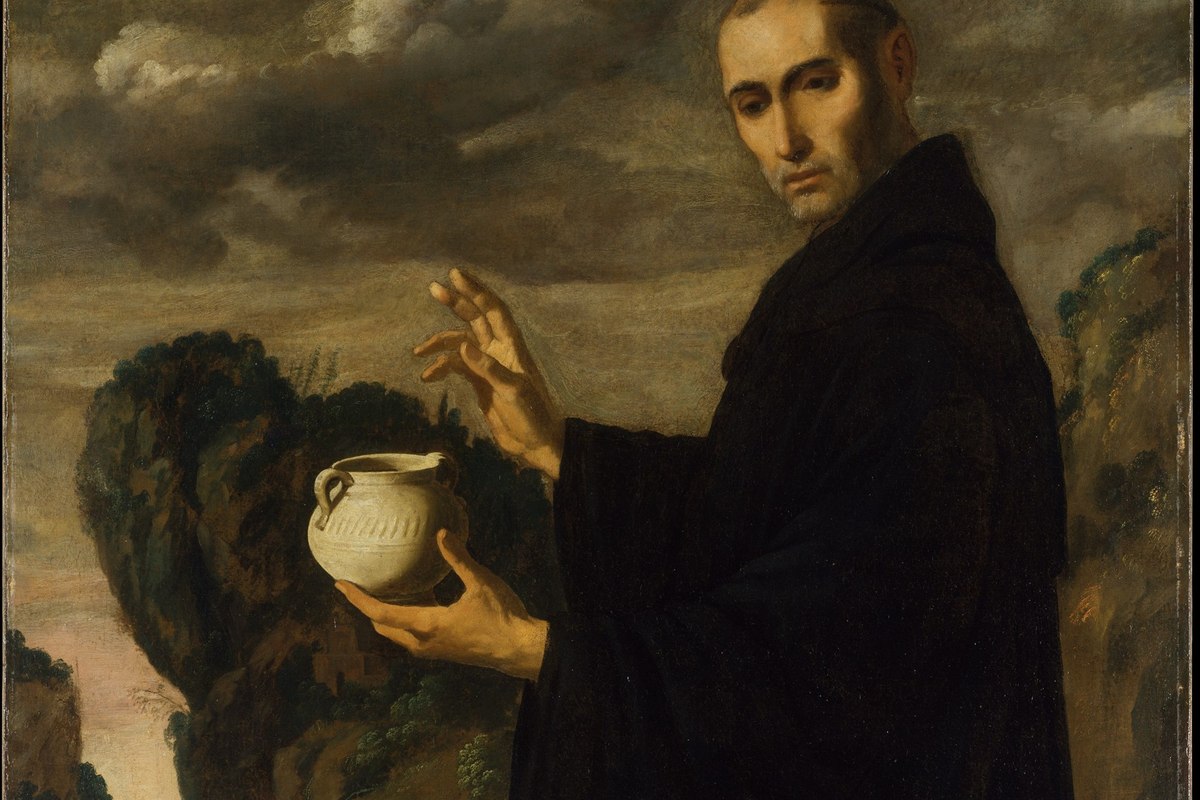
Bartolomé Esteban Murillo, "Saint John of God," 1672, Hospital de la Caridad, Seville — public domain.
Nothing in that first half of his life suggested the man he would become. The change arrived suddenly, in 1537, when he heard a sermon preached by Saint John of Ávila in Granada, Spain. The effect on him was immediate and extreme — by most accounts, John reacted with such visible anguish and self-recrimination over his past that people around him feared for his sanity, and he was briefly confined, along with the mentally ill patients of a local hospital, as a result. It was inside that same hospital, seeing firsthand how brutally the mentally ill were often treated at the time, that John apparently first formed the resolve that would define the rest of his life: caring for exactly the people society had the least patience for. Whatever exactly happened in that moment, it redirected the entire rest of his life.
From breakdown to hospital founder
Once he'd recovered, John channeled that same intensity into caring for the sick and poor of Granada, eventually establishing a hospital dedicated to exactly the kind of people the city's other institutions were least equipped, or least willing, to help. He began, quite literally, by begging in the streets at night for money and supplies, then using whatever he collected to feed and shelter the sick during the day — a routine so relentless that friends reportedly urged him to slow down for his own health, advice he never took. His approach combined practical medical care with a personal, hands-on devotion that drew other men to join him, men who found in his example something more compelling than the era's usual charitable almsgiving: a willingness to actually live alongside the poor rather than simply provide for them from a distance.
That community grew, after his death, into a formal religious order — the Brothers Hospitallers of St. John of God — which remains active in hospital and healthcare ministry around the world today, a direct institutional descendant of one man's sudden change of direction in a Granada street. The order eventually spread across Europe and, through later missionary expansion, into Latin America, Africa, and Asia, running hospitals, care homes, and mental health facilities that trace their founding spirit back to that same uncompromising insistence on serving whoever else refused to.
A death that mirrored his whole life
John of God died in 1550, on his own 55th birthday, and the circumstances of his death read almost like a final, unplanned sermon on everything he'd spent his life doing. He contracted pneumonia after jumping into a flooded river in the dead of winter to save a man who was drowning, and the illness proved fatal. It's a striking symmetry: a man whose entire adult mission had been throwing himself, often literally, into other people's suffering, died doing exactly that one final time.
An unofficial rule that outlasted him
John of God never wrote a formal religious rule during his own lifetime — the community that gathered around him operated more on the example he set day to day than on any written constitution. That structure came later, imposed by his early followers and eventually formalized by the Church decades after his death, when the loose brotherhood was recognized as a religious order under the Hospitaller rule. It's an unusual origin story for a major order: most religious congregations trace back to a founder's deliberate rule of life, while John's traces back mostly to the sheer, sustained example of a man who kept showing up for people no one else would touch, night after night, until others started showing up alongside him.
Sainthood and a wide net of patronages
John of God was canonized in 1690, a century and a half after his death, and the causes he's patron of today read almost like a biography in miniature: hospitals, the sick, and nurses, for the obvious reasons; firefighters, whose work carries the same instinct toward physical risk for others' sake that defined his death; alcoholics, given his own troubled early years; and, less predictably, booksellers, a patronage tied to earlier work he'd done selling religious books and pamphlets before his final calling took hold. His feast is celebrated on March 8, and he's often paired in devotional art and popular memory with Saint Teresa of Calcutta as one of the Church's clearest examples of a life built entirely around hands-on care for the sick and the discarded.
Trivia
What triggered John of God's conversion?
What did John of God found, and where?
How did John of God die?
When was John of God canonized, and what is he the patron saint of?
What is Saint John of God's feast day?
You May Also Like
Related Reading