Saint Kilian

Another Irish monk who left for good
Kilian was born around 640 in Mullagh, County Cavan, in Ireland, and belonged to the same broad missionary tradition that had already carried monks like Columban and Gall onto the European continent a generation earlier — Irish peregrini, who left their homeland permanently rather than treat missionary work as a temporary posting. The word peregrinus, Latin for "pilgrim" or "wanderer," described a specifically Irish monastic practice: leaving one's homeland for good, as a form of self-denial undertaken for Christ's sake, rather than traveling to a fixed destination and then returning. Irish monasteries in this period had become unusually vigorous centers of learning and asceticism, and their monks fanned out across continental Europe founding monasteries and mission churches from France to northern Italy.
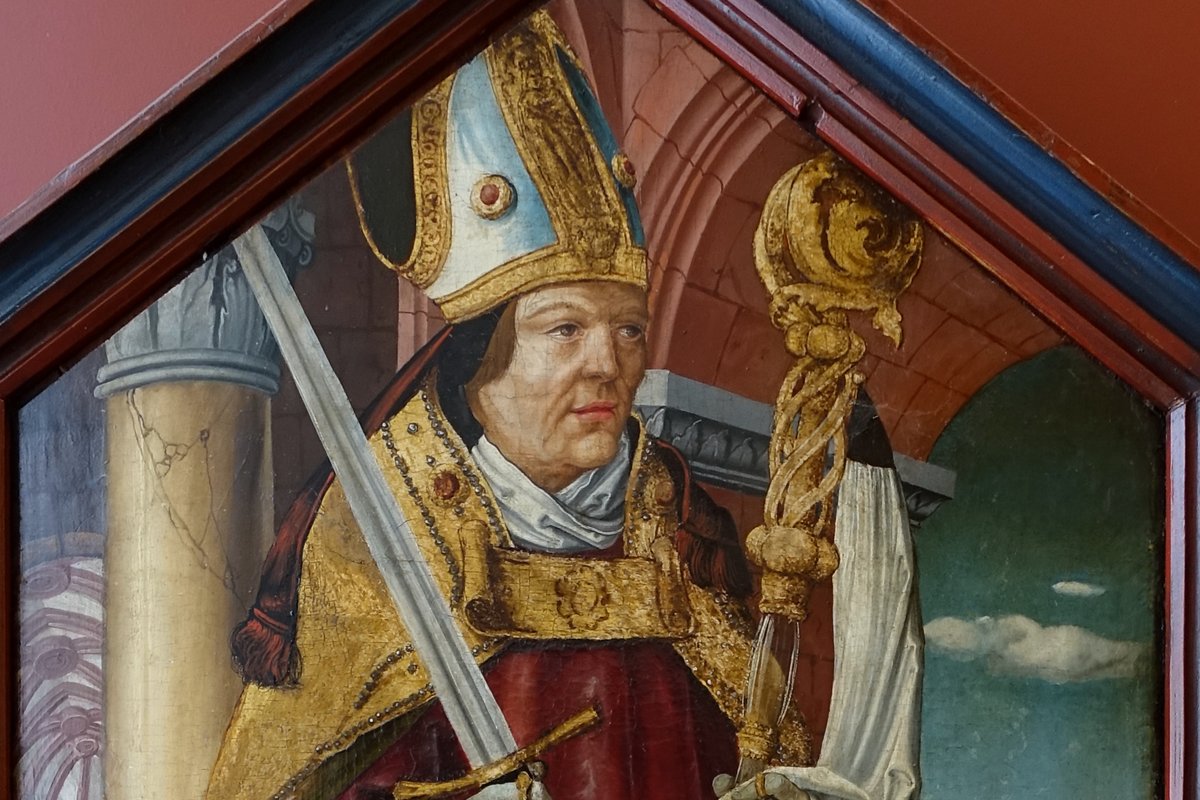
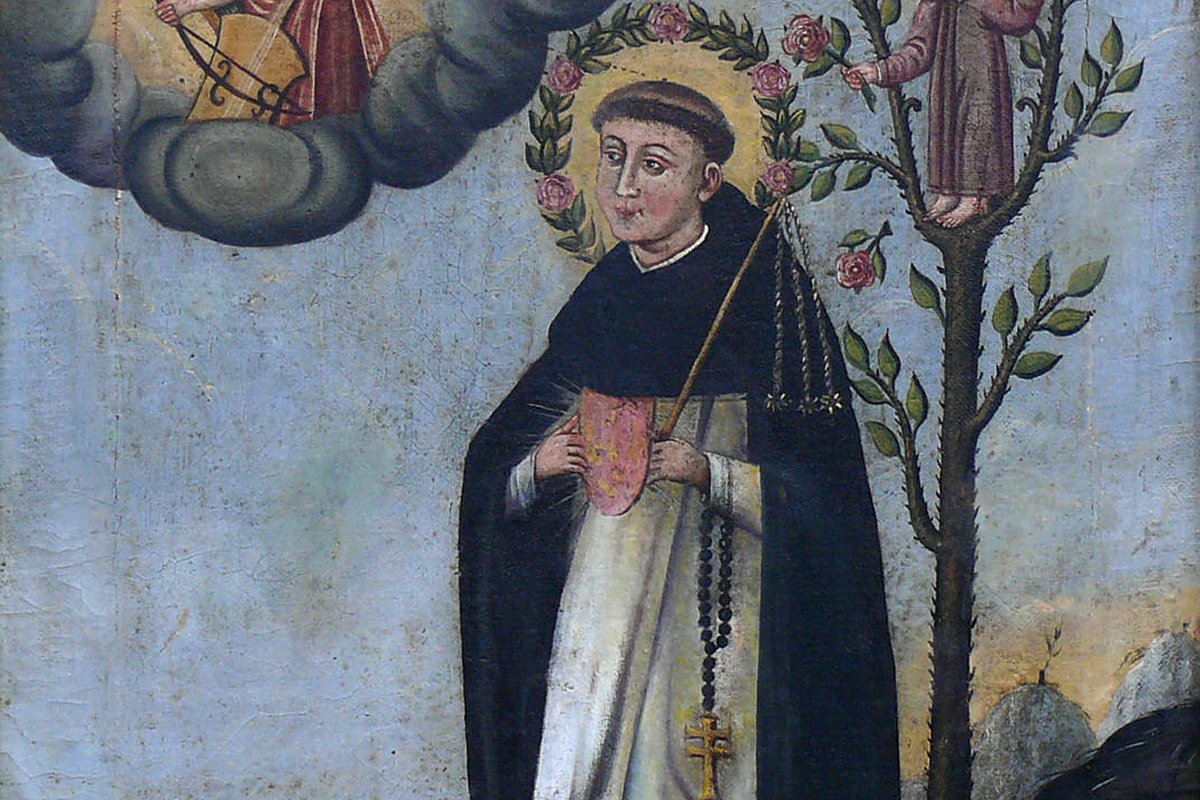
Unknown Franconian painter, Saint Kilian, panel painting, c. 1520, Mainfränkisches Museum, Würzburg — public domain.
Kilian, however, was a bishop rather than a monastic founder, and his mission took a more overtly episcopal shape: around 686, he traveled first to Rome, where tradition holds he received a papal commission to preach in Franconia, before setting out for continental Europe with two companions, the priest Colman and the deacon Totnan, aiming to evangelize the Franconian region centered on what is now Würzburg, in Bavaria, Germany. The area was still largely pagan at the time, ruled by Frankish dukes who owed nominal allegiance to the Merovingian crown but governed their own territories with considerable independence.
Converting a duke, and confronting his marriage
The mission's early success centered on Gozbert, the local Frankish duke, whom Kilian succeeded in converting to Christianity along with a substantial part of his court. That success, though, put Kilian in an uncomfortable position almost immediately. Gozbert was married to Geilana, the widow of his own late brother — a marriage that Kilian, applying canon law directly and without much apparent diplomacy, told the duke was unlawful for a Christian ruler to maintain. It's a confrontation with an unmistakable echo of the biblical account of John the Baptist challenging Herod over his marriage to Herodias, his brother's former wife — a parallel many readers notice immediately, though the two are separate historical and biblical episodes rather than one story repeating itself.
Canon law in this period treated marriage to a brother's widow as a form of incest under the Church's rules on affinity — kinship created by marriage rather than blood — a category of forbidden marriage that struck early medieval converts as far more restrictive than the customs they were used to. For a newly converted duke to end such a marriage would have meant a genuine political and personal cost, not simply a private matter of conscience, which is likely part of why Geilana reacted as forcefully as she did once it became clear Gozbert was taking Kilian's objection seriously.
Murdered while the duke was away
Gozbert, according to the traditional account, took the challenge seriously enough to consider separating from Geilana, which put her in a position she wasn't willing to accept quietly. While Gozbert was away from Würzburg on military campaign, Geilana had Kilian, Colman, and Totnan secretly murdered, calculating that the matter could be closed before her husband returned and had the chance to act on Kilian's challenge himself. The killing took place around 689, ending a mission that had, up to that point, been succeeding about as well as any Irish missionary bishop's work on the continent typically did.
A cathedral built on rediscovered remains
The remains of Kilian and his two companions were rediscovered in Würzburg some years after their deaths, and the discovery became the foundation of major local veneration that has continued, in one form or another, ever since. Würzburg's cathedral, the Kiliansdom, is dedicated to him and remains a functioning, actively used cathedral today — not a ruin or a museum piece, but the living center of the diocese that grew up around his martyrdom.
Kilian's cult spread well beyond Würzburg in the centuries that followed, with churches dedicated to him as far away as Ireland, Luxembourg, and parts of Italy, carried along the same missionary and pilgrim routes his fellow Irish monks had used to travel the continent. He is typically depicted in art as a bishop holding a sword, a reference to his martyrdom, alongside his crozier — the shepherd's-crook-shaped staff that symbolizes a bishop's pastoral authority over his flock. That combination of sword and crozier captures the essential shape of his story: a shepherd of souls killed for insisting, plainly and at personal cost, that even a ruler's household was not exempt from the law he'd been sent to preach.
A living festival, thirteen centuries later
Kilian's feast is kept on July 8, and in Würzburg it's marked by Kiliani, a major regional festival that draws large crowds every year — a striking case of a seventh-century missionary bishop's memory staying genuinely alive in local civic and religious life rather than fading into a name on a calendar. He is venerated today as the patron saint of Würzburg and of the broader Franconia region, the same territory he set out to evangelize with two companions and, by most accounts, very little idea of how the mission would end.
His story fits into a wider pattern of Irish missionary bishops and monks whose work reshaped the religious map of early medieval Europe, a movement worth setting alongside other saints who took the Gospel far from home at real personal risk, such as Saint Peter Canisius, who faced his own share of hostility centuries later defending Catholic teaching in Reformation-era Germany. Kilian's case stands out even within that broader missionary tradition for how directly his death was tied to a single act of moral courage — a plain refusal to stay quiet about an unlawful marriage, delivered to the one household in Franconia where saying it aloud carried the greatest risk.
Trivia
Who was Saint Kilian?
Why was Saint Kilian murdered?
Is the story of Kilian and Geilana similar to any Bible story?
What happened to Kilian's remains?
What is Saint Kilian the patron saint of, and when is his feast?
You May Also Like
Related Reading