Saint Leonard of Port Maurice

Four decades on the road
Leonard was born in 1676 in Porto Maurizio, on the Italian Riviera, and entered the Franciscan order as a young man. What defined his life afterward was travel: for more than forty years, he preached parish missions across Italy, moving from town to town delivering the kind of intensive, revival-style sermons meant to reawaken faith among Catholics whose religious practice had gone slack or routine. It was exhausting, repetitive work with no fixed congregation and no settled home, and Leonard kept at it for decades.
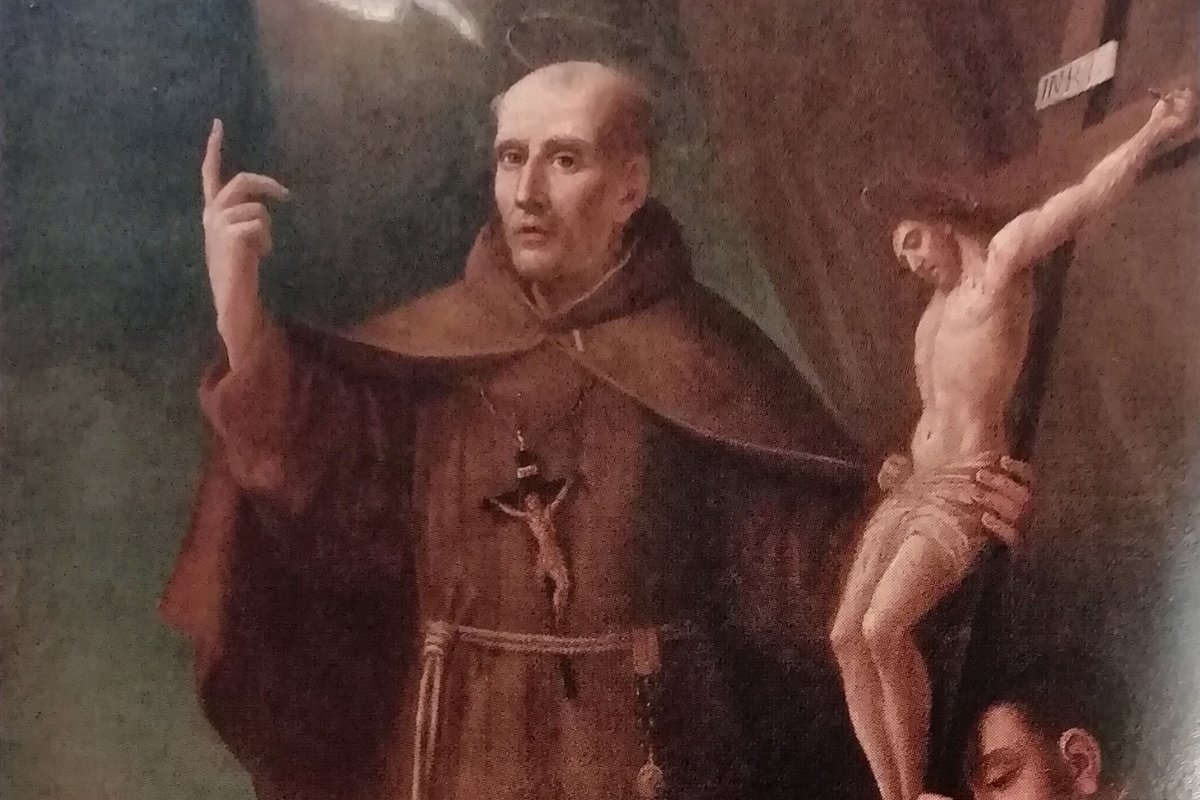
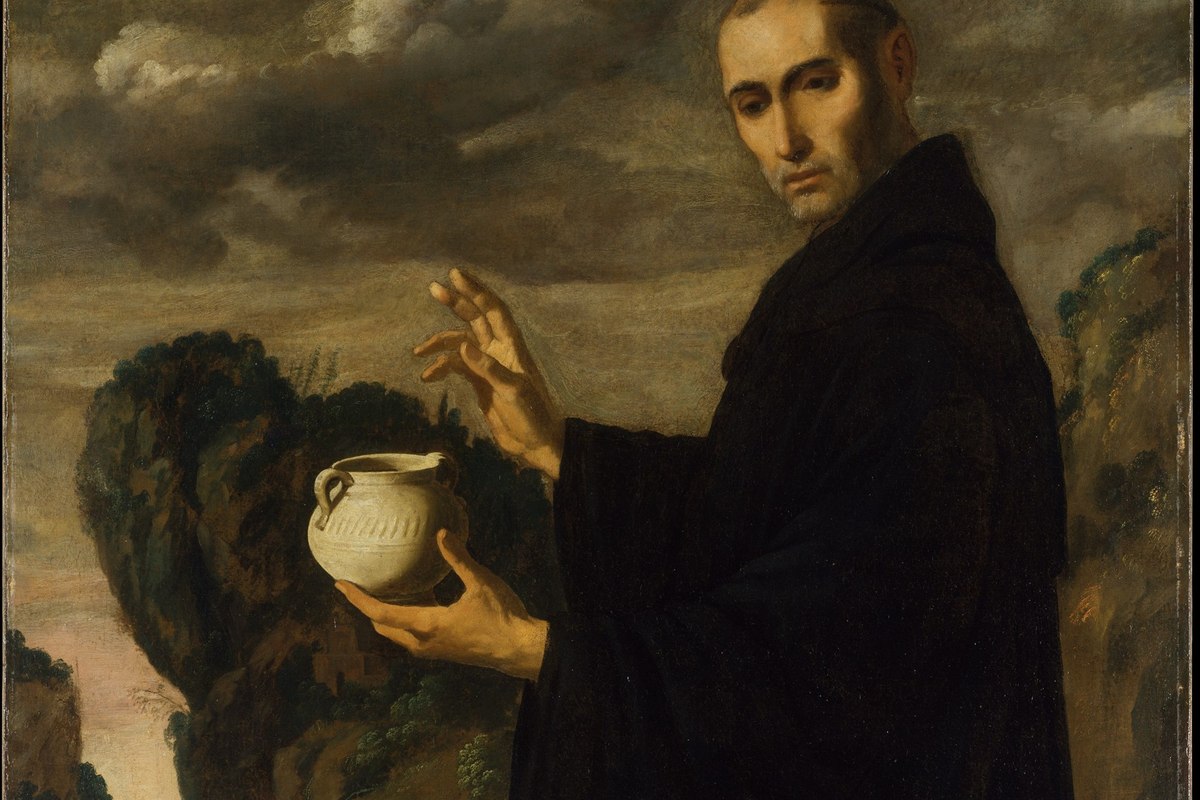
Clarice Vasini, "San Leonardo da Porto Maurizio," 1763, originally from the Church of San Paolo in Monte dell'Osservanza — public domain.
Before settling into the preaching life for which he's remembered, Leonard had once hoped for a very different kind of ministry. As a young friar he petitioned to be sent as a missionary to China, following in the footsteps of earlier Franciscan and Jesuit missionaries to Asia, but poor health forced him to abandon the plan. He was assigned instead to a convent near Florence, where a serious illness during his recovery became, according to his own later account, the turning point that redirected his ambitions toward the mission field closer to home — the struggling and often neglected rural parishes of Italy itself, rather than a distant one abroad.
A devotion he carried from town to town
Wherever Leonard preached, he tended to leave something physical behind: a set of Stations of the Cross, the fourteen-scene devotional sequence tracing Christ's path to crucifixion, installed in the local church or a prominent public space. He did this so consistently, and in so many places, that tradition credits him with erecting the Stations in more than 500 separate locations over his preaching career. That sheer volume of repetition is a large part of why the devotion's modern form — fourteen stations, in a fixed sequence, found in virtually every Catholic church today — owes so much to one itinerant friar's habit of leaving a physical reminder behind wherever he went.
The devotion itself, tracing the road Jesus walked while carrying his cross to execution, had existed in various forms for centuries before Leonard's time, originating with the Franciscan custodians of the holy sites in Jerusalem, who guided pilgrims along the actual route tradition associated with Christ's final walk. Since most Catholics could never travel to Jerusalem themselves, a simplified version — a series of images or simple crosses representing key moments along that route — began appearing in parish churches across Europe from the late Middle Ages onward. What Leonard contributed wasn't the idea itself but its standardization and sheer reach: he settled on the now-familiar fourteen-station sequence and pushed it, sermon after sermon, town after town, until it became close to universal in Italian Catholic practice, and from there spread through the wider Church.
Inside the Colosseum
The single most striking instance came in 1750, when Leonard installed a set of Stations inside the Roman Colosseum itself — a building already carrying deep symbolic association with early Christian martyrdom in the popular imagination. Placing the devotion there wasn't simply about convenience or visibility; it tied his broader project of spreading the Stations directly to Rome's own layered Christian memory, in one of the most recognizable structures in the world.
A preacher and a writer
Leonard's influence wasn't confined to what he built physically. He was also a prolific and widely read spiritual writer, producing devotional works meant for ordinary readers rather than fellow clergy or theologians — among them Il Tesoro Nascosto ("The Hidden Treasure"), a popular treatise on the Mass, and numerous sermons on the Immaculate Conception, a Marian belief he preached on with particular energy well over a century before Pope Pius IX formally defined it as dogma in 1854. Leonard's preaching missions typically lasted a week or more in each town, following a set pattern: sermons on sin and repentance early in the mission, building toward a dramatic public procession or penitential rite near its close, often timed to coincide with the erection of a new set of Stations as the mission's lasting monument. That combination of urgent, plainspoken preaching and a durable physical legacy left behind in each town is part of why his impact outlived him so thoroughly, even in places that had long forgotten the name of the friar who'd once passed through.
Recognition long after his death
Leonard died in Rome in 1751. He was beatified in 1796 and canonized in 1867, well over a century after his death, by which point the devotional practice he'd spent his life spreading was already thoroughly embedded in ordinary Catholic parish life across Italy and beyond. His feast is kept on November 26 in most calendars, though a handful list it a day later, on November 27. No widely established patronage attaches to his name, but his practical, on-the-ground influence on how Catholics actually pray the Stations of the Cross today is difficult to overstate.
Trivia
What was Leonard of Port Maurice known for during his lifetime?
What did he do at the Roman Colosseum in 1750?
How many Stations of the Cross did Leonard install in his lifetime?
When was Leonard of Port Maurice canonized?
What is Saint Leonard of Port Maurice's feast day?
You May Also Like
Related Reading