Saint Malachy of Armagh

A reformer born into a fractured Church
Malachy — born Máel Máedóc Ó Morgair in Armagh, Ireland, in 1094 — grew up in a period when the Irish Church had drifted in significant ways from Roman liturgical and canonical practice, having developed largely in isolation for centuries with its own customs around clerical discipline, church governance, and even how bishoprics were inherited, in some cases treated almost like family property. Ordained a priest and later consecrated a bishop, Malachy became Archbishop of Armagh and dedicated much of his career to closing that gap, working to introduce Roman rites, reorganize dioceses along more standard lines, and enforce clerical discipline more in keeping with practice elsewhere in Western Christendom. It was, by most accounts, difficult and often unwelcome work, resisted at points by clergy and local power structures used to the older Irish customs.
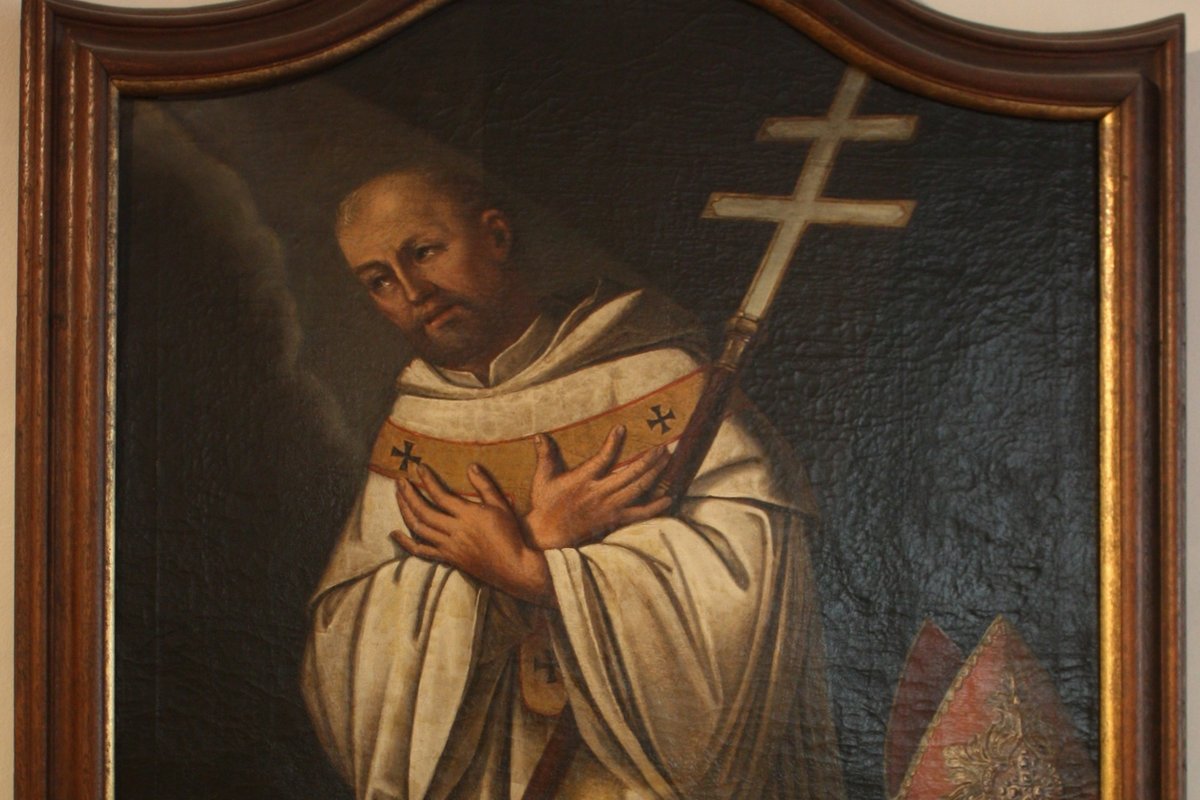
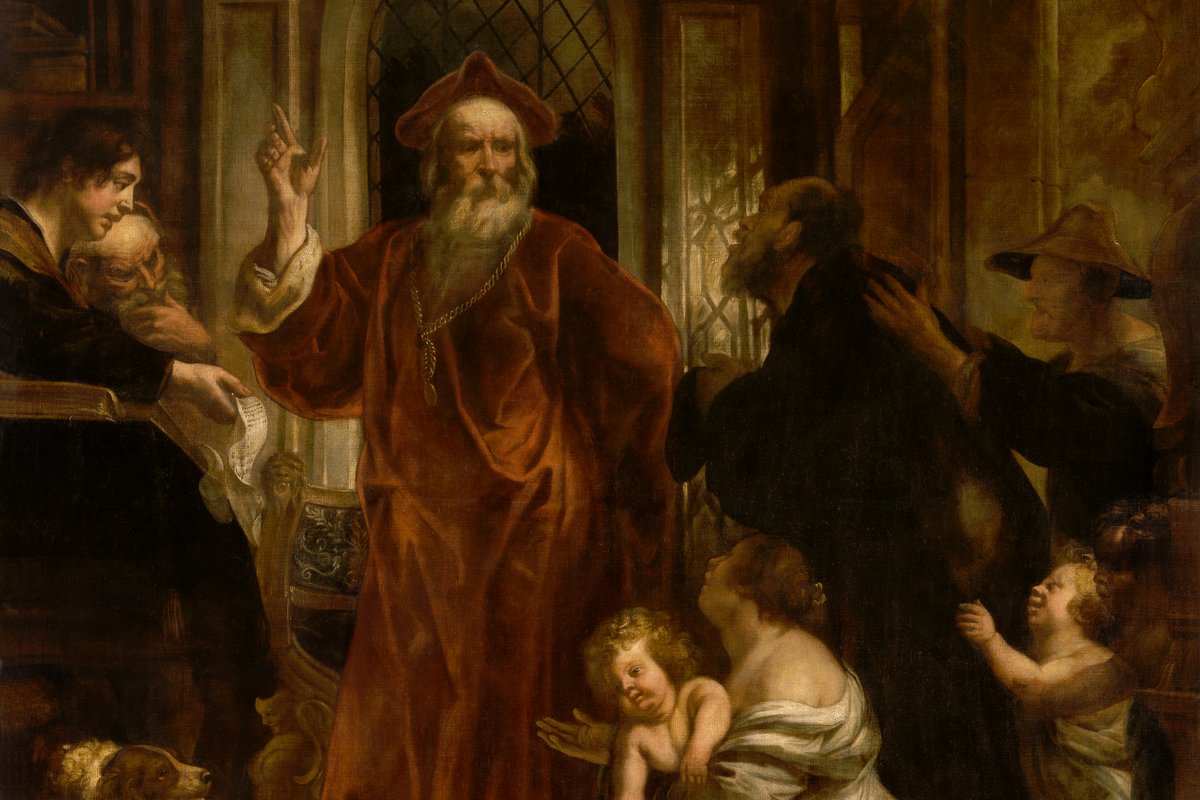
Unknown artist, portrait of Malachias (Saint Malachy of Armagh), 1666, Kloster Eberbach, Germany; photograph CC BY-SA 3.0.
A friendship formed at Clairvaux
On a journey to Rome to seek papal approval for his reform efforts, Malachy passed through France and visited the monastery of Clairvaux, where he met its abbot, Bernard — already, by that point, one of the most influential and widely respected churchmen in Europe. The two men formed a close friendship that lasted the rest of Malachy's life. Malachy died at Clairvaux itself in 1148, on a return visit, reportedly in Bernard's arms on All Souls' Day. Bernard, moved by the friendship and by what he had witnessed of Malachy's life, went on to write his biography, the Vita Malachiae — a work that did much to establish Malachy's reputation and helped support the case for his eventual canonization.
The first Irish saint canonized by Rome
Pope Clement III formally canonized Malachy in 1199, a little over fifty years after his death — and, notably, the first time Rome had formally canonized an Irish saint through its official process, rather than through the older pattern of ancient, community-based veneration that had recognized most earlier Irish saints. His feast is kept on November 3, honoring the real, well-documented work of a churchman who spent his career trying to bring institutional coherence to a fractured Church.
The "prophecy" that came four centuries later
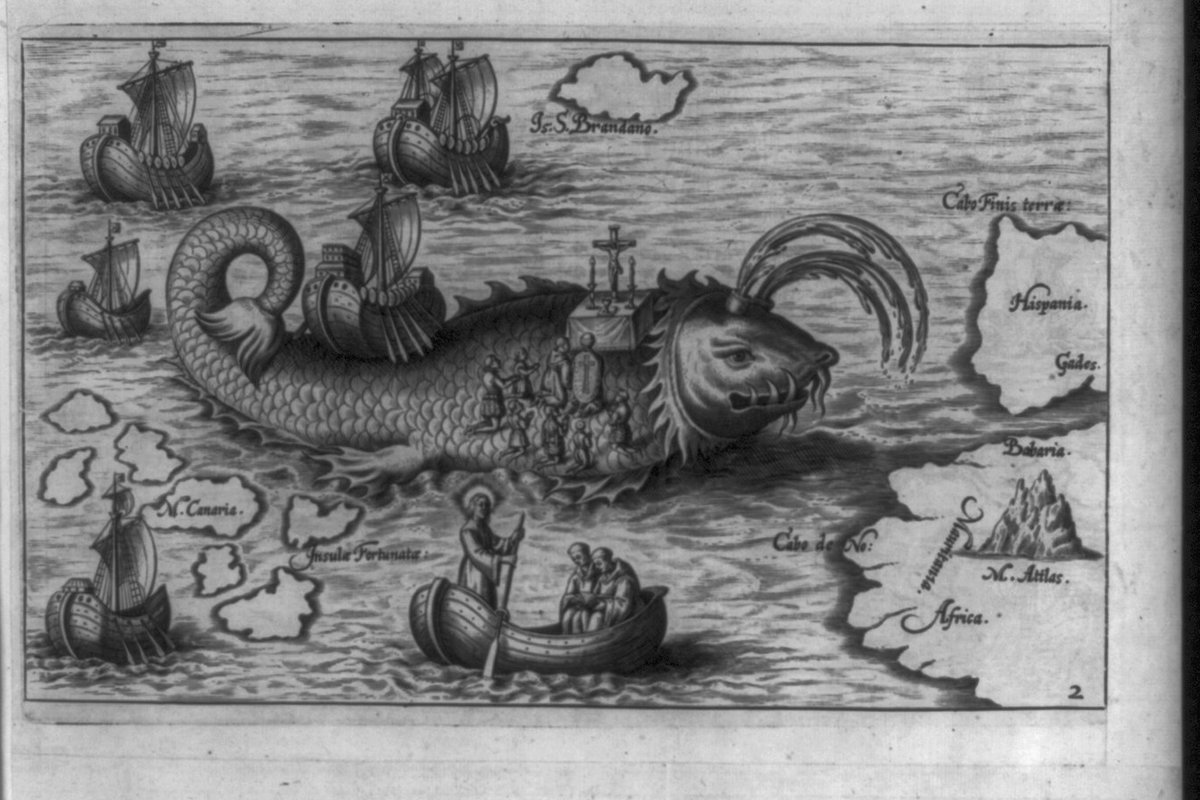
Malachy's name is popularly attached to something else entirely: the "Prophecy of the Popes," a list of 112 short, cryptic Latin mottoes supposedly predicting, in order, every pope from Malachy's own era all the way to the end of the world. It is worth being direct about this, because the claim is often repeated as settled fact: the prophecy was first published in 1595 by a Benedictine monk named Arnold Wion, more than four centuries after Malachy died, with no earlier trace of the document existing anywhere in between. Most historians, and most Catholic scholars who have studied the question, regard it as a probable pseudepigraph — a document falsely attributed to a famous name from the past to lend it authority — largely because its mottoes map reasonably well onto real popes only up through roughly the period just before its 1595 publication, and become vague or unreliable for everyone who came after. It makes for a genuinely interesting piece of later legend, but it has nothing to do with the actual, historically documented life of the Irish reformer whose name it borrowed.
How the legend of the mottoes actually works
The 112 mottoes themselves are brief Latin phrases — things like "Pastor et Nauta" ("Pastor and Sailor") or "Lumen in Caelo" ("Light in the Sky") — each supposedly matched to a pope through some detail of his name, coat of arms, birthplace, or era. Believers in the prophecy's authenticity point to a handful of mottoes that do seem to fit strikingly well with popes who reigned centuries after Wion's 1595 publication. Skeptical historians counter that the pattern is exactly what one would expect from a document written after the fact up to a certain date and left deliberately vague afterward, so that later readers can stretch loose imagery to fit whoever happens to be pope at the time. The Catholic Church has never given the prophecy any official standing — it is not part of Church teaching, was never endorsed by Rome, and modern reference works on papal history typically treat it as a curiosity of print history rather than a genuine medieval survival.
The world Malachy actually worked in
It's easy for the sensational later legend to eclipse how difficult Malachy's real work was. Twelfth-century Ireland had no single strong royal authority to back Church reform the way rulers elsewhere in Europe often did, and its monastic federations had grown used to a degree of independence from Rome that made outside oversight unwelcome in many quarters. Malachy trained for a time under Archbishop Cellach of Armagh and later worked to end a practice in which the Armagh succession had become effectively hereditary within a single kinship group — a problem he confronted directly by refusing to accept the office peacefully until the family holding it relented. His reforms also introduced Continental religious practices to Ireland more broadly: he helped bring the Cistercian order, of which Bernard of Clairvaux was the most famous member, into Irish monastic life, founding Mellifont Abbey as Ireland's first Cistercian house not long before his own death. That single connection — an Irish archbishop importing a French monastic reform movement, then dying in the arms of that movement's most famous monk — says more about Malachy's real historical significance than any prophecy ever could.
Trivia
Who was Saint Malachy of Armagh?
Why was Malachy's canonization significant?
What was Malachy's connection to Bernard of Clairvaux?
Did Saint Malachy really predict every future pope?
When is the feast day of Saint Malachy of Armagh?
You May Also Like
Related Reading