Saint Peter Damian

From swineherd to scholar
Peter was born in Ravenna in 1007, the youngest of a large family already struggling to get by, and by his own later account, his arrival was unwelcome enough that his mother nearly refused to nurse him. Both of his parents died while he was still a child, and one of his elder brothers, rather than providing for his education, put him to work as a swineherd, feeding him table scraps and treating him, in Peter's own later description, more like a servant than a sibling. It was another brother, a priest named Damian, who intervened — taking Peter in, arranging for his schooling, and giving him a path out of the poverty and neglect that had defined his early years. Peter never forgot the debt: he attached his brother's name permanently to his own, which is why history remembers him as Peter Damian rather than by his birth name alone.
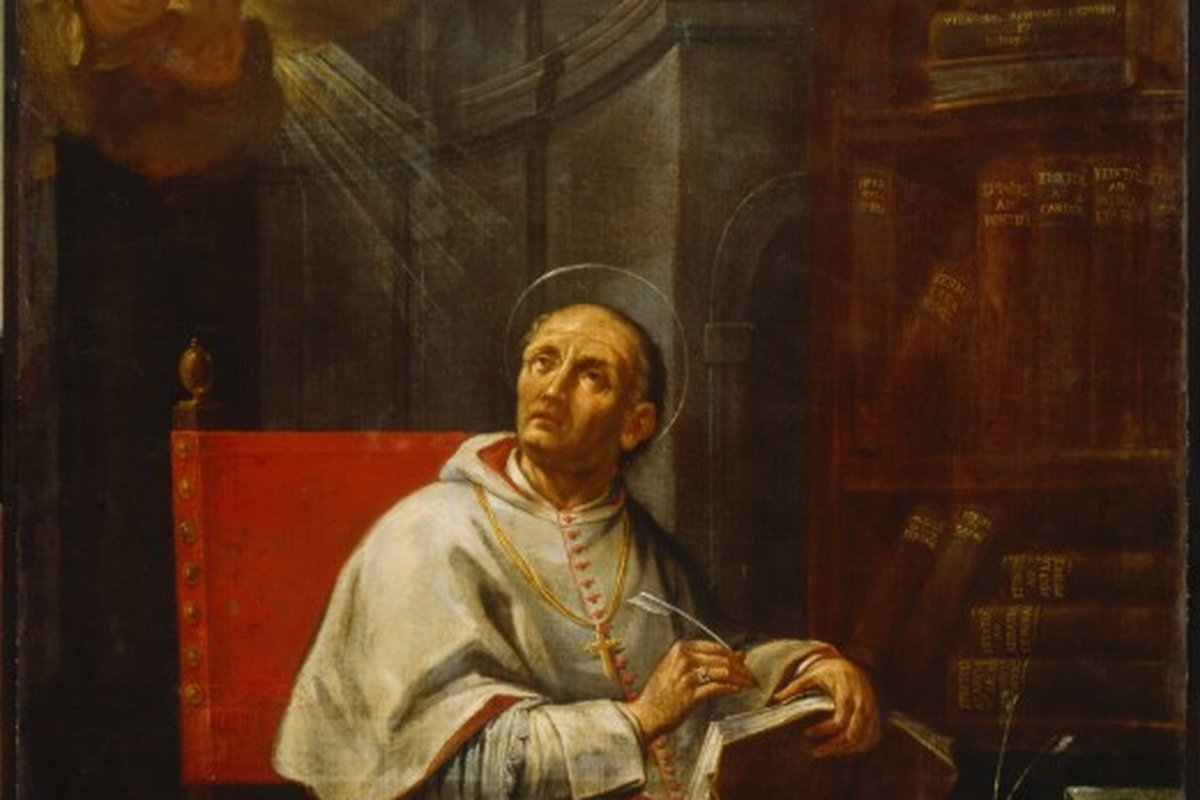
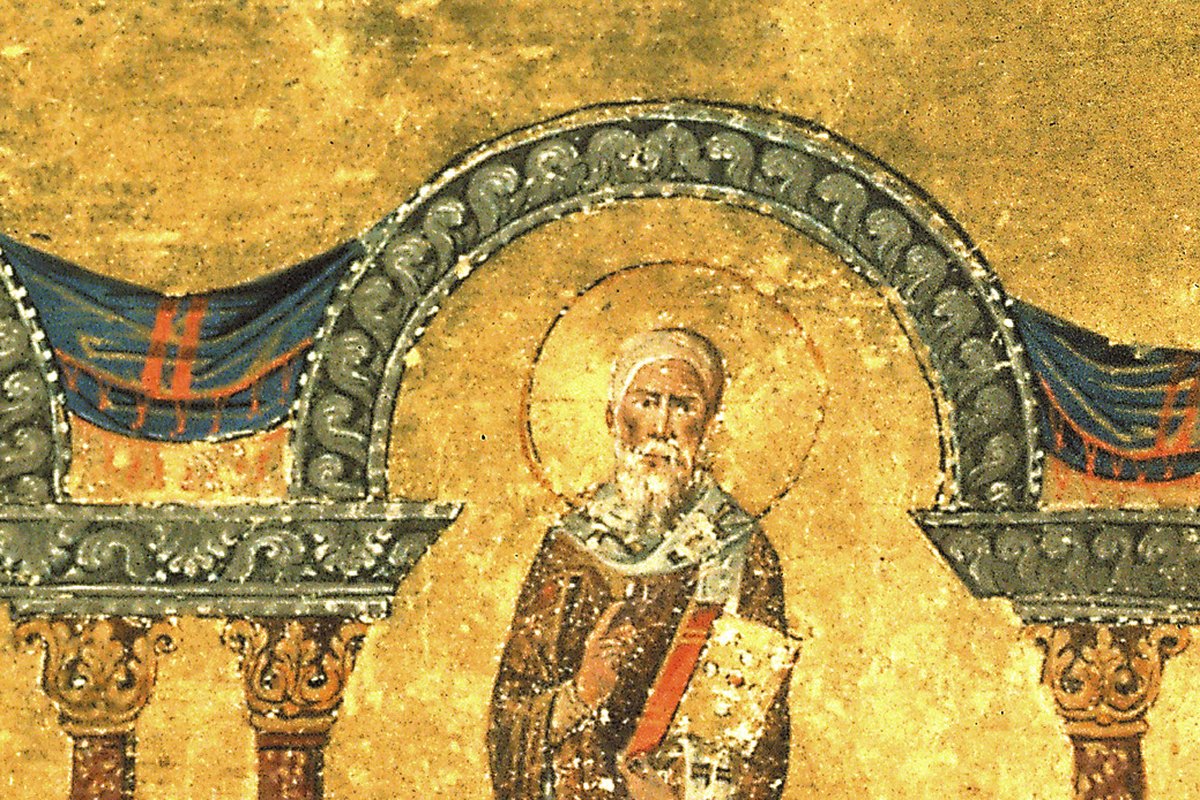
Andrea Barbiani, San Pier Damiani, 18th century, Biblioteca Classense, Ravenna — public domain.
Once rescued, Peter proved to be an exceptional student. He studied first at Faenza and then at Parma, two of the more respected schools in northern Italy at the time, and by his early twenties he had already built a reputation as a skilled teacher himself, supporting himself for a time by tutoring other students. It was a striking reversal for a boy who, only a few years earlier, had been given away to herd pigs — and it set the pattern for the rest of his life: real hardship met, again and again, with discipline rather than bitterness.
By his own later account, that early success frightened him more than it satisfied him. He grew uneasy with the comfortable, well-regarded life a talented young teacher could expect in eleventh-century Italy, worrying that it pulled him away from God rather than toward him. That unease is what eventually pushed him out of the schoolroom entirely and into the far harder life of the hermitage — a decision that puzzled colleagues who had expected him to rise through the ranks of the region's cathedral schools instead.
From hermit to reformer
That rescued education paid off, but not in the direction most successful young teachers of his era would have chosen. Rather than building a comfortable academic career, Peter turned toward the austere world of eremitical monasticism, entering the hermitage of Fonte Avellana in the Apennine mountains of central Italy around 1035. The community followed an unusually demanding rule — long fasts, extended silence, and a level of physical penance that Peter himself found bracing rather than excessive. He rose to become its prior within a few years and used the position to strengthen its discipline further, later helping found several affiliated hermitages that extended the same rigorous observance elsewhere in Italy.
From that base, he grew into one of the most forceful voices in what became known as the Gregorian Reform, the sweeping 11th-century push to clean up a Church riddled with simony — the buying and selling of Church offices — and widespread clerical misconduct. Peter's most direct contribution to that fight was the Liber Gomorrhianus, a treatise he addressed straight to Pope Leo IX condemning sexual corruption among the clergy in blunt terms that left little room for the institutional Church to look away. He followed it with numerous other letters and treatises over the following decades, arguing consistently that clerical office was a trust to be guarded, not a prize to be purchased or a comfort to be abused.
A reluctant cardinal
Peter's reputation for integrity eventually pulled him further into Church politics than he wanted to go. He was made Cardinal Bishop of Ostia in 1057, a position he accepted with real reluctance, preferring the discipline of hermitage life to the demands of Roman ecclesiastical administration; he reportedly petitioned more than one pope for permission to resign and return to Fonte Avellana, without success. He nonetheless carried out numerous delicate diplomatic missions for the papacy in his later years, including efforts to resolve clerical disputes in France and Germany and to mediate a serious rift within the Church at Milan, before dying in Faenza in 1072 while returning from one such mission.
Doctor of the Church
Peter's feast is kept on February 21, and in 1828 Pope Leo XII named him a Doctor of the Church, recognizing both his reforming writings and the personal integrity that gave them weight — a title shared with only a small number of theologians across the Church's entire history, among them fellow reforming voices like Saint Gregory of Nazianzus. It's a remarkable trajectory to sum up in one sentence: a child nearly refused his own mother's milk, sent to herd pigs by his own family, ends up centuries later ranked among the Church's most authoritative teachers — proof, in his own telling, that no beginning is too discouraging to be redeemed by grace and by a brother willing to intervene.
Trivia
Who was Saint Peter Damian?
What did Peter Damian's childhood actually look like?
What was Peter Damian's role in the Gregorian Reform?
What is the Liber Gomorrhianus?
Why is he called 'Saint Peter Damian' rather than something else?
You May Also Like
Related Reading