Saint Pier Giorgio Frassati

A wealthy family's son who gave it all away quietly
Pier Giorgio Frassati was born in 1901 in Turin, Italy, into a family with real social and political weight — his father founded and edited one of Italy's major newspapers and later served as a senator and ambassador. Pier Giorgio could have coasted through a comfortable, well-connected life. Instead, as a young man active in Catholic Action and the local Catholic student movement, he spent much of his own money supporting Turin's poor directly, visiting the sick, and helping families who had nothing — frequently giving away so much of his allowance and even his own train fare or clothing that he'd arrive home with less than he'd left with. He kept almost all of it quiet, telling neither his socially prominent parents nor most of his friends the extent of what he was doing.
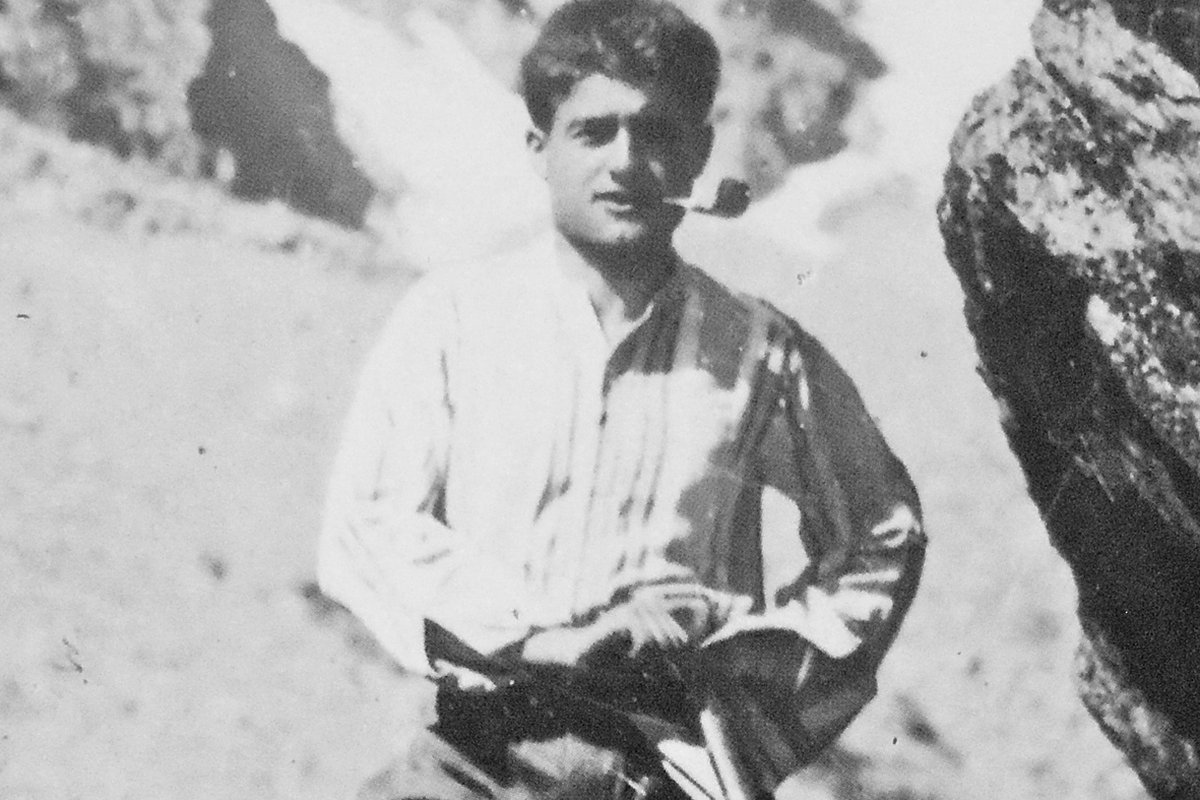
Photograph of Pier Giorgio Frassati, by 1925, "Une vie en image" — public domain.
A mountaineer who wrote his own motto weeks before he died
Away from his charitable work, Frassati was an enthusiastic and skilled mountaineer, spending as much time as he could climbing in the Alps with friends from his student circles. Just weeks before his death, he wrote two words on the back of a photograph of himself on a climb: Verso l'alto — "To the heights." It's become the phrase most associated with his life, capturing at once his literal love of climbing and what people close to him understood as his broader sense of aiming continually upward, toward God, in the middle of an otherwise very ordinary university student's life.
Struck down suddenly at 24
In the summer of 1925, Frassati fell ill with a fulminant, fast-moving case of poliomyelitis and died within days, at just 24 years old. It's widely believed, though never definitively confirmed, that he contracted the illness from the sick and poor people he regularly cared for around Turin — a grim irony, if true, given how central that work had been to his short life.
A funeral that revealed the scale of his charity
What happened at his funeral is the detail people remember most. His family, expecting a private service befitting their social standing, instead found the streets of Turin lined with an enormous crowd of poor, sick, and working-class mourners — people his own parents had never met or even known existed in their son's life. Only then did the Frassati family grasp how much of Pier Giorgio's time, money, and attention had gone quietly toward people well outside their own social circle, none of whom he'd ever mentioned by name at home.
Canonized alongside another young layman
Pier Giorgio Frassati was beatified in 1990, when Pope John Paul II called him the "Man of the Eight Beatitudes" for a life he saw as embodying Christ's teaching in the Sermon on the Mount. He was canonized on September 7, 2025, by Pope Leo XIV, in a ceremony held jointly with Carlo Acutis, another young layman recognized for holiness lived out in ordinary modern circumstances rather than in religious life. His feast is kept on July 4, and he's recognized today as a patron of youth and of mountaineers — a rare saint whose two best-known qualities, a love of the mountains and a hidden generosity toward the poor, turned out to define both his life and his death.
A student active well beyond the classroom
Frassati studied mining engineering at the Royal Polytechnic University of Turin, a course of study he reportedly chose so that he could, in his own words, work more directly among miners and the working poor after graduation — a detail that fits the pattern of the rest of his life, where personal comfort was consistently traded for proximity to people with less. He was heavily involved in Catholic Action, an international lay movement promoting Catholic engagement in public and social life, and also joined the Dominican Third Order, a lay association allowing men and women to live out Dominican spirituality — prayer, study, and service — without becoming friars or nuns themselves. He took the religious name Girolamo within that order, after the reforming Dominican friar Girolamo Savonarola, whose combination of intense personal piety and public zeal for reform Frassati openly admired.
A group of friends who called themselves the "Tipi Loschi"
Much of Frassati's mountaineering life happened alongside a close circle of university friends who nicknamed their informal group the "Tipi Loschi" — roughly, "the Shady Characters," a joke about how their long hikes and boisterous camaraderie looked from the outside. The climbs were genuine escapes from the pressures of Turin's political and social life — his father was, at various points, both a newspaper founder and Italy's ambassador to Germany, and the elder Frassati's public career put real distance between father and son over politics and priorities. But the mountains were never simply recreation for Pier Giorgio; friends recalled him leading impromptu prayers at the summit and treating the physical exertion of the climb itself as a kind of spiritual discipline, which is part of why Verso l'alto reads, to those who knew him, as literal instruction as much as metaphor.
Why his canonization took so long
Frassati's cause for canonization opened decades before his eventual sainthood, and the gap between his 1990 beatification and his 2025 canonization reflects how the process requires a verified miracle attributed to his intercession beyond the one already recognized for beatification — a requirement that can take many years to satisfy through the Church's formal investigation process. His continued popularity with young Catholics throughout that long wait, especially through youth movements and World Youth Day gatherings where his story was frequently told, kept his cause active in the public imagination well before Rome finished its own careful review.
Trivia
What did Pier Giorgio Frassati actually do with his family's wealth?
What was 'Verso l'alto,' and why is it associated with him?
How did Pier Giorgio Frassati die?
When was Pier Giorgio Frassati canonized?
What is Pier Giorgio Frassati the patron saint of?
You May Also Like
Related Reading