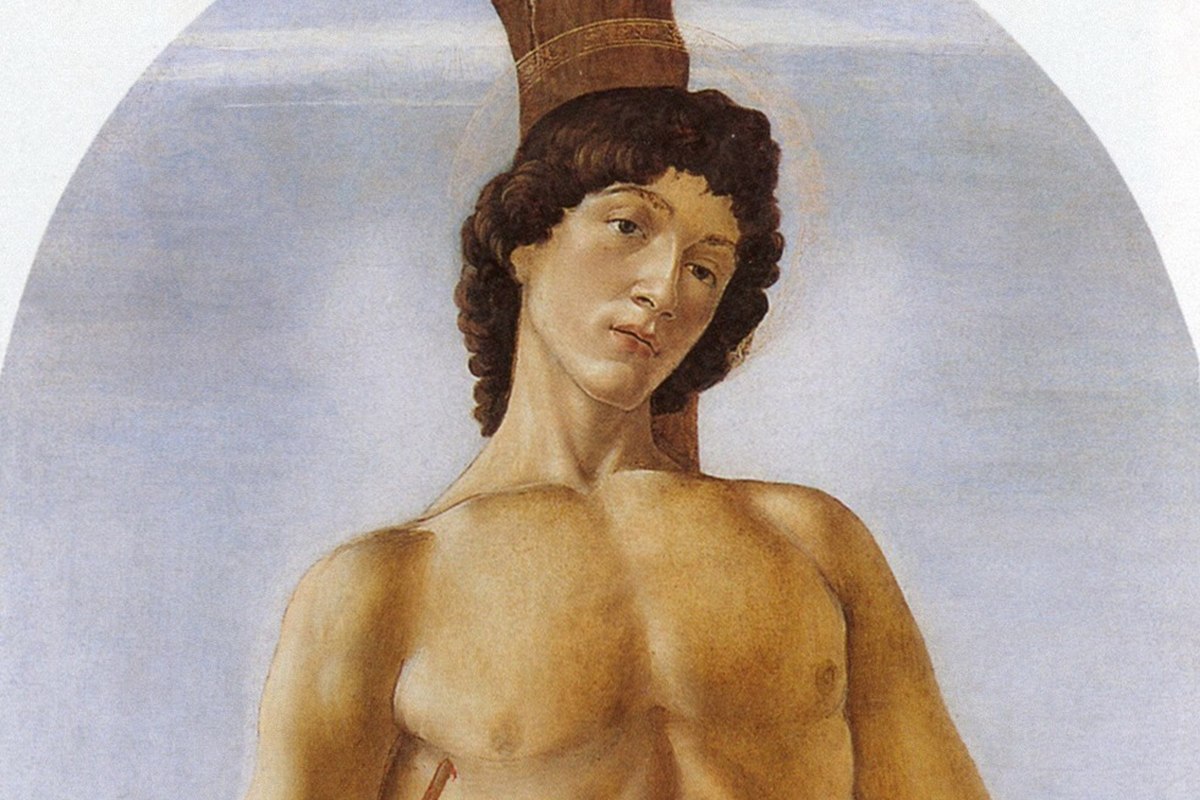
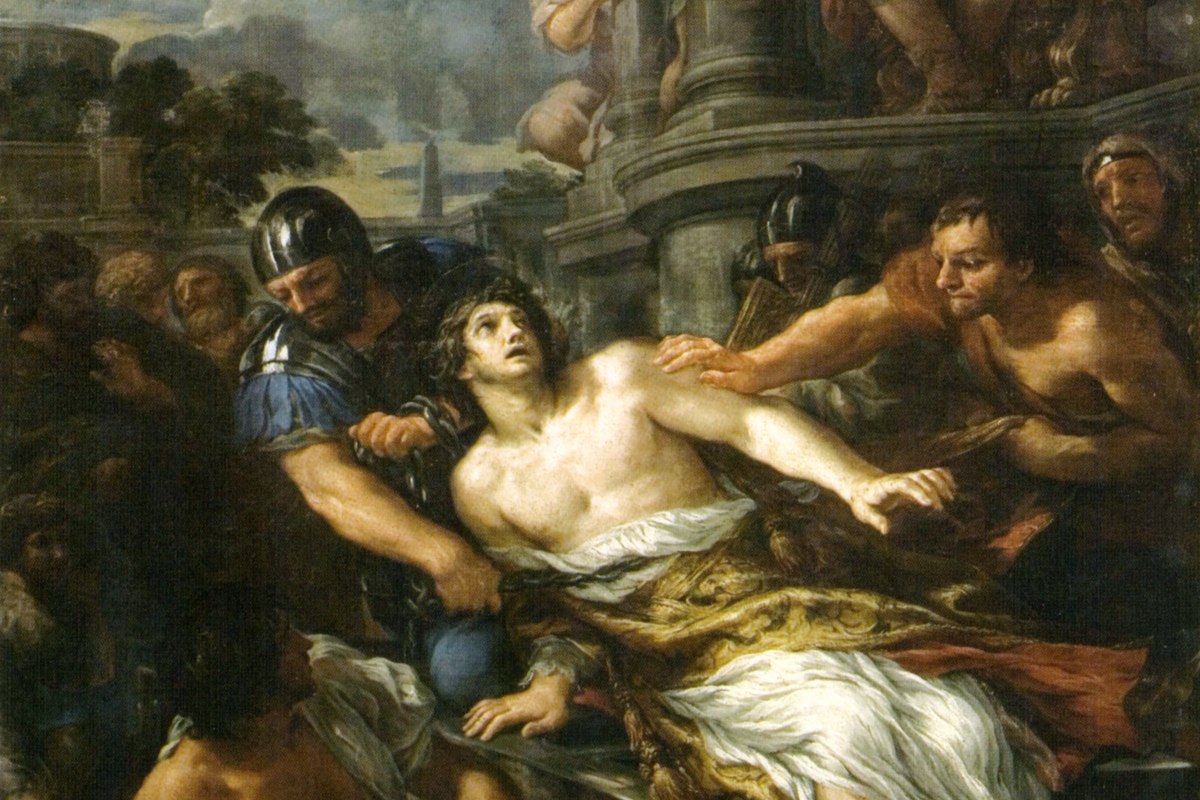
Saint Quentin of Amiens

A missionary sent from Rome
By the traditional account, Quentin was the son of a Roman senator who left the comfort of Rome to carry the Christian faith into Gaul, traveling alongside Saint Lucian of Beauvais, another missionary later venerated as a martyr in his own right. Quentin is said to have settled in and around Amiens, in what's now northern France, preaching openly at a time when Christianity remained illegal across the Roman Empire and local officials were expected to enforce imperial religious policy without exception. It's a familiar shape for a 3rd-century martyr story — a well-born convert who gives up rank and safety to evangelize a frontier province — and it's exactly the kind of narrative pattern that makes historians want independent corroboration before accepting the details as fact.
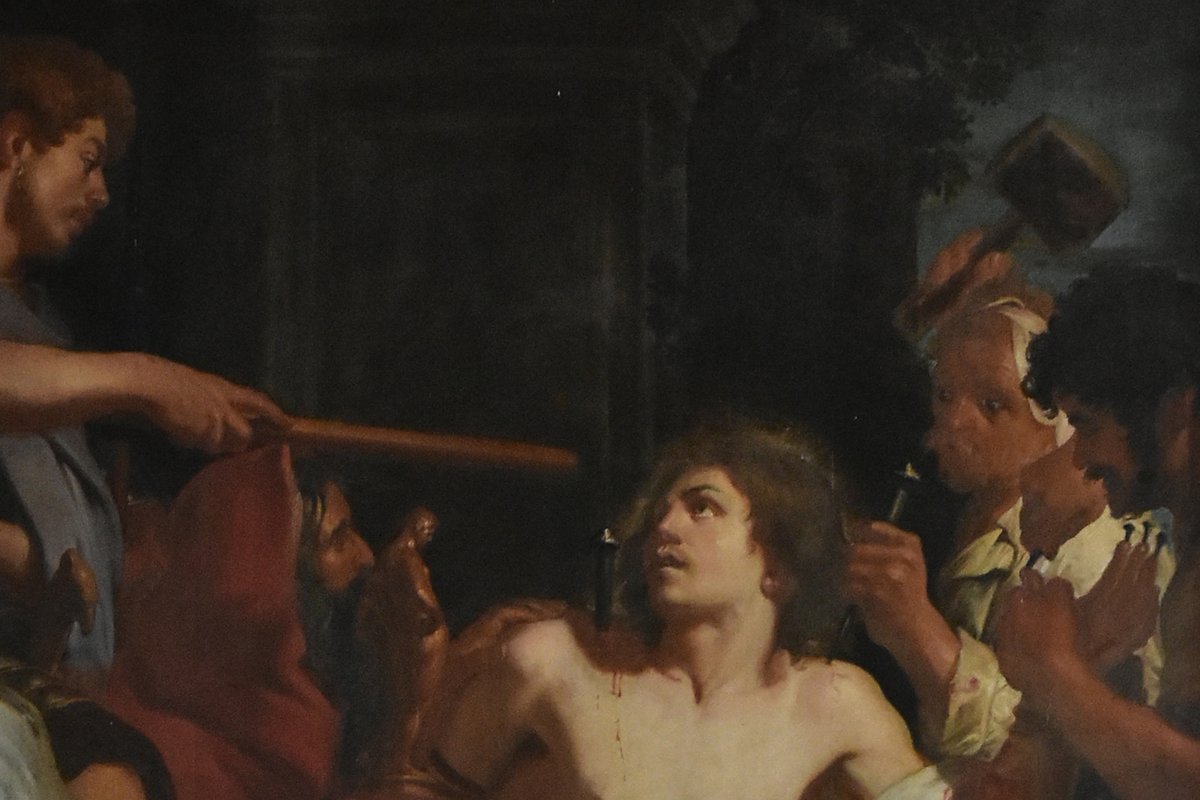
Gaspar de Crayer, The Martyrdom of Saint Quentin, 17th century, Sint-Kwintenskerk, Sint-Kwintens-Lennik — public domain.
Amiens itself was a genuine Roman administrative center in Gaul at the time, sitting on a major road network, which at least makes the geography of the legend plausible even where the specific personal details remain unverifiable. A missionary aiming to establish Christianity in the region would have had good practical reasons to settle exactly where the story places Quentin — a populated town with real traffic through it, rather than an isolated rural outpost where a new faith might struggle to take root at all.
Arrest under a strikingly familiar villain
According to the legend, Quentin's preaching drew the attention of the Roman prefect Rictiovarus, who had him arrested and subjected to an escalating series of tortures meant to force his renunciation of Christianity: racking, boiling oil or pitch poured over his body, and iron spikes driven under his fingernails and finally into his skull. It's worth pausing on the name Rictiovarus specifically, because it's a genuine red flag for how this account came together. The same prefect turns up as the villain in several other Gallic martyr legends with no independent historical record connecting them — a pattern scholars recognize as a hagiographic template, a stock persecutor figure reused across different saints' stories rather than a documented Roman official whose career can be traced through surviving imperial records. That doesn't mean Quentin himself is invented, but it does mean the specific torture narrative attached to him should be read as traditional storytelling rather than eyewitness history.
Ancient martyr Acts written generations after the events they describe often borrowed heavily from earlier texts, reusing dramatic set-pieces — the incorruptible torture victim, the cruel but ultimately powerless persecutor, the escalating series of punishments each one more severe than the last — because those set-pieces were what audiences expected from the genre, not because a court record survived to describe the actual proceedings. Recognizing that pattern doesn't erase Quentin from history; it simply means the fine-grained details of his suffering shouldn't be treated with the same confidence as, say, the fact that a shrine to him existed by a certain date.
A body hidden, then found
The legend doesn't end with the beheading. Quentin's executioners are said to have thrown his body into a nearby marsh or river to prevent it from being venerated, and there it stayed, hidden, for fifty-five years — until a Roman noblewoman named Eusebia, led to the spot by a light from heaven, miraculously rediscovered the body still uncorrupted and gave it proper burial. It's the kind of concluding miracle common to this genre of ancient martyr narrative, tying a hidden death to a providential, delayed recognition of the martyr's sanctity.
The fifty-five-year gap is itself a storytelling device worth noting: it puts the rediscovery safely on the far side of the persecutions that killed Quentin in the first place, in an era when Christianity had become tolerated or even favored under Constantine and his successors, so that Eusebia's public veneration of the body carried no legal risk to her. Ancient hagiography frequently uses this kind of time jump to move a story from an age of danger into an age of open devotion, letting the martyr's cult be established without contradicting the fact that public Christian worship had been illegal at the time of the martyrdom itself.
What actually survives independent of the legend
Strip away the torture scene and the marsh miracle, and what's left is genuinely solid: an important basilica has stood on Quentin's traditional burial site in Amiens since late antiquity, rebuilt and expanded across the medieval centuries into the Basilica of Saint-Quentin that still stands there today. The French city of Saint-Quentin, some distance from Amiens, took its own name directly from his cult, a naming choice that only makes sense if devotion to this martyr was already old and firmly established by the time the town grew up around it. That's the pattern seen elsewhere in this blog's coverage of thinly documented ancient martyrs — the physical, institutional trace of a cult can be real and centuries old even when the literary Acts describing the martyrdom itself were composed generations later and shaped by storytelling conventions rather than courtroom transcripts.
Feast day and patronage
Quentin's feast is kept on October 31. He remains the principal patron of the city and diocese of Saint-Quentin, a patronage rooted directly in the basilica and the town that grew up around his cult rather than in any specific detail of the torture narrative — a reminder that a saint's lasting devotional identity often outlasts the historical uncertainty surrounding the story that first attached to his name.
The Basilica of Saint-Quentin has had its own turbulent history, damaged during the French Revolution and again during the First World War, when the town of Saint-Quentin sat directly in the path of some of the war's heaviest fighting. That the basilica was rebuilt each time, and that the town never considered abandoning the martyr's name it had carried for well over a thousand years, says something about how deeply local identity had fused with the cult of a saint whose actual biography can no longer be verified in any independent detail. Readers interested in other early martyrs whose vivid Acts are wrapped in similar legendary embellishment may also want to read about Saint Blaise, whose own dramatic story shares several of the same storytelling conventions found in Quentin's legend.
Trivia
Who was Saint Quentin of Amiens?
Is the story of Saint Quentin's torture and martyrdom historically reliable?
What happened to Quentin's body after his death, according to legend?
What real historical evidence exists for Saint Quentin, independent of the legendary Acts?
What is Saint Quentin of Amiens the patron saint of?
You May Also Like

Related Reading