Saint Vitus

A child's secret baptism
By the traditional account, Vitus was a boy — often given as around twelve or thirteen years old — born into a pagan family of some standing in Roman Sicily. His nurse, Crescentia, and her husband, Modestus, were secretly Christian, and between them they had Vitus baptized without his father's knowledge, raising him quietly in the faith even as he continued to live as his father's son in an openly pagan household. It's a setup familiar from several ancient martyr legends: a child's genuine faith taking root inside a family determined to prevent exactly that.
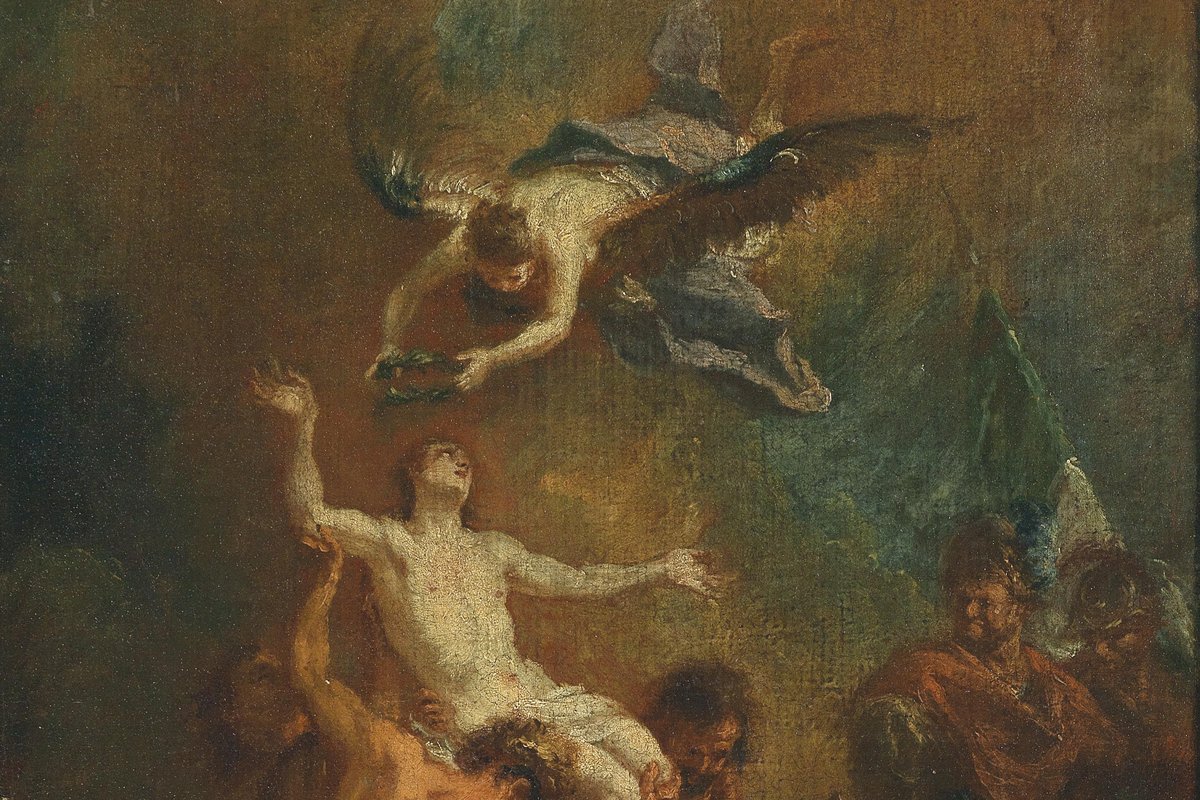
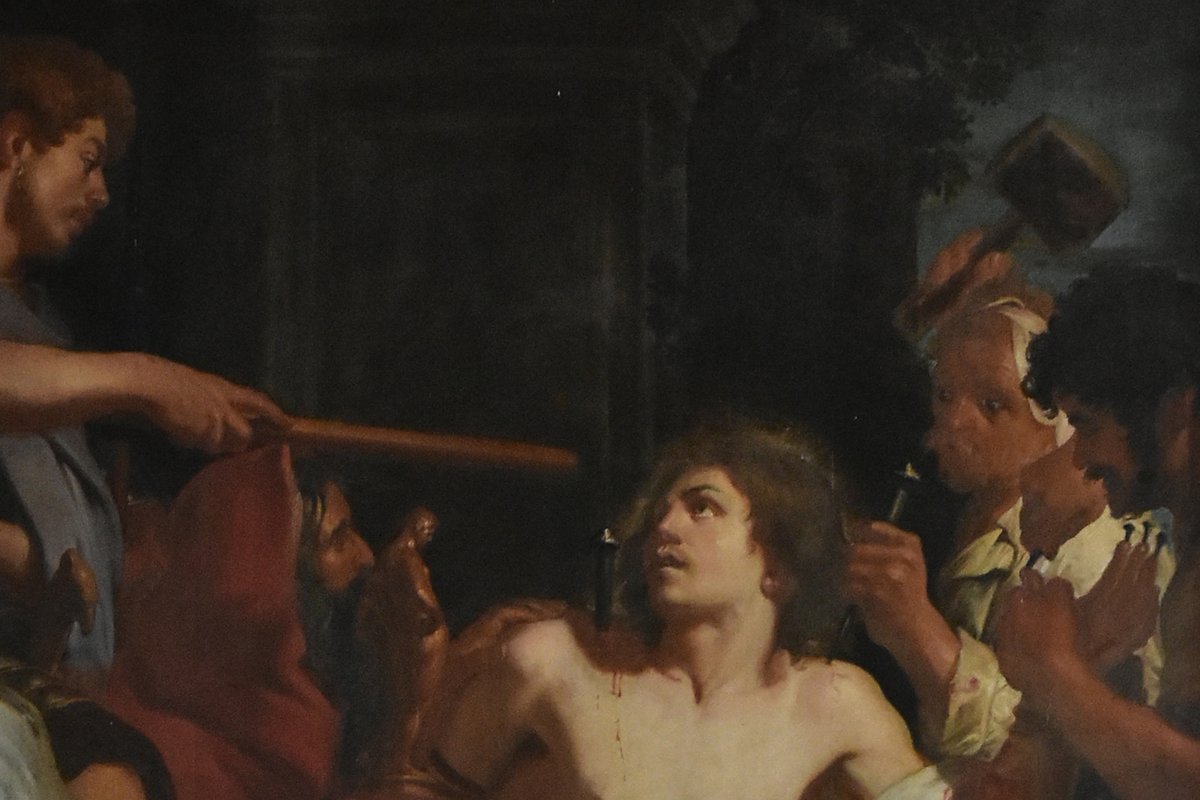
Martin Johann Schmidt ("Kremser Schmidt"), The Martyrdom of Saint Vitus, circa 1772 — public domain.
Discovery, flight, and capture
The legend says Vitus's father eventually discovered his son's Christianity and tried to beat it out of him, and that the household witnessed miraculous events in the aftermath — the specifics vary across versions of the story, but the general shape is a father's violent attempt at coercion answered by divine intervention protecting the boy. One recurring detail has the father's arm withering when he raised it against his son, only to be healed after Vitus prayed over him — a healing the father is said to have dismissed as sorcery rather than a sign to abandon his hostility. Rather than risk further danger, Vitus fled together with Crescentia and Modestus, the three of them staying one step ahead of arrest for a time before Roman authorities eventually caught up with them during Diocletian's persecution.
Diocletian's reign, from 284 to 305, produced the last and most severe of the empire-wide persecutions of Christians, an effort so sweeping it's remembered simply as "the Great Persecution." Churches were destroyed, scriptures confiscated and burned, and Christians in the civil service and army forced to choose between sacrificing to the Roman gods or losing their positions, freedom, or lives. It's the same historical backdrop against which most of the Fourteen Holy Helpers — the group of saints, including Vitus, Eustace, and others, venerated together since the late Middle Ages as particularly powerful intercessors — are traditionally said to have died, which is part of why so many of their individual stories share the same general shape of discovery, flight, and capture.
Torture, and an uncertain end
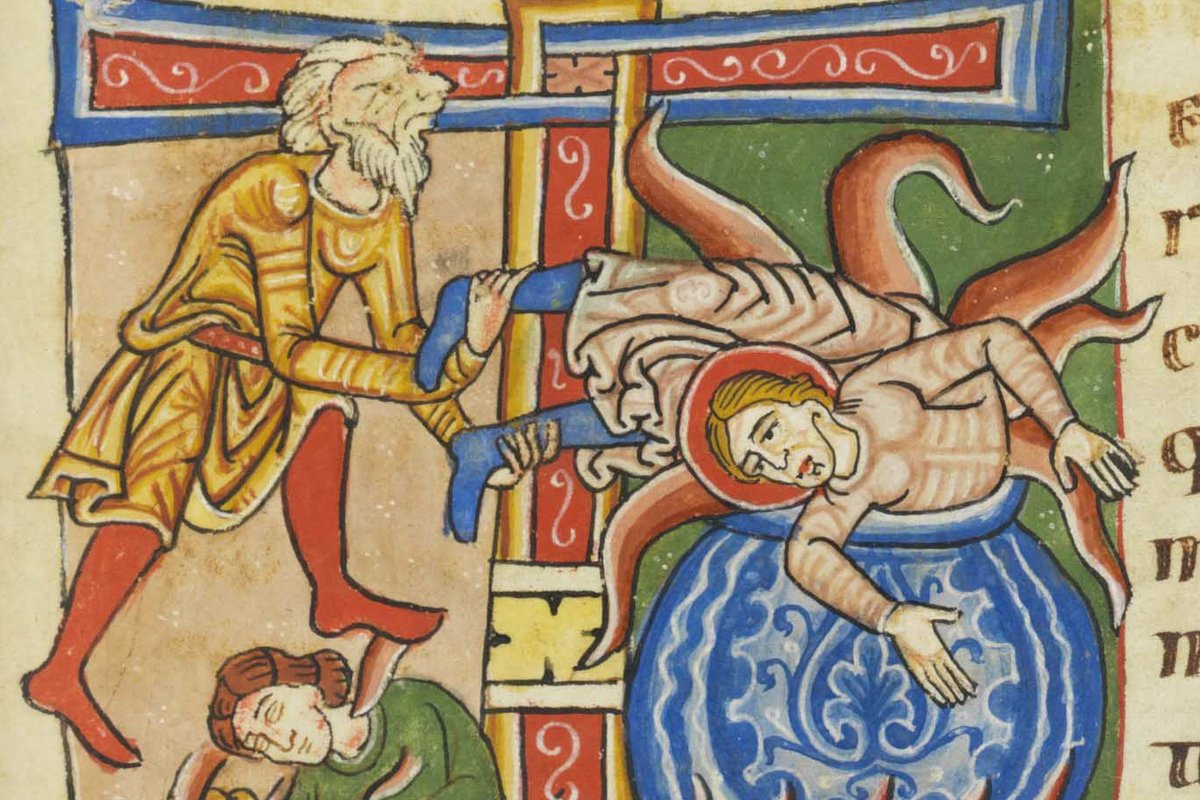
What follows in the traditional Acts is a familiar catalogue of persecution-era torture: the legend describes all three being subjected to severe punishment, including being placed together in a cauldron of boiling oil, tar, or lead, which they are said to have survived entirely unharmed, a miracle meant to demonstrate God's protection over them even as their persecutors escalated the punishment. Where the story gets notably less consistent is the actual cause of death — different versions of the Acts don't agree on precisely how Vitus, Crescentia, and Modestus finally died, which is itself a signal to modern readers that this account was shaped and reshaped by storytellers over a long period rather than fixed early by a single reliable record.
What scholars actually think happened
It's worth being direct about where Vitus's story stands in terms of historical reliability, in the same way this blog treats other members of the Fourteen Holy Helpers such as Saint Eustace. Modern Catholic scholarship regards the detailed Acts of Vitus as legendary rather than historical narrative, and unlike some other doubtful saints whose cult is thought to have grown up around a real, if poorly documented, martyr, Vitus's case is generally treated as legendary from an early stage — the most that can be reasonably affirmed is that an ancient cult devoted to a martyr by this name existed and spread widely, not that the specific events of the Acts describe anything that actually happened to a real boy in Sicily.
A name that outlived the legend, in medicine
Whatever the historical uncertainty surrounding the man, Vitus's name attached itself permanently to something entirely real: Sydenham's chorea, a genuine neurological movement disorder marked by involuntary, jerking movements, became known popularly as "Saint Vitus's Dance." The connection traces to a documented medieval and early modern custom of dancing, sometimes to the point of exhaustion, before statues of Vitus on his feast day — a practice that itself became associated with outbreaks of compulsive dancing mania in parts of medieval Europe — and to the historical practice of bringing people suffering from chorea's involuntary movements to pray for his intercession, on the logic that a saint already linked to uncontrollable dancing was the natural one to ask for relief from an uncontrollable physical disorder.
The dancing mania itself is one of the odder footnotes in medieval history. Chroniclers recorded outbreaks in which large groups of people, sometimes hundreds at once, danced uncontrollably through streets and churches for days, collapsing from exhaustion, in towns across the Holy Roman Empire between roughly the 14th and 17th centuries. Historians still debate the cause — theories range from stress-induced mass hysteria to religious fervor to, less plausibly, poisoning from ergot fungus on rye bread — but at the time, sufferers and observers alike often understood it through the lens of Vitus's cult, either as a curse requiring his intercession to lift or as a form of penance owed to him. English speakers eventually extended his name even further, borrowing "Saint Vitus's Dance" as a colloquial label loosely applied to any nervous, fidgety movement long after the medical term Sydenham's chorea had entered proper use.
Feast day and patronage
Vitus's feast is kept on June 15. He's remembered today as patron of dancers and actors, of people with epilepsy, and, through the chorea connection, of those suffering from nervous disorders generally; German folk tradition also associates him with protection against oversleeping and lethargy around his feast day, a lighter, more domestic echo of the same restless-movement theme that runs through the rest of his legend.
His cult also spread widely into Central and Eastern Europe during the Middle Ages, where he's honored as one of the patrons of the Czech lands — St. Vitus Cathedral, the great Gothic cathedral inside Prague Castle and the burial place of Bohemian kings, carries his name, a testament to how far devotion to this uncertain Sicilian boy eventually traveled from wherever his cult actually began. Between the medical vocabulary he lent to modern neurology and the cathedral towering over Prague's skyline, Vitus stands as an unusual case: a saint whose documented legend historians treat with real skepticism, yet whose name left a far larger, and far more verifiable, mark on later history than most saints whose Acts are considered reliable.
Trivia
Who was Saint Vitus?
Is the story of Saint Vitus historically reliable?
What happened to Vitus, Crescentia, and Modestus according to the legend?
Why is a nervous system disorder called 'Saint Vitus's Dance'?
What is Saint Vitus the patron saint of?
You May Also Like

Related Reading