Saint Rose Philippine Duchesne

A childhood ambition delayed by a revolution
Rose Philippine Duchesne was born on August 29, 1769, in Grenoble, France, into a prosperous family, and entered religious life as a young woman with the Visitation nuns, drawn early on toward the idea of missionary work in distant lands. That ambition had to wait. The French Revolution swept through in the 1790s, suppressing religious orders across the country and closing convents outright, and Duchesne's own community was scattered along with the rest — she spent the revolutionary years living quietly, sheltering some of her former sisters, nursing the sick and imprisoned when she could reach them, and holding onto religious life in whatever form circumstances allowed. It was a dangerous, uncertain decade for anyone connected to the Church in France, and Duchesne's own Visitation convent in Grenoble was seized and sold off by revolutionary authorities, ending communal religious life there entirely.
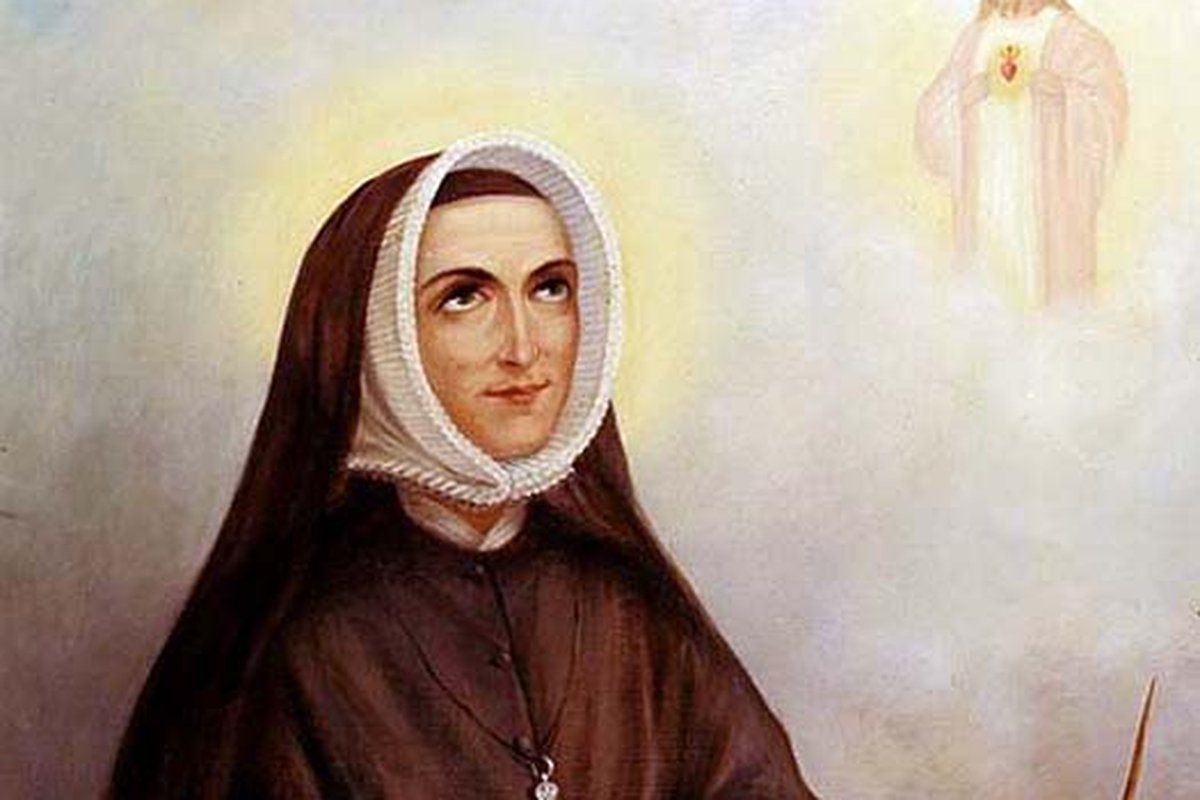
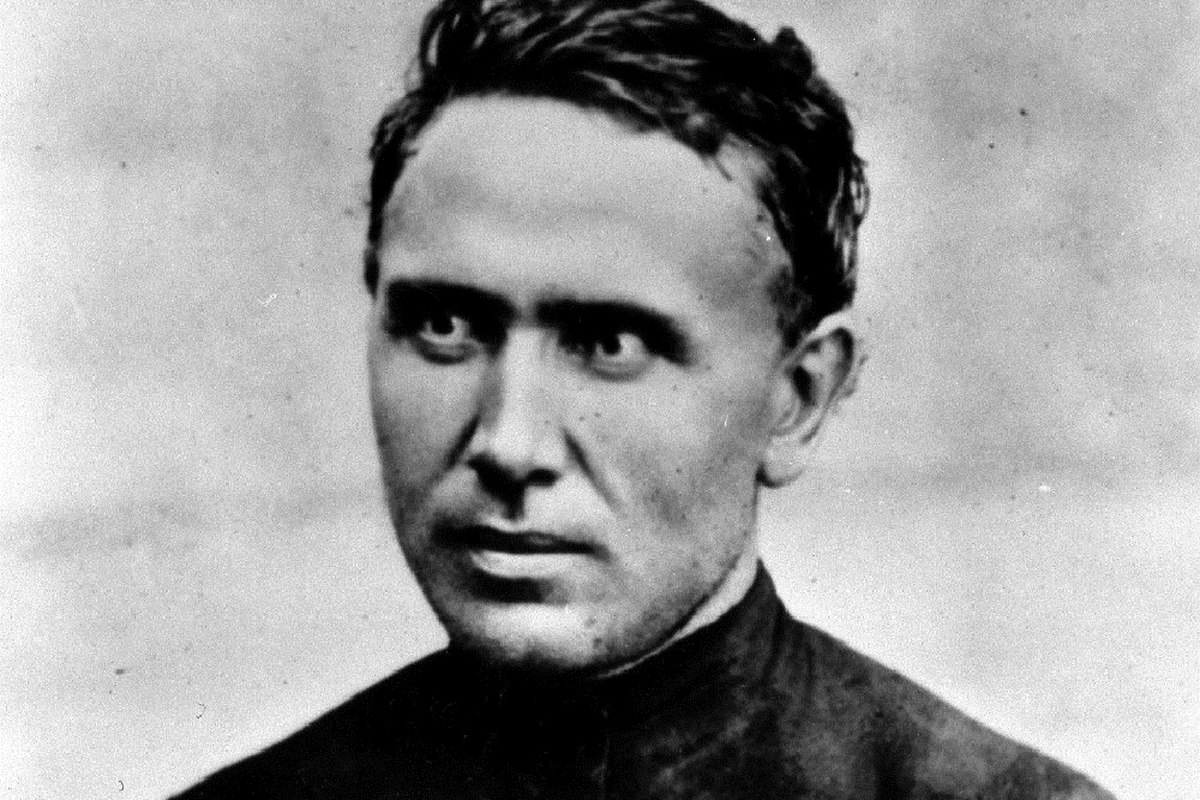
Unknown artist, portrait of Rose Philippine Duchesne, late 19th or early 20th century, Society of the Sacred Heart — public domain.
When it became possible again after the Revolution's most violent phase had passed, she tried to reassemble her old community on the site of the former convent, buying back part of the property herself with family help. The attempt largely failed — too few of her former sisters were willing or able to return to formal religious life after years of dispersal — and Duchesne eventually judged that the Visitation order, as she had known it, wasn't going to be revived there. Rather than give up on religious life altogether, she joined the newly founded Society of the Sacred Heart, a teaching congregation built specifically around the education of girls, in 1804 — more than a decade after the upheaval had first interrupted her plans. Its founder, Saint Madeleine Sophie Barat, became a lasting influence, and Duchesne rose within the young order even as she kept pressing, year after year, for the one assignment that mattered most to her: a mission overseas.
A door that finally opened
Duchesne spent years afterward pressing her superiors for a missionary assignment to America, a request that went unanswered for a long time even as she continued her work in France, teaching and helping run the Society's schools. It finally came in 1818, when Bishop William Louis Dubourg of the Louisiana Territory, badly in need of teaching sisters for his vast and thinly staffed diocese, asked the Society of the Sacred Heart to send help. Duchesne was chosen to lead the small band sent in response — along with a handful of other Religious of the Sacred Heart, she crossed the Atlantic and then made the long, difficult passage up the Mississippi to the edge of the American frontier. She was nearly 49 years old, an age at which most missionaries of any era were winding a career down rather than starting one.
She and her companions settled in St. Charles, Missouri, where they opened a log-cabin school that became the first free school west of the Mississippi River, teaching the daughters of settlers alongside, before long, Native American children as well. The conditions were nothing like what she'd known in France: bitter winters, scarce supplies, a language and a landscape she was still learning in her fifties. Over the following years she helped found several more schools and convents across the Missouri frontier, including houses in Florissant and elsewhere, working in real material hardship and rarely with the comfort or resources of her earlier life. She also served for a time as the Society's provincial superior in America, overseeing the young congregation's growth across a territory far larger and rougher than anything her formation in France had prepared her for.
Learning to pray in a language not her own
In her final years of active ministry, well into her seventies, Duchesne moved to a mission among the Potawatomi at Sugar Creek, Kansas, where she worked to learn something of their language and customs even as age and failing health limited how much active teaching she could still do herself. What she could do, and did constantly, was pray — long, silent hours of it, day after day, a habit the Potawatomi around her noticed and gave a name to: they called her, in an account often rendered as "Quah-kah-ka-num-ad," the "Woman Who Prays Always." It's a nickname rather than a formal title, but it's become one of the most enduring details attached to her memory, capturing a woman whose contribution in old age had shifted from active teaching to a kind of constant, visible devotion the community around her recognized and respected.
She stayed at Sugar Creek only about a year before her health forced her back to St. Charles, where she spent her last years in a small room, still praying for hours at a time, still writing letters to the Society's houses back in France. Sisters who knew her in this period described someone who had, in effect, kept only the innermost part of her vocation once the physically demanding parts — teaching, building, traveling — were no longer possible for her. It's a detail that resonates with the way Saint Kateri Tekakwitha, venerated among Native peoples of North America in a very different setting a century and a half earlier, is remembered: sanctity found less in outward accomplishment than in quiet, sustained fidelity.
Canonization and an unusual kind of patronage
Rose Philippine Duchesne died at St. Charles, Missouri, on November 18, 1852, having spent more than three decades on the American frontier after an already full life in France. She was beatified in 1940 and canonized by Pope John Paul II in 1988, and her feast is kept on November 18, the anniversary of her death. She doesn't carry a single, formally established patronage the way some saints do — she's honored above all within the Society of the Sacred Heart as a founding figure of its American missions, and the university and several schools across the United States now bear her name — but her story has taken on an informal patronage of its own among people drawn to it: proof that a demanding, physically difficult missionary vocation can begin, not end, at an age when most people are told their working years are behind them.
Her canonization also placed her among a small but growing group of saints connected to the early American Church, alongside figures like Saint Elizabeth Ann Seton, the first native-born American to be canonized, who was building schools on the East Coast around the same years Duchesne was building them on the Missouri frontier. Together their stories mark out the beginnings of Catholic education in the young United States, carried forward largely by women who crossed oceans, and sometimes entire continents, to do work no one else was positioned to do.
Trivia
Who was Saint Rose Philippine Duchesne?
What happened to Rose Philippine Duchesne during the French Revolution?
What was the significance of the school she founded in Missouri?
Why did the Potawatomi call her 'Woman Who Prays Always'?
When was Rose Philippine Duchesne canonized, and what is she known for today?
You May Also Like
Related Reading