Blessed Solanus Casey

A farm boy from Wisconsin
Bernard Francis Casey was born on November 25, 1870, on a farm in Oak Grove, Wisconsin, the sixth of sixteen children born to Irish immigrant parents. He worked a series of ordinary jobs as a young man — among them logging, prison guard work, and streetcar operation — before entering seminary discernment in his mid-twenties. One widely reported episode from his streetcar days holds that witnessing a violent incident, or perhaps the death of a young woman he was unable to help, pushed him decisively toward considering the priesthood, though the exact details of what specifically prompted his vocation vary between different early biographical accounts. He eventually joined the Capuchin Franciscans, a reform branch of the Franciscan order tracing its own roots back to the ideals of Saint Francis of Assisi, and took the religious name Solanus, after a Spanish Franciscan missionary to South America.
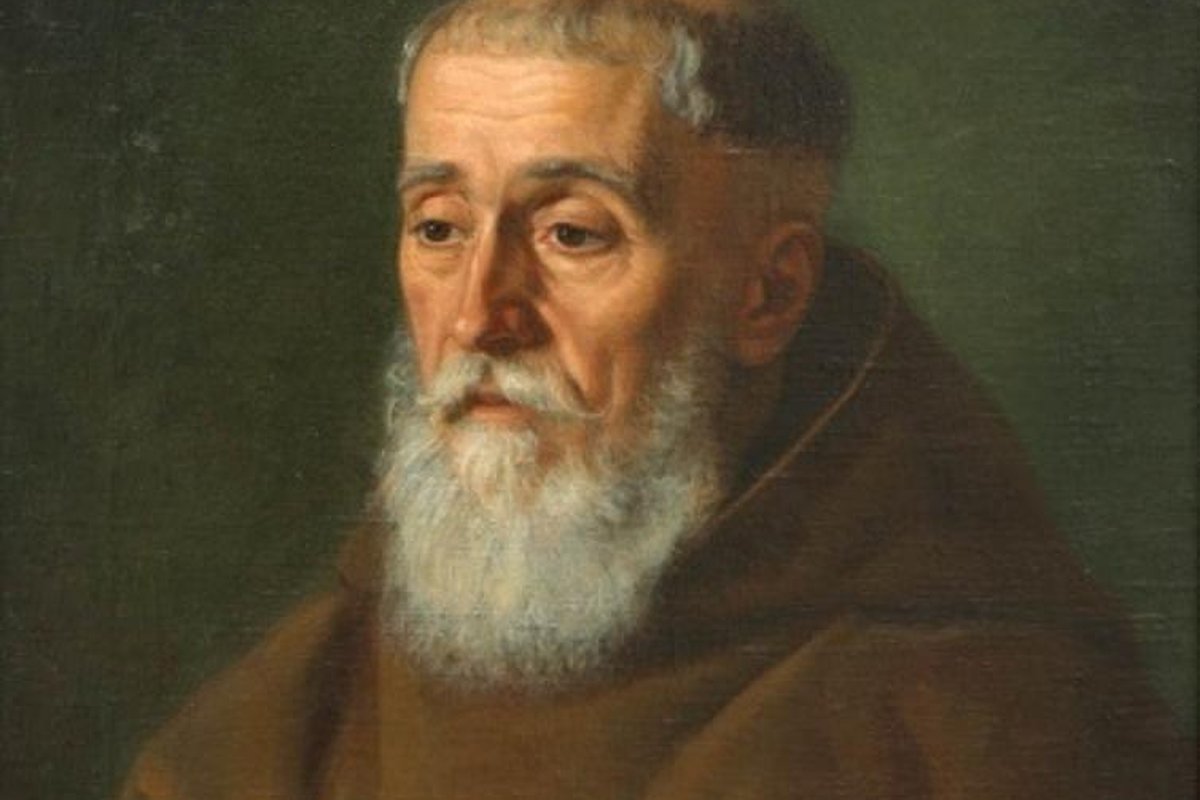
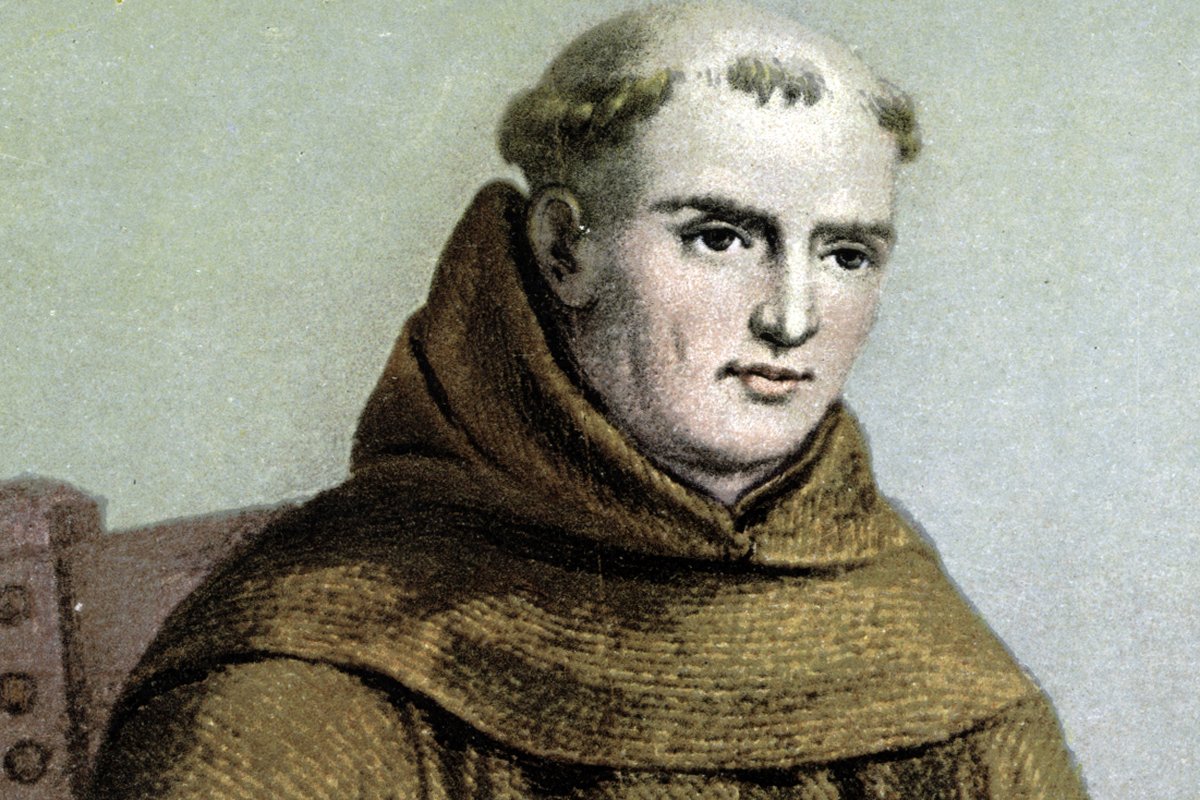
Jan Zasiedatel, portrait of a Capuchin friar, 1872, Vinnytsia Regional Art Museum — public domain. (Representative image of a Capuchin friar's habit; no public-domain photograph of Solanus Casey himself could be confirmed for use here.)
Ordained, but with real restrictions
Solanus struggled seriously with his seminary studies, particularly with the Latin and German instruction common in Capuchin formation at the time — instruction conducted almost entirely in languages he had not grown up speaking, on top of subject matter that was already demanding for any seminarian. His academic performance left his superiors genuinely uncertain whether he should be ordained at all, and some accounts describe formal deliberation among his formators over whether to dismiss him from the order entirely rather than proceed to ordination. He was ordained a priest in 1904, but as what the Church calls a "simplex priest" — a real, documented ecclesiastical category granting him permission to celebrate Mass while explicitly barring him from hearing confessions or preaching formal doctrinal sermons, restrictions reserved for priests whose superiors judged them insufficiently prepared for those specific duties. It was, by any ordinary measure, a limited and somewhat humbling beginning to a priestly vocation, the kind of restriction that could easily have pushed a less resilient man toward bitterness or a quiet retreat from ministry altogether.
Decades at the door
Rather than the pulpit or the confessional, Solanus spent most of the following five decades serving as a porter — the friar responsible for answering the door — at Capuchin friaries, first in New York and later, for the bulk of his ministry, at St. Bonaventure Monastery in Detroit. It might sound like an unremarkable assignment, but in practice it put him in direct, daily contact with an enormous stream of visitors: the poor, the sick, the anxious, and the grieving, all of whom found in Solanus a patient, unhurried listener with time for whoever showed up. Word of his gentle counsel and of prayers people credited to his intercession — reported healings and answered petitions among them — spread steadily through Detroit over the decades, turning a friar with no formal preaching license into one of the city's most sought-after spiritual figures.
A popular devotion that grew from the ground up
What makes Solanus Casey's story distinctive, alongside the reversal of expectations built into it, is how genuinely grassroots his popularity was. He held no important office within his order, published no significant theological writing, and was never assigned to prominent parish or diocesan work. His reputation grew instead the way older, more folk-rooted devotions often have — through ordinary people telling other ordinary people about a friar at a Detroit friary door who was worth the trip to see. His characteristic response to those who came seeking cures or favors was to encourage them toward gratitude and confidence in God's providence rather than to promise any specific outcome himself, redirecting attention away from his own role and toward the faith of the person asking — a habit of deflection that friars who lived alongside him often singled out as central to his character.
He died on July 31, 1957, in Detroit, reportedly telling those with him at the end that he was giving his soul to Jesus Christ. The years since his death have done little to dampen that grassroots devotion; if anything, it's grown. His story bears more than a passing resemblance to that of another twentieth-century Capuchin, Padre Pio, an Italian friar of the same religious family who likewise drew enormous popular devotion during his own lifetime, though the two men's specific gifts and circumstances differed substantially.
Blessed, with his cause still active
Solanus Casey was beatified by Pope Francis on November 18, 2017, a ceremony held in Detroit that drew tens of thousands of people — a scale of attendance unusual for a beatification and a fair measure of how deeply his memory had taken root in the city decades after his death. Beatification gives him the title "Blessed," one formal step below full canonization as a saint; his cause remains active within the Church, but he has not yet been canonized, and it would be inaccurate to describe him as a saint until that final step is formally reached. Today, the Solanus Casey Center in Detroit, built beside St. Bonaventure Monastery where he served for so many years, preserves his tomb and continues the same basic function he spent his life performing: a place where anyone can simply show up and be received.
Trivia
Who was Blessed Solanus Casey?
Why was Solanus Casey ordained a 'simplex priest'?
Has Solanus Casey been canonized as a saint?
What was Solanus Casey known for during his lifetime?
Where is Blessed Solanus Casey venerated today?
You May Also Like
Related Reading