Saint Stanislaus Kostka

A noble family, a forbidden vocation
Stanislaus Kostka was born in October 1550 at Rostków, in the Polish nobility, the kind of family whose sons were expected to build careers in service to the crown or the Church hierarchy at a respectable, comfortable level — not to throw over every advantage of birth for a religious order still just a few decades old. He was sent, along with his older brother Paweł, to study under the Jesuits in Vienna, and it was there, still a teenager, that Stanislaus became convinced he wanted to join the Society of Jesus himself. That decision put him directly at odds with his father, who wanted no part of a son entering religious life against the family's wishes, and with Paweł, who took his brother's growing determination as a personal embarrassment.
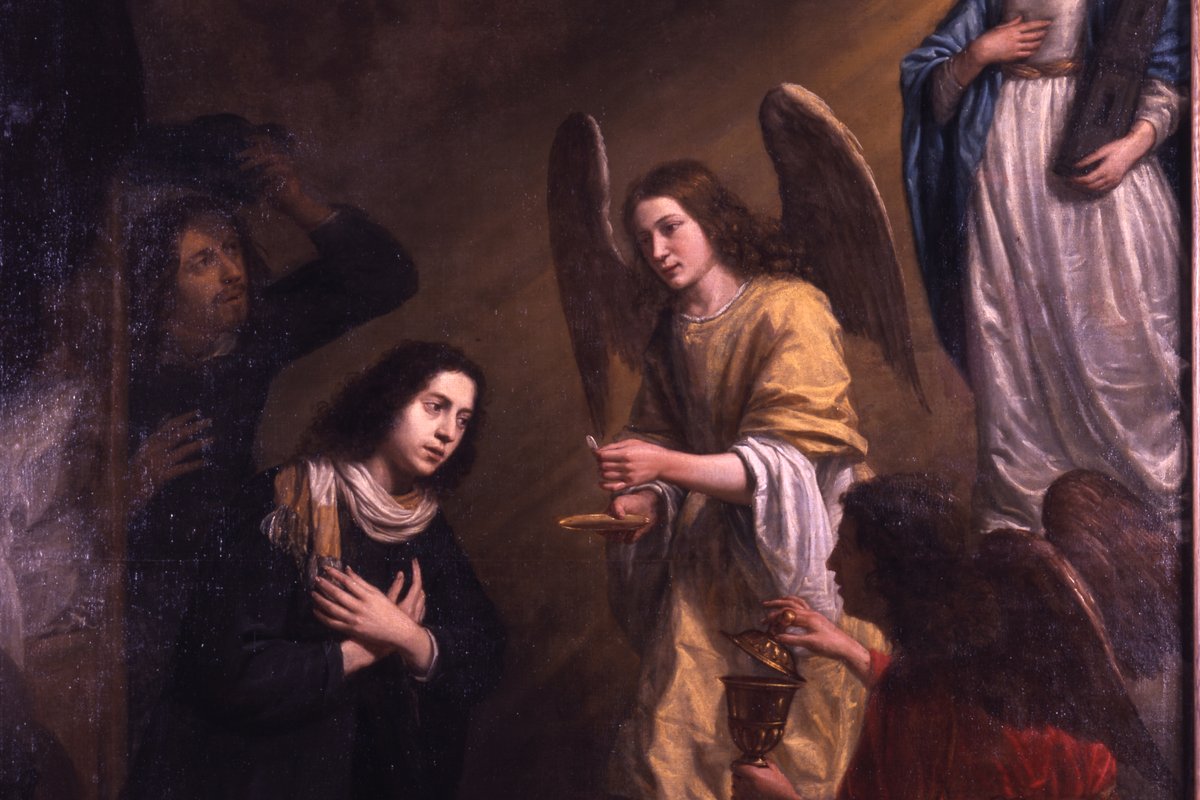
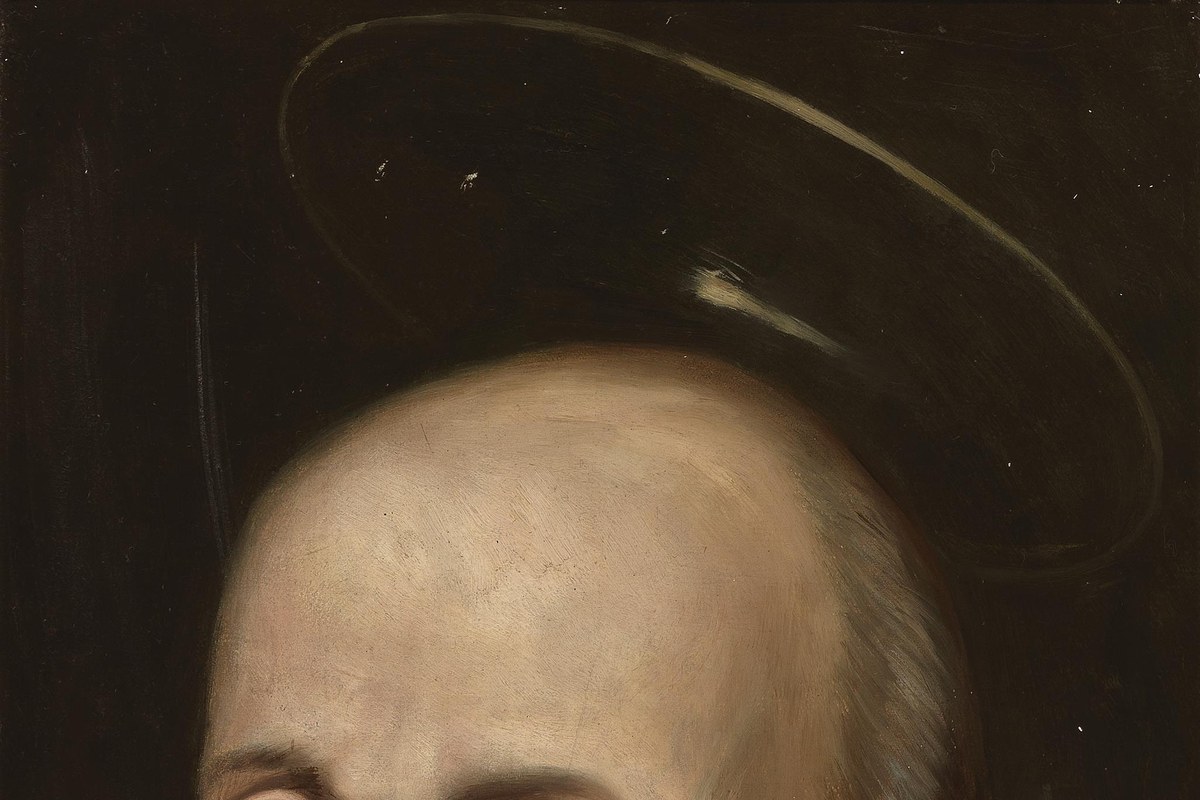
Jan van Cleve, Saint Stanislaus Kostka Receiving the Holy Communion from the Hands of Angels, 17th century, Limburgs Museum — public domain.
Beaten by his own brother
What followed wasn't quiet family disapproval. According to the accounts of his life, Paweł responded to his younger brother's vocation with repeated verbal abuse and outright physical beatings, trying to browbeat him out of the idea entirely. It's a detail that sits uncomfortably alongside the more sanitized image saints sometimes get in devotional retelling — Stanislaus's path to the Jesuits began not with gentle encouragement but with real domestic violence from someone who should have supported him. When he sought admission to the Jesuit novitiate locally, in Vienna, he was turned away, in large part because the provincial superior didn't want to provoke the family's opposition and risk the political fallout of accepting a nobleman's son against his father's explicit wishes.
The walk to Dillingen
Refused at home, Stanislaus made a decision that says as much about his resolve as anything else in his short life: he left Vienna on foot, alone, and set out for Dillingen, Germany, roughly 450 miles away, where he'd heard the Jesuits might receive him without the same local political pressure. Part of the journey he made disguised as a beggar, a precaution against being recognized and forcibly returned home by relatives who might well have been sent looking for him. It's a striking image — a young man of noble birth walking hundreds of miles in rags rather than accept the comfortable, conventional life his family had planned for him.
Received by a fellow future saint
The journey worked. Stanislaus eventually reached Rome, where he was received into the novitiate of the Society of Jesus by Francis Borgia, the order's superior general at the time — himself a former Spanish duke who had given up a life of wealth and titled privilege to become a Jesuit, and who would later be canonized a saint in his own right. For Stanislaus, admission by Borgia represented the end of a year defined by rejection and family conflict, and the beginning of a religious life he'd fought hard simply to be allowed to start.
A vision that hardened his resolve
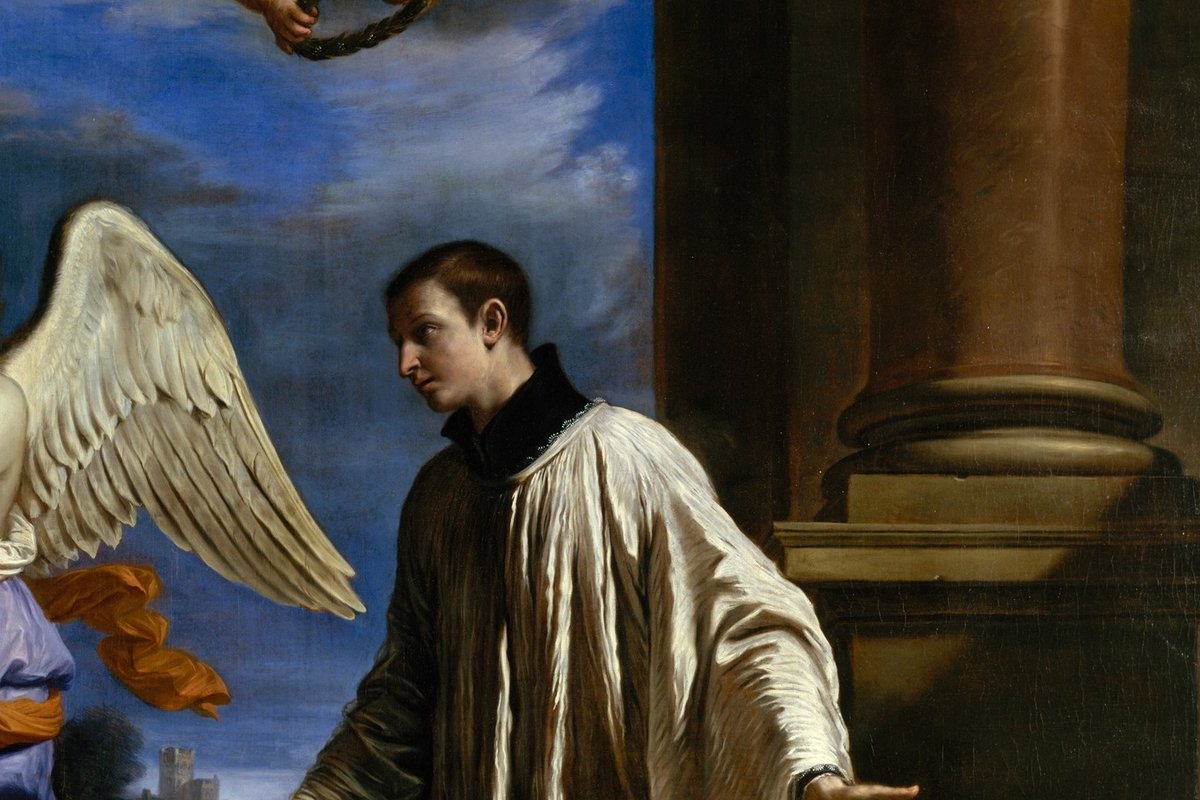
Devotional accounts of Stanislaus's life describe two experiences during his time in Vienna that reportedly deepened his determination before the walk to Dillingen ever happened. During a serious illness there, tradition holds he was denied Communion by a Protestant landlord he was lodging with and instead received it, in a vision, from the hands of angels — the scene later Baroque painters returned to again and again, including the very painting used as this article's hero image. A second tradition describes the Virgin Mary appearing to him during the same illness and placing the infant Jesus in his arms, an experience linked in later biographies to his particular devotion to Mary and to his eventual decision to enter religious life specifically as a Jesuit. As with much of his story, these visions are preserved in pious biography written after his death rather than independently documented at the time, and should be read as devotional tradition rather than settled historical fact — but they help explain the intensity that drove a teenager to walk hundreds of miles rather than give up.
A short life, and a death he seemed to foresee
He didn't have long to live it. Stanislaus died in Rome on August 15, 1568, less than a year after entering the novitiate, at just seventeen years old — not through martyrdom, but from a sudden and severe illness, in the same quiet, natural-death pattern later seen in fellow young Jesuit saints like John Berchmans and Aloysius Gonzaga, both of whom are venerated alongside him as patrons of young people and students in formation. By tradition, Stanislaus had a strong sense in advance that his death was coming, reportedly speaking of a particular devotion to the Assumption of Mary, celebrated on August 15, and expressing hope he might die on that feast specifically — a hope tradition says was granted. As with much surrounding a life this short and this intensely mythologized soon after death, the precise details of any prediction should be read as pious tradition rather than a documented, dated prophecy.
Canonization and patronage
Stanislaus Kostka was canonized in 1726 by Pope Benedict XIII. His feast is kept on November 13 in the general Roman calendar (August 15 in some local calendars, marking the day of his death). He's honored as a co-patron of Poland, and — fittingly for a young man whose entire adult life was the Jesuit novitiate — as a patron of Jesuit novices and students specifically, with a further tradition invoking his intercession for the grace of a happy, peaceful death.
Trivia
Who was Saint Stanislaus Kostka?
Why did his family oppose his vocation so violently?
How far did Stanislaus travel to join the Jesuits, and why in disguise?
Who received Stanislaus into the Society of Jesus?
What is Saint Stanislaus Kostka the patron saint of?
You May Also Like
Related Reading