Saint Toribio de Mogrovejo

From the Inquisition's bench to a bishop's mitre
Toribio Alfonso de Mogrovejo was born on November 16, 1538, in Mayorga, in the Kingdom of León, Spain, and trained as a lawyer, eventually becoming a judge and presiding over a tribunal of the Spanish Inquisition in Granada — respected, capable, and entirely a layman. That career took an abrupt turn in 1580, when King Philip II, exercising the Spanish crown's royal patronage over Church appointments in its American territories, nominated Toribio to become Archbishop of Lima, then the most important episcopal see in Spanish South America. There was a problem: Toribio hadn't been ordained to anything. He objected to the appointment on exactly those grounds, telling the king's ministers in writing that a layman had no business holding the highest church office in the New World. The objection went nowhere — the nomination held, and he found himself pushed through ordination to the priesthood and consecration as a bishop in rapid succession, simply to be qualified for a post he'd already been given before he'd said a single Mass. He arrived in Peru in 1581 to take up the role, more than four decades old and only newly a priest.
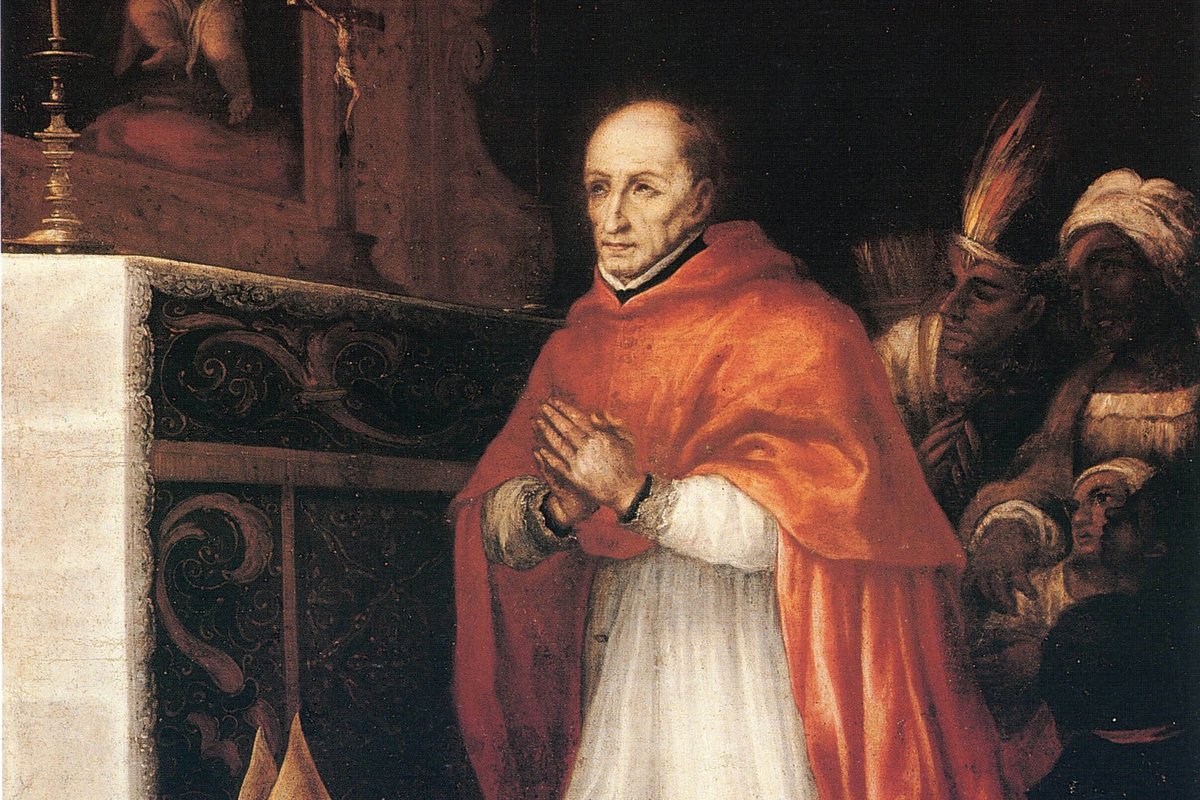
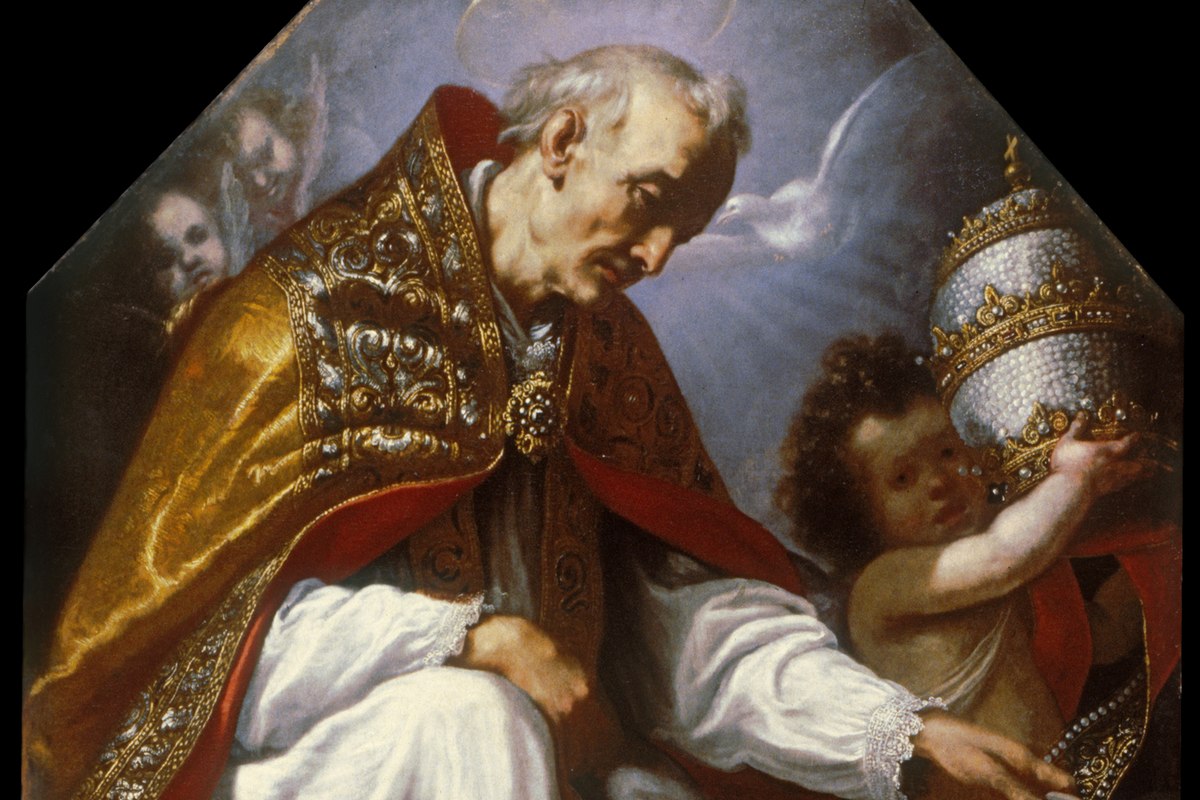
Unknown artist, Santo Toribio Alfonso de Mogrovejo, Arzobispo de Lima, second half of the 17th century, Museo Nacional de Bellas Artes, Buenos Aires — public domain.
The system that put him there, the patronato real (royal patronage), gave the Spanish crown sweeping authority to nominate bishops throughout its American territories, largely bypassing the kind of clerical career path that produced most bishops in Europe. It produced some notoriously poor choices over the centuries. Toribio turned out to be one of its more startling successes — a career judge with no pastoral training who nonetheless became one of the most energetic and reform-minded bishops Spanish America ever had.
Walking a diocese the size of an empire
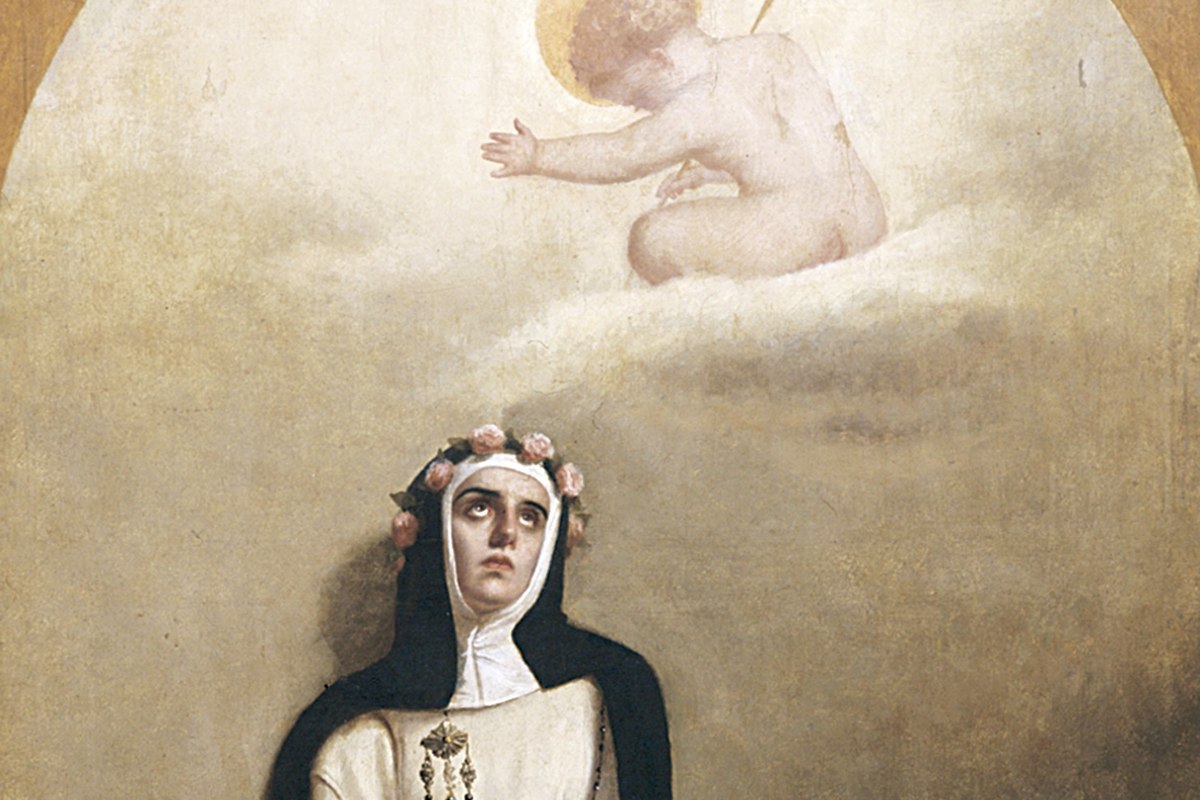
The Archdiocese of Lima that Toribio inherited was staggering in scale, stretching across some of the most difficult terrain in the hemisphere — high Andean passes, remote valleys, and settlements separated by enormous distances with few real roads connecting them. Rather than governing from the comfort of the archiepiscopal palace in Lima, Toribio spent much of his roughly 25 years in office personally traveling to the diocese's most remote parishes, on foot and on horseback, conducting pastoral visits few of his predecessors or contemporaries attempted at that scale. Some accounts estimate his cumulative travel over the course of his tenure at distances comparable to circling the globe several times over — an often-repeated figure that's difficult to verify with real precision given the record-keeping of the period, but one that reflects a genuinely unusual level of physical commitment to reaching ordinary people rather than administering from a distance. He also worked to learn local indigenous languages well enough to hear confessions directly, without relying on an interpreter, a level of personal engagement that set him apart from much of the Spanish colonial clergy of his era. He carried a portable altar with him on these journeys, sleeping in huts and mountain shelters as often as in any comfortable lodging, and he made a point of confirming and instructing ordinary parishioners in remote hamlets that no previous archbishop had ever visited in person. Among the people he is said to have confirmed during these travels was a young girl in Lima who would later become Saint Rose of Lima, the first canonized saint of the Americas — a detail that, whatever its precise historical footing, nicely captures how the same generation of colonial Peru produced more than one figure the Church would eventually recognize as a saint.
A council that spoke Quechua and Aymara
In 1582 and 1583, Toribio convened the Third Council of Lima, an important regional Church council that shaped Catholic pastoral practice across Spanish South America for generations afterward. Among its most significant and lasting achievements was the production of catechisms translated into Quechua and Aymara, the major indigenous languages of the Andean highlands — a real, documented, and historically significant act of linguistic accommodation that allowed local communities to receive core Catholic teaching in their own languages rather than only through Spanish or Latin. The council's decrees also addressed the training of clergy and the treatment of Indigenous parishioners, part of a broader effort under Toribio's leadership to bring some order and consistency to a rapidly expanding colonial Church.
Advocacy within, not against, the colonial system
Toribio consistently and documentedly pushed back against abuses of Indigenous peoples by Spanish encomenderos, the colonial landholders granted authority over Native labor and tribute, intervening on behalf of communities suffering under harsh treatment during his pastoral visits. That advocacy was real, and it earned him a reputation, even among some contemporaries, as unusually protective of Indigenous welfare for a Spanish colonial churchman. It's worth being precise about what this did and didn't amount to, though: Toribio worked to improve conditions for Indigenous peoples within the framework of Spanish colonial rule, not to challenge that framework's legitimacy or existence, and he shouldn't be cast as a modern-style anti-colonial figure — a distinction that matters for reading his record honestly rather than flattening it into something it wasn't.
Death, canonization, and patronage
Toribio de Mogrovejo died on March 23, 1606, in Saña, Peru, while still actively engaged in a pastoral visit, reportedly having continued administering the sacraments almost to the end. Sources describing his tenure cite enormous numbers of people baptized and confirmed across his 25 years in office, though as with his travel distances, precise figures from that era should be treated as estimates rather than exact counts. He was canonized by Pope Benedict XIII in 1726, and is venerated today as a patron of Latin American bishops and of Peru, with his feast kept on March 23 (observed on April 27 in Peru itself).
His tomb in Lima's cathedral remains a pilgrimage site, and his example — a churchman who spent his energy reaching the edges of his diocese rather than governing from its center — is often cited in the Latin American Church as a model for episcopal ministry generally, distinct from and older than more recent theological movements that have sometimes claimed him as a forerunner. For readers interested in other missionary bishops and priests who took on similarly vast, difficult territories, the story of Saint Junípero Serra, who founded missions across a different and equally demanding frontier in California, offers a useful point of comparison a couple of centuries later.
Trivia
Who was Saint Toribio de Mogrovejo?
How unusual was it for a layman to become an archbishop?
What did Toribio de Mogrovejo actually do as archbishop?
What was the Third Council of Lima, and why does it matter?
Did Toribio de Mogrovejo oppose Spanish colonial rule?
You May Also Like
Related Reading