Saint Vincent de Paul

From a peasant farm to the priesthood
Vincent was born in 1581 in Pouy, a small village in Gascony, in southwestern France, to a farming family of modest means. He was ordained a priest young, at twenty, several years before the minimum age normally required by canon law, through a dispensation his bishop granted him — a detail that suggests he was already recognized as unusually capable and serious about his vocation from an early age. His early career was, by his own later admission, more ambitious than saintly: he pursued benefices and positions that promised financial security and advancement, a period of his life he later spoke of with some embarrassment once his priorities had changed.
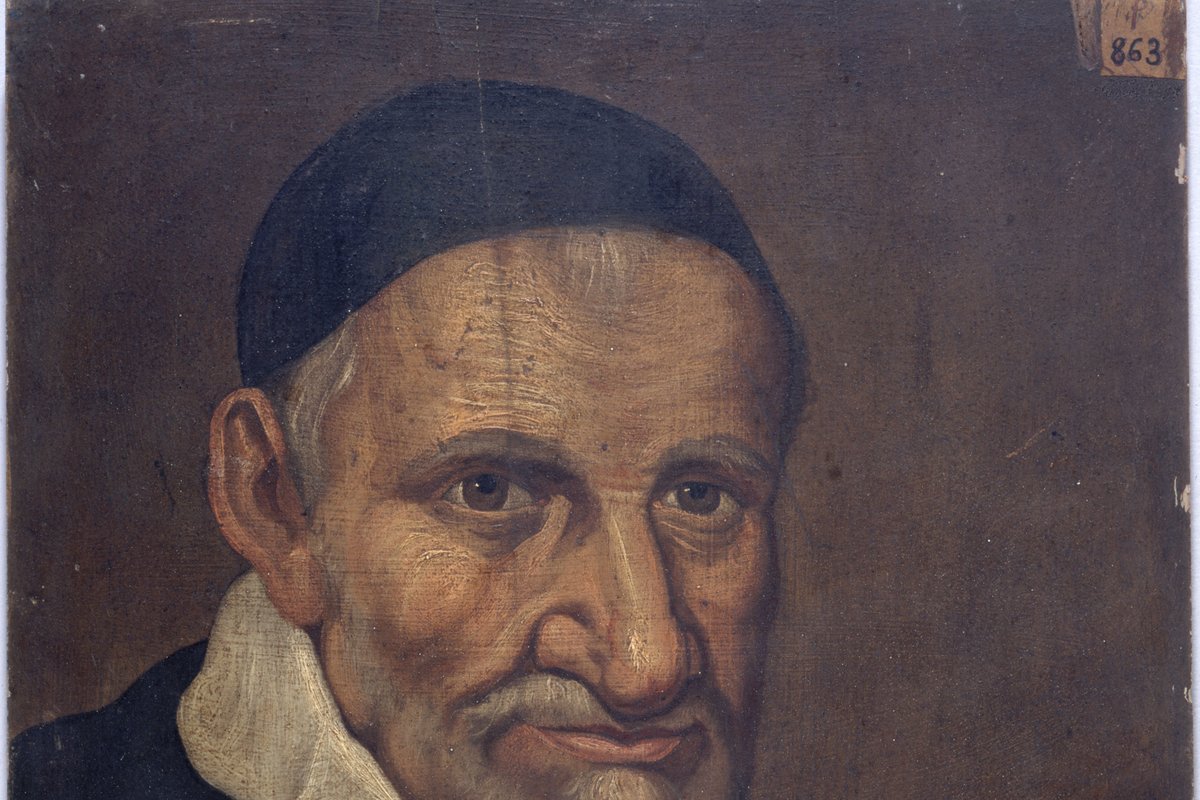
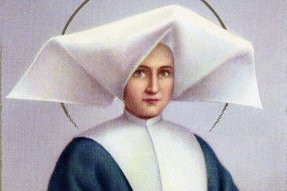
Anonymous, portrait of Saint Vincent de Paul, 17th century, Musée Carnavalet, Paris — public domain.
The turning point, by tradition, came through two very different formative experiences. According to one widely repeated account, Vincent was captured by Barbary pirates on a sea voyage early in his priesthood and sold into slavery in Tunis for roughly two years before escaping — an episode some modern historians treat with caution given the thinness of independent corroboration, though it remained part of how Vincent himself described his own life in later years. More securely documented is his time as tutor and chaplain to the wealthy Gondi family, a position that exposed him directly to the vast gap between the comfort of the noble household he served and the desperate poverty of the peasants living on the family's rural estates — people who, Vincent came to realize, had little or no meaningful access to the sacraments or basic pastoral care despite living so close to genuine wealth.
That contrast seems to have shaped the rest of his life's work: rather than staying inside institutions built for the comfortable, he kept building new ones aimed squarely at people everyone else had stopped looking at.
Organizing charity instead of just performing it
Vincent's real innovation wasn't compassion — plenty of people in 17th century France felt sorry for the poor. It was organization. He formed Confraternities of Charity, structured groups of laywomen in individual parishes who took on a rotating, disciplined responsibility to visit, feed, and nurse the sick and destitute in their own homes, rather than waiting for the poor to come to them. In 1625, he founded the Congregation of the Mission — priests, later nicknamed Vincentians or Lazarists (after the Paris priory of Saint-Lazare that became their headquarters), dedicated specifically to evangelizing and serving the rural poor that city-based clergy rarely reached. Vincent also became deeply involved in the care of galley slaves — convicts chained to the oars of French naval ships, among the most physically brutalized and spiritually neglected people in the kingdom — securing better treatment for them and personally ministering to their material and spiritual needs, work that reinforced his growing conviction that the Church's charity had to reach the populations it most habitually overlooked.
Building an entirely new kind of religious life
The Confraternities' work eventually needed a more permanent structure, and in 1633, Vincent partnered with a widow named Louise de Marillac to found the Daughters of Charity. It was a genuinely novel kind of religious community: rather than living enclosed behind convent walls as most women religious did at the time, the Daughters took vows renewed annually and lived and worked directly out in the world, inside hospitals, in private homes, and on the streets. It was the first uncloistered institute of women dedicated to active charitable work, and it became the model that countless later congregations of active religious sisters would follow.
A phrase associated with his spirit, if not his exact words
A line often attributed to Vincent — that charity is greater than any rule, and that every rule exists to serve charity rather than the reverse — captures the spirit of everything he built, even though the exact wording circulating today can't be pinned down with confidence to a specific letter or conference in his surviving correspondence. It's best treated as a fair summary of his approach rather than a verified quotation: every structure he founded, from the Confraternities to the Daughters of Charity to the Congregation of the Mission, was built to bend around the needs of the poor rather than the other way around.
Canonized a century after his death
Vincent de Paul died in Paris in 1660 and was canonized in 1737. His feast day is September 27. He's honored today as patron of charitable societies and organizations broadly — a patronage that reflects less a single miracle than an entire working method, one still visible in the Saint Vincent de Paul Society and countless other charitable organizations that trace their approach directly back to his model of organized, door-to-door mercy.
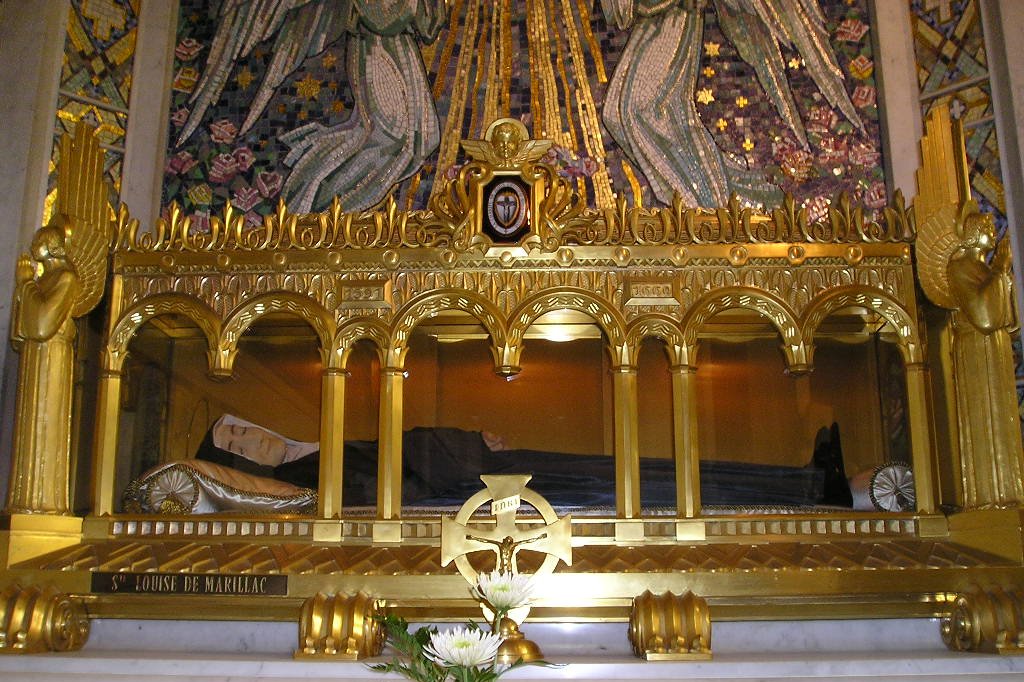
His close collaborator, Louise de Marillac, was canonized in her own right in 1934 and is honored today as the patroness of social workers, a recognition of just how central her own organizational and spiritual leadership was to the Daughters of Charity's early success — the community's growth owed as much to her direct daily supervision as to Vincent's broader vision. Together, their partnership stands as one of the more consequential collaborations between a priest and a laywoman in the history of Catholic charitable work, producing an institutional model that later inspired other congregations dedicated to active service rather than the enclosed, contemplative religious life that had dominated women's religious communities for centuries before them.
Trivia
What did Saint Vincent de Paul found?
Who was Louise de Marillac?
What made the Daughters of Charity unusual for their time?
When was Vincent de Paul canonized, and what is he patron of?
What were the Confraternities of Charity that Vincent de Paul organized?
You May Also Like

Related Reading