Saint Eustace

A hunt that turned into a vision
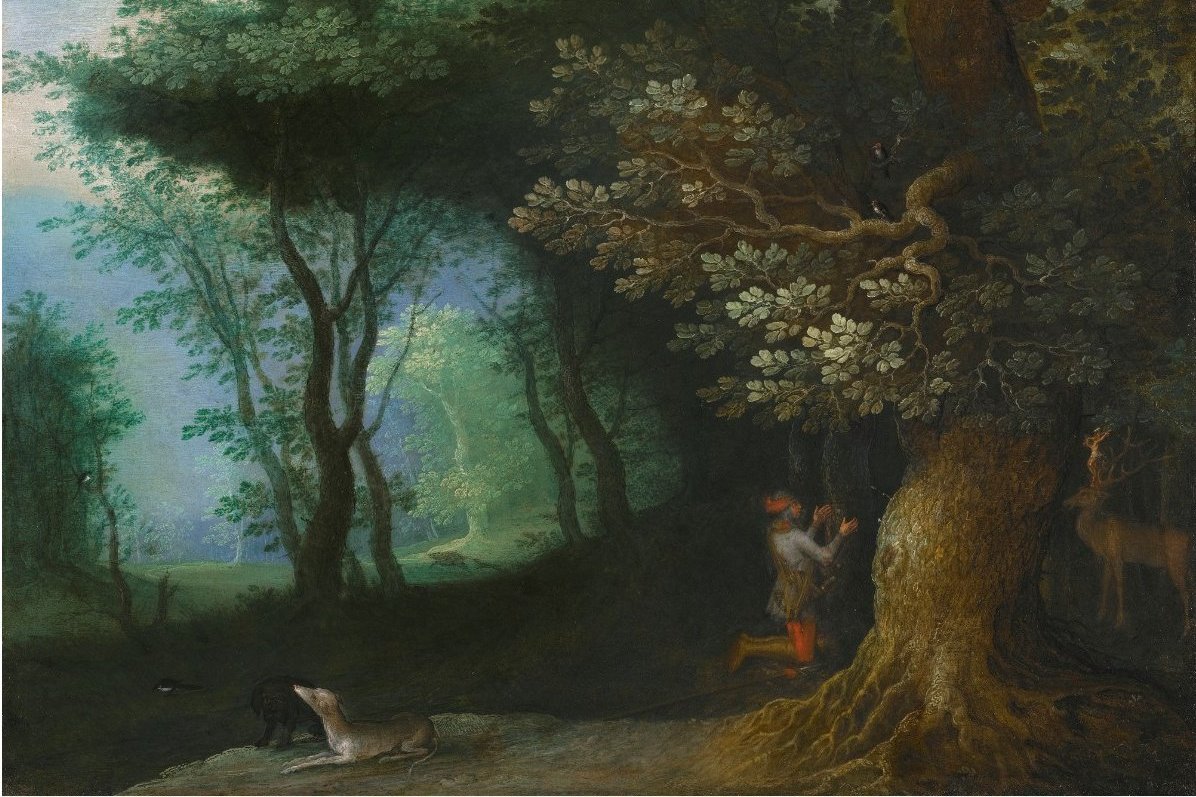
By the traditional account, Eustace began life as Placidus, a Roman general serving under the emperor — sources differ on whether it was Trajan or Hadrian — and a respected military commander well before any hint of Christianity entered his story. While out hunting one day, he pursued a magnificent stag deep into the forest, and when he finally cornered it, he looked up to see a crucifix fixed glowing between its antlers, along with a voice identifying itself as Christ. It's a scene that has been painted again and again across the history of Christian art — Pisanello's version, the one used as this article's hero image, is one of the most celebrated depictions, and the same stag-with-crucifix motif still shows up in the iconography of Saint Hubert of Liège, a later medieval saint whose legend borrows the identical image.
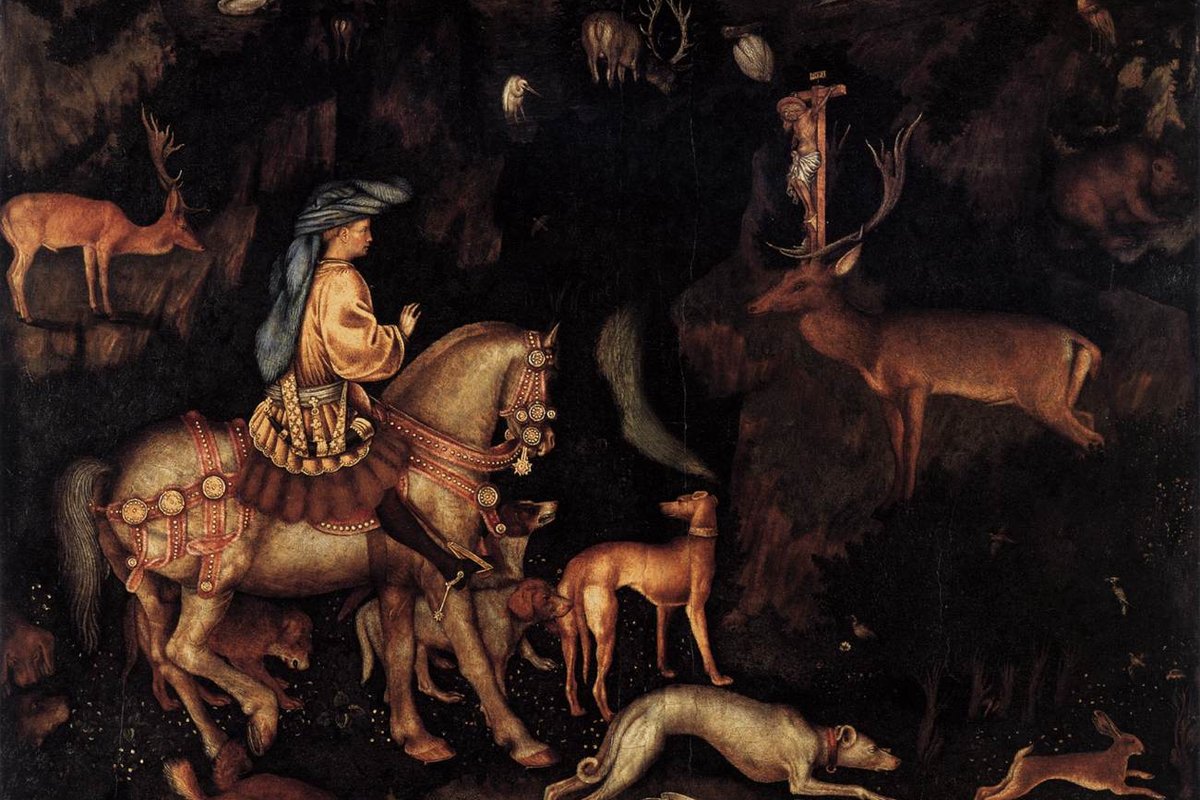
Pisanello, The Vision of Saint Eustace, c. 1440, National Gallery, London — public domain.
The voice from the vision, by the traditional telling, didn't just announce itself — it told Placidus plainly that his conversion would cost him everything, warning him of the trials that lay ahead before he'd even had the chance to be baptized. That detail matters to how the story functions as a piece of religious storytelling: the vision isn't a reward for faith already proven, it's an invitation into a hardship the convert accepts with his eyes open. Medieval preachers leaned on that structure heavily, since it gave listeners a model of conversion that didn't promise an easier life, only a meaningful one.
Loss, hardship, and restoration
Placidus was baptized after the vision and took the name Eustace. What follows in the legend is a long stretch of hardship: Eustace reportedly lost his wealth, his position, and even his family for a time, enduring years of poverty and separation before eventually being restored to his former rank and reunited with his wife and sons. It's the kind of extended trial-and-restoration arc common to ancient conversion narratives, building toward a final test of the convert's faith rather than ending the story at the moment of belief itself.
The details of the separation are themselves dramatic enough to have circulated independently: Eustace is said to have lost his sons to wild animals and his wife to pirates during a sea voyage taken to escape poverty, only for the family to be reunited years later, each member having survived the disaster that seemed to have claimed them, in a scene of recognition medieval audiences found genuinely moving. It's the same narrative engine found in other ancient romances of separated families — loss, wandering, and eventual reunion — repurposed here into a specifically Christian story about providence working through suffering rather than around it.
A death inside a bronze bull
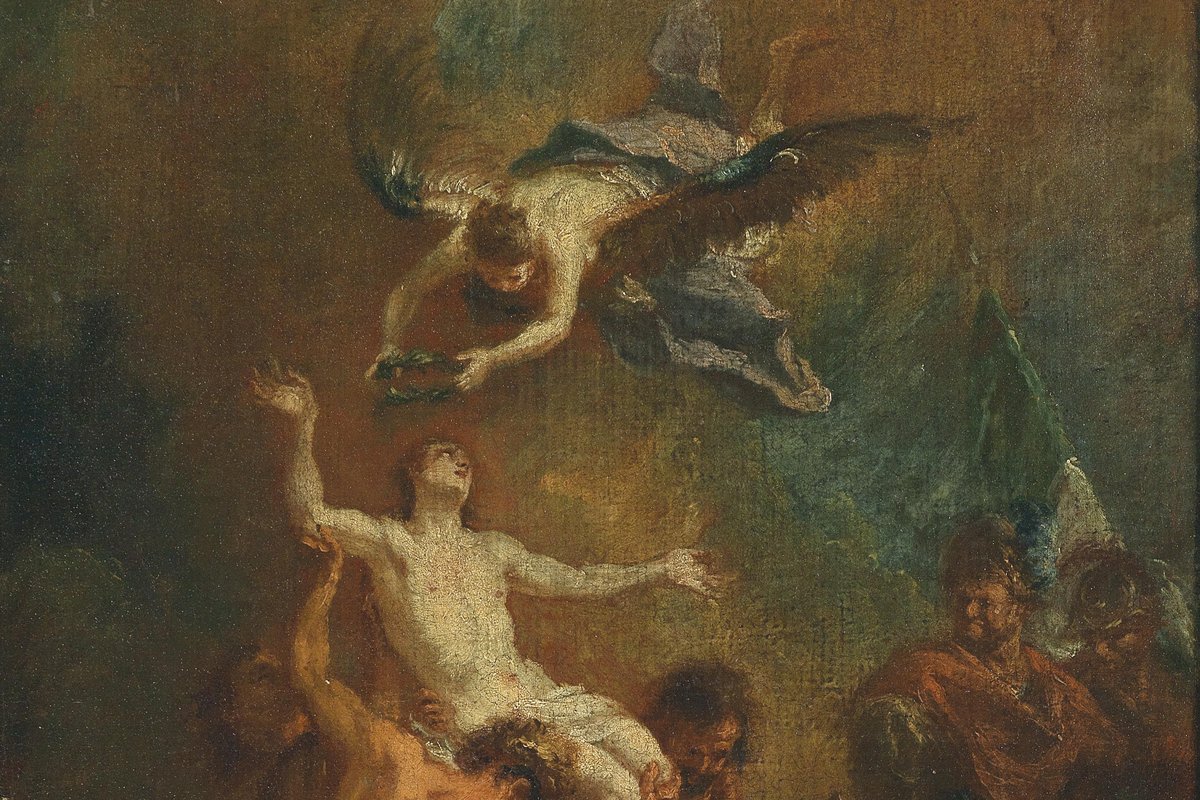
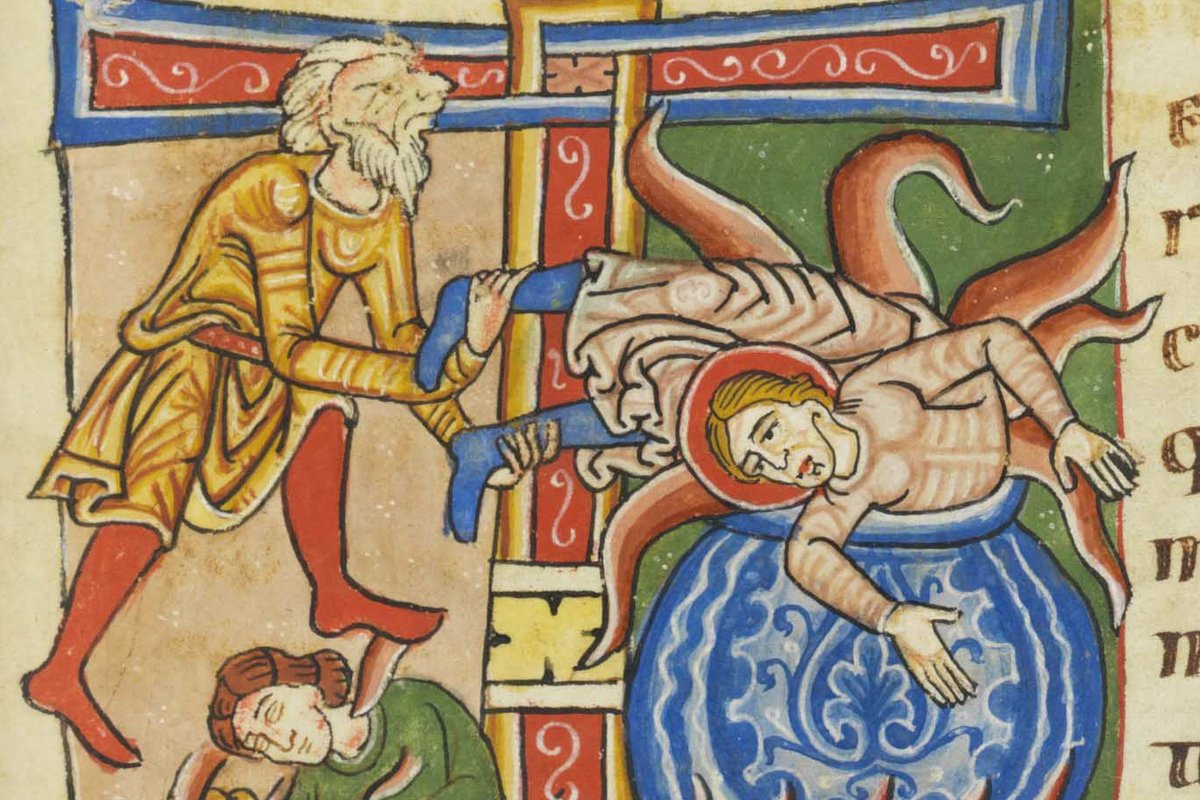
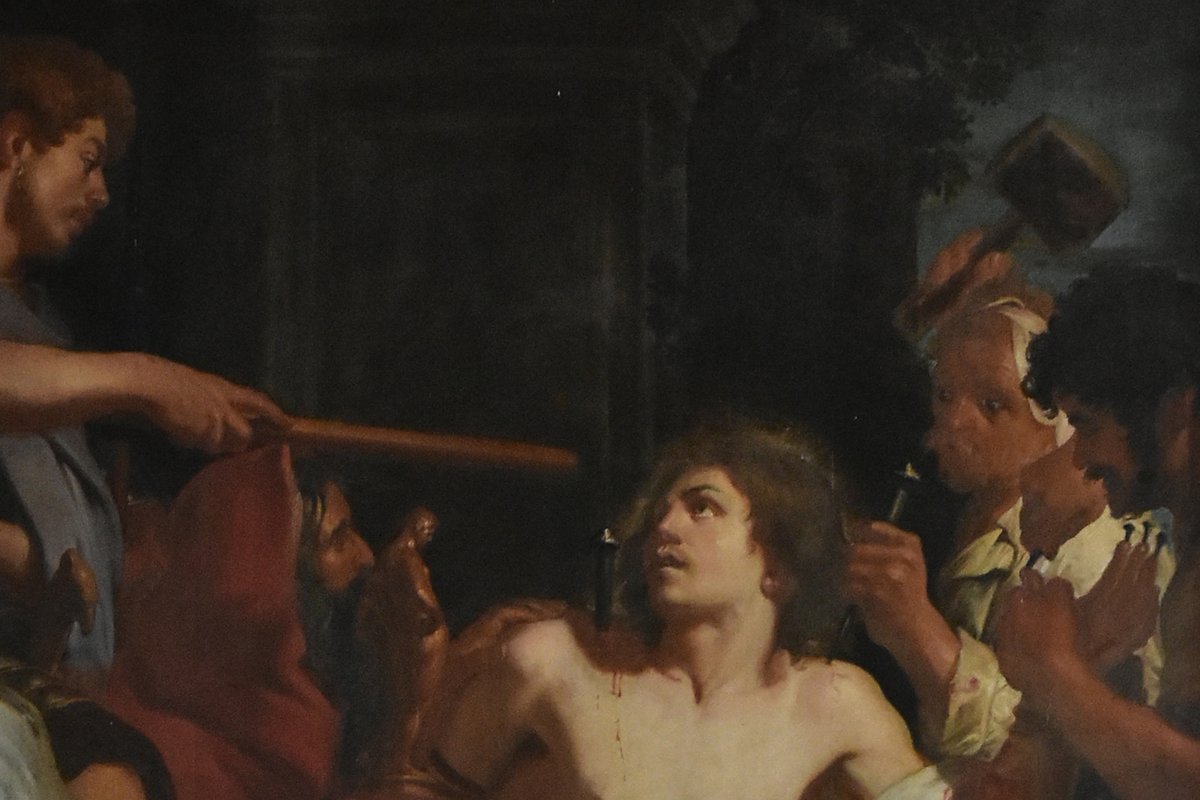
That final test came when Eustace and his family, once restored to favor, refused to take part in a pagan sacrifice honoring the emperor. By tradition, the punishment was especially gruesome: they were sealed inside a hollow bronze statue shaped like a bull or ox, which was then heated from below until they died. The scene gave Eustace his enduring association with fire and with severe, seemingly hopeless suffering — the roots of his later patronage over firefighters and over people facing difficult circumstances.
Medieval commentators sometimes drew a direct comparison between Eustace's ordeal and that of the Old Testament figure Job — a man tested repeatedly through loss of family, wealth, and status, whose fidelity to God survived every blow. Whether or not the comparison was intentional on the part of whoever composed Eustace's legend, it helps explain why the story found such a ready audience: it gave Christians a New Testament-era Job, a Roman soldier rather than a patriarch, but shaped by the same basic promise that suffering endured in faith is not suffering endured for nothing.
A legend built on an earlier legend
It's worth being direct about what modern scholarship actually says here, rather than treating this as simply one more ancient martyr's story with some embellished details. The Catholic Encyclopedia describes Eustace's surviving Acts as "certainly fabulous" — not just unreliable in specifics, but fabricated as a genre of religious storytelling. Scholars have traced the narrative to a 7th-century text built closely on the model of the Clementine Recognitions, an earlier and widely circulated conversion-and-family-separation story that supplied the template for several unrelated saints' legends across the early medieval Church. That means the uncertainty here runs deeper than it does for a figure like Saint Boniface of Tarsus, whose historical existence is at least generally accepted even though his story is legendary — with Eustace, some historians question whether there was ever a real Roman martyr behind the name at all.
That hasn't stopped the Church from listing him formally in the Roman Martyrology, and it hasn't dented his popularity with artists across the centuries — the crucifix-in-the-antlers image proved simply too striking to abandon, regardless of how shaky its historical footing turned out to be under closer scrutiny.
A legend that outgrew its own uncertain origins
None of that scholarly doubt stopped Eustace's story from becoming one of the most popular saints' legends of the medieval and Renaissance periods. He was counted among the Fourteen Holy Helpers, a group of saints — including figures like Saint Blaise — venerated across medieval Europe as powerful intercessors against specific dangers, and his feast is kept on September 20. He remains patron of hunters, of firefighters, of people facing seemingly impossible circumstances, and of the city of Madrid. It's a reminder that a saint's devotional staying power and a saint's documented historical existence are two genuinely separate questions — and with Eustace, the gap between them is about as wide as it gets anywhere on this blog.
The stag vision also traveled well beyond church art. It appears on coats of arms, on the badges of hunting guilds across medieval Europe, and eventually on the corporate logo of a well-known outdoor-clothing brand, whose founders borrowed the antlered-crucifix image directly from the Eustace-and-Hubert visual tradition without any particular religious intent behind the choice. It's an odd afterlife for a story the Church's own reference scholarship doubts ever happened, and a good illustration of how a striking image can outlive the theological and historical questions surrounding its origin.
Trivia
Who was Saint Eustace?
Is the story of Saint Eustace historically true?
How was Saint Eustace supposedly martyred?
What is Saint Eustace the patron saint of?
What are the Fourteen Holy Helpers, and is Saint Eustace one of them?
You May Also Like

Related Reading